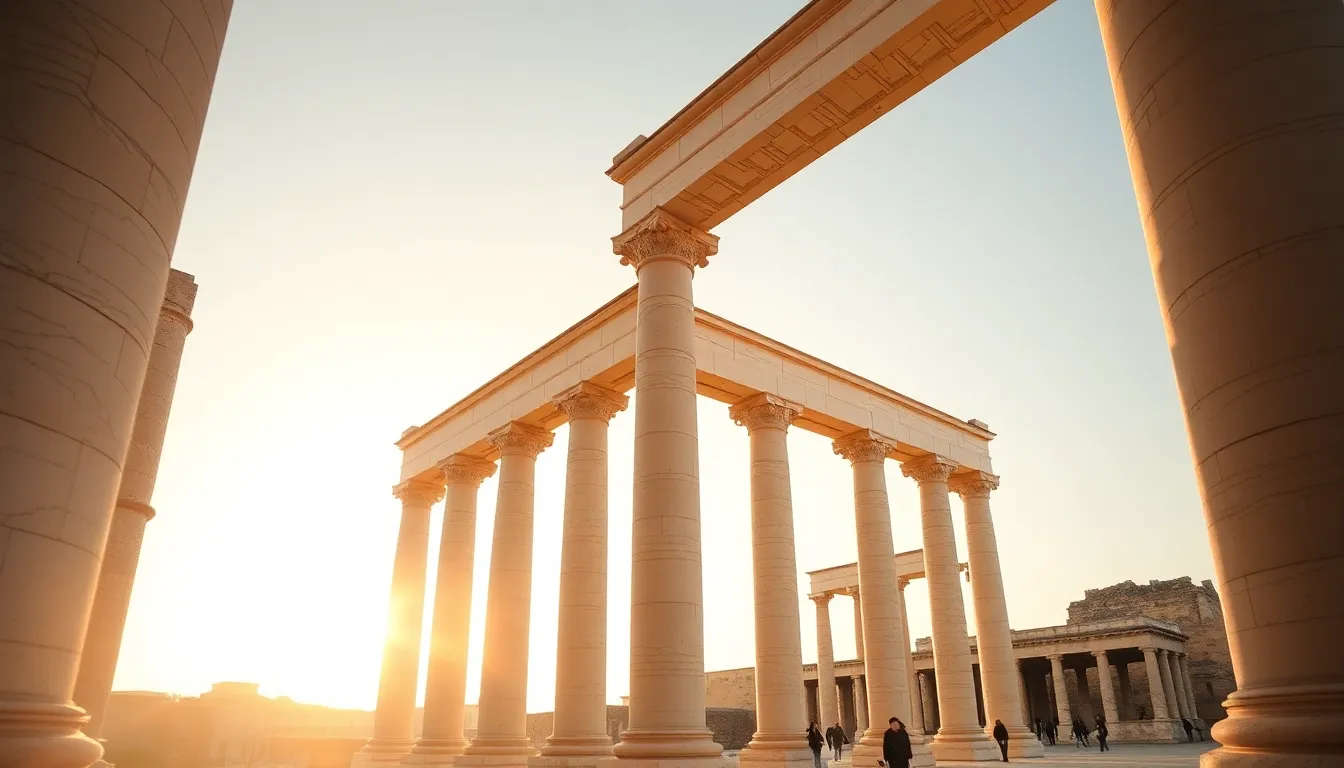
I will be honest with you. When I first started running the seven churches, I almost skipped Smyrna. It sits under a working city of nearly three million people, the ruins are tucked into a corner of downtown Izmir, and there is no grand acropolis to climb. Then one trip a retired pastor in my group asked to read the letter aloud at the agora, and he got to the line about being faithful unto death. He stopped. He had buried members of his own congregation that year. The quiet that followed told me everything. Smyrna is small on the map and large in the heart. I have never skipped it since.
For a faith group, Smyrna is the church of faithfulness under pressure. If you are leading pastors, rabbis, or educators who want to understand what it cost to follow Christ in the Roman world, this is the stop where the cost gets real.
Why Smyrna Stands Apart
Smyrna is the second of the seven churches John addresses in Revelation, and it holds a rare distinction. Of the seven letters, only two contain no rebuke at all. Smyrna is one of them, and Philadelphia is the other. To a small, poor, persecuted church, John has nothing to correct and everything to encourage.
The city itself was ancient and proud. Smyrna competed with Ephesus and Pergamon for the title of first city of Asia. It was wealthy, beautiful, and intensely loyal to Rome, home to a temple of the imperial cult. That loyalty is exactly what made life hard for Christians here. In a city that prided itself on emperor worship, refusing to call Caesar lord marked you out. The pressure John describes was not abstract. It came from a population that saw Christian refusal as treason.
The Letter to Smyrna
Revelation 2:8 through 11 is short, and I read all of it on site. John identifies Christ as “the First and the Last, who died and came to life again,” which is the exact comfort a dying church needs to hear. Then he speaks plainly. “I know your afflictions and your poverty, yet you are rich.” The church was materially poor and spiritually wealthy, the inverse of Laodicea at the other end of the circuit.
He names the source of the slander, “those who say they are Jews and are not, but are a synagogue of Satan,” a phrase that requires careful, honest handling with a group, and especially with an interfaith or combined Christian and Jewish group. I always frame it as a first-century intracommunity conflict, not a license for anything. Then the heart of the letter: “Do not be afraid of what you are about to suffer. The devil will put some of you in prison to test you, and you will suffer persecution for ten days. Be faithful, even to the point of death, and I will give you the crown of life.”
That phrase, the crown of life, would have meant something specific here. Smyrna was known for a crown of buildings ringing the top of Mount Pagos, a skyline locals literally called the crown of Smyrna. John takes the city’s own image and turns it into a promise.
Polycarp: The Crown of Life in the Flesh
You cannot teach Smyrna without Polycarp. He was bishop of Smyrna, a disciple of the apostle John himself, and around 155 AD, in old age, he was arrested and brought to the stadium to be executed unless he would curse Christ and swear by Caesar. The account of his death is one of the earliest martyrdom records the church has.
When the proconsul pressed him to deny Christ, Polycarp answered, “Eighty-six years I have served him, and he has done me no wrong. How can I blaspheme my King who saved me?” He was burned at the stake, and tradition holds the fire would not consume him until he was pierced. Polycarp is the letter to Smyrna lived out. “Be faithful even to the point of death” stopped being a verse and became a man your group can name. I tell his story standing in the agora, and it stays with people for the rest of the trip.
What Your Group Walks Today
Smyrna is modern Izmir, a large, lively port city on the Aegean, so this stop feels different from the open archaeological parks elsewhere on the circuit. The main site is the Agora of Smyrna, an excavated Roman marketplace in the middle of the city.
Here your group sees the basilica, a long colonnaded hall, with rows of arched vaults beneath it that have survived remarkably well. The standing columns, the underground galleries, and some early Christian graffiti scratched into the stone give a real sense of the public space where this church lived and traded. It is compact, which makes it ideal for gathering the group close and reading the letter together.
Above the city rises Mount Pagos, crowned by the Kadifekale fortress, the height that gave Smyrna its famous crown of buildings. Many groups drive up for the view across the gulf, which ties directly to John’s promise of the crown of life. Izmir also has a strong base of hotels and restaurants, which makes it a practical place to overnight while touring the northern churches.
How Smyrna Fits the Seven Churches Circuit
Smyrna is day two of the loop for most groups, paired with Pergamon to the north. It follows Ephesus, where the circuit begins, and it sets up the harder messages that come later. Reading Smyrna right after Ephesus is instructive. Ephesus had everything and lost its first love. Smyrna had almost nothing and held on. The contrast preaches itself.
Our seven churches pilgrimage guide lays out the full route, and the Ephesus and the church of Revelation and Pergamon and Satan’s throne guides cover the stops on either side. The broader spiritual sites in Turkey hub places it all in context.
One planning note worth raising early with any pastor. With Heritage Tours, the group leader travels free when you bring fifteen or more participants. For a congregation putting together a Revelation trip, that lowers the barrier to making it happen.
FAQ: The Church of Smyrna in Revelation
Why did the church of Smyrna receive no rebuke in Revelation?
Smyrna was a small, poor, and persecuted church, and John found nothing in it to correct. Of the seven letters, only Smyrna and Philadelphia contain pure encouragement with no rebuke. To a suffering congregation, John offers comfort and the promise of the crown of life rather than correction.
Who was Polycarp and why does he matter at Smyrna?
Polycarp was the bishop of Smyrna and a disciple of the apostle John. Around 155 AD, in his eighties, he was martyred for refusing to deny Christ and swear by Caesar. His death is one of the earliest recorded Christian martyrdoms and embodies the letter’s call to be faithful even to the point of death.
Where is Smyrna located today?
Smyrna is modern Izmir, a large port city on Turkey’s Aegean coast. The main archaeological site is the Agora of Smyrna, an excavated Roman marketplace in the city center, with the Kadifekale fortress on Mount Pagos above. Izmir is a practical base for touring the northern seven churches.
What does “the crown of life” mean in the letter to Smyrna?
The crown of life is the promise to those who stay faithful unto death. The image had local force, because the top of Mount Pagos was ringed with buildings that locals called the crown of Smyrna. John takes the city’s own famous skyline and turns it into a promise of eternal reward.
How should a group handle the phrase “synagogue of Satan”?
Handle it carefully and in context. The phrase refers to a specific first-century local conflict and is not a statement about Jewish people in general. With any group, and especially a combined Christian and Jewish group, frame it honestly as an intracommunity dispute of its time, not as a license for hostility today.
If the church of Smyrna speaks to your congregation, I would be glad to help you build the stop into a full Revelation journey. The faithfulness theme runs deep here, and it grounds the whole circuit. You can see how we plan these trips on our Turkey destination page and the group heritage tours page. Contact us whenever you are ready to start.