How to Use This Itinerary (and How to Customize It)
I have been building Turkey itineraries for faith groups for over twenty years, and the one thing I can tell you is that no two groups are exactly alike. A synagogue community tracing Ottoman Jewish history needs different pacing than a church group walking the path of Paul. What follows is a 12-day framework that covers the major heritage regions of Turkey in a sequence that actually works for groups. It is a starting point. We adjust it for every community we work with.
If you are a rabbi or pastor considering Turkey for your group, read through this and think about where your community would want to spend more time. Then let us build your version together.
Days 1 through 3: Istanbul, the Jewish Quarter, Hagia Sophia, and the Spice Bazaar
Your group arrives in Istanbul, and the first thing to know is that this city has been a center of Jewish, Christian, and Muslim life for longer than almost any place on earth. Don’t rush it.
Day 1 is arrival and settling in. If your group lands early enough, a walk through the Sultanahmet district in the late afternoon sets the tone. The Blue Mosque, the Hippodrome, the layers of history visible from a single street corner. For your group, this is orientation. Let them absorb it.
Day 2 begins in the Jewish Quarter of Balat, one of the oldest continuously inhabited Jewish neighborhoods in the world. Neve Shalom Synagogue, the Ahrida Synagogue (which dates to the 15th century), and the Jewish Museum of Turkey are all within walking distance. For a Jewish group, this is the emotional center of the Istanbul experience. For a Christian group, Balat also holds some of the oldest churches in the city.
Group leader note: Neve Shalom requires advance security clearance for group visits. We handle this, but your participants should know about it beforehand so it doesn’t feel alarming on arrival.
Day 3 is Hagia Sophia, the Basilica Cistern, and the Grand Bazaar. Hagia Sophia deserves real time. It was the largest cathedral in the world for nearly a thousand years before it became a mosque. The layers of its history are visible on the walls. For a faith group, standing inside it is standing inside one of the most significant religious buildings ever constructed.
The afternoon at the Spice Bazaar and the surrounding streets is lighter. Your group needs that balance after two intense mornings.
Days 4 and 5: Day Trip to Edirne, the Great Synagogue, and the Ottoman Capital
This is the part of the itinerary that surprises people. Edirne was the capital of the Ottoman Empire before Istanbul, and it holds the restored Great Synagogue of Edirne, one of the largest synagogues in Europe. It was abandoned for decades, restored in 2015, and is now open to visitors. Most Turkey itineraries skip Edirne entirely. For a heritage group, especially one with interest in Jewish history, it is worth every hour of the drive.
Day 4 is the drive to Edirne (about 2.5 hours from Istanbul), visiting the Great Synagogue, the Selimiye Mosque (considered one of the finest examples of Ottoman architecture in the world), and the old city center.
Day 5 is a morning in Edirne to visit the Ottoman medical museum and the old market, then return to Istanbul in the afternoon.
Group leader note: The Edirne day trip works best with an overnight stay. The drive back on the same day is doable but tiring for older participants. We can arrange a hotel in Edirne that keeps the group comfortable.
Days 6 and 7: Cappadocia, Cave Churches, Underground Cities, and Byzantine Heritage
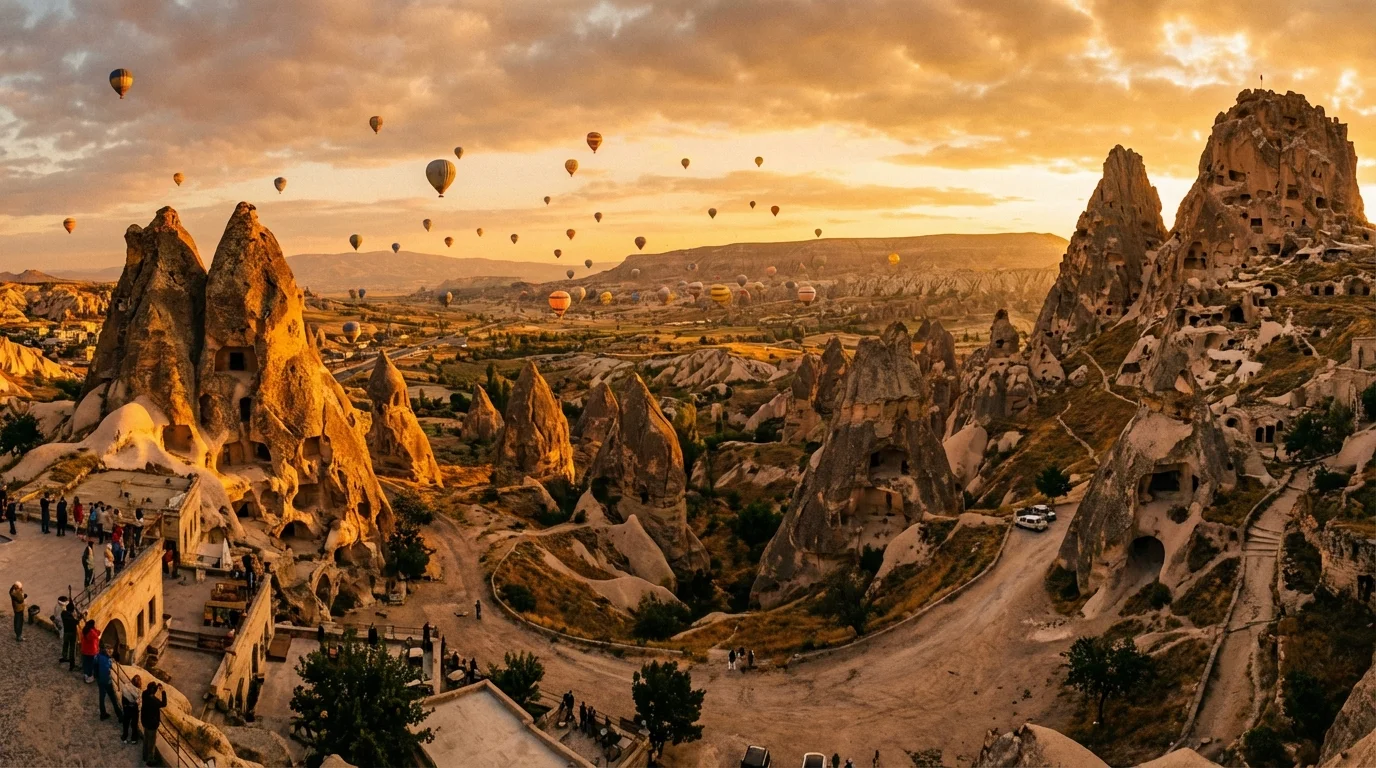
A short morning flight from Istanbul brings your group to Cappadocia, and nothing prepares them for what they see. The landscape looks like another planet. But the real significance for a faith group is underground. Early Christians carved churches, monasteries, and entire cities into the soft volcanic rock here, some as early as the 4th century. These were places of worship, refuge, and community during periods of persecution.
Day 6 is the Goreme Open Air Museum, which contains some of the best-preserved cave churches in the world, with frescoes dating to the 10th and 11th centuries. The Karanlik Kilise (Dark Church) is particularly striking. In the afternoon, Derinkuyu Underground City shows how entire communities lived, worshipped, and protected themselves below ground.
Day 7 is a morning walk through Ihlara Valley, where more cave churches line the gorge walls. The afternoon is open, and this is intentional. Your group has had two very full days. Give them time to reflect. A sunset viewing over the fairy chimneys is something they will remember.
Group leader note: The underground cities involve narrow passages and uneven stairs. If you have participants with mobility concerns, talk to us about this in advance. There are ways to adjust the visit so everyone can experience the core sites without the most physically demanding sections.
Days 8 through 10: The Aegean Coast, Ephesus, the House of the Virgin Mary, and Izmir
The flight from Cappadocia to Izmir takes about an hour and brings your group to the Aegean coast. This is where Paul walked. This is where the early church took shape.
Day 8 is Ephesus. Your group walks through streets where Paul preached in a theater that seated 25,000 people. The Library of Celsus, the terraced houses, the ruins of what was once one of the largest cities in the Roman Empire. For a Christian group, Ephesus is one of the most significant places on earth.
Day 9 begins at the House of the Virgin Mary on Mount Koressos, a small stone building that both Christian and Muslim traditions hold as the place where Mary spent her final years. It is a place of genuine spiritual weight, quiet and simple. The afternoon can include the Basilica of St. John in Selcuk, built over what is believed to be the apostle John’s burial site.
Day 10 is Izmir, known in the ancient world as Smyrna, one of the Seven Churches of Revelation. The agora ruins and the Jewish quarter of Izmir round out the Aegean experience.
Group leader note: Ephesus gets extremely hot from June through September. We schedule visits for early morning during summer months to avoid the worst of it. Make sure your group brings water and wears hats. This is not optional.
Days 11 and 12: Return to Istanbul or Departure
Day 11 is a flight back to Istanbul. If your group still has energy, a boat cruise on the Bosphorus in the afternoon is a beautiful way to see the city from the water, with mosques, palaces, and the skyline spread across two continents.
Day 12 is departure day. We arrange airport transfers so your group gets to their flights without the stress of navigating Istanbul traffic on their own.
Adapting This Itinerary for a Purely Jewish or Purely Christian Group
This itinerary covers both Jewish and Christian heritage sites because Turkey holds both. But if your group has a specific focus, the itinerary shifts.
For a Jewish heritage focus, we expand the Istanbul Jewish Quarter time, add a visit to Sardis (home to one of the oldest synagogues in the world), and spend more time in Edirne. Cappadocia becomes optional, and Ephesus is shorter.
For a Christian pilgrimage focus, we add more of the Seven Churches of Revelation circuit (Pergamon, Sardis, Laodicea), expand the Ephesus and Cappadocia time, and may reduce the Edirne portion.
The point is that this itinerary bends to fit your community. That is what we do.
If you want to start building your group’s version of this trip, reach out to us here. We will walk through the options together.
FAQ: Turkey Heritage Tour Itinerary Questions
Is 12 days enough for a heritage tour of Turkey? Twelve days is enough to cover Istanbul, Cappadocia, and the Aegean coast (Ephesus and Izmir) at a pace that works for a group. If you want to add the full Seven Churches of Revelation circuit or spend more time in eastern Turkey, 14 to 16 days is more realistic. We help group leaders decide the right length based on their community’s interests and physical capacity.
Should a Turkey heritage itinerary include Istanbul, Cappadocia, AND Ephesus? For a first trip, yes. These three regions represent three very different layers of Turkey’s heritage history. Istanbul is the Ottoman and Byzantine center. Cappadocia is early Christian underground heritage. Ephesus is where the early church took public shape. Together, they tell a story that no single region tells alone.
What Jewish heritage sites should a Turkey itinerary include? At minimum, the Neve Shalom and Ahrida synagogues in Istanbul, the Jewish Museum of Turkey, and the Great Synagogue of Edirne. For groups with more time, the ancient synagogue at Sardis is one of the most impressive Jewish heritage sites in the Mediterranean world. We build these into every Jewish heritage itinerary.
How do you organize hotel stays for a group heritage tour of Turkey? We book hotels in each region so the group has a consistent base. In Istanbul, the Sultanahmet or Beyoglu areas work best for heritage access. In Cappadocia, Goreme or Uchisar. Near Ephesus, Selcuk or Kusadasi. Internal flights connect the regions, so your group does not need to endure long bus rides between sites.
Can Heritage Tours customize this Turkey itinerary for my group? Yes. Every Heritage Tours itinerary is built around the specific community traveling. The 12-day structure here is a framework. We adjust it based on your group’s faith tradition, physical needs, interests, and budget. Start the conversation here.