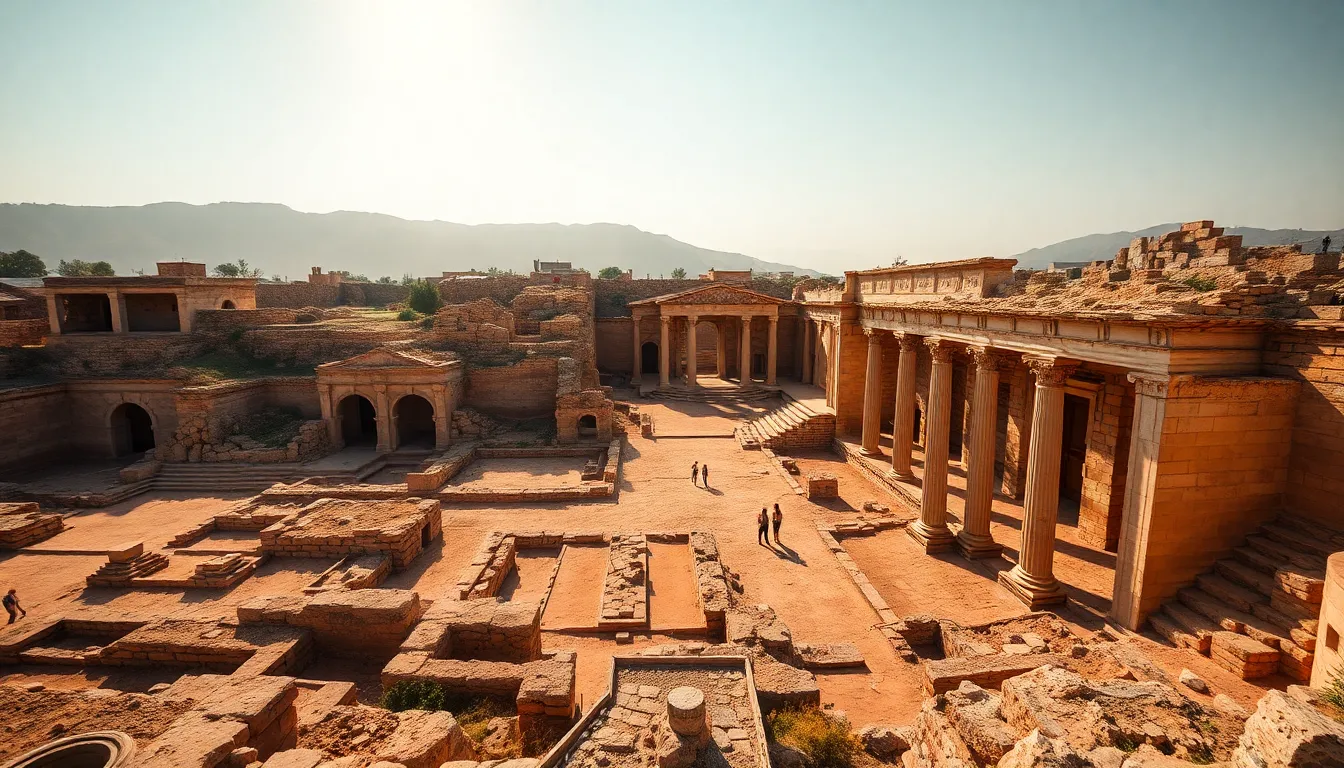
Thyatira is the church most groups have never heard of, and I love watching that change. We pull into Akhisar, a busy ordinary Turkish town, and there in the middle of it is a fenced archaeological plot surrounded by apartment blocks and shops. People are usually underwhelmed for about ninety seconds. Then I tell them this is the hometown of Lydia, the woman who sold purple cloth and became the first convert in Europe, and that this least-impressive site received the longest of the seven letters in Revelation. Suddenly the modest ruins matter. Thyatira teaches a lesson the whole trip needs. God does not measure a church by the grandeur of its stones.
If you are leading a faith group through the seven churches, do not skip Thyatira because it is small. For pastors and educators especially, it is one of the most quietly rewarding stops on the circuit.
The Least-Known of the Seven
Thyatira is the fourth of the seven churches and the one with the least to show above ground. It was never a great religious capital like Pergamon or a major port like Ephesus and Smyrna. It was a working town, a center of trade and manufacturing, set on the road between Pergamon and Sardis.
What Thyatira was known for was its trade guilds. The town had an unusual concentration of them, weavers, dyers, potters, tanners, bronze workers, and bakers. Above all it was famous for its dyers, and especially for a deep red-purple dye. That detail connects Thyatira to one of the most beloved conversion stories in the New Testament.
Lydia, the Seller of Purple
In Acts 16, when Paul crosses into Europe and reaches Philippi, the first person to respond to the gospel is a woman named Lydia, “a dealer in purple cloth from the city of Thyatira.” She was a businesswoman, a worshipper of God, and after she and her household were baptized, she opened her home to Paul and his companions. The first European church met in the house of a woman from Thyatira.
I always make this connection explicit, because for many groups it ties two parts of their Bible together that they never linked. Lydia carried the purple trade of her hometown to Philippi, and she carried her faith into the founding of the church there. When a group has already traveled or studied Paul’s journey in Greece, standing in Lydia’s home city closes a loop. The purple dye that made Thyatira famous is the same trade that supported the woman who hosted the first church in Europe. Our spiritual sites in Turkey hub places Thyatira within the wider sweep of the early church.
The Letter to Thyatira
Here is the surprise that gets every group. The smallest, least-known of the seven churches received the longest letter, Revelation 2:18 through 29. There is real substance here, and the trade-guild background unlocks it.
John identifies Christ as the Son of God “whose eyes are like blazing fire and whose feet are like burnished bronze,” fitting imagery for a town of metalworkers. Then a warm commendation. “I know your deeds, your love and faith, your service and perseverance, and that you are now doing more than you did at first.” Unlike Ephesus, which had cooled, Thyatira was growing in love. That is a beautiful thing to say to a small congregation.
But there is a sharp rebuke. John confronts a figure he calls “that woman Jezebel, who calls herself a prophet,” who was leading some in the church into idolatry and immorality. The likely background is the trade guilds. Membership often required joining in guild feasts held in pagan temples, with idol food and the immorality that went with them. For a working Christian in Thyatira, refusing to participate could mean losing your livelihood. The pressure to compromise was economic and constant. To those who hold fast and do not learn “Satan’s so-called deep secrets,” John promises authority over the nations and the morning star.
That economic angle makes Thyatira relevant in a way groups feel immediately. It is the question of how far you bend your faith to keep your job, told in first-century terms.
What Your Group Walks Today
I will set expectations honestly, because it helps. Thyatira is the most modest site on the circuit. The ruins sit in a fenced excavation area right in the center of modern Akhisar, surrounded by the everyday life of a Turkish town.
What is here is a small but genuine field of remains, including a colonnaded street, the foundations of a Roman-era basilica later used as a church, and scattered columns, arches, and inscriptions. It does not take long to walk. That is part of its value for a group. You gather in one compact place, read the longest of the seven letters, talk about Lydia and the trade guilds, and move on. There is something fitting about reading the longest letter at the smallest site.
Practically, Akhisar makes a natural pairing with Sardis, which lies a short drive south and offers the grander ruins of a gymnasium and one of the largest ancient synagogues ever excavated. Most groups visit the two together in a single day.
How Thyatira Fits the Seven Churches Circuit
Thyatira falls around day three of the loop, after Smyrna and Pergamon and usually paired with Sardis on the same day, before the route finishes at Philadelphia and Laodicea. It is the contrast piece of the circuit. After the drama of Pergamon’s acropolis, Thyatira’s humble plot makes the point that the longest, weightiest message went to the least impressive place.
Our seven churches pilgrimage guide lays out the full route, and the Pergamon and Satan’s throne and Smyrna persecuted church guides cover the nearby stops in detail.
One thing worth knowing as you plan numbers. With Heritage Tours, the group leader travels free when you bring fifteen or more participants. For a pastor assembling a Revelation pilgrimage, that helps the trip pencil out.
FAQ: The Church of Thyatira in Revelation
Why did the smallest church receive the longest letter?
Thyatira was a modest working town, yet John gives it the longest of the seven letters, Revelation 2:18 to 29. The length reflects the seriousness of the issue there, a pressure to compromise with pagan trade-guild practices, not the size or importance of the city. It is a reminder that God’s attention is not tied to a church’s prominence.
What is the connection between Thyatira and Lydia?
Lydia, the first convert in Europe in Acts 16, was “a dealer in purple cloth from the city of Thyatira.” The town was famous for its purple dye, the trade Lydia carried to Philippi. Standing in her hometown connects Paul’s mission in Greece with the early church in Asia and gives the modest site real meaning for a group.
Who is the “Jezebel” mentioned in the letter to Thyatira?
John uses the name Jezebel for a figure in the church who claimed to be a prophet and was leading believers into idolatry and immorality. The likely background is the pressure to join pagan guild feasts to keep one’s trade. The name recalls the Old Testament queen who led Israel into idol worship, marking the seriousness of the compromise.
Is Thyatira worth visiting given how little remains?
Yes, for what it teaches. The site in Akhisar is small, a fenced excavation with a colonnaded street and basilica foundations, but reading the longest of the seven letters at the least-impressive site is one of the quiet high points of the circuit. It pairs well with the grander ruins of nearby Sardis on the same day.
Where is Thyatira today?
Thyatira lies under the modern town of Akhisar in western Turkey, on the route between Pergamon and Sardis. The ruins sit in the center of town, surrounded by ordinary streets and buildings, which is part of what makes the visit distinctive among the seven churches.
If Thyatira and the story of Lydia speak to your congregation, I would be glad to help you fit it into a full Revelation journey. The longest letter at the smallest site is a lesson groups carry home. You can see how we plan these trips on our Turkey destination page and the group heritage tours page. Contact us whenever you are ready to start planning.