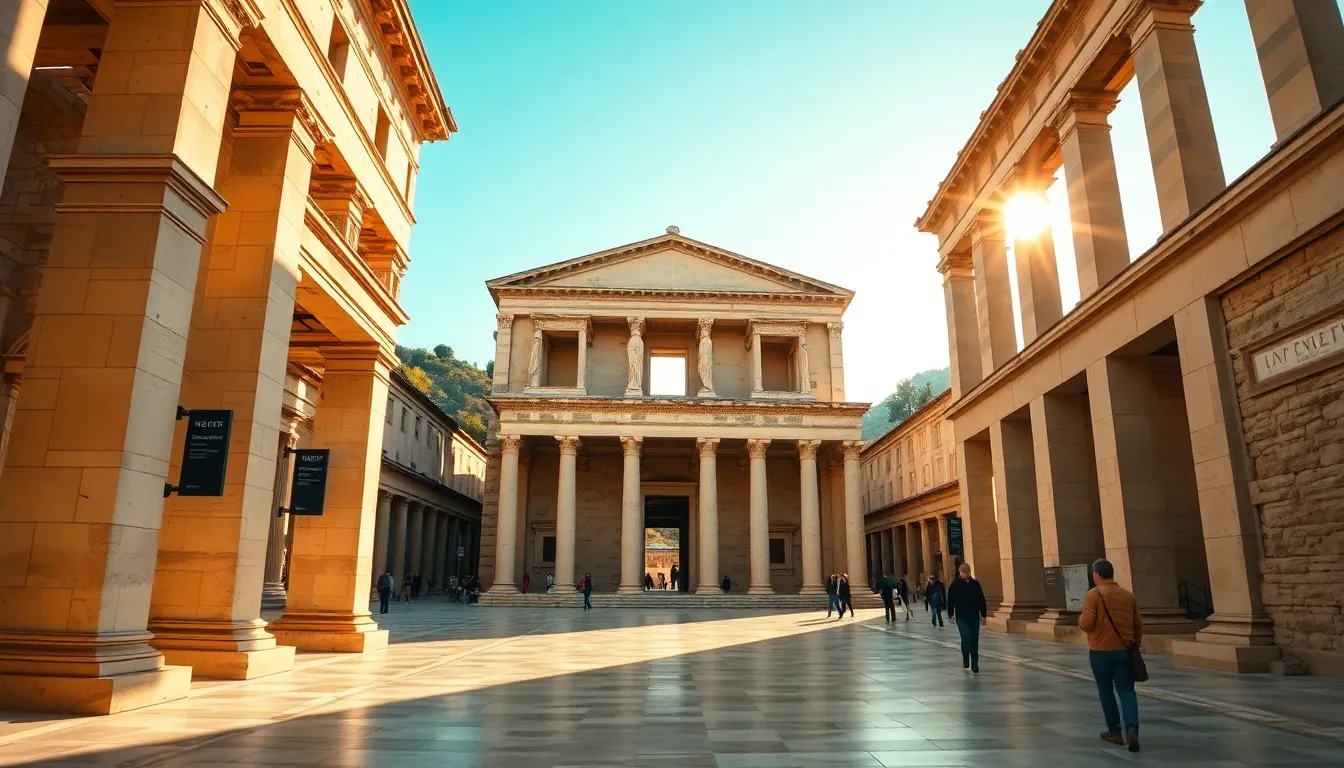
I have stood in a lot of ancient theaters with a lot of groups, but the one at Ephesus does something the others do not. I gather everyone on the stone seats, the same curve that held twenty-five thousand Ephesians, and I read Acts 19 out loud. The riot of the silversmiths, the crowd chanting “Great is Artemis of the Ephesians” for two hours. And then I read Revelation 2, the letter John addressed to the church that worshipped in this very city. People look around at the marble, the empty stage, the hillside, and you can see it land. This is where it happened. This is the first of the seven churches, and it is where the whole circuit begins.
If you are leading a faith group through Turkey, Ephesus is the anchor. Everything else in a Revelation pilgrimage builds from here. Let me walk you through what your people actually see and why it matters.
Why Ephesus Comes First
John addresses seven churches in Revelation 2 and 3, and Ephesus heads the list for good reason. It was the largest and most important city of Roman Asia, a port that connected the province to the wider Mediterranean, and a center of trade, learning, and pagan worship. A courier carrying John’s letter from Patmos would have arrived here first.
It was also the church with the deepest roots. Paul spent close to three years in Ephesus, longer than almost anywhere else, teaching daily in the hall of Tyrannus and seeing the gospel spread across the whole province. His Letter to the Ephesians was written to this community. John is believed to have lived out his final years here. Timothy is traditionally counted as its bishop. When John writes to Ephesus, he is writing to a mature, hardworking, well-taught church.
That is what makes the letter sting.
The Letter to Ephesus
Revelation 2:1 through 7 follows the pattern John uses for all seven churches, and it is worth reading slowly with your group on site. He commends Ephesus warmly. They have worked hard and persevered. They have tested those who claimed to be apostles and found them false. They have not grown weary. They hate the practices of the Nicolaitans, as Christ does.
Then comes the turn. “Yet I hold this against you: You have forsaken the love you had at first.” This is a church that got the doctrine right and let the love go cold. The call is direct. “Remember the height from which you have fallen. Repent and do the things you did at first.” And the promise to the one who overcomes is striking in a city named for the goddess Artemis: “I will give the right to eat from the tree of life, which is in the paradise of God.”
I have found that this letter does more work in a group than almost any other on the circuit. Every congregation knows what it is to be busy and orthodox and somehow distant from the first love. Ephesus names it.
What Your Group Walks Today
Ephesus is one of the best-preserved ancient cities in the Mediterranean, and a half-day stop does not do it justice. Here is what I make sure every group sees.
The Great Theater
This is the heart of the visit. The theater seated around twenty-five thousand and still stands, cut into the slope of Mount Pion. Acts 19 places the riot of the silversmiths here, when Demetrius and the makers of silver Artemis shrines turned the city against Paul’s preaching because it threatened their trade. Reading that passage in the actual theater is the moment the trip turns from sightseeing to pilgrimage.
The Marble Street and the Library of Celsus
The marble-paved main street runs downhill past the agora to the Library of Celsus, whose reconstructed two-story facade is the most photographed sight in Ephesus. Your group is walking the same stones the early Christians walked to gather, trade, and worship. The scale tells them what kind of city the gospel had to make its way through.
The Terrace Houses
These are worth the extra ticket. The terrace houses are the preserved homes of wealthy Ephesians, with mosaics and frescoes still on the walls and floors. They show how the comfortable classes lived, which makes the letter’s warning about lost first love feel concrete. This is the world the Ephesian Christians lived inside.
The Temple of Artemis and the Basilica of St. John
A short distance from the main site lie the scattered remains of the Temple of Artemis, once one of the seven wonders of the ancient world, now reduced to a single reconstructed column. Nearby in Selcuk stands the Basilica of St. John, built by Emperor Justinian over the traditional burial site of the apostle John. For a Revelation pilgrimage, this is meaningful ground. Tradition holds that John, the author of Revelation, lived and died here.
Pairing Ephesus With the House of the Virgin Mary
On the wooded hillside above Ephesus sits the House of the Virgin Mary, where tradition says Mary spent her final years after John brought her here. Multiple popes have prayed at the site, and it is sacred to Muslims as well as Christians. Because it is minutes from the main ruins, almost every group folds it into the Ephesus day. It is quiet in the morning, and groups consistently name it among the most moving stops of the whole trip. Our spiritual sites in Turkey hub covers the House of Mary in more depth.
How Ephesus Fits the Seven Churches Circuit
Ephesus is day one of the loop. From here the route runs north to Smyrna and Pergamon, then inland to Thyatira and Sardis, and finishes at Philadelphia and Laodicea. Reading the letters in order, starting here, is what turns seven ruins into one story. Our seven churches pilgrimage guide maps the full route, and the Smyrna persecuted church and Pergamon and Satan’s throne guides cover the next two stops in detail.
A practical word on timing. Ephesus gets crowded, and the marble can throw heat by midday. I always arrange an early morning entry, before the cruise-ship groups arrive from Kusadasi. It changes the experience completely. You can read Acts 19 in the theater without competing with three other tour guides on loudspeakers.
If you are building this for a congregation, it helps to know that with Heritage Tours the group leader travels free when you bring fifteen or more participants. For a pastor planning a Revelation trip, that math matters early.
FAQ: Ephesus and the Church of Revelation
Why is Ephesus the first of the seven churches of Revelation?
Ephesus was the largest and most important city of Roman Asia and the natural first stop for a courier carrying John’s letter from Patmos. It was also the most established of the seven churches, with deep roots from Paul’s nearly three-year ministry and John’s later years in the city. Revelation lists it first, and a pilgrimage built on the biblical order begins here.
What does the letter to Ephesus actually say?
In Revelation 2:1 to 7, John commends the Ephesian church for its hard work, perseverance, and rejection of false teaching, then rebukes it for forsaking the love it had at first. The call is to repent and return to that first love, with the promise that the one who overcomes will eat from the tree of life.
What can a group see at Ephesus today?
The great theater where the Acts 19 riot took place, the marble street, the Library of Celsus, the terrace houses with their mosaics, the agora, the remains of the Temple of Artemis, and the nearby Basilica of St. John. Most groups also visit the House of the Virgin Mary on the hillside above the city.
How much time should a faith group spend at Ephesus?
Plan a full day. A half-day stop only scratches the surface and leaves no room to read scripture on site or visit the House of Mary and the Basilica of St. John. An early morning entry avoids the cruise crowds and gives your group quiet time in the theater.
Did the apostle John really live and die at Ephesus?
Strong early tradition holds that John spent his final years in Ephesus and was buried there. The Basilica of St. John in Selcuk was built over the traditional burial site. While not provable by archaeology, the tradition is ancient and widely held, which is why Ephesus carries such weight on a Revelation pilgrimage.
If Ephesus is where you want your congregation’s Revelation journey to begin, I would be glad to help you build it. The theater, the letter, and the first-love message belong together, and they hit hardest when your people are standing in them. You can see how we structure these trips on our Turkey destination page and the group heritage tours page. Contact us whenever you are ready.