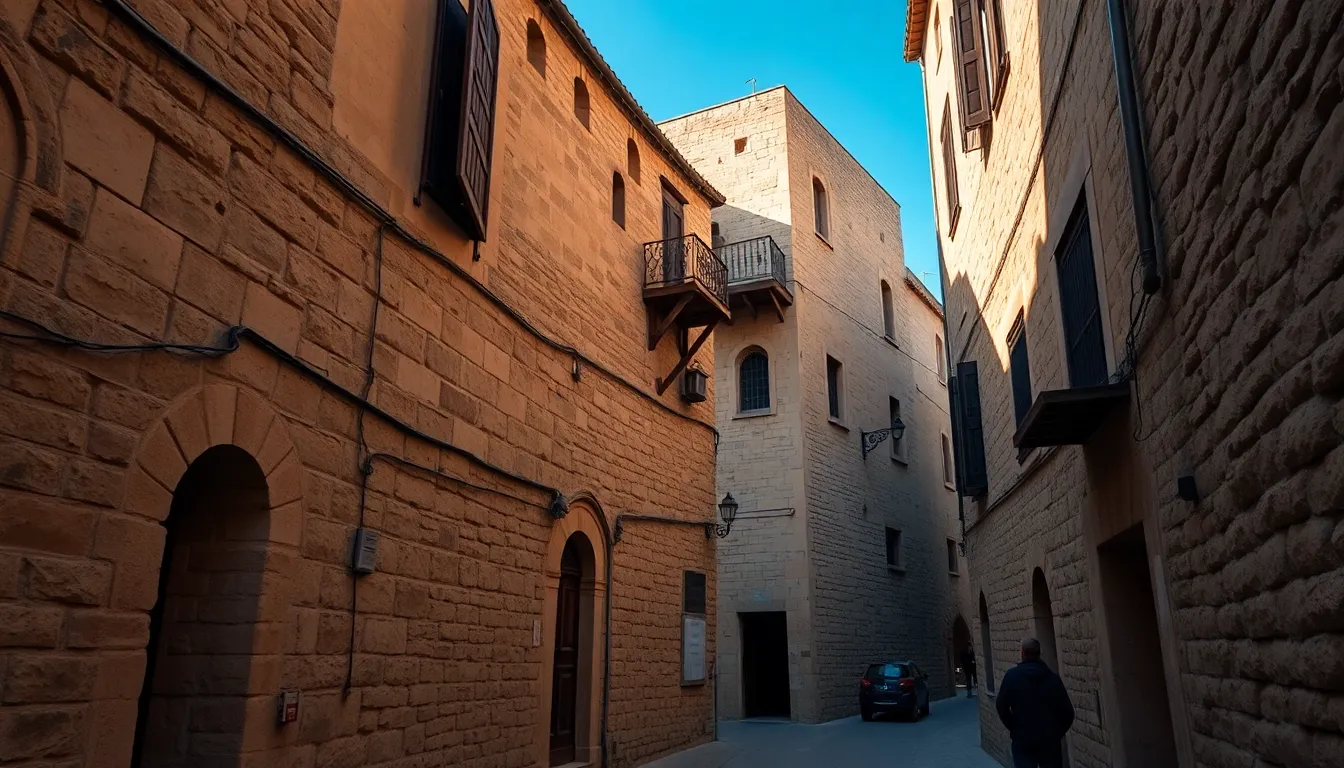
I tell every group the same thing before we walk into the Juderia of Toledo: slow down. The instinct on a heritage trip is to march from one famous building to the next, checking sites off a list. The Juderia does not reward that. The lanes themselves are the site. The two synagogues are the anchors, but the streets between them, the doorways, the stone underfoot, the way the buildings lean in over your head, that is where the medieval Jewish community of Toledo actually lived. You feel it by walking it slowly, not by hurrying to the next door.
If you are a rabbi or an educator planning a Spain journey, the Juderia of Toledo is one of the places your group will remember most. Let me walk you through what it is and what a visit really looks like on the ground.
What the Juderia Was
For roughly seven centuries, Toledo held one of the most important Jewish communities in all of medieval Europe. At its height, the Jewish population numbered in the thousands, concentrated in a quarter on the western side of the old city, sloping down toward the Tagus River. This was not a ghetto in the later, enforced sense. For long stretches it was a thriving, semi-autonomous neighborhood with its own synagogues, schools, markets, bathhouses, and institutions.
Toledo’s Jews were translators, physicians, financiers, scholars, and craftsmen. The famous translation schools of Toledo, where Arabic and Hebrew works were rendered into Latin and passed into the rest of Europe, depended on Jewish scholars. When people talk about the Golden Age of Spanish Jewry, Toledo is one of the cities they mean.
I make sure groups understand the scale before we walk in. This was not a handful of families. This was a civilization within a city, and what survives today is a fragment of what once filled these streets.
The Two Synagogues: The Anchors of the Walk
Toledo holds two of the only three medieval synagogues left standing in all of Spain, and both are in the Juderia. They are the structural backbone of any group visit here.
El Transito
El Transito, built in 1357 by Samuel Halevi, the treasurer to King Pedro I, is the more historically rich of the two. Its walls are covered in Mudejar stucco and bands of Hebrew inscription, and it now houses the Sephardic Museum, the national museum of Spanish Jewish history. I usually give this building the most time on the walk, both for the prayer hall and for the museum, which gives the whole quarter its historical frame.
Santa Maria la Blanca
A few minutes away stands Santa Maria la Blanca, the older of the two, built around 1180. It is the hall of white horseshoe arches that looks, to most first-time visitors, more like a mosque than a synagogue, a direct testament to the shared craftsmanship of medieval Toledo. It was taken from the community and converted to a church in the early 15th century, an early loss that came before the 1492 expulsion.
Seeing both in one walk is the right way to do it. They are different in age, in feel, and in story, and the contrast teaches more than either one alone.
The Lanes a Group Walks
Beyond the two synagogues, the Juderia itself is the experience, and these are the things I make sure a group notices.
Calle del Angel and the Heart of the Quarter
The streets around the synagogues, Calle del Angel and the lanes branching off it, carry the medieval grain of the neighborhood. The buildings are tall and close, the streets narrow enough in places that you can touch both walls. This compression is not an accident. It is how the quarter was built, and walking it gives your group a bodily sense of medieval urban Jewish life that no photograph delivers.
Doorways, Mezuzah Marks, and Quiet Traces
Scattered through the quarter, if you know to look, are traces the casual tourist walks right past. Worn grooves on a few doorposts where a mezuzah once sat. Old stone thresholds. Plaques and tile markers the city has placed to identify the Juderia. I point these out as we go, because they turn an attractive old neighborhood into your community’s specific inheritance.
The Sephardic Markers and the River View
Modern Toledo has marked the Juderia with menorah symbols set into the pavement and signage tracing the historic route. Down toward the edge of the quarter you reach viewpoints over the Tagus, the same river the medieval community lived above. I like to end the walk somewhere with a view, because it gives the group a place to stop, breathe, and absorb where they have been.
How I Structure the Walk for a Group
A few practical notes from leading this many times.
Toledo is built on a hill and the Juderia slopes. The lanes are cobbled and uneven, and there are steps. For a mixed-age group, I keep the pace gentle and build in places to rest. This is a walk to savor, not a hike to endure.
I plan the synagogues around their opening hours and ticketing, and I leave unstructured time in the lanes between them rather than booking every minute. The quarter is best when a group has room to wander a little, to step into a quiet doorway, to read a plaque without being rushed to the next stop.
A full Juderia visit, both synagogues plus the walk between and around them, runs about two and a half to three hours done properly. Rushing it to ninety minutes is possible but I do not recommend it. Your community came a long way to be here.
Holding the Story With Dignity
The Juderia is a beautiful neighborhood and it is also the scene of real tragedy. The community that built it was attacked in 1391, saw its synagogues taken, and was finally expelled in 1492 along with all the Jews of Spain. I do not walk groups through these streets pretending that did not happen.
But I also frame it the way I frame the whole Spain trip. The expulsion was not the end of this community. The people who lived in these lanes carried Toledo with them, into the Ottoman lands, into North Africa, into Sephardic communities that kept Toledo’s melodies and Ladino alive for five hundred years. When your group walks the Juderia, they are not visiting a graveyard. They are walking the source of a story that is still being told. I make sure people leave understanding both the loss and the survival.
FAQ: Visiting the Juderia of Toledo
What is the Juderia of Toledo?
It is the historic Jewish quarter of Toledo, home for roughly seven centuries to one of medieval Europe’s most important Jewish communities. It sits on the western side of the old city, sloping toward the Tagus River, and still contains two of Spain’s three surviving medieval synagogues along with a network of atmospheric medieval lanes.
How long does it take to walk the Juderia?
Done properly, with both synagogues and the streets between and around them, plan for about two and a half to three hours. The two synagogues anchor the visit, but the lanes themselves are a major part of the experience and reward a slow, unhurried pace.
What are the main sites in the Toledo Juderia?
The two surviving synagogues are the anchors: El Transito, which houses the Sephardic Museum, and Santa Maria la Blanca, the older hall of white horseshoe arches. Beyond them, the quarter offers medieval lanes such as Calle del Angel, paving markers tracing the historic route, and viewpoints over the river.
Is the Juderia accessible for older group members?
It requires some care. Toledo is hilly, the quarter slopes, and the lanes are cobbled with occasional steps. With a gentle pace and planned rest stops, mixed-age groups manage it well. We build the walk around your group’s comfort rather than a fixed timetable.
Why visit the Juderia rather than just reading about Spanish Jewish history?
Because the streets carry what a book cannot. Standing in the narrow lanes, reading the Hebrew on the synagogue walls, looking down at the same river the community lived above, makes the history personal and present. For a faith community, walking the place together turns history into shared memory.
If Toledo’s Juderia is part of the journey you are picturing, I would welcome the chance to talk it through. Heritage Tours builds each Spain itinerary around the history and interests of your specific group, and with fifteen or more participants the group leader travels free. You can read more about Jewish heritage in Spain or see how we run our group heritage tours.
Contact us whenever you are ready to start planning.