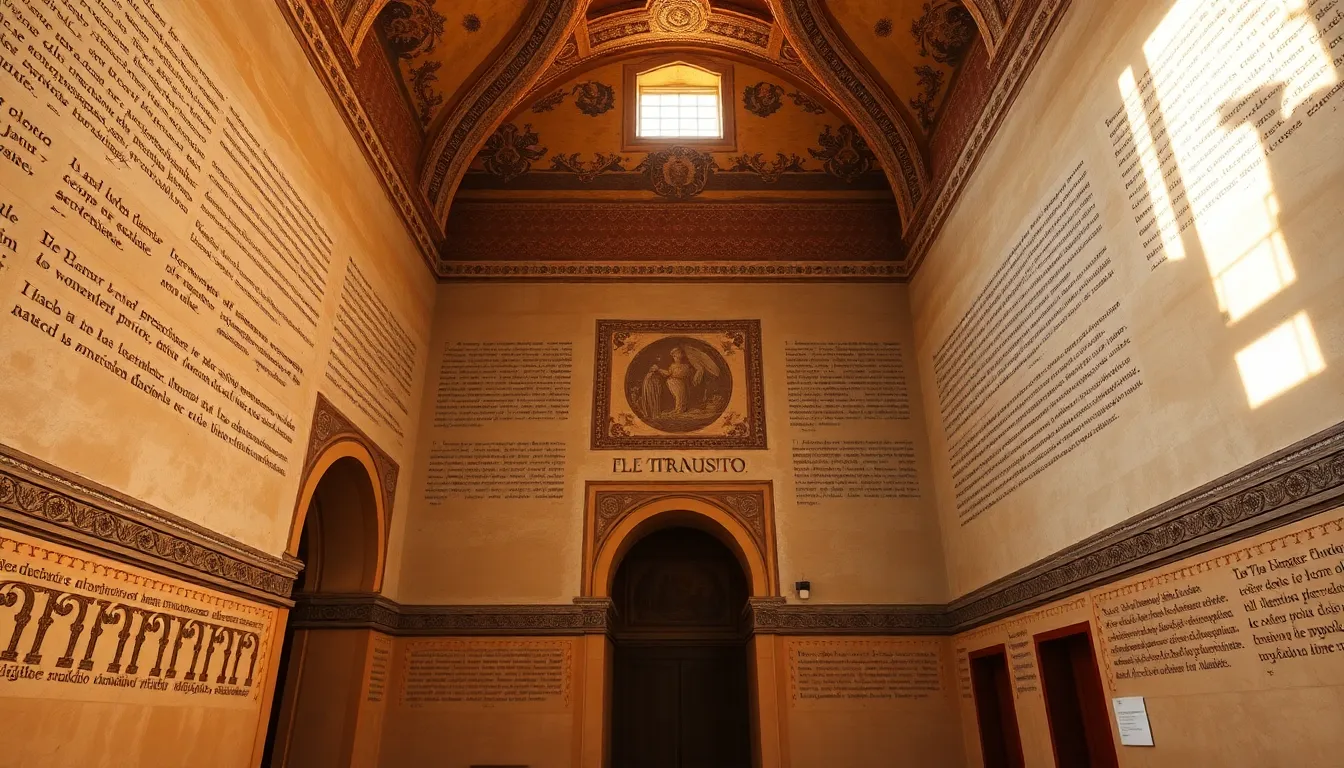
The first time I brought a group into El Transito, nobody spoke for a while. We walked in out of the bright Toledo street, and the room just held everyone. People stood looking up at the walls, reading the Hebrew, running their eyes along the carved stucco, and I have learned over the years to simply let that silence sit. There is no rush. The building has been here since 1357. It can wait a few minutes for a group to catch its breath.
If you are a rabbi or an educator thinking about bringing your community to Spain, El Transito is one of the rooms you will plan around. Let me walk you through what it is, why it matters, and what your group actually experiences when they step inside.
What El Transito Is, and Who Built It
El Transito was built around 1357 by Samuel Halevi Abulafia, the treasurer and trusted advisor to King Pedro I of Castile. That detail matters more than it first appears. Halevi was a Jew operating at the highest level of a Christian royal court, wealthy and powerful enough to commission a private synagogue beside his own home. The building is evidence of how far a Jewish family could rise in 14th-century Castile, and, as it turned out, of how quickly that could be taken away. Halevi was arrested, his property seized, and he died in custody not long after the synagogue was finished.
The formal name was the Synagogue of Samuel Halevi. The name El Transito came centuries later, after the building had been converted to a church and given over to an order that dedicated it to the Transit of the Virgin. The name your group sees on the door today is a Christian one. That is part of the story, and I always make sure people understand it before we go in.
The Mudejar Walls: What Your Group Looks At
The single most striking thing about El Transito is the decoration. From the outside, the building is plain, almost severe brick. Inside, the upper walls are covered in Mudejar stucco work of extraordinary delicacy.
Mudejar is the term for the style produced by Muslim craftsmen working under Christian rule. So here is what your group is actually standing inside: a Jewish synagogue, commissioned by a Jewish official of a Christian king, decorated by Muslim artisans. Three faiths in the plasterwork of a single room. I have never found a more direct way to explain the cultural braid of medieval Spain than to point at that ceiling and let people see it for themselves.
The Hebrew Inscriptions
Running along the walls are bands of Hebrew text, mostly Psalms, carved into the stucco alongside geometric and floral patterns. There are also inscriptions praising Samuel Halevi and King Pedro, which is its own quiet lesson in the politics of the moment. When your group can read Hebrew, this is where the room comes alive. People recognize the verses. They start reading aloud, softly, almost without meaning to. For a community standing in a building their ancestors prayed in, reading the same words off the wall is a moment that does not need any commentary from me.
The Coffered Ceiling
Look up further and there is a carved wooden ceiling, the kind of artesonado woodwork Toledo was known for. It is worth pointing out, because most groups are so taken with the walls that they forget to raise their eyes the final few feet.
The Sephardic Museum Inside
What makes El Transito a longer visit than the building alone would suggest is that it now houses the Sephardic Museum, the national museum of Spanish Jewish history. The exhibits occupy rooms around and beside the prayer hall.
The museum does honest, careful work. It traces Jewish life in Spain from the Roman and Visigothic periods, through the Golden Age, into the daily texture of medieval community life, and through the expulsion of 1492 and the Sephardic diaspora that followed. The collection includes tombstones, ritual objects, ketubot, manuscripts, and textiles. For an educator, it is a gift, because it gives the building a full historical frame rather than leaving your group to fill in eight centuries on their own.
I usually structure the visit so the group experiences the prayer hall first, in silence, and then moves into the museum to understand what they have just stood inside. Doing it in that order tends to land better than walking through the exhibits first.
How a Group Moves Through El Transito
A few practical notes from leading groups here.
The space is not large. The prayer hall holds a tour group comfortably but not a crowd, so timing your entry matters in peak season. The museum portion adds real time, and a group that wants to read the panels properly should budget around ninety minutes for the whole site rather than the twenty minutes some itineraries allow.
El Transito sits in the heart of the old Jewish quarter, the Juderia of Toledo, within an easy walk of Santa Maria la Blanca, the other surviving Toledo synagogue. Most groups see both in the same morning, and I recommend that pairing. Seeing them back to back lets your community feel the difference between them, the airy white arches of one and the dense, written walls of the other.
Photography rules change from time to time, so I confirm the current policy with each group rather than promising anything in advance. Modest dress is appropriate, as it is in any house of worship turned heritage site.
Holding the Loss With Dignity
I want to say something about how I handle this building emotionally, because group leaders ask me about it.
El Transito is beautiful, and it is also a wound. It was a synagogue for less than a hundred and fifty years before it was taken, converted, and used for everything from a church to a barracks. The community that built it was expelled. There is grief in this room, and I do not paper over it.
But I also do not let the visit end in grief. The Sephardic Museum exists because that community survived. They carried Ladino, their melodies, their cooking, and their prayers across the Mediterranean and kept them alive for five centuries. The expulsion is not the end of the story, it is the middle of it. I make sure every group leaves El Transito understanding both halves: what was lost here, and what refused to be lost.
FAQ: Visiting the El Transito Synagogue in Toledo
Is the El Transito Synagogue still a working synagogue?
No. It has not held regular Jewish worship since the expulsion of 1492. Today it is a museum and a national heritage site, home to the Sephardic Museum. Groups visit it as a historical and spiritual site rather than for services, though many find it deeply meaningful to read the Hebrew inscriptions and reflect there together.
What is the difference between El Transito and Santa Maria la Blanca?
They are the two surviving medieval synagogues of Toledo, a short walk apart. El Transito, built in 1357, is known for its dense Mudejar stucco and Hebrew inscriptions, and it houses the Sephardic Museum. Santa Maria la Blanca is older, with white horseshoe arches and a more open, airy feel. Most groups visit both in one morning.
How long should a group spend at El Transito?
Plan for about ninety minutes if you want time in both the prayer hall and the Sephardic Museum. The prayer hall itself can be experienced in fifteen to twenty minutes, but the museum rewards a slower walk, and rushing it means missing the historical frame that makes the building make sense.
Can our group read the Hebrew inscriptions inside?
Yes. The walls carry bands of Hebrew text, largely from the Psalms, carved into the stucco. Groups with Hebrew readers often find this the most moving part of the visit. We build in time for it rather than treating the room as a quick photo stop.
Is El Transito suitable for a synagogue or church heritage group?
Very much so. For Jewish groups it is one of the most significant surviving sites of Sephardic life in the world. For Christian and educator groups, it tells the layered story of three faiths in medieval Spain and the history of the expulsion. We tailor the framing of the visit to your community.
If El Transito is on your mind for your congregation’s journey, I would welcome the chance to talk it through. Heritage Tours builds each Spain itinerary around the interests and history of your specific group, and with fifteen or more participants, the group leader travels free. You can see how we structure these journeys on our group heritage tours page, or read more about Jewish heritage in Spain to plan the wider trip.
Contact us whenever you are ready to start the conversation.