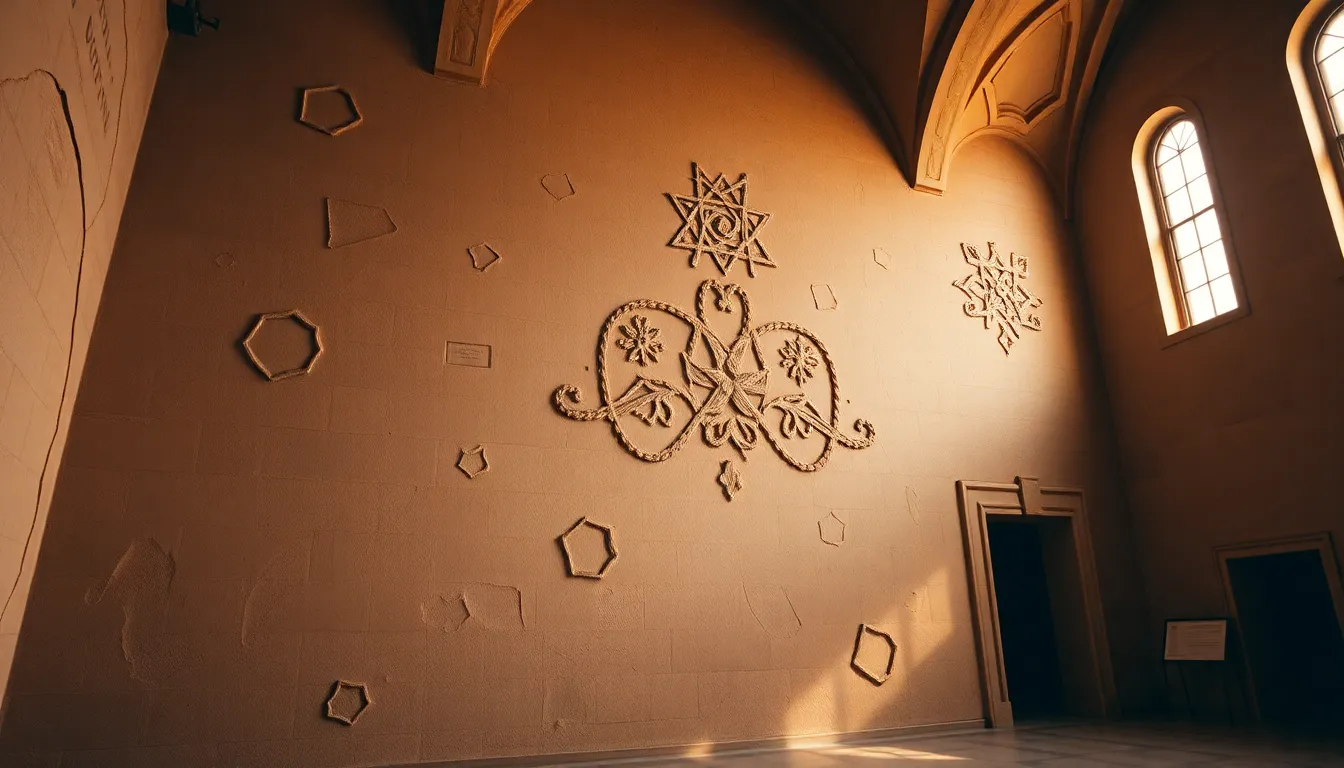
Of all the places I take groups in Spain, the Sephardic Museum in Toledo is the one I most often see people fall quiet in. They walk in expecting a museum. They get one. But the museum lives inside a 14th-century synagogue, and the moment people understand that the building itself is the most important object in the collection, something changes in the room. They stop reading labels and start looking up.
Let me tell you what is here and how a group can take it in properly, because this is a place that rewards a leader who knows what to point at.
A Museum Inside a Synagogue
The Sephardic Museum is housed in the Synagogue of El Transito, in the old Jewish quarter of Toledo. The synagogue was built around 1356 by Samuel ha-Levi Abulafia, the treasurer to King Pedro I of Castile. That detail matters. A Jew served as treasurer to a Christian king and built one of the most beautiful synagogues in medieval Europe with the wealth and standing that came with the post. The building is a record of a moment when Jewish life in Spain reached extraordinary heights, shortly before it was destroyed.
The main prayer hall is what stops people. The upper walls are covered in carved stucco of staggering delicacy, Hebrew inscriptions running in bands around the room, psalms and praise worked into the plaster alongside geometric and floral patterns. The ceiling is carved cedar. The overall effect is so close to Islamic Mudejar art that visitors often assume they have walked into a mosque. That blending is the point. This was a Jewish house of prayer built by Muslim-trained craftsmen for a community living inside a Christian kingdom. It is convivencia made visible in a single room.
After the expulsion of 1492, the building was taken over and used as a church for centuries. It was declared a national monument in the late 1800s, and in 1964 it became the home of the Sephardic Museum.
What the Collection Holds
The museum tells the story of Sephardic Jewry, the Jews of Spain and their descendants, across the whole arc of that history. The galleries built around the prayer hall walk you through Jewish life in medieval Iberia: ritual objects, tombstones with Hebrew inscriptions, ketubot, textiles, manuscripts, and everyday items that bring the community out of abstraction.
What I always make sure my groups see is the way the museum handles 1492 and after. It does not stop at the expulsion. It follows the Sephardim out into the diaspora, into the communities they built in North Africa, the Ottoman Empire, the Balkans, and the Mediterranean, carrying their Ladino language, their melodies, and their Toledo memory with them for five hundred years. For a Jewish group, that continuity is the comfort inside the grief. The community was expelled. The community was not erased.
There is also an archaeological garden and a section of the original women’s gallery. The fragments of carved stone and the funerary inscriptions are worth slowing down for. They are the actual stones, not reproductions.
Why This Place Lands So Hard for Groups
I have led a lot of synagogue visits, and El Transito is different because of the layering. You are standing in a Jewish prayer hall, built at the height of Jewish prosperity in Spain, by a man who served at the royal court, decorated in a style borrowed from Muslim Spain, later seized and turned into a church, and now a museum that exists because the community it served was driven out. Every one of those layers is in the room with you at once.
For a rabbi bringing a group, I usually suggest doing the prayer hall last rather than first. Walk the galleries, build the story, understand who Samuel ha-Levi was and what this community had, and then step into the hall. When people enter that room already carrying the history, the carved walls hit differently. I have had groups sing there, quietly, with permission. I have had groups simply stand. Both work.
For a Christian group, El Transito is one of the clearest possible windows into the world that produced so much of what they read, and into the cost of the expulsion. It makes the Sephardic story concrete in a way no lecture can.
Visiting With a Group
The Sephardic Museum sits in the heart of old Toledo’s Jewish quarter, the Juderia, a short walk from the other major synagogue in the city, Santa Maria la Blanca. Doing both in one visit is the natural move, and most of my Toledo days include them together.
It is a state museum with regular hours, generally open Tuesday through Sunday and closed on Mondays, with reduced hours on some afternoons and holidays. Admission is modest. Group entry is straightforward, but for a heritage group I strongly recommend a licensed local guide or arranging access with enough lead time, because the difference between reading the labels and having someone unpack Samuel ha-Levi, the inscriptions on the walls, and the diaspora galleries is enormous. We coordinate that so your leader can focus on the group rather than the logistics.
A realistic visit is sixty to ninety minutes inside, longer if your group reads carefully and lingers in the prayer hall, which they will. The surrounding Juderia is worth time on its own. The lanes are narrow and quiet in the early morning, and walking them before the day-trip crowds arrive is the version I always try to give my groups.
Toledo itself is usually a day trip from Madrid or an overnight, and the Sephardic Museum is the anchor of any heritage day in the city. Pair it with Santa Maria la Blanca, the Cathedral if your group wants the fuller Toledo picture, and a slow walk through the old quarter.
FAQ: Visiting the Sephardic Museum of Toledo
What is the Sephardic Museum in Toledo?
It is a national museum dedicated to the history of Sephardic Jewry, housed inside the 14th-century Synagogue of El Transito in Toledo’s old Jewish quarter. The building itself, with its carved stucco walls and Hebrew inscriptions, is the centerpiece. The galleries around it trace Jewish life in medieval Spain and follow the Sephardim into the diaspora after 1492.
Why is the El Transito synagogue significant?
It was built around 1356 by Samuel ha-Levi Abulafia, treasurer to King Pedro I of Castile, at the height of Jewish standing in medieval Spain. Its decoration blends Jewish, Christian, and Muslim artistic traditions in one room, making it a vivid record of convivencia. After 1492 it was turned into a church, and it became the Sephardic Museum in 1964.
How long should a group spend at the museum?
Plan for sixty to ninety minutes inside, and longer if your group reads the galleries closely and wants time in the main prayer hall. Many groups pair it with the nearby Santa Maria la Blanca synagogue and a walk through the surrounding Juderia, which makes a half day in old Toledo.
Is the Sephardic Museum suitable for Christian groups too?
Very much so. For Christian travelers it is one of the clearest windows into the Jewish world of medieval Spain and into the human cost of the 1492 expulsion. Pastors I work with find it a powerful and honest stop. The building and the diaspora galleries make the Sephardic story concrete rather than abstract.
When is the museum open and do groups need to arrange entry?
It is generally open Tuesday through Sunday and closed Mondays, with reduced hours on some afternoons and holidays. Admission is modest and group entry is straightforward, but I recommend booking a licensed guide and arranging access ahead of time. We handle that coordination so your day in Toledo runs smoothly.
Toledo is where the Sephardic story stops being a date in a book and becomes a room you can stand in. If you want your community to encounter it that way, with the history laid out so the prayer hall lands the way it should, I would love to help you build the day. You can explore our Spain heritage tours, see how our group journeys work, or read more on Spain’s hidden heritage sites, the Jewish history museum in Girona, and the Alhambra and the year 1492.
Contact us when you are ready to start the conversation.