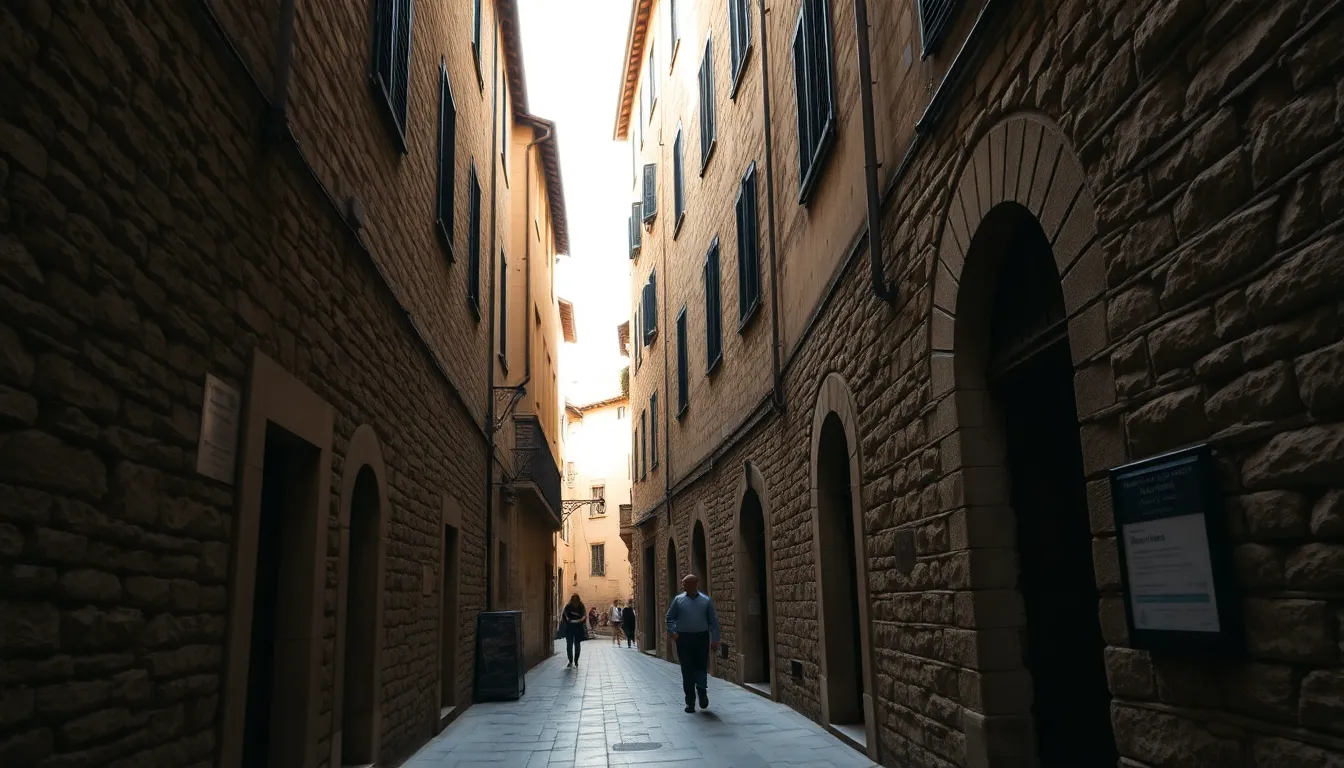
The first time I brought a group into the Bonastruc ca Porta Center, one of the rabbis traveling with me put his hand flat against the old stone wall and just stood there. He had read about Nachmanides his whole life. He had taught from him. And here he was, inside the building complex that carries the rabbi’s name, in the quarter where the man actually lived and led. That is the thing about this place. It is not a museum that explains Jewish Girona from a distance. It is standing inside it.
Let me walk you through what the center is, who Nachmanides was, and how a heritage group should approach a day in the Girona Call.
What Bonastruc ca Porta Is
Bonastruc ca Porta is the name of a cultural complex in the middle of Girona’s Call, the city’s medieval Jewish quarter. The complex includes the Museum of Jewish History and the Nahmanides Institute for Jewish Studies. It sits on the site of what was the last synagogue of the Girona community before the expulsion, and the name itself is the Catalan name of the great medieval rabbi the city is most proud of.
“Bonastruc ca Porta” is widely understood to be the Catalan name of the rabbi the Jewish world knows as Nachmanides, or by the acronym Ramban. Whether or not every scholar agrees the identification is airtight, the city has built its Jewish heritage center around that connection, and for good reason. Girona was home to one of the most important rabbinic and kabbalistic communities in medieval Europe, and Nachmanides is its towering figure.
The center is built around quiet courtyards and stone halls. As you move through it, you are moving through the actual fabric of the medieval Call, not a reconstruction.
Who Nachmanides Was, and Why Girona Holds Him
For travelers who do not know the name, I take a minute on this, because it changes how people see the whole quarter.
Nachmanides, born in Girona around 1194, was one of the foremost rabbis, biblical commentators, and kabbalists of the Middle Ages. His commentary on the Torah is still studied in yeshivot today, eight centuries later. He was a physician, a philosopher, and a leader of his community.
He is also remembered for an event that bears directly on the heritage story this center tells. In 1263 he was compelled to take part in the Disputation of Barcelona, a public religious debate staged before King James I of Aragon, in which he was forced to defend Judaism against a convert pressing the Christian case. By most accounts he held his own with courage and skill. He paid for it. The pressure that followed eventually drove him from Spain, and he spent his final years in the Land of Israel, helping to renew Jewish life in Jerusalem and Acre.
That arc, a brilliant leader pushed out of the country he served, is the Sephardic story in miniature, two centuries before 1492 made it final.
What the Museum Tells
The Museum of Jewish History walks a group through the full life of the Girona community, which existed here for roughly six hundred years, from the late 9th century to the expulsion in 1492. The galleries cover daily life, religious practice, the structure of the community, and its scholarship, with Girona’s reputation as a center of Kabbalah given its due.
What I find the museum does especially well is the ending. It does not flinch from the expulsion and the long erasure that followed, when the Call’s houses were absorbed into the city and the Jewish quarter was nearly forgotten. The galleries also handle the funerary stones from Montjuic, the old Jewish cemetery of Girona, with real care. Those inscribed stones are among the most affecting objects in the collection, the names of people who lived and died here, in their own language, in their own hand.
Why the Call Itself Is the Real Site
Here is what I tell every group: the museum is excellent, but do not spend all your time indoors. The Girona Call is one of the best-preserved Jewish quarters in all of Europe, and the streets are the experience.
The lanes are narrow, steep, and stone, winding up the hillside in a way that has barely changed in seven hundred years. You can stand in passages so tight your group has to walk single file, under arches and stairways that the community itself used. Unlike Toledo, the Call is not overrun. There is room to stop, to talk, to let a moment land. I have stood my groups in those lanes and read a few lines of Nachmanides aloud, and the quiet does the rest.
The combination is what makes Girona special: the museum to carry the story, and the streets to feel it.
Visiting With a Heritage Group
The Bonastruc ca Porta Center is generally open daily, with shorter hours on Sundays and holidays, and admission is modest. Group visits are well handled here. Girona is genuinely set up to welcome Jewish heritage travelers, and that shows.
For a heritage group I always arrange a licensed local guide who knows the Call street by street. The difference between wandering the lanes on your own and walking them with someone who can point to where the synagogue stood, where the mikveh was, and how the community fit into the medieval city is the difference between a nice walk and an encounter. We coordinate the guide and the museum entry together.
Plan for two to three hours to do the center and the Call properly: an hour or so inside the museum, then unhurried time in the streets. Girona is an easy day trip from Barcelona, about forty minutes by fast train, which makes it one of the most accessible deep heritage stops in Spain. It pairs beautifully with Besalu’s medieval mikveh a short drive north, and many of my groups do the two together for a full day of preserved Jewish Catalonia.
A practical note: the Call is steep and the footing is uneven old stone. It is manageable for most groups, but flag it to anyone who needs to pace themselves, and plan a few natural places to pause.
FAQ: Visiting the Bonastruc ca Porta Center in Girona
What is the Bonastruc ca Porta Center?
It is the Jewish heritage complex in the heart of Girona’s medieval Jewish quarter, the Call. It houses the Museum of Jewish History and the Nahmanides Institute for Jewish Studies, and it sits on the site of the community’s last synagogue. The name is the Catalan name associated with Nachmanides, the great medieval rabbi of Girona.
Who was Nachmanides and why is he tied to Girona?
Nachmanides, also known as Ramban, was born in Girona around 1194 and became one of the leading rabbis, Torah commentators, and kabbalists of the Middle Ages. He was forced into the public Disputation of Barcelona in 1263 and later left Spain for the Land of Israel. Girona honors him as its greatest Jewish figure, and the heritage center carries his Catalan name.
Is the museum worth it, or should we just walk the quarter?
Do both, and in that order. The museum gives your group the story of six hundred years of Jewish Girona, including the Montjuic funerary stones and the community’s reputation in Kabbalah. Then the streets of the Call let you feel it. The lanes are among the best-preserved in Europe and far quieter than Toledo, which leaves room for real reflection.
How long should a group plan for Girona?
Plan two to three hours for the center and the Call together, roughly an hour inside the museum and the rest in the streets. Girona is about forty minutes by fast train from Barcelona, so it works well as a day trip, and it pairs naturally with the medieval mikveh in nearby Besalu.
Is the Girona Call accessible for older travelers?
The Call is steep, with narrow lanes and uneven historic stone, so it requires some care. Most groups manage it well with an unhurried pace and a few planned stops to rest. We build the day around your group’s needs and arrange a local guide who knows the easier routes through the quarter.
Girona is the place where the medieval Jewish world of Spain still stands up around you, lane by lane, and where one of the greatest rabbis in Jewish history walked the same stones your group will. If you want your community to meet Nachmanides in his own quarter, I would be glad to help you plan it. You can explore our Spain heritage tours, see how our group journeys work, or read more on Spain’s hidden heritage sites, the Sephardic Museum of Toledo, and the Alhambra and the year 1492.
Contact us when you are ready to start planning.