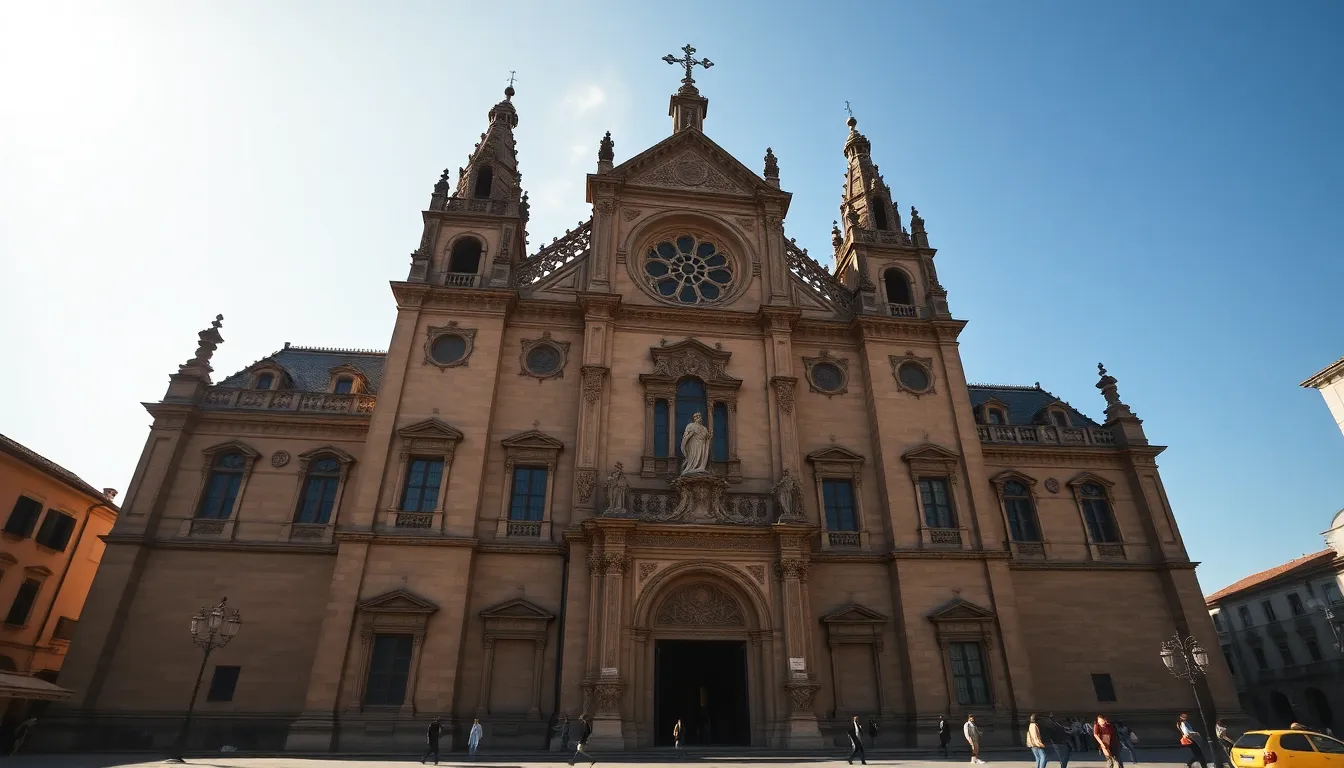
I have walked into the Cathedral of Santiago de Compostela with dozens of groups, and the moment never flattens out. You come through the old town, the lanes narrow, and then the square opens and the cathedral stands there at the end of every pilgrim road in Europe. People go quiet. I have learned to just let them have that minute and say nothing.
Whether your group walks the Camino or arrives by coach, the cathedral is the destination that gives the whole journey its shape. Let me walk you through what is actually inside, so you can prepare your people to receive it rather than just photograph it.
Why This Cathedral Exists
The cathedral exists for one reason: the tomb beneath it. According to the tradition that built medieval Europe’s most-walked pilgrimage, the Apostle James the Greater, one of the twelve and one of the inner three closest to Jesus, was martyred in Jerusalem around the year 44. His followers, the tradition holds, carried his body by sea to the northwestern edge of the Iberian peninsula, where he had preached, and buried him there.
The grave was lost for centuries. Then, in the early 9th century, a hermit named Pelayo was drawn by lights over a field. The local bishop, Theodemar, declared the rediscovered tomb to be that of the apostle. The site took the name Compostela. King Alfonso II came to venerate it, a first church was raised, and the pilgrimage began. The great Romanesque cathedral you see today was begun in 1075 and consecrated in 1211, with the Baroque facade we now recognize added much later.
You do not have to adjudicate the historical questions to share this honestly with a group. What you can say with full confidence is that for more than a thousand years, people have believed the apostle rests here and have shaped their lives around walking to him. That belief is itself one of the great facts of Christian history, and your group is standing inside its consequence.
The Tomb of Saint James
The reason for everything is in the crypt beneath the high altar. There, a silver reliquary holds remains venerated as those of Saint James, alongside two of his disciples. Pilgrims descend a small stairway to stand before it. The space is plain and tight, deliberately so. After the soaring nave above, the smallness of the crypt brings you up against the simple object the whole journey points to.
Just above, behind the high altar, is one of the cathedral’s enduring customs. Pilgrims climb a stairway behind the gilded statue of Saint James and, by tradition, place a hand on the apostle’s shoulder or embrace the image from behind. For centuries this was the gesture that marked the end of the road. I prepare groups for both moments, the embrace above and the tomb below, because taken together they carry the meaning of arrival.
The Botafumeiro
Most people who know anything about this cathedral know the Botafumeiro. It is the giant censer, a thurible of brass and bronze standing about a meter and a half tall and weighing roughly 80 kilograms when loaded with charcoal and incense. Eight men, the tiraboleiros, haul on ropes through a pulley system high in the dome, and the censer swings in a vast arc across the transept, nearly reaching the ceiling on each pass, trailing smoke and a low rush of air you can feel from the pews.
There is a practical origin to it. Medieval pilgrims arrived having walked for weeks, unwashed and exhausted, and the incense purified the air of a crowded church. But the effect is unmistakably more than hygienic. To see it swing is to understand why pilgrims wept when they reached this place.
Here is the part group leaders most need to know. The Botafumeiro does not swing at every Mass. It is used on specific feast days and can be requested for a fee, often arranged in advance by a group or a parish. If seeing it matters to your congregation, it has to be planned, not hoped for. We handle that arrangement when it is the right fit for a group, and I always tell leaders honestly when a particular date does or does not include it.
The Pilgrim’s Mass
The daily Pilgrim’s Mass is the living heart of the cathedral. Held at noon and again in the evening, it welcomes the pilgrims who arrived that day. At the start, the lector often reads out where the arriving pilgrims set off from and by which route, and you hear the geography of the whole continent named aloud. For a group that has just walked even the final stage, hearing your starting point announced is a quiet, powerful thing.
Attending this Mass is not sightseeing. Your group sits among people who have walked for weeks, some of whom are at the end of a journey that meant everything to them. That context is the gift. I encourage groups, whatever their denomination, to enter it as participants in a moment rather than spectators of a ritual.
The Portico de la Gloria
Before you leave, look at the Portico de la Gloria, the Romanesque sculpted portal carved by Master Mateo and completed in 1188. It is one of the masterpieces of medieval European sculpture: Christ in glory at the center, the apostles and prophets ranged around, the elders of the Apocalypse tuning their instruments. For centuries pilgrims pressed a hand to the central column in greeting, and the marble there wore into the shape of fingers. The column is now protected, but the carving itself remains a sermon in stone that rewards slow looking.
How to Plan the Visit
Give the cathedral more time than you think you need. A rushed hour does it an injustice. I build in the Pilgrim’s Mass, time at the tomb, the embrace of the apostle, and quiet looking at the Portico, with margin around it for your people to absorb. The old town outside, a UNESCO World Heritage site, deserves an unhurried afternoon as well.
If your group is arriving on foot, our Camino de Santiago pilgrimage guide and the French Way group guide cover the road that leads here. To prepare your people for the man whose tomb this is, read the heritage of Saint James in Spain. And you can see how the cathedral fits a wider itinerary on our Spain spiritual sites hub and our Spain destination page.
One note for your planning conversation at home: with Heritage Tours, the group leader travels free with fifteen or more participants, which makes bringing a real congregation here far more workable than most leaders expect.
FAQ: Visiting Santiago de Compostela Cathedral
Can you see the tomb of Saint James inside the cathedral?
Yes. The reliquary venerated as holding the remains of Saint James sits in a crypt beneath the high altar, and pilgrims descend a small stairway to stand before it. Just above, behind the altar, visitors can climb to embrace the gilded statue of the apostle, a gesture that has marked the end of the pilgrimage for centuries.
Does the Botafumeiro swing at every Mass?
No. The great censer is used on certain feast days and can be requested for a fee, usually arranged in advance by a group or parish. If seeing the Botafumeiro matters to your group, it must be planned ahead of time rather than left to chance. We arrange it when it suits a group’s dates and budget.
What is the Pilgrim’s Mass and is it open to all?
The Pilgrim’s Mass is the daily service that welcomes the pilgrims who arrived that day, held at noon and again in the evening. It is open to everyone, including non-Catholic groups, and at the start the lector often reads out the starting points and routes of the day’s arriving pilgrims. It is the living heart of the cathedral.
How much time should a group spend at the cathedral?
Plan for at least half a day. That allows time for the Pilgrim’s Mass, the tomb, the embrace of the apostle, and slow looking at the Portico de la Gloria, with margin for your people to absorb it. The surrounding old town, a World Heritage site, deserves additional unhurried time.
Is the cathedral suitable for non-Catholic faith groups?
Yes. Protestant groups visit regularly and find the cathedral and its Pilgrim’s Mass deeply meaningful. The story of the apostle, the thousand-year pilgrimage tradition, and the sheer human reality of people arriving on foot from across Europe speak across denominational lines.
If Santiago is going to be a high point of your congregation’s journey, I would be glad to help you plan the visit so your people arrive ready to receive it. Contact us whenever you want to talk it through.