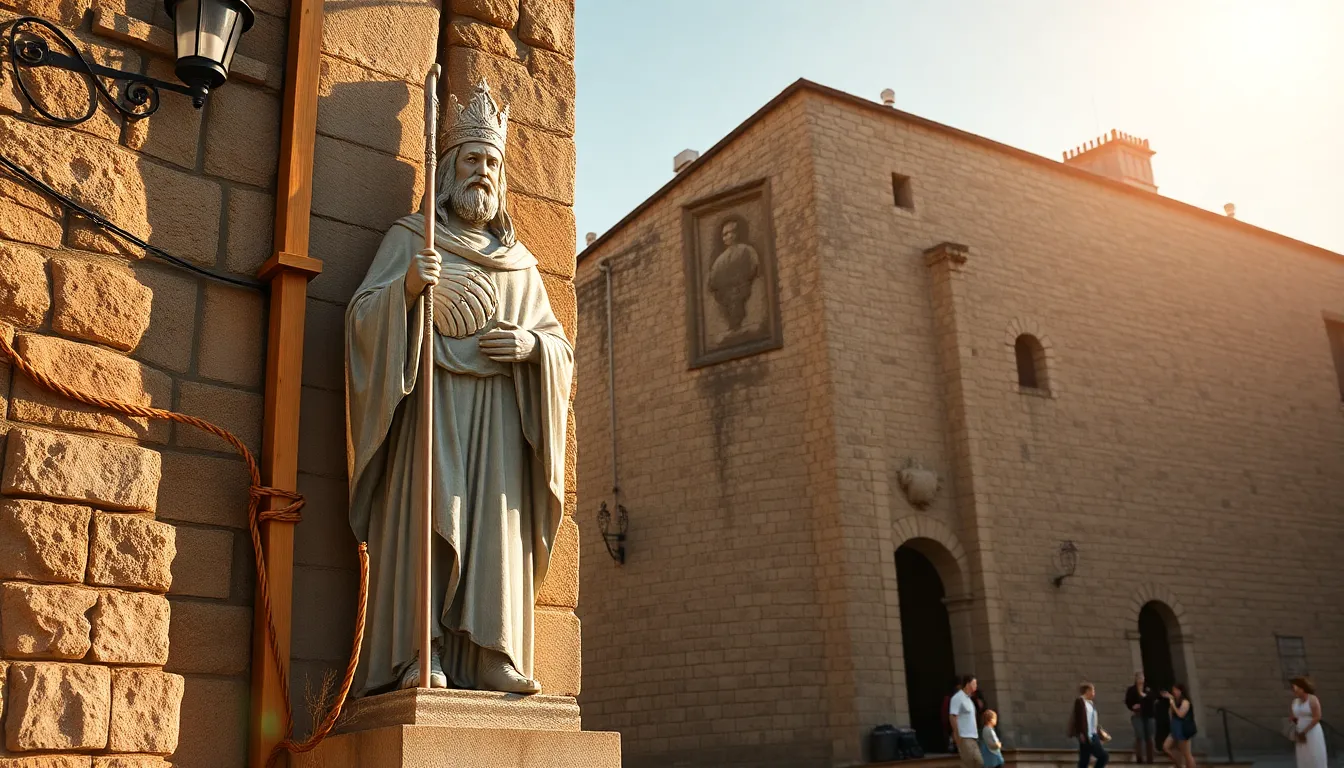
A pastor once stopped me halfway through a tour of Galicia and said, “Help me out here. The man was a fisherman from the Sea of Galilee. How did his bones end up in the far corner of Spain?” It is exactly the right question, and I would rather a group leader ask it out loud than carry a vague unease about it the whole trip.
So before you bring your congregation to the cathedral or the Camino, let me lay out the heritage of Saint James in Spain honestly. Where the tradition comes from, what we can say with confidence, where it shades into legend, and why it built one of the most enduring pilgrimages in the Christian world. You can share all of this with your people in a way that respects both their faith and their intelligence.
Who Saint James Actually Was
Start with the man in scripture, because that part is solid ground. James the Greater was the son of Zebedee and the brother of John. He was a fisherman called by Jesus from his nets on the Sea of Galilee, and he became one of the twelve apostles. More than that, he was one of the inner three, present with Peter and John at the Transfiguration, at the raising of Jairus’s daughter, and in Gethsemane. Jesus nicknamed him and his brother Boanerges, sons of thunder, which tells you something about his temperament.
The book of Acts records his death plainly. Around the year 44, King Herod Agrippa had James put to the sword, making him the first of the apostles to be martyred. That is where the New Testament account ends. Everything that connects him to Spain comes after, from tradition rather than scripture, and a good group leader names that boundary clearly.
The Tradition of James in Iberia
Here is the tradition as it was received and passed down through the medieval church. Before his martyrdom, James is said to have traveled to the Iberian peninsula, then the Roman province of Hispania, to preach the gospel at the western edge of the known world. The mission, the tradition holds, was slow and discouraging, and a vision of the Virgin Mary at Zaragoza encouraged him to persevere, an episode tied to the great devotion of Our Lady of the Pillar.
After his death in Jerusalem, the tradition continues, his disciples carried his body by sea back to the lands where he had preached, landing on the Galician coast, and buried him inland at the site that would become Compostela. The grave then passed out of memory for the better part of eight centuries.
I want to be candid with group leaders about the historical status of this. There is no firm documentary evidence for the journey or the burial, and historians treat the Iberian mission as later tradition rather than established fact. That honesty does not diminish the heritage. The point of the heritage is not to win an argument. It is to understand the faith of the millions who built their devotion on this story and walked across a continent because of it.
The Rediscovery That Started Everything
The pilgrimage was not born in the first century. It was born in the ninth. In the early 800s, a hermit named Pelayo reported strange lights over a remote field in Galicia. The local bishop, Theodemar, investigated and declared the tomb found there to be that of the apostle James. The place took the name Compostela, and King Alfonso II of Asturias traveled to venerate it, becoming, in effect, the first pilgrim.
The timing matters and it is worth understanding. Most of the Iberian peninsula was then under Muslim rule, and the small Christian kingdoms of the north were fighting for survival. A martyred apostle buried on their own soil gave those kingdoms a powerful focus of identity and courage. James became Santiago, and a patron of the Christian north. The image of Santiago Matamoros, James as a mounted warrior, emerged from this struggle, and it is a real and sometimes uncomfortable part of the heritage that thoughtful groups should know about rather than be surprised by.
How the Pilgrimage Rose
Once the tomb was established, the road organized itself around it with remarkable speed. By the 11th and 12th centuries, pilgrims were streaming to Santiago from across Europe. Monasteries, hospitals, bridges, and churches rose to shelter and feed them. A 12th-century manuscript known as the Codex Calixtinus included what amounts to the first pilgrim’s guidebook, describing the route, the peoples along it, and the shrine itself.
Santiago took its place beside Jerusalem and Rome as one of the three supreme pilgrimage destinations of medieval Christendom. To have walked all three was the height of a devout life. The scallop shell, gathered on the Galician coast, became the badge every returning pilgrim wore, and it remains the symbol of the Camino to this day. When your group sees shells set into pavements and walls along the road, that is the heritage marking the way.
Why This Matters for Your Group
When you bring a congregation to Spain in the footsteps of Saint James, you are not visiting a quaint local legend. You are stepping into a thousand-year river of human devotion that shaped the map of Europe, drew the borders of nations, built thousands of churches, and still moves hundreds of thousands of people onto the road every year.
Sharing the heritage honestly, the firm scriptural ground, the cherished tradition, and the historical questions, gives your people something more durable than a sanitized story. It lets them stand at the tomb with open eyes and a full heart at the same time. In my experience that honesty deepens the encounter rather than weakening it.
To follow the heritage onto the ground, see our Camino de Santiago pilgrimage guide for the road itself and our guide to Santiago de Compostela Cathedral for the shrine at its end. The French Way group guide covers the classic route in depth. You can see how the apostle’s story anchors a wider itinerary on our Spain spiritual sites hub and our Spain destination page.
A practical note for your planning: with Heritage Tours, the group leader travels free with fifteen or more participants, which makes leading your congregation into this heritage more achievable than it first looks.
FAQ: The Heritage of Saint James in Spain
Is Saint James really buried in Spain?
The tomb in Santiago de Compostela has been venerated as the burial place of Saint James since its rediscovery in the 9th century. The connection rests on tradition rather than documentary proof, and historians treat the apostle’s Iberian mission and burial as later tradition. What is certain is that for over a thousand years people have believed it and shaped their faith and their journeys around it.
What is Saint James known for in the Bible?
In scripture, James the Greater was a Galilean fisherman, the brother of John, and one of the twelve apostles. He belonged to the inner circle of three closest to Jesus, present at the Transfiguration and in Gethsemane. The book of Acts records that he was martyred under Herod Agrippa around the year 44, the first of the apostles to die for the faith.
How did the pilgrimage to Santiago begin?
It began in the early 9th century, when a hermit’s report of lights over a field in Galicia led the local bishop to declare a tomb there to be that of the apostle. King Alfonso II came to venerate it as the first pilgrim. Over the following centuries the route grew into one of the three great pilgrimages of medieval Christendom, alongside Jerusalem and Rome.
Why is the scallop shell the symbol of Saint James?
The scallop shell was gathered by pilgrims on the Galician coast and worn home as proof they had reached Santiago. Over time it became the universal badge of the pilgrim and the marker of the Camino routes. Today shells are set into pavements, walls, and signposts to guide pilgrims toward the cathedral.
How should I explain the Saint James tradition to my congregation honestly?
Distinguish clearly between what scripture records and what tradition holds. Scripture gives us James the apostle and his martyrdom. The journey to Spain, the burial in Galicia, and the rediscovery are tradition, cherished but not documented. Presenting it this way respects both your group’s faith and their intelligence, and in my experience it deepens rather than diminishes the visit.
If you want help shaping the story of Saint James into a journey your congregation will carry home, I would be glad to talk it through. Contact us whenever you are ready.