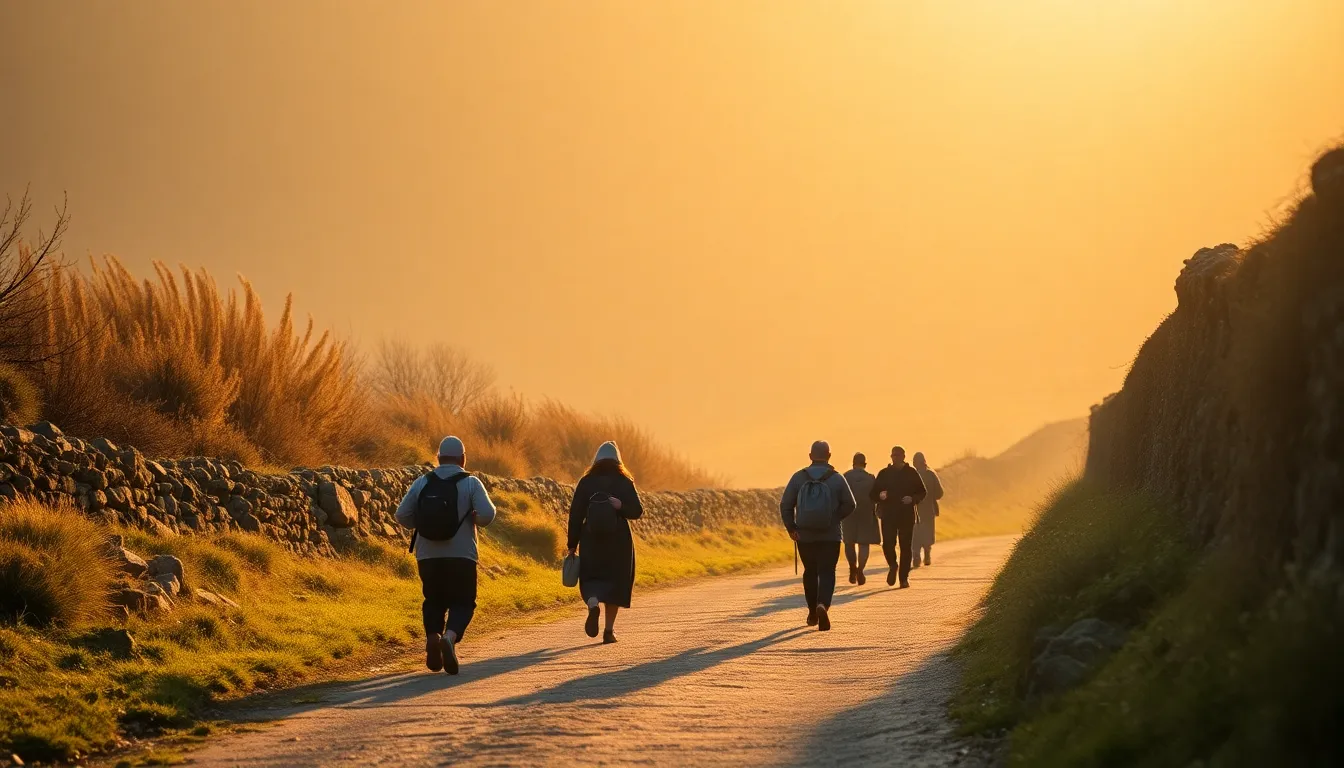
The first time I told a group of pastors we were going to walk part of the Camino de Santiago, one of them asked me whether it was a Catholic thing he should be careful about. I understand the question. But by the third day on the road, that same pastor was the one slowing the rest of us down so he could stand quietly at a wayside cross. The Camino does that. It crosses the lines people walk in with.
I have led congregations along the Camino for years now, Protestant and Catholic and a few mixed groups, and I want to give you the honest picture. Not the romantic version and not the brochure version. What the pilgrim road actually is, how groups walk it, and how to decide which part is right for your people.
What the Camino de Santiago Actually Is
The Camino de Santiago, the Way of Saint James, is a network of pilgrimage routes across Europe that all lead to one place: the tomb of the Apostle James in Santiago de Compostela, in the far northwest corner of Spain. Pilgrims have walked these roads since the 9th century, when the apostle’s burial site was said to have been discovered in Galicia. By the Middle Ages, Santiago stood beside Rome and Jerusalem as one of the three great pilgrimage destinations of the Christian world.
That history is not a museum piece. People are walking right now. Some are deeply devout, some are working through grief, some are not sure why they came and find out along the way. When your group steps onto the road, you join that stream. That is the thing I most want you to understand before you plan anything else. The Camino is a living practice, not a trail you tick off.
The Main Routes, and Which One Suits a Group
There is no single Camino. There are several historic routes, and the choice shapes the whole experience.
The Camino Frances (The French Way)
This is the classic. It runs roughly 780 kilometers from Saint-Jean-Pied-de-Port in the French Pyrenees across northern Spain to Santiago. It is the most walked, the best supported, and the one with the richest concentration of churches, hospitals, and pilgrim towns along the way. For most first-time groups, this is where I point them. The infrastructure means you are never far from water, food, or a place to rest, and that matters enormously when you are responsible for fifteen or more people of mixed ages and fitness.
The Camino Portugues (The Portuguese Way)
Coming up from Lisbon or Porto, this route has grown popular for good reason. The coastal variant is gentler and very beautiful, and the final stretch from Tui into Galicia works well for a shorter group walk.
The Camino del Norte (The Northern Way)
This hugs the Atlantic coast through the Basque Country and Cantabria. It is stunning and quieter, but it is harder, with more climbing. I would only take a fit, experienced group on this one.
The Camino Ingles (The English Way)
The short route that medieval pilgrims from Britain and Ireland walked after arriving by sea at Ferrol or A Coruna. At around 75 to 110 kilometers, it is a strong option for a group that wants the full pilgrimage shape in less time.
You Do Not Have to Walk the Whole Thing
This is the single most freeing thing I tell group leaders, so let me say it plainly. You do not need to walk 780 kilometers to walk the Camino.
The most common choice for faith groups is the final stage from Sarria to Santiago, about 115 kilometers over five or six days. There is a practical reason as well as a spiritual one. To receive the Compostela, the official certificate of completion issued by the Cathedral, a pilgrim must walk at least the last 100 kilometers. Starting at Sarria clears that threshold with a little margin, which is why it is the busiest and most welcoming section of the entire route.
Other groups walk a single representative day, then continue to Santiago by coach. That is a completely legitimate way to encounter the Camino, especially for a congregation with older members or anyone who cannot manage consecutive days of walking. The pilgrimage is in the posture, not the mileage.
How a Group Actually Walks It
Here is what a well-run group walk looks like in practice, because the logistics are where good intentions either hold up or fall apart.
You walk in stages, usually 15 to 25 kilometers a day. Your luggage is transferred ahead by vehicle, so people carry only a daypack with water, layers, and lunch. A support coach shadows the route, which means anyone who needs to stop and ride for a stretch can do so without shame or drama. That single arrangement is what makes Camino walking possible for a real congregation rather than a hand-picked athletic few.
Each morning has a rhythm. We often begin with a short reading or a moment of prayer before setting out. People walk in clusters or alone, as they need to. By midday the conversations have changed. By evening, when everyone gathers over a shared meal in a Galician village, the group is closer than it was that morning. I have watched this happen on every single Camino group I have led.
I also build in flexibility for the body. Blisters are real. Knees are real. A good plan has shorter and longer day options and never treats the schedule as sacred. The destination is sacred. The schedule serves the people.
When to Walk and What to Expect from Galicia
Galicia is green for a reason. It rains. Late spring (May and June) and early autumn (September) give you the best balance of mild temperatures, long daylight, and manageable crowds. July and August are hot and crowded, with the Holy Year exceptions drawing very large numbers. Winter is quiet and atmospheric but wet and cold, and some lodging closes.
Pack for rain even in summer. Good broken-in footwear is non-negotiable, and I say that to every group in every pre-trip call. The single most common avoidable problem on the Camino is new boots.
Arriving in Santiago
The walk ends at the Cathedral of Santiago de Compostela and the tomb of the apostle. The first sight of the cathedral spires from Monte do Gozo, the Hill of Joy, undoes a lot of people. Then comes the Pilgrim’s Mass, where the day’s arrivals are welcomed and, on certain days, the great Botafumeiro incense burner swings through the transept. To stand there having walked the last stage, among strangers who walked it too, is a different thing entirely from arriving by bus as a tourist.
If your congregation is drawn to the deeper story behind the road, our guide to Santiago de Compostela Cathedral and the heritage of Saint James in Spain will fill in what your people will be standing inside of. For groups ready to commit to the classic route, the French Way group guide goes deeper on logistics. You can see how all of this fits a full itinerary on our Spain spiritual sites hub.
One practical note worth your planning math: with Heritage Tours, the group leader travels free with fifteen or more participants. On a multi-day walk where you are shepherding your people across real terrain, having your own costs covered makes the decision to lead a lot easier to bring to your board.
FAQ: Walking the Camino de Santiago with a Faith Group
How long does it take a group to walk the Camino de Santiago?
It depends on which section you choose. The popular final stage from Sarria to Santiago takes five to six days and covers about 115 kilometers, which qualifies for the Compostela certificate. The full Camino Frances takes around 30 to 35 days, which is more than most groups can commit to. Many congregations walk a single representative day and travel the rest by coach. All of these are valid ways to make the pilgrimage.
Do you have to be Catholic to walk the Camino?
No. The Camino welcomes pilgrims of every background, and Protestant groups walk it regularly and find it deeply meaningful. The practice of walking toward a sacred place crosses denominational lines. The Cathedral’s Pilgrim’s Mass is open to all, and the road itself makes no distinctions.
How fit do you need to be to walk the Camino?
Moderately fit is enough for the popular Sarria to Santiago section, which follows gentle hills on well-marked paths. With luggage transfer and a support coach shadowing the route, group members who need to ride for a stretch can do so easily. We design group walks around the real range of ages and abilities in a congregation, not around athletes.
What is the best time of year to walk the Camino?
Late spring (May and June) and early autumn (September) offer the best mix of mild weather, long daylight, and manageable crowds. July and August are hot and busy. Galicia rains in every season, so pack for it regardless of when you go, and never walk in new, unbroken-in boots.
What is the Compostela and how does a group earn it?
The Compostela is the certificate of completion issued by the Cathedral of Santiago. To receive it, a pilgrim must walk at least the final 100 kilometers and collect stamps in a pilgrim passport along the way. Starting from Sarria clears that distance, which is why it is the most common starting point for groups who want the official recognition of the pilgrimage.
If the Camino is calling your congregation, I would be glad to help you decide which route and which stage fit your people. Every group arrives at this differently, and the right walk is the one that fits yours. Contact us whenever you are ready to start the conversation.