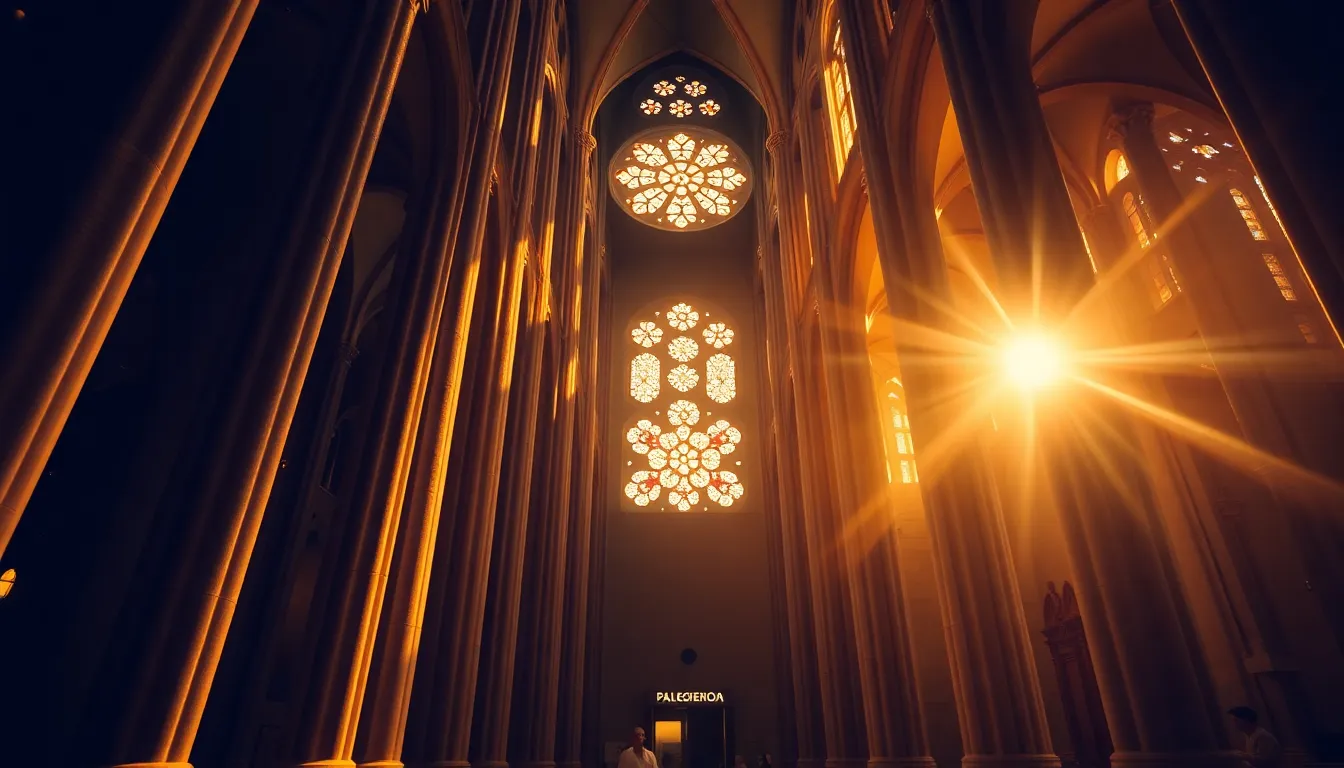
I have taken a lot of groups into the Sagrada Familia, and I have noticed that the people who come expecting a famous tourist landmark are often the ones most undone by it. They walk in ready to take a photo and check a box, and then the light comes down through the windows and they forget to lift the camera. That is the thing most itineraries miss about this place. The Sagrada Familia is not a monument that happens to be a church. It is a prayer, built in stone, by a man who meant every inch of it. For a heritage group, that is the whole reason to go.
So let me tell you how to read it, because read as a work of faith it is one of the most rewarding stops in all of Spain.
What the Sagrada Familia Is
The Basilica de la Sagrada Familia is a Roman Catholic church in Barcelona, designed by the Catalan architect Antoni Gaudi. Construction began in 1882, and it is still not finished. Gaudi took over the project in 1883 and spent the rest of his life on it, more than forty years, increasingly to the exclusion of everything else. He died in 1926, struck by a tram, with the church far from complete. He knew he would never see it done and said so plainly. He was building for a timescale longer than his own life.
It is consecrated, it functions as a basilica, and it remains an active building site. The towers are still rising. When people say it has been under construction for well over a century, that is not a knock on it. The slowness is part of what it is. Gaudi compared his client to the medieval cathedral builders and said his client, meaning God, was in no hurry.
Reading It as Theology in Stone
This is what I want your group to understand before you walk in, because it changes everything you see.
Gaudi did not decorate the Sagrada Familia with Christian themes. He built the entire church as a deliberate telling of the Christian story. Almost nothing is arbitrary.
The three great facades each carry a chapter. The Nativity facade, the one Gaudi largely completed himself, faces the rising sun in the east and bursts with life, the birth of Jesus rendered in stone that almost seems to grow. The Passion facade faces west, toward the setting sun, and is stark, angular, and hard, carved to convey the suffering and death. The Glory facade, still being completed, is meant to face the theme of resurrection and the path to God. The orientation is the message. Birth in the morning light, death in the evening, the day itself preaching.
Inside, Gaudi built a forest. The columns branch like trees toward the ceiling, and they are not a stylistic flourish. He wanted those who entered to feel they had walked into a wood, with light filtering down as it does through leaves. The stained glass is tuned by color and by direction: cooler blues and greens on the morning side, warmer reds and oranges on the evening side, so the light itself moves through the building with the hours and the seasons. When the afternoon sun comes through the western glass, the whole interior fills with fire. I have watched entire groups go silent when it happens.
Every number, every form, the geometry of the towers, the symbols carved into the doors, was chosen to point at something. Gaudi was a devout man, and toward the end of his life an austere one. He understood the building as an act of worship.
How a Heritage Group Should Approach It
For a Christian group, the Sagrada Familia is close to ideal, because it is one of the few major sites in the world that was conceived from the ground up as a teaching of the faith. I encourage pastors to treat it as a walk through the Gospel rather than an architecture tour. Start at the Nativity facade, move inside to the light and the forest of columns, and read the building as the sermon Gaudi intended it to be. Groups that do this come out having had an encounter, not a sightseeing stop.
For a Jewish group or a mixed group, I am honest that this is a deeply Christian building, and I frame it as such, as Gaudi’s profound expression of his own faith and as one of the great works of human devotion of the modern age. Read that way, with that honesty, it speaks to anyone moved by what faith can build. I have had rabbis stand in that light and talk with their groups about devotion, patience, and building things you will never see finished. The themes are universal even when the iconography is not.
For everyone, there is the matter of Gaudi himself. A man who gave his last decades to a single act of worship he knew he would not live to complete. That alone is worth sitting with.
Visiting With a Group
Practical truth: the Sagrada Familia is the most visited site in Barcelona, and it is run accordingly. Entry is by timed ticket only, for a specific slot, and tickets sell out days or weeks ahead in busy seasons. You cannot walk up and expect to get in. For groups, the timed entry has to be booked well in advance, and we handle that so your leader is not managing it at the door.
A guided visit is worth it here more than at most sites, precisely because so much of the meaning is in the symbolism, and a good guide reads the building rather than just naming its parts. We arrange licensed guides who understand the theology, not only the engineering. If your group wants to go up one of the towers, that is a separate timed ticket with its own small lift and a stair descent, and it is not for everyone, so it is worth deciding in advance.
Plan for at least ninety minutes inside, and I would push for more, because the interior light rewards lingering and changes through the day. If you can, aim your slot for when the sun will be coming through the side of the glass your group will respond to, the morning blues or the late-afternoon reds. The basilica is broadly accessible inside, which makes it comfortable for mixed-age groups, with the towers being the one exception.
Barcelona has a great deal for a heritage group beyond Gaudi, including the city’s own Jewish history in the old Call near the Gothic Quarter, and Girona’s far better-preserved Jewish quarter is a short train ride away. The Sagrada Familia fits naturally into a Barcelona day that holds both the Christian and the Jewish threads of the city.
FAQ: Visiting the Sagrada Familia With a Heritage Group
Why visit the Sagrada Familia on a faith heritage tour?
Because it was built as an act of faith, not just as architecture. Antoni Gaudi designed the entire basilica as a deliberate telling of the Christian story, from the facades that carry the Nativity, Passion, and Glory to the interior light tuned to move through the day. For a heritage group, reading it as theology in stone makes it one of the most meaningful stops in Spain.
Is the Sagrada Familia finished?
No. Construction began in 1882 and continues today. Gaudi took over in 1883 and worked on it until his death in 1926, knowing he would never see it completed. The towers are still rising. The long timescale is part of its meaning, echoing the medieval cathedral builders who worked across generations.
Do groups need to book tickets in advance?
Yes, and it is essential. The Sagrada Familia is Barcelona’s most visited site, entry is by timed slot only, and tickets sell out well ahead in busy seasons. Groups must book in advance and arrive within their window. We arrange the timed group entry and a guide so your visit is not at risk at the door.
Is the Sagrada Familia appropriate for non-Christian groups?
It is a deeply Christian building, and we frame it honestly as Gaudi’s expression of his own faith. Read that way, it speaks to anyone moved by human devotion and by what faith can build. Jewish and mixed groups can find it powerful when it is presented as one of the great works of religious devotion of the modern age rather than as a generic landmark.
How much time should a group spend there?
Plan for at least ninety minutes inside, and more if you can, because the interior light changes through the day and rewards lingering. Tower visits are a separate ticket with stairs on the descent and are not suited to everyone. The basilica interior is broadly accessible, which makes it comfortable for mixed-age groups.
The Sagrada Familia is one of those rare places where you can walk a group through an entire act of faith without leaving the room, if you go in ready to read it that way. If you want Barcelona shaped around that kind of encounter, holding both its Christian and its Jewish stories, I would be glad to help you build it. You can explore our Spain heritage tours, see how our group journeys work, or read more on Spain’s hidden heritage sites, the Cave of Saint Ignatius at Manresa, and the Jewish history museum in Girona.
Contact us when you are ready to start planning.