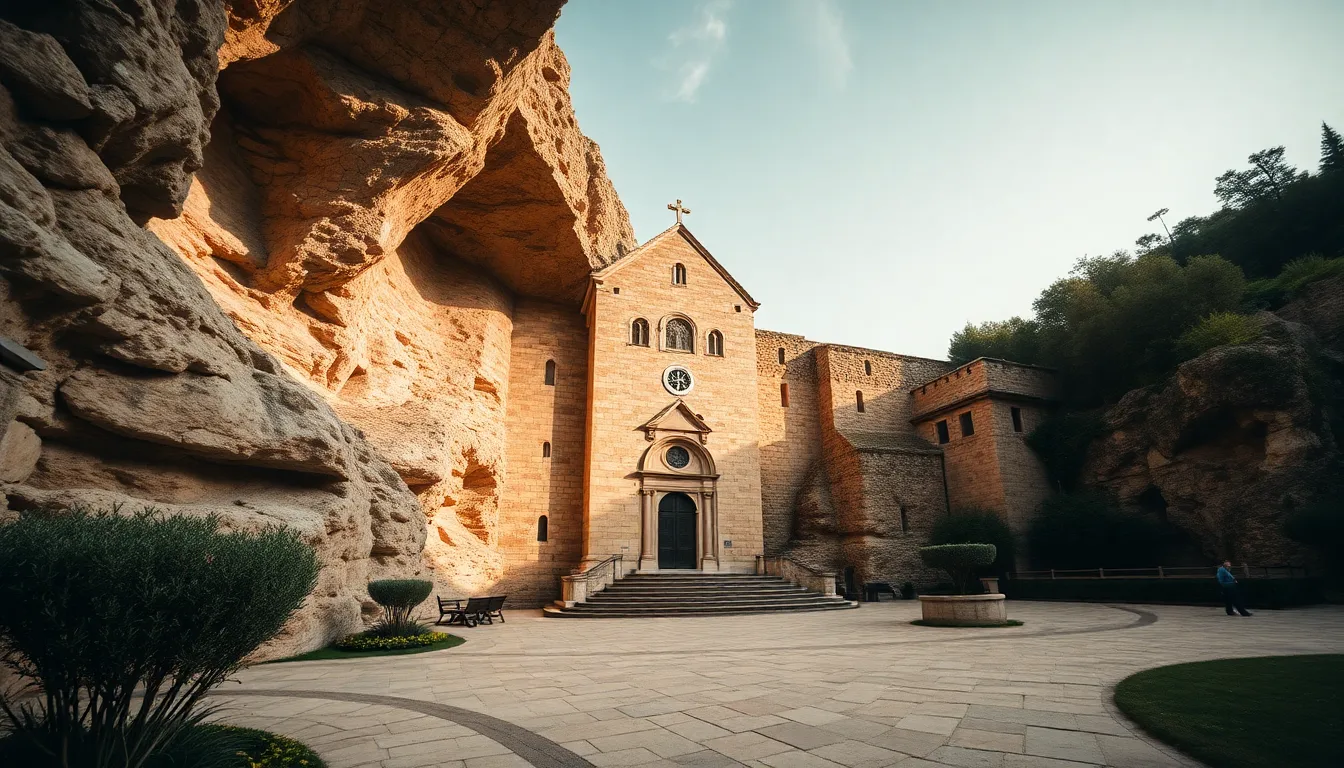
Manresa is not on most people’s Spain itinerary, and that is exactly why I love bringing groups here. After the noise of Barcelona, you drive about an hour inland, and the whole register changes. The cave where Ignatius of Loyola spent the better part of a year in prayer is a quiet place, and quiet is the right word for what happens to a group inside it. People who have spent a week photographing cathedrals walk into this small space and put their phones away on their own. For a heritage group, especially one drawn to the inner life of faith, this is one of the most formative stops in the country.
Let me tell you who Ignatius was, what happened in this cave, and how a group should approach a visit.
What Happened at Manresa
In 1521, Inigo Lopez de Loyola was a Basque soldier whose leg was shattered by a cannonball at the siege of Pamplona. During a long, painful recovery, with nothing to read but a life of Christ and a book of saints, something in him turned. The ambitious soldier became a man bent on a different kind of life.
On his way to what he intended as a pilgrimage, he stopped at the town of Manresa, near the monastery of Montserrat, and stayed far longer than planned, from 1522 into 1523, nearly a year. He lived in poverty, begged for food, prayed for hours, and spent time in a cave on the hillside above the river Cardoner. It was here, in this period of intense interior struggle and consolation, that he worked through the experiences and methods that became the Spiritual Exercises.
That book is the reason Manresa matters far beyond its size. The Spiritual Exercises is a structured program of prayer, meditation, and discernment that Ignatius later refined, and it became the foundation of Jesuit spirituality. Ignatius went on to found the Society of Jesus, the Jesuits, and was canonized as a saint. Centuries later, the Exercises are still used in retreats around the world. The seed of all of it was planted in this cave.
What You Actually See
The cave, the Santa Cova, is no longer a rough hole in the hillside. Over the centuries a sanctuary was built around and over it, and today there is a baroque chapel complex and a large building run by the Jesuits, which functions as a spirituality and retreat center. You walk through the built sanctuary to reach the cave itself, which has been preserved as the heart of the site, set with an altar and devotional imagery.
I am always honest with groups about this so they are not surprised: the space is ornate now, not raw. But the cave is still there, the actual hollow where Ignatius prayed, and the position is unchanged. From the sanctuary you look out over the river valley toward Montserrat, the serrated mountain that meant so much to him. That view is what he saw. The landscape has held.
The wider Manresa experience includes the Ignatian sites scattered through the old town, the places where he begged, prayed, and tended the sick, often linked together as a route. For groups with the time and the inclination, walking that route turns a single stop into a day of following a conversion on the ground where it happened.
How a Group Encounters It
For a Christian group, and especially anyone who has done the Spiritual Exercises or made an Ignatian retreat, the cave is close to sacred ground. I do not over-program it. The right move is usually less talking, not more. I give the group the story before we arrive, walk them in, and then leave space. Pastors and retreat leaders I work with have used the cave for silent prayer, for a reading from the Exercises, for the examen, the daily reflection Ignatius taught. The place is built for interior work, and a group that comes ready for that gets the most from it.
For a Jewish or mixed group, I frame Manresa honestly as the birthplace of one of the great spiritual traditions of the Christian world, and as a window into how a single person’s interior crisis can reshape history. Read that way, it speaks to anyone interested in the life of the spirit. The themes of Manresa, struggle, discernment, the slow turning of a life, are not the property of one tradition.
For everyone, there is the quiet. Manresa is the antidote to a heritage tour that has been all grandeur and crowds. It is small, inward, and still, and groups often tell me afterward that it was the stop where they could finally hear themselves think.
Visiting With a Group
Manresa sits about an hour northwest of Barcelona by car or train, and it pairs naturally with Montserrat, the famous mountain monastery, which is close by and bound up in the same Ignatian story. Many of my groups do Montserrat and the Cave of Saint Ignatius together as a single day out of Barcelona, the mountain and the cave, the grand and the intimate, side by side.
The Santa Cova sanctuary is run by the Jesuits as a working spirituality center, generally open daily with a midday closing common in Spain, and entry to the cave is modest or by donation. Because it is a place of prayer and retreat, groups are asked to keep it quiet and respectful, which is exactly the spirit you want anyway. For a group that wants more than a look, the center can sometimes accommodate guided reflection or a short retreat element, and we arrange that ahead of time when a leader wants it.
Plan for an hour or so at the cave and sanctuary, more if you build in silent prayer or walk the Ignatian route through town. The site is reasonably accessible, though there are some steps and the wider Manresa route involves walking, so it is worth matching the depth of the visit to your group. As always, a leader who arrives knowing the Manresa story gives the group far more than a guide reading a plaque can.
FAQ: Visiting the Cave of Saint Ignatius at Manresa
What is the Cave of Saint Ignatius?
It is the cave near Manresa, in Catalonia, where Ignatius of Loyola spent months in prayer in 1522 and 1523 and worked through the material that became the Spiritual Exercises. A baroque sanctuary and a Jesuit spirituality center were later built around it. The cave itself, the Santa Cova, is preserved at the heart of the complex.
Why is Manresa important to Christian heritage?
Manresa is where the Spiritual Exercises of Saint Ignatius took shape, the structured program of prayer and discernment that became the foundation of Jesuit spirituality and is still used in retreats worldwide. Ignatius went on to found the Society of Jesus. For Ignatian and Jesuit-connected groups, this cave is foundational ground.
Is the cave still in its original state?
The cave is preserved, but it is now surrounded by an ornate baroque sanctuary and a Jesuit retreat center rather than left raw. The actual hollow where Ignatius prayed remains, set with an altar, and the view it gives over the river valley toward Montserrat is what he would have seen. We tell groups this in advance so the built setting is not a surprise.
Can groups pray or hold a reflection at the cave?
Yes. The site is run by the Jesuits as a working spirituality center, and groups are welcome to use it for silent prayer, a reading from the Exercises, or the daily examen, in a quiet and respectful spirit. With advance notice, the center can sometimes support guided reflection or a short retreat element. We arrange that when a leader wants it.
How does Manresa fit into a Spain itinerary?
Manresa is about an hour from Barcelona and pairs naturally with the mountain monastery of Montserrat nearby, which shares the same Ignatian story. Many groups do both in one day, balancing the grandeur of Montserrat with the quiet of the cave. Plan an hour or more at the cave, longer if you walk the Ignatian route through the old town.
Manresa is the stop that lets a heritage tour breathe, the quiet center after the great cathedrals, where the inner life of faith comes forward. If your community is drawn to that, I would be glad to help you fold it into a Spain journey alongside Montserrat and Barcelona. You can explore our Spain heritage tours, see how our group journeys work, or read more on Spain’s hidden heritage sites, the Sagrada Familia in heritage context, and the Sephardic Museum of Toledo.
Contact us when you are ready to start planning.