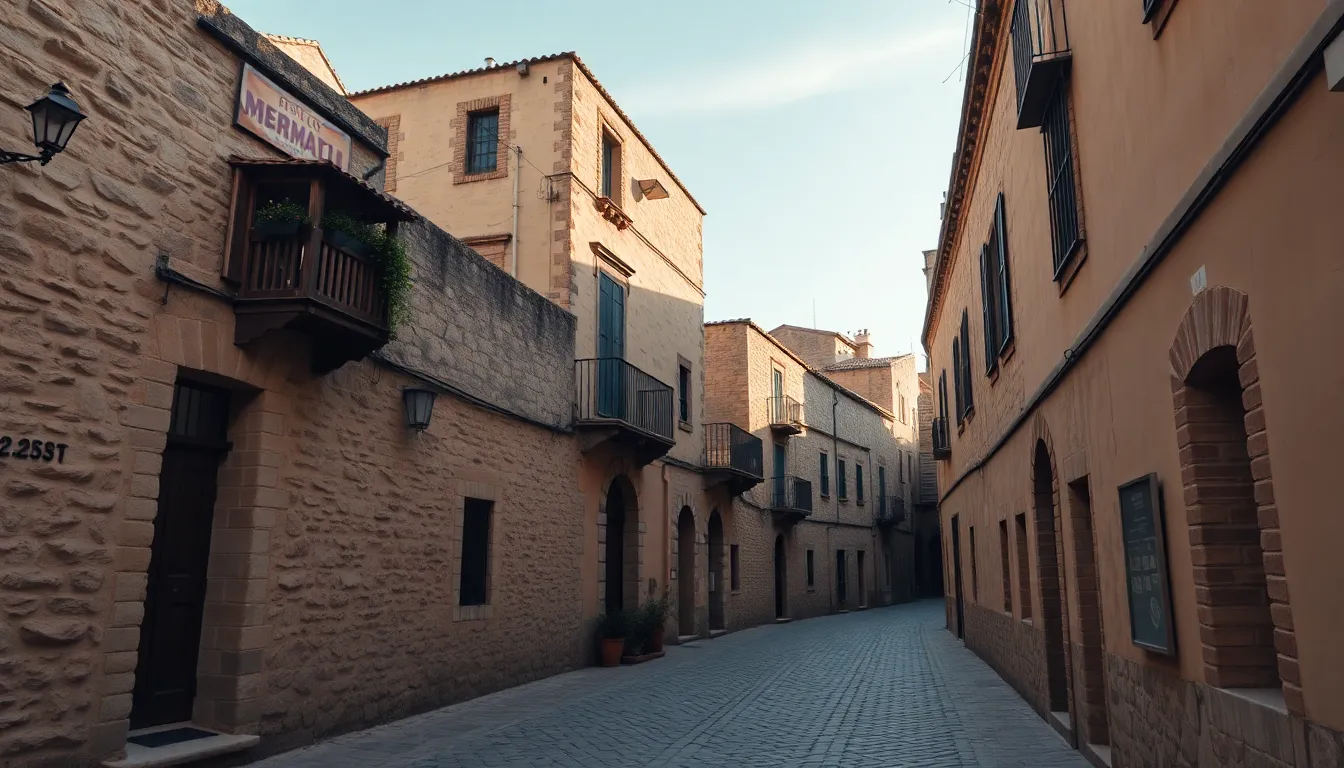
Most people who plan a Jewish heritage trip to Spain think of three cities. Toledo, Cordoba, Girona. They are the famous ones, and rightly so. But after years of leading groups across this country, the moments I hear about most afterward are almost never from the famous places. They come from the small towns. A quiet hilltop juderia at dusk with no other tourists in sight. A medieval lane in a village most travelers have never heard of. The places where a group stops feeling like sightseers and starts feeling like they have stepped through a door into a vanished world.
Those places have a name, and a network. It is called the Red de Juderias, and understanding it will change how you think about building a Spain trip. Let me explain what it is and how groups actually tour it.
What the Red de Juderias Is
The Red de Juderias de Espana, the Network of Spanish Jewish Quarters, is an official association of Spanish towns and cities that share a significant Jewish heritage and have committed to preserving and presenting it. It was founded in the mid-1990s, and it has grown to include more than twenty member towns spread across the country.
These are not random selections. Each member town has a real and documented Jewish history, a juderia, the Spanish word for Jewish quarter, that survives in some meaningful form, whether in its street layout, its surviving buildings, its archaeology, or its museums. Membership means the town has chosen to honor that history rather than let it fade, and to make it accessible to visitors. For a group leader, the network is a gift. It is essentially a curated, vetted map of where Spain’s Jewish past is best preserved and best presented.
The network ties into a broader cultural route known as the Caminos de Sefarad, the Roads of Sefarad, Sefarad being the Hebrew name for the Iberian Peninsula. Following the Caminos means tracing a thread of Jewish life across Spain, from the famous centers to the small towns most itineraries miss.
The Towns of the Network
The member towns range from major cities to villages, and that range is part of what makes the network so useful for building a varied trip. A few worth knowing as a group leader.
Toledo is the crown, the largest and most significant medieval Jewish quarter in Spain, home to two of the three surviving medieval synagogues. Cordoba holds the third surviving synagogue and the legacy of Maimonides. Girona offers the best-preserved quarter in the network, a near-intact medieval neighborhood, covered in our piece on the Call of Girona. Seville carries the layered story of its Santa Cruz quarter, explored in our Jewish Seville guide.
Then come the smaller members that reward a group willing to go off the obvious path. Besalu in Catalonia preserves a rare medieval mikveh, a ritual bath, discovered beneath the town. Hervas in Extremadura holds one of the most atmospheric old quarters in Spain, a tangle of timber-framed lanes. Segovia, Avila, Tudela, Ribadavia, Caceres, Plasencia, Oviedo, Leon, Estella, Monforte de Lemos, and more each carry their own juderia and their own piece of the story. Membership shifts over the years as towns join, so the exact roster is worth confirming when you plan, but the heart of the network is steady.
What I love about the smaller towns is that the Jewish quarter is often the quietest, most intact part of an already small place. You walk lanes with almost no one else around. The history is not competing with crowds. It can breathe.
How Groups Actually Tour the Network
You do not tour all twenty-plus towns. No group should try. The art of using the Red de Juderias is selection, and how you select shapes the whole character of the trip.
Build Around Regions, Not a Checklist
The towns cluster geographically, and the smart way to plan is by region rather than chasing a list across the whole map. A northern route might link Girona and Besalu in Catalonia, then move toward Tudela and Estella in Navarre. A central route built around Toledo can fold in Segovia and Avila. A western route through Extremadura can connect Hervas, Caceres, and Plasencia, some of the most underrated quarters in the entire network. Choosing a region lets a group go deep rather than spending the trip on a bus.
Pair the Famous With the Quiet
My favorite itineraries balance the two. A group needs the great anchors, Toledo, Cordoba, Girona, the places with the surviving synagogues and the museums that tell the full story. But the small towns are where the trip becomes personal. I build routes that pair a major center with two or three smaller quarters nearby, so a group gets both the grandeur and the intimacy.
Use the Network’s Resources
Because the member towns have committed to presenting their heritage, most offer signed Jewish-quarter walking routes, interpretation, and often a museum or visitor center. This infrastructure makes the smaller towns far more rewarding to visit than they would be cold. For a group leader, it means the history is supported on the ground, not left to guesswork.
Why the Network Suits Group Heritage Travel
The Red de Juderias was, in a sense, built for the kind of travel we do. The whole premise is reflective heritage tourism, walking the quarters, understanding the history, honoring a community that is gone. That is exactly what a faith group comes to Spain for.
The smaller towns in particular shine with a group. A solo traveler can find a quiet hilltop juderia eerie or simply puzzling without context. A group, with a guide to tell the story and companions to share the silence, experiences it as something close to sacred. The network gives you the places. The group experience gives them meaning.
The route also connects naturally to the larger story we tell across Spain, the Golden Age, the Spanish Inquisition, the 1492 expulsion, all of which played out in these same towns. Our Jewish heritage of Spain hub sets the network within that arc, and our Spain destination page shows how we build the regional routes.
A trip like this, balancing famous anchors with quiet discoveries across a region, is best built around a group. Our group heritage tours page explains how that works, and with Heritage Tours the group leader travels free with fifteen or more participants, which makes a multi-town route more achievable for a congregation.
FAQ: Touring the Red de Juderias
What is the Red de Juderias?
The Red de Juderias de Espana, the Network of Spanish Jewish Quarters, is an official association of more than twenty Spanish towns and cities with significant Jewish heritage that have committed to preserving and presenting it. Founded in the mid-1990s, it offers visitors a curated map of where Spain’s Jewish past is best preserved.
What are the Caminos de Sefarad?
The Caminos de Sefarad, the Roads of Sefarad, is the broader cultural route tied to the network. Sefarad is the Hebrew name for the Iberian Peninsula. Following the Caminos means tracing Jewish life across Spain, from the great centers to the small towns most itineraries overlook.
How many of the network’s towns should a group visit?
Far fewer than the full roster. The best approach is to choose a region and go deep rather than chasing all twenty-plus towns across the country. A typical route pairs one or two famous anchors, such as Toledo or Girona, with two or three smaller quarters nearby, giving a group both grandeur and intimacy.
Which smaller towns are most rewarding for a heritage group?
Besalu, with its rare medieval ritual bath, and Hervas in Extremadura, with one of the most atmospheric old quarters in Spain, are favorites. Segovia, Avila, Tudela, Caceres, and Plasencia each reward a group willing to step off the obvious path. The smaller towns are often the quietest and most intact.
Is a multi-town Sefarad route practical for a group?
Yes, when it is built around a region rather than a checklist. Grouping towns geographically keeps bus time down and lets a group go deep. The network towns offer signed walking routes, interpretation, and often museums, so the history is supported on the ground. A group with a guide gets far more from these places than a solo traveler would.
If you want to build a Caminos de Sefarad route for your community, balancing the famous quarters with the quiet ones, I would welcome the conversation. Contact us whenever you are ready to start planning.