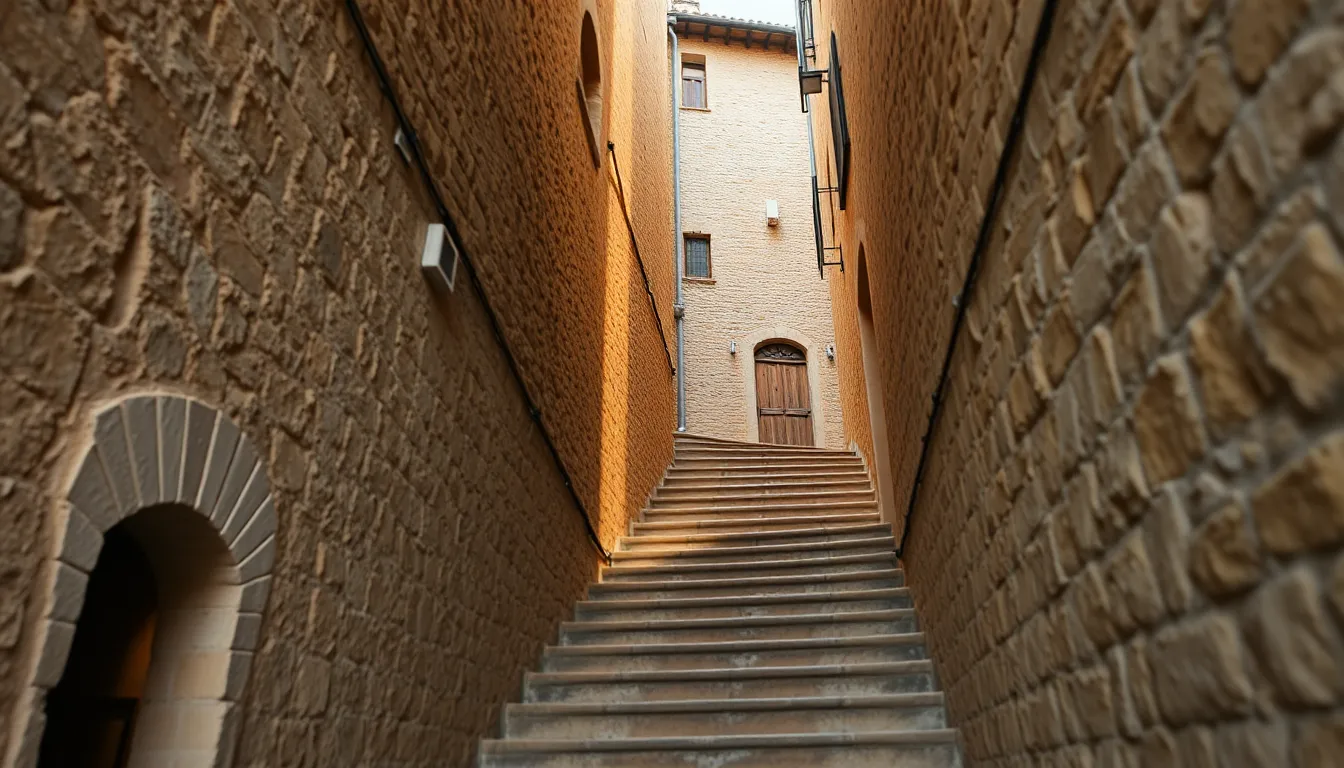
The first time I led a group into the Call of Girona, I lost half of them within five minutes. Not because anyone wandered off. Because the moment we stepped off the main street and into the old quarter, people stopped walking. They stood in the narrow stone lanes, looked up at the walls pressing in on both sides, and went quiet. One woman in the group, a retired teacher, turned to me and said, “This is the first place that doesn’t feel like a museum.” She was right. That is exactly what makes Girona different.
I have brought congregations to Toledo, to Cordoba, to the great synagogue sites of Spain. They matter, every one of them. But Girona offers something none of the others can. It is not a building you visit. It is a neighborhood you walk through, mostly intact, mostly as it was. For a group leader trying to help people feel a vanished world rather than read about it, that is rare, and it is worth understanding before you plan a trip.
What the Call Actually Is
“Call” is the Catalan word for the Jewish quarter, and it likely comes from the Hebrew “kahal,” meaning community or congregation. Girona’s Call sat in the heart of the old city, a dense network of lanes climbing the hillside below the cathedral. At its height, somewhere between the 12th and 14th centuries, several hundred Jews lived here, making it one of the most important Jewish communities in medieval Catalonia.
What survived is the layout. When the Jewish community was expelled in 1492, the quarter was sealed off and built over, and in a strange way that neglect protected it. The doorways were not widened. The lanes were not straightened for carriages. The stone staircases that climb between the houses are the same ones people walked seven hundred years ago. Restoration work over the last few decades opened the quarter back up, and today you can walk lanes that had been bricked shut for centuries.
When I tell a group that the alley they are standing in has not changed shape since before Columbus sailed, I watch it land. That is the kind of detail that makes a place real to people.
Walking the Labyrinth
I use the word labyrinth deliberately. The Call is not a single street you stroll down. It is a tangle of lanes, some so narrow two people cannot pass shoulder to shoulder, with steps that turn and double back and open suddenly into small courtyards. Carrer de la Forca is the main spine, but the heart of the experience is the smaller passages branching off it.
For a group, this geography is both a gift and a thing to manage. The gift is the feeling of enclosure, of intimacy, of walking inside history rather than past it. The thing to manage is simple logistics. Large groups string out in narrow lanes, and it is easy to lose people around a corner. I keep groups smaller through the Call, sometimes splitting a larger congregation into two and rotating them through with the museum visit. It makes the experience better for everyone.
Take the time to stop. The Call rewards slowness. Point out the worn thresholds, the marks on doorposts where mezuzahs once hung, the way the light falls into the lanes at midday. These are the details that turn a walk into an encounter.
The Museum of Jewish History
At the center of the Call sits the Museu d’Historia dels Jueus, the Museum of Jewish History, housed in a building that was part of the medieval community complex. This is the anchor of any visit, and I structure my Girona days around it.
The museum traces the full arc of Jewish life in Catalonia, from settlement through the Golden Age of learning, through the rising pressures of the 14th century, to the expulsion. Its collection includes medieval gravestones recovered from the Jewish cemetery on Montjuic hill, ritual objects, documents, and archaeological finds from the quarter itself. The gravestones in particular move people. Reading a name and a date carved in Hebrew, knowing it marked a real person buried on the hill above the city, closes the distance between then and now.
The museum is small enough that a group can move through it together, and substantive enough to anchor a real conversation. I usually gather everyone afterward in one of the courtyards and give them space to talk about what they saw. That reflection time is part of the trip, not an extra.
The Nachmanides Connection
You cannot understand the Call of Girona without Nachmanides. Known by the acronym Ramban, he was born in Girona around 1194 and became one of the towering figures of medieval Jewish thought, a Torah scholar, philosopher, and physician whose commentaries are still studied in yeshivas today. Girona was his city. The community here was shaped by his presence and his school.
For groups with a strong learning focus, this is where Girona becomes more than beautiful. You are standing in the streets that formed one of Judaism’s great minds. I touch on his story in the Call and point groups toward the deeper account in our piece on Nachmanides of Girona, because his life, including the Disputation of Barcelona that eventually drove him from Spain, is a story worth telling on its own.
Fitting Girona Into a Spain Itinerary
Girona is roughly an hour and a half north of Barcelona by road, less by fast train, which makes it an easy and rewarding addition to a Catalonia-based itinerary. Many of my groups combine it with Barcelona and with the smaller Call of Besalu nearby, building a northern Spain heritage route that feels very different from the Toledo and Cordoba corridor in the south.
I often suggest Girona to leaders who have already brought a group to Toledo and want their next Spain trip to go deeper. It is quieter. It draws fewer crowds outside peak summer. And because the experience is about atmosphere and walking rather than ticking off monuments, it gives a returning group something genuinely new. If you are mapping out a broader Sefarad route, our overview of the Red de Juderias network shows how Girona fits among the twenty-plus Jewish-quarter towns that make up the Caminos de Sefarad, and the wider Jewish heritage of Spain hub lays out how the pieces connect.
For the full picture of what a Spain heritage journey can include, our Spain destination page walks through the regions and sites we build trips around.
Why a Group Experience Suits Girona
Some heritage sites work fine for an individual traveler with a guidebook. Girona is better with a group and a guide. The history is layered, much of it is not signposted, and the emotional weight of the place benefits from being shared. When your congregation stands together in a lane that has not changed in seven centuries, the silence among them is part of the experience. People feel it more deeply when they feel it together.
That is the case I make to group leaders. Girona is not a stop you rush through on the way somewhere else. Given a full day, with the museum, the lanes, the Nachmanides story, and time to simply be present in the quarter, it becomes one of the moments people remember most from a Spain trip.
With Heritage Tours, the group leader travels free with fifteen or more participants, which makes building a trip like this more achievable for a congregation than most leaders expect.
FAQ: Visiting the Call of Girona
What makes the Call of Girona special compared to other Jewish quarters?
The Call survived as a near-complete medieval neighborhood rather than a few isolated buildings. After the 1492 expulsion the quarter was sealed and built over, which preserved its original layout. Today you walk lanes, staircases, and doorways that have not changed shape since the 14th century, which is rare anywhere in Europe.
How long do I need to visit the Call with a group?
I recommend a full day. The Museum of Jewish History anchors the visit and takes a couple of hours with reflection time. The lanes of the Call reward slow walking, and many groups combine Girona with the smaller nearby Call of Besalu. Rushing it works against everything that makes the place meaningful.
Is the Call of Girona accessible for older travelers?
Parts of it are challenging. The quarter is built on a hillside with stone staircases and steep, uneven lanes. I plan routes carefully for mixed-age groups, choose the more manageable paths, and build in rest stops. The museum itself is more accessible than the open lanes. With good planning, older travelers experience the heart of the Call comfortably.
Who was Nachmanides and why does he matter to Girona?
Nachmanides, known as Ramban, was born in Girona around 1194 and became one of the most influential rabbis, philosophers, and biblical commentators in Jewish history. His school shaped the Girona community, and his commentaries are still studied today. Standing in his city is part of what gives the Call its depth for learning-focused groups.
Can Girona be combined with Barcelona in one trip?
Yes, easily. Girona sits about ninety minutes north of Barcelona by road and less by fast train. Many groups base in Barcelona and visit Girona as part of a northern Spain heritage route, often adding the small Call of Besalu nearby. It pairs naturally with a Catalonia-focused itinerary.
If you are thinking about bringing your community to Girona, I would welcome the conversation. Every group brings a different focus, and the right itinerary is the one built around yours. Contact us whenever you are ready to start planning.