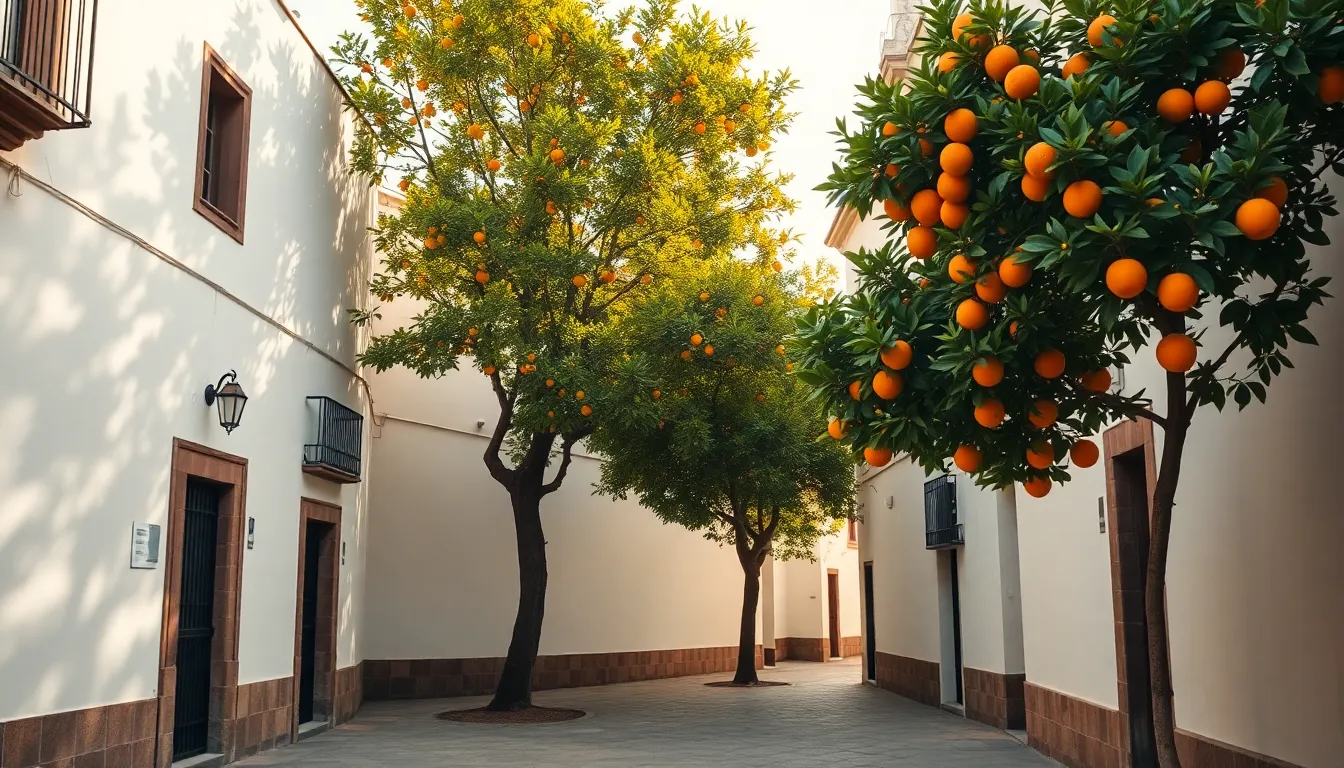
Santa Cruz is the most beautiful quarter in Seville, and that is exactly the problem I have to solve every time I lead a group through it. Visitors come for the postcard. Whitewashed walls, orange trees, geraniums spilling from balconies, narrow lanes that open onto hidden plazas. Tour guides walk people through it all day long talking about flamenco and tapas. What almost none of them say, and what I make sure my groups understand before we take a single step into those lanes, is that this gorgeous neighborhood was once the Jewish quarter of Seville, and that its beauty sits on top of one of the darkest chapters in Spanish Jewish history.
Telling that story well, holding the beauty and the tragedy together without letting either erase the other, is the heart of leading a group through Jewish Seville. Let me walk you through what happened here and how to bring a congregation into it with the care it deserves.
Seville’s Jewish Community Before 1391
Seville was, for centuries, home to one of the largest and most important Jewish communities in all of Spain. After the Christian conquest of the city in 1248, the Jewish quarter was established in the area that includes today’s Santa Cruz and the neighboring Santa Maria la Blanca district. It was a thriving community, several thousand strong, with synagogues, schools, markets, and the full texture of Jewish life.
For a group, it matters to establish this first. Before we talk about what was lost, I want people to understand what existed. This was not a small or marginal community. It was a center of Jewish life in the medieval world, woven into the fabric of one of Spain’s great cities. The lanes we walk were laid out for Jewish families going about ordinary lives, to the synagogue, to the market, to study, to home.
The Massacre of 1391
I tell this part slowly and plainly, because it asks for honesty rather than drama. In the summer of 1391, a wave of anti-Jewish violence swept across Spain, incited by inflammatory preaching and the breakdown of royal protection. It began in Seville, and Seville suffered among the worst of it.
A mob attacked the Jewish quarter. The community that had lived here for generations was devastated. Many were killed. Synagogues were seized and turned into churches. And many of the survivors, facing death otherwise, accepted forced baptism, becoming the first large generation of conversos, the converts whose descendants would later live under the shadow of the Spanish Inquisition. The violence of 1391 spread from Seville across Castile and Aragon, and it marked a turning point. The relative stability of Spanish Jewish life was broken, and the road that would lead to the 1492 expulsion had begun.
When I stand with a group in the pretty lanes of Santa Cruz and tell them this, the contrast is the lesson. The beauty around us was, in part, the beauty of a quarter emptied of the people who built it. I do not say this to spoil the place. I say it so that people see it truly. A heritage traveler owes the dead that much, to know what happened where they are standing.
Walking Santa Cruz and the Old Juderia
The Jewish quarter survives as one of Seville’s most atmospheric districts, even though, as in most of Spain, the synagogues themselves are gone or transformed. Here is how I help a group read it.
The Layout Itself
The narrow, winding lanes of Santa Cruz preserve the medieval street pattern of the juderia. The tight passages were not designed for tourist charm. They were the streets of a dense medieval Jewish neighborhood. Walking them slowly, a group can feel the shape of the community that lived here, even where individual buildings have changed beyond recognition.
The Lost Synagogues
Seville’s main synagogues did not survive as synagogues. Several were converted into churches after 1391, and a few of those churches still stand, their walls holding a history most visitors never learn. The church of Santa Maria la Blanca, for instance, began as a synagogue. I point these out so a group understands the pattern that runs through all of Jewish Spain. The sacred spaces were not destroyed so much as repurposed, their origins quietly buried under new use.
The Markers and Memory
In recent years Seville has done more to acknowledge this history, with markers and interpretation that name the quarter’s Jewish past. Reading these with a group, in a place that for so long presented itself only as a charming tourist district, feels like an act of restoration. The memory is being spoken again.
Seville Within a Spain Itinerary
Seville sits in Andalusia, in the south, which makes it a natural pairing with Cordoba, an hour or so away by fast train, and with Granada, where the 1492 expulsion decree was issued. A southern Spain route linking these three cities gives a group the Golden Age of Cordoba, the converso tragedy of Seville, and the final expulsion at Granada, the full arc in a single region.
Seville is also a member of the Red de Juderias network, the association of Spanish towns preserving their Jewish heritage, which means its quarter is increasingly presented with the care this history needs. Our Jewish heritage of Spain hub sets Seville within the longer story, and our Spain destination page shows how we build these southern routes.
How to Lead a Group Through Jewish Seville
A few things I have learned matter most here.
Set the frame before you walk in. If a group enters Santa Cruz thinking only of orange trees and flamenco, the history will not reach them. I tell the story of the quarter, including 1391, before we step into the lanes, so that everything they see afterward is seen truly.
Hold the beauty and the tragedy together. Santa Cruz is genuinely lovely, and I do not ask people to pretend otherwise. The work is to let the beauty and the loss occupy the same space, which is, after all, the truth of the place.
Give 1391 its dignity. I name the massacre plainly, without sensationalizing it and without softening it into vagueness. The people who died here deserve to be remembered as what they were, a community destroyed, and the survivors as what they became, conversos who carried a hidden thread forward.
This is exactly the kind of layered history that benefits from a group and a guide. Our group heritage tours page explains how the group experience works, and with Heritage Tours the group leader travels free with fifteen or more participants, which makes bringing a congregation to Seville more achievable than most leaders expect.
FAQ: Jewish Heritage of Seville
Was Santa Cruz really the Jewish quarter of Seville?
Yes. The Santa Cruz district and the neighboring Santa Maria la Blanca area formed Seville’s medieval juderia, established after the Christian conquest of 1248. Today it is one of the city’s most beautiful and most visited quarters, but its origins as a thriving Jewish neighborhood are too often left unmentioned by general tours.
What happened in Seville in 1391?
In the summer of 1391, a wave of anti-Jewish violence began in Seville and spread across Spain. A mob attacked the Jewish quarter. Many were killed, synagogues were seized and converted to churches, and many survivors accepted forced baptism, becoming conversos. The 1391 violence marked a turning point on the road that led to the 1492 expulsion.
Are there surviving synagogues in Seville?
Not as synagogues. Seville’s main synagogues were converted into churches after 1391, and several of those churches still stand, including the church of Santa Maria la Blanca, which began as a synagogue. The Jewish quarter survives chiefly through its medieval street layout and through markers acknowledging its history.
How should I introduce the 1391 story to a group?
Set the frame before you enter the quarter. If a group walks into Santa Cruz expecting only charm, the history will not reach them. Tell the story first, including the massacre, plainly and with dignity, so that everything they see in the lanes afterward is understood truly. The contrast between the beauty and the loss is the lesson.
Can Seville be combined with other Jewish heritage cities?
Yes. Seville pairs naturally with Cordoba, about an hour away by fast train, and with Granada, where the expulsion decree was issued. A southern Spain route linking the three gives a group the Golden Age, the converso tragedy, and the final expulsion in a single region. Seville is also a member of the Red de Juderias network.
If you want to bring your community to Seville and tell its story with the care it deserves, I would welcome the conversation. Contact us whenever you are ready to begin planning.