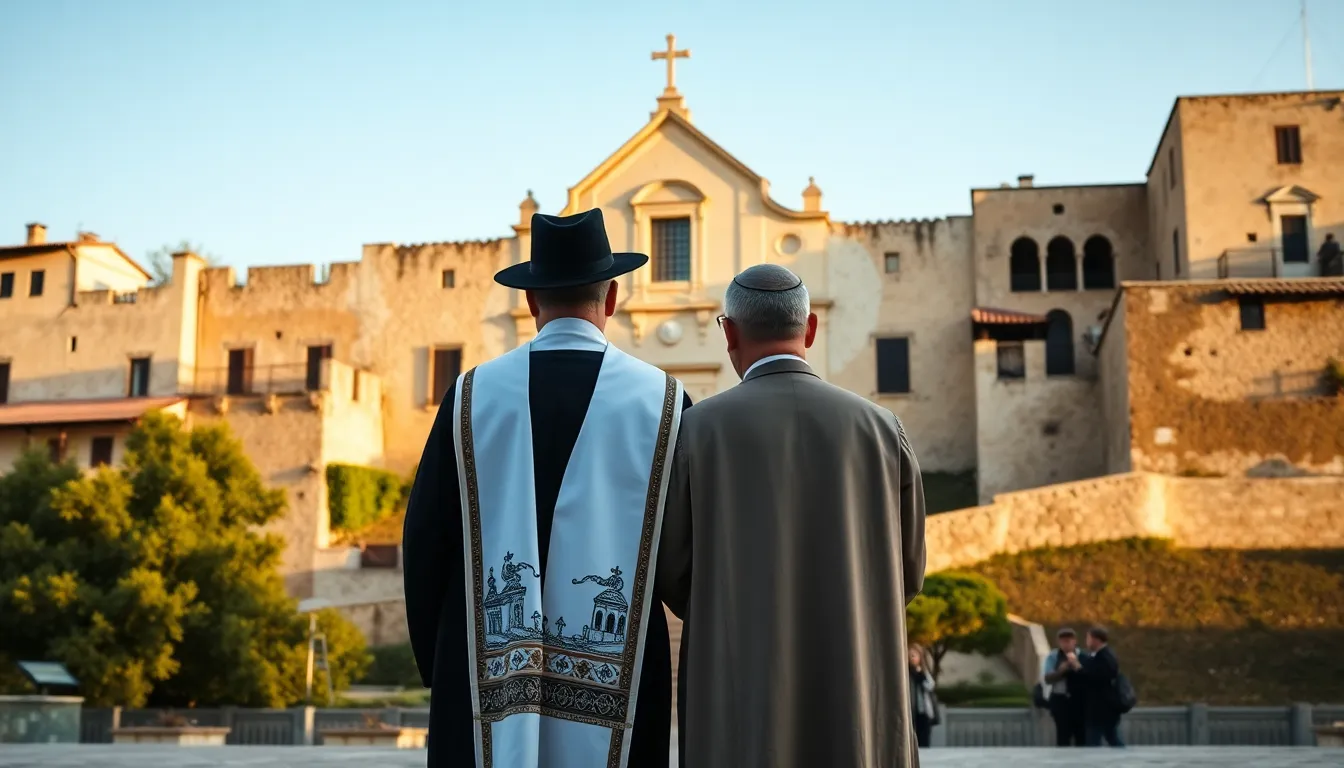
The most moving trip I have ever helped lead to Spain was co-led by a rabbi and a pastor whose congregations sat in the same town and barely knew each other. They had become friends at an interfaith council, and over coffee one afternoon they decided to take their communities to Spain together. Neither had done anything like it. Both were a little nervous. By the last night, standing together in Cordoba, they told me it had become the most important thing either of their congregations had done in years.
Spain is the natural ground for this, more than almost anywhere on earth. For centuries Jews, Christians, and Muslims lived in the same cities, the convivencia, and the heritage they left sits side by side, sometimes inside the same walls. A trip that brings two faith communities to walk that ground together is not a gimmick. It is a conversation that the country itself has already begun, and you are stepping into it. Here is what I have learned about co-leading one well.
Why Spain Is the Right Place for This
You could attempt an interfaith trip to many destinations. Few of them would do the work for you the way Spain does.
In Toledo, a synagogue became a church and kept its Hebrew inscriptions on the walls. In Cordoba, the great mosque holds a cathedral inside it, and Maimonides and Muslim scholars walked the same streets in the same golden age. In Granada, the Alhambra speaks of Muslim Spain while the cathedral nearby speaks of what came after. The layers are not theoretical. They are physical, visible, standing. A mixed group does not have to manufacture a reason to talk about shared history and hard history. The stones raise the questions on their own.
That is the gift and the responsibility of an interfaith Spain trip. The material is rich, and it includes both the beauty of coexistence and the pain of its ending, the expulsion of 1492, the Inquisition, the forced conversions. An honest trip holds both. Handled with care, that honesty is exactly what makes two communities trust each other more by the end.
Co-Leadership Is a Partnership, Plan It Like One
When two clergy lead together, the partnership itself is the foundation of the trip. I have seen it soar and I have seen it strain, and the difference is almost always how much the two leaders prepared together beforehand.
I encourage co-leaders to meet, more than once, well before the trip. Not to plan logistics, the operator handles much of that, but to plan how they will lead together. Who speaks at which site? How will you handle a moment of grief at a place of expulsion? How will you frame prayer in mixed company? What happens when a question comes up that touches real theological difference? Settling the spirit of the partnership in advance means that on the ground, the two of you move as one, and your communities feel it.
The two leaders also model the whole trip. When a rabbi and a pastor are visibly at ease with each other, curious about each other, generous with each other, their congregations relax into the same posture. If the leaders are guarded, the groups stay guarded. You set the tone simply by how you treat each other in front of everyone.
Prepare Both Communities, Together and Apart
Preparation matters on any heritage trip, and double so here. I prepare an interfaith group on two tracks.
First, each community prepares within itself. The Jewish group studies Sephardic history and what 1492 meant to their people. The Christian group studies the Reconquista, the Camino, and the harder chapters of church history in Spain. Each community arrives grounded in its own story. Our guide on preparing your group spiritually for Spain lays out a pre-trip study rhythm that works for either community.
Second, the communities prepare for each other. I like a joint gathering before the trip, even a single one, where the two groups meet, share a meal, and hear from both leaders about what they are walking into together. Some of the best interfaith trips I have seen began with that one shared dinner months before departure. By the time they reached Spain, they were not two groups traveling near each other. They were one group with two roots.
This dual preparation is what turns an interfaith trip from an awkward joint booking into a genuine shared pilgrimage.
Handle the Practical Differences With Care
Two faith communities traveling together bring two sets of practical needs, and ignoring that is how good intentions go wrong.
Dietary observance is the clearest example. A combined group may include kosher, halal, and standard eaters at the same table, and that table is where belonging is built or broken every night. It takes planning, and it is entirely manageable. Our guide on handling dietary needs across a mixed group walks through exactly how, and on an interfaith trip it matters even more, because the shared meal is part of the message.
Prayer and observance need thought too. Will there be moments of Jewish prayer, Christian prayer, both, shared silence? I do not prescribe one answer, because it depends on the two communities. But I do insist the leaders decide together in advance, so no one is improvising a sensitive moment in front of everyone. Often the most powerful approach is the simplest: each tradition prays in its own voice at the right moment, and the other community stands respectfully present. Witnessing another community pray is itself a profound interfaith experience.
And the practical logistics of a larger combined group, mobility, pacing, transport, all still apply. Two congregations means a wider range of ages and needs. Our guide on mixed mobility across a Spain group is worth reading alongside this one.
The Economics of a Co-Led Trip
There is a practical upside to co-leading that I want clergy to know about, because it makes these trips more reachable than people assume.
Two communities combined usually fill a group easily, often well past the threshold where the trip economics work in your favor. With Heritage Tours, when your combined group reaches 15 or more, the group leader travels free, and on a larger combined trip a second leader can often travel free as well. For a rabbi and a pastor leading together, that frequently means both clergy travel free. The trip that felt financially out of reach for either congregation alone becomes very reachable together.
I walk through exactly how this works in our guide on the free group leader economics for Spain. For co-led trips it is genuinely good news, and I raise it early because it changes what two leaders believe is possible.
What Two Communities Carry Home
The reason I love these trips is what happens at the end. Two communities that arrived as strangers leave as people who have stood together in hard and beautiful places, who have seen each other pray, who have eaten at the same table for ten days. That does not undo centuries of history. But it builds something real and local and lasting, a friendship between two congregations that outlives the trip by years.
The rabbi and pastor I mentioned still lead a joint service every year on the anniversary of their trip. Their communities are woven together now in a way a hundred panel discussions could never have managed. That is what Spain can do for two faith communities willing to walk it together. The country has been holding this conversation for a thousand years. An interfaith trip lets your people join it.
FAQ: Co-Leading an Interfaith Trip to Spain
Why is Spain a good destination for an interfaith heritage trip?
Spain holds Jewish, Christian, and Muslim heritage side by side, often inside the same buildings. A synagogue in Toledo that became a church, the mosque-cathedral of Cordoba, the Alhambra and the cathedral in Granada, these layers make the convivencia tangible. A mixed group does not have to invent reasons to discuss shared and difficult history, because the sites raise the questions themselves. That makes Spain uniquely suited to bringing two faith communities together.
How should a rabbi and pastor prepare to co-lead?
Meet more than once well before the trip, not for logistics but to align on how you will lead together. Decide who speaks at which site, how you will handle moments of grief at places of expulsion, and how prayer will work in mixed company. The partnership sets the tone for both communities, so when the two leaders are at ease and generous with each other, their congregations follow. That groundwork is what lets you move as one on the ground.
How do you handle prayer when two faiths travel together?
There is no single answer, and the right one depends on the two communities, so the leaders should decide together in advance rather than improvise a sensitive moment publicly. Often the most powerful approach is the simplest: each tradition prays in its own voice at the right moment while the other community stands respectfully present. Witnessing another community pray is itself a meaningful interfaith experience.
Can both leaders travel free on an interfaith trip?
Often, yes. Two communities combined usually fill a group well past the 15-participant threshold where the group leader travels free, and on a larger combined trip a second leader can frequently travel free as well. For a rabbi and pastor co-leading, that often means both clergy travel free, which makes a trip that felt out of reach for either congregation alone very reachable together.
How do you manage different dietary and observance needs in one group?
With advance planning, and it is entirely manageable. A combined group may include kosher, halal, and standard eaters at the same table, and good operators arrange for everyone to be fed well without anyone feeling singled out. On an interfaith trip this matters even more, because the shared meal is part of the message. The same care applies to prayer, pacing, and mobility across a wider combined group.
If you and a fellow clergy member are dreaming about taking your communities to Spain together, I would be honored to help you build it. Explore our Spain heritage destination and our group heritage tours, then reach out and let us start the conversation.