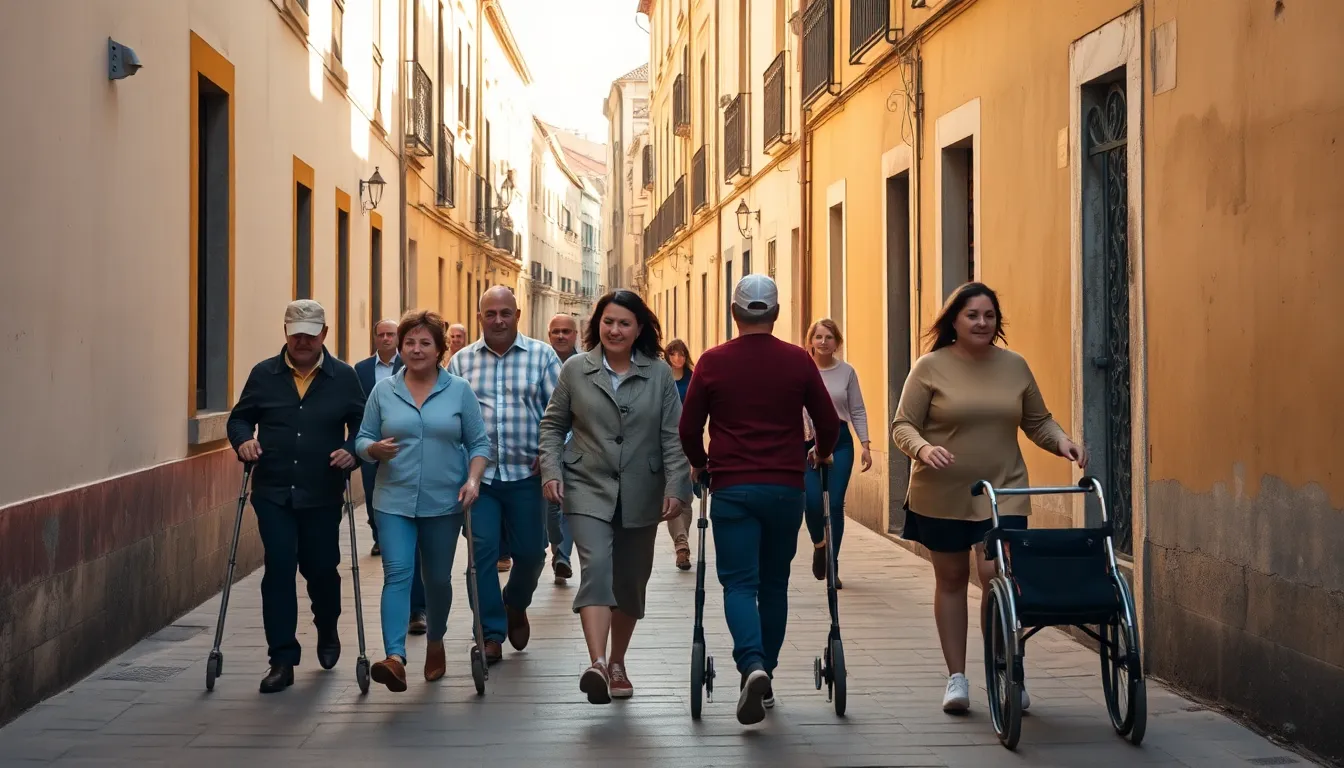
On one of my early Spain trips, a man in his late seventies pulled me aside the night before we left for Toledo. He told me, quietly, that he was worried he would slow everyone down. He had a knee that gave him trouble on stairs, and he had heard the old city was all cobblestones and hills. He almost hadn’t come. He told me he had spent weeks deciding whether to be a burden.
That conversation changed how I lead. No one in my care should ever spend weeks deciding whether they are welcome. A heritage group is, by its nature, a mixed-mobility group. You have congregants in their thirties and congregants in their eighties, people who hike and people who use a cane, travelers recovering from surgery and travelers who simply tire faster than they used to. Keeping all of them included across cities built nine hundred years ago is one of the real arts of leading a Spain trip. It is absolutely doable. Here is how.
Know the Terrain You Are Walking Into
Spain’s heritage sites are beautiful and old, and old means uneven. Honest planning starts with knowing exactly what the ground is like.
Toledo is a hill town. Its Jewish quarter is a maze of narrow, steeply sloped cobblestone lanes, charming to look at and genuinely demanding to walk. Cordoba’s old city is flatter but still cobbled, and the Mezquita involves a fair amount of standing. Granada’s Alhambra sits on a hill, with significant walking across the grounds and uneven historic surfaces throughout. Seville and the cathedral cities involve long walks and standing time. The Camino, by definition, is walking.
None of this is a reason to stay home. It is a reason to plan with eyes open. When you know the terrain in advance, you can build a trip where everyone participates fully, just not always in identical ways.
Find Out What People Actually Need, Early and Privately
You cannot plan for mobility you do not know about. And you will not learn about it by asking a vague question to the whole group.
When I open a trip, I ask every participant, privately and in writing, about their mobility honestly. Not “are you fit to travel,” which makes people defensive, but practical questions. How far can you comfortably walk in a day? Are stairs difficult? Do you use any aids now, or do you tire on uneven ground? Would a wheelchair or a folding stool help on longer site visits? I make clear that there is no wrong answer and no judgment, just planning.
People will tell you the truth if you make it safe to. The man worried about Toledo would have told me weeks earlier if I had asked him directly and gently. Now I always do. I write down what I learn, I keep it confidential, and I share the practical picture with my operator at the planning stage. A heritage operator who knows your group’s real range can build accessible alternatives into the itinerary instead of improvising on the day.
Build the Itinerary to Flex
The secret to a mixed-mobility trip is not finding sites everyone can do identically. It is building a trip with built-in flexibility so everyone does what works for them at each stop.
Plan accessible routes and alternatives at every site. Many heritage sites have a step-free entrance, a smoother path, or an elevator that the standard tourist route ignores. A good operator knows these and routes accordingly. At the Alhambra, for example, the walking is significant but there are ways to reduce it for those who need that.
Build in rest points. I make sure every site visit has somewhere to sit. A shaded bench, a cafe, a wall. For travelers who tire, knowing rest is always close removes the anxiety that makes them hold back. Sometimes I carry a couple of lightweight folding stools for exactly this.
Pace the days realistically. I would rather see four sites well than six in a rush. A slower pace is not only kinder to tired travelers, it makes the trip better for everyone. Nobody comes home wishing they had walked faster between cathedrals.
Use transport smartly. Hotel pickup and dropoff, which Heritage Tours includes for group tours, matters enormously here. It means no congregant has to walk to a meeting point or navigate transit. The day begins and ends at the door. For sites on hills, I look at how close transport can get and plan the walking from there.
Our Spain group tour planning guide goes deeper into pacing and site selection, both of which are where mobility planning really lives.
Let People Choose Without Losing Belonging
Here is the balance that takes real care. Some travelers will not be able to do every single part of every site. The climb to a particular viewpoint, the long walk through the full Alhambra grounds, the steepest lanes of Toledo. The challenge is to let people opt out of a strenuous segment without ever feeling left out of the group.
I handle this by framing choices as choices, not failures. At a demanding site, I will say to the whole group, openly, that there is a fuller walking route and a gentler one, and both are good. People self-select, and nobody is singled out. I make sure the gentler option is genuinely worthwhile, not a consolation prize. And I make sure there is always a companion, often me or a co-leader, with the group that takes the easier path, so no one is ever off on their own.
A second leader is a real asset here. When the group naturally splits at a strenuous site, two leaders mean both groups are cared for. This is one of several reasons I encourage larger groups to bring a co-leader, which often travels free as well. Our guide on how the free group leader economics work explains when a second free seat becomes possible.
Coordinate Mobility and Other Needs Together
Mobility rarely travels alone. The congregants who tire on cobblestones are often the same ones managing medical diets, medications, or the heat. I plan these together rather than in separate silos.
I keep heat in mind, because tired travelers and hot afternoons are a hard combination. I schedule the most demanding walking for cooler parts of the day. I make sure water is always available. And I coordinate dietary needs alongside mobility, because the same advance care serves the same people. Our guide on handling dietary needs across a mixed group pairs directly with this one for exactly that reason.
The throughline is simple. The travelers who need the most care are usually your most devoted participants, the ones who have wanted this trip for years. They deserve a plan that lets them be fully present, not a plan that quietly leaves them behind.
The Goal Is That Everyone Comes Home Moved
When I plan mobility well, the man worried about Toledo walks the parts he can, rests when he needs to, sees everything that matters, and comes home telling everyone it was the trip of his life. That is the standard. Not that everyone does everything identically, but that everyone is fully part of the journey and nobody spends weeks deciding whether they belong.
A heritage trip is about a shared story. The whole point collapses if some of your people are left at the bottom of the hill. With honest planning, flexible itineraries, and a little extra care, they never are.
FAQ: Mixed Mobility on a Spain Heritage Group Trip
Can someone with limited mobility join a Spain heritage trip?
Yes, with planning. Spain’s heritage cities have cobblestones, hills, and historic surfaces, but most sites have accessible routes, step-free entrances, or ways to reduce walking that a good operator builds into the itinerary. Combined with realistic pacing, built-in rest points, and hotel pickup and dropoff, a traveler with limited mobility can be fully included. The key is knowing each person’s real needs in advance.
How do I find out about my group’s mobility needs?
Ask every participant privately and in writing, with practical and judgment-free questions. Instead of “are you fit to travel,” ask how far they can comfortably walk in a day, whether stairs are difficult, whether they use aids, and whether a wheelchair or folding stool would help. Make clear there is no wrong answer. People tell the truth when you make it safe to, and you can then share the practical picture with your operator early.
What are the most challenging sites for mobility in Spain?
Toledo’s Jewish quarter is steep and heavily cobbled, the Alhambra in Granada sits on a hill with significant walking across uneven historic surfaces, and the cathedral cities involve long walks and standing time. The Camino is walking by definition. None of these rule out a mixed-mobility group, but each one rewards advance planning of accessible routes, rest points, and gentler alternatives.
How do I let people skip strenuous parts without making them feel left out?
Frame choices as genuine choices, not failures. At a demanding site, announce to the whole group that there is a fuller route and a gentler one and both are good, so people self-select without being singled out. Make sure the gentler option is genuinely worthwhile and that a leader always accompanies it. A second leader is a real asset here, which is one reason larger groups benefit from a co-leader who often travels free.
Does Heritage Tours help with accessibility planning?
Yes. Hotel pickup and dropoff is included for group tours, which removes the walk to a meeting point or transit navigation entirely. Beyond that, we plan accessible routes and alternatives at each site, build in rest points, pace the days realistically, and coordinate mobility alongside dietary and medical needs. The goal is that every traveler is fully part of the journey, not that everyone does everything in exactly the same way.
If your group spans a wide range of ages and abilities and you want to make sure everyone travels together comfortably, I would be glad to help you plan it. Take a look at our Spain heritage tours and our group heritage tours, then reach out whenever you are ready.