I have walked the Ignatius sites with more than one group, and I have learned to start by telling people what they are about to see is not the story of a saint who was always saintly. It is the story of a vain, ambitious soldier who got his leg shattered by a cannonball, spent a long convalescence with nothing to read but the lives of the saints, and came out a different man. That arc, the conversion in a sickbed, is what makes Ignatius land for a modern congregation. People who would tune out a flawless holy man lean in when they hear about the cannonball.
So let me trace the path the way I trace it on the ground, from the castle where he was born to the cave where he wrote the book that still shapes Jesuit life five centuries later.
The Soldier: Loyola and the Cannonball at Pamplona
Inigo Lopez de Loyola was born around 1491 in the family castle at Loyola, in the Basque country of northern Spain. He was the youngest of many children in a minor noble family, and he grew up wanting exactly what young men of his class wanted: arms, honor, a name made in war and at court. By his own later account he was vain about his appearance, hungry for fame, and not especially devout.
In 1521 he was defending the fortress of Pamplona against a French assault. The garrison wanted to surrender; Ignatius talked them into holding out. A cannonball passed between his legs, shattering one and wounding the other. The fortress fell almost immediately. He was carried back to the castle at Loyola, where the leg was set badly, broken again on purpose, and reset, all without anything we would recognize as anesthesia. He nearly died.
The Long Convalescence
This is the hinge of the whole story, and I slow down for it with every group. Bedridden for months, Ignatius wanted chivalric romances to pass the time, the knightly adventure novels he loved. The castle had none. What it had were two devotional books: a life of Christ and a collection of the lives of the saints. He read them because there was nothing else.
And as he read, he noticed something about his own mind. When he daydreamed about worldly glory and impressing a noble lady, he felt good in the moment but empty afterward. When he imagined doing what Saint Francis or Saint Dominic had done, serving God, the joy stayed with him. He began to pay attention to that difference. That noticing, the careful watching of what different desires leave behind in the soul, became the seed of everything he later taught. The castle at Loyola is where a soldier first learned to read his own interior life.
The Pilgrim: Montserrat and the Vigil of Arms
When he recovered, Ignatius set out as a pilgrim, intending to reach Jerusalem. His first major stop was Montserrat, the mountain monastery I write about elsewhere. There, in 1522, he made a deliberately symbolic break with his old life. He made a general confession over three days. Then he did something a knight would understand: he kept an all-night vigil before the altar of the Black Madonna, the way a young man kept vigil over his arms before being knighted. But Ignatius was reversing the ritual. He laid down his sword and dagger at the altar, gave his fine clothes to a beggar, and put on rough pilgrim’s sackcloth.
I point this out to groups because it shows how Ignatius thought. He did not abandon his identity as a soldier. He converted it. He was still a man under orders, still keeping vigil, still serving a Lord. The whole shape of the religious order he would later found, with its military language and its vow of obedience, is already visible in that night at Montserrat.
The Mystic: The Cave of Manresa
From Montserrat he walked down to the nearby town of Manresa, meaning to stay a few days. He stayed almost a year, from 1522 into 1523. This is the heart of the pilgrimage for me, and the place where I see groups go quiet.
In Manresa Ignatius lived as a beggar, prayed for hours every day, fasted severely, and let his hair and nails grow as a rejection of his old vanity. He went through a period of brutal interior darkness, doubt and scruples so severe he was tempted to suicide. And then, gradually, came a series of profound mystical experiences, including a famous illumination on the bank of the river Cardoner, where he later said he understood more about the things of God in one experience than in all the rest of his life put together.
The Spiritual Exercises
Out of this year in Manresa came the book that still organizes Jesuit life: the Spiritual Exercises. It is not a book you read so much as a book you do, a structured four-week program of prayer, meditation on the life of Christ, and the careful discernment of spirits that Ignatius first noticed in his sickbed at Loyola. Everything he had learned about watching his own desires, he turned into a method that another person could be guided through.
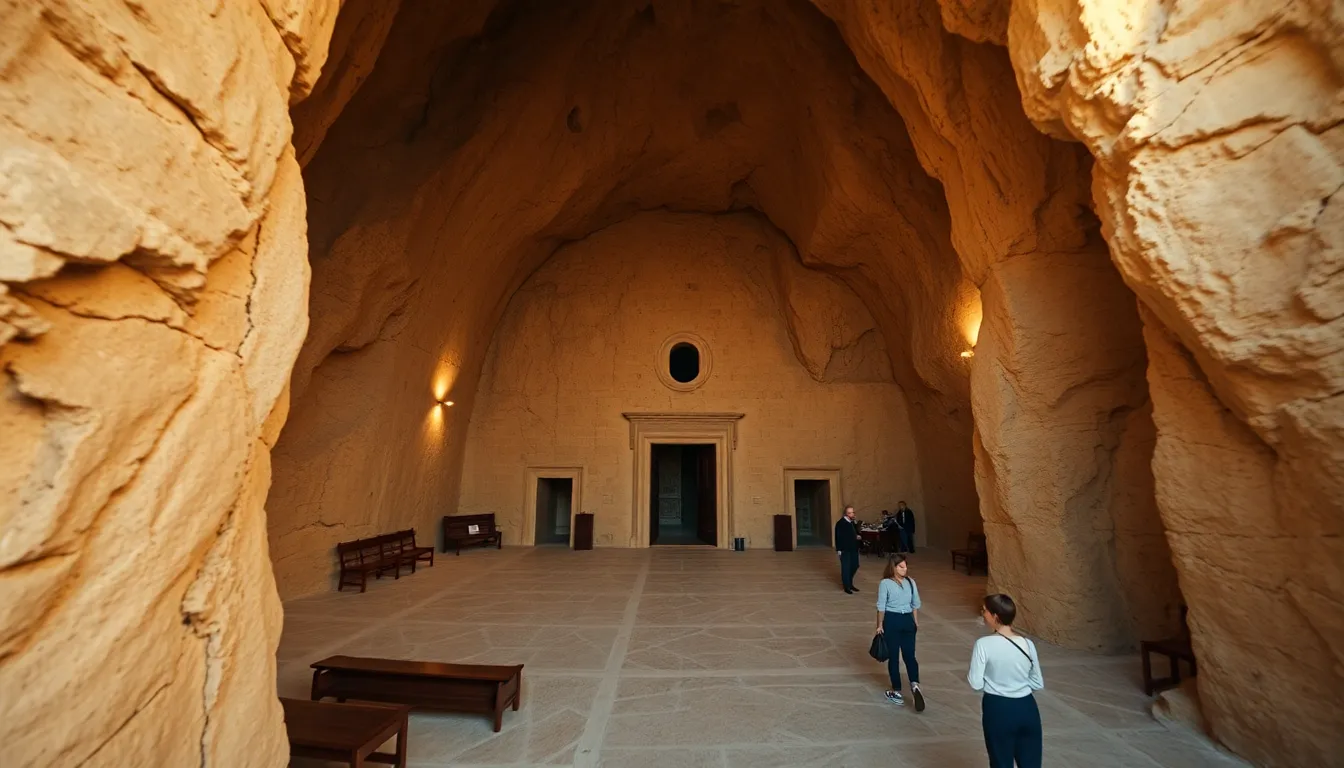
The traditional site associated with all of this is the Santa Cova, the Holy Cave at Manresa, where he is said to have prayed and begun composing the Exercises. A sanctuary was later built around it, and groups can visit the cave today. Standing in that small space, you are at the source of a spiritual method that has formed millions of people, from sixteenth-century missionaries to Pope Francis, the first Jesuit pope.
The Founder: From Pilgrim to the Society of Jesus
The rest of the story moves fast, and I usually tell it standing outside the cave. Ignatius did reach Jerusalem briefly, then realized that to do the work he felt called to, he needed an education. So at over thirty years old, this former soldier sat in classrooms with boys, learning Latin grammar, first in Spain and finally at the University of Paris. There, in 1534, he and a small group of companions, including Francis Xavier, took vows together. They called themselves the Society of Jesus. In 1540 the pope formally approved the order. The Jesuits became the great teaching and missionary order of the Catholic Reformation, founding schools and universities across the world, many of which still bear the name today.
Ignatius spent his last years in Rome directing the order and is buried there. But the man was made in Spain, in three places a faith group can still stand: the castle where the cannonball found him, the mountain where he laid down his sword, and the cave where he wrote the book.
Planning an Ignatian Itinerary
These sites cluster in two regions. Loyola is in the Basque country in the north, near San Sebastian. Montserrat and Manresa are close together in Catalonia, an easy pairing within an hour of Barcelona and of each other. A group can do Montserrat and Manresa in a single full day, which is why I usually anchor the Ignatian story in Catalonia and treat Loyola as a northern extension for groups with the time.
For mixed groups, I am honest that this is a Catholic story at its core, tied to a specific religious order. But the human arc, ambition broken open, a long convalescence, learning to read your own heart, travels well beyond Catholicism. Protestant pastors have told me the Manresa cave gave them one of the best conversations of the trip about discernment and calling.
If you are building the wider trip, the Ignatian sites sit naturally alongside the Montserrat mountain monastery just up the road, and they fit into the broader picture I lay out in our guide to spiritual sites in Spain. For groups going north, the Basque section connects well with the cathedral cities of the Camino.
FAQ: The Ignatius of Loyola Heritage Trail
Who was Saint Ignatius of Loyola?
Ignatius was a Basque nobleman and soldier born around 1491 who underwent a dramatic conversion after a cannonball shattered his leg at the siege of Pamplona in 1521. During a long convalescence he turned from a worldly life toward God, became a pilgrim and mystic, wrote the Spiritual Exercises, and went on to found the Society of Jesus, the Jesuits, in 1540. He is one of the most influential figures of the Catholic Reformation.
What happened at the cave of Manresa?
After his conversion, Ignatius spent nearly a year in Manresa in 1522 and 1523, praying intensely, fasting, and passing through a period of deep spiritual crisis followed by profound mystical illumination, including a famous experience on the banks of the river Cardoner. The cave there, the Santa Cova, is the traditional site where he prayed and began composing the Spiritual Exercises, the structured prayer program that still shapes Jesuit spirituality today.
Are the Ignatius sites suitable for a Protestant group?
Yes, with the right framing. The core story is Catholic and tied to the Jesuit order, but the human journey of ambition broken open, a long forced pause, and learning to read one’s own desires resonates across traditions. Many Protestant leaders find the cave of Manresa sparks rich conversation about discernment, calling, and conversion. It works best as a guided visit with context rather than a devotional stop.
Where are the main Ignatian sites located in Spain?
They fall in two regions. The castle at Loyola, where Ignatius was born and convalesced, is in the Basque country near San Sebastian in the north. Montserrat, where he laid down his sword, and Manresa, where he wrote the Spiritual Exercises, are close together in Catalonia, both within about an hour of Barcelona. Groups often do Montserrat and Manresa together in one day.
How does Ignatius connect to the Jesuits and Pope Francis?
The Society of Jesus, founded by Ignatius and his companions in 1540, became the leading teaching and missionary order of the Catholic Church and established schools and universities worldwide. Pope Francis, elected in 2013, was the first Jesuit pope, formed in the same Ignatian spirituality that traces directly back to the cave at Manresa. Visiting these sites connects a group to a living tradition, not just a historical one.
If the path of Ignatius speaks to your community, I would be glad to help you build it into a Spain itinerary that gives each site the time it deserves. Reach out to us here.