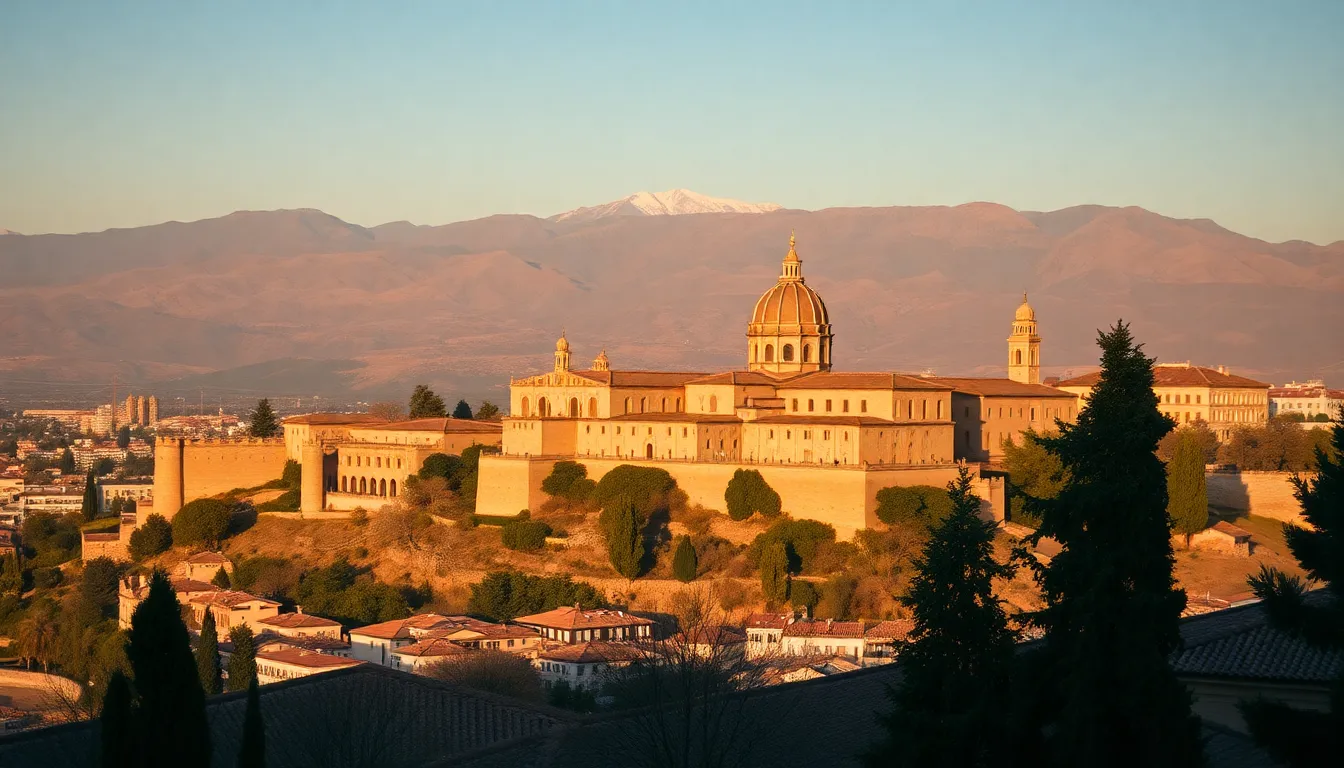
There is a hill in Granada called the Mirador de San Nicolas, and I take every group there in the late afternoon. You stand at the railing, the Alhambra glows red and gold across the valley, the snow on the Sierra Nevada catches the last light behind it, and for a few minutes nobody needs to say anything. Then I tell them the date. 1492. This is where it ended, I say, and this is where so much of what came after began. The mood always shifts. Granada is beautiful, but it is also the place where the long story of three faiths sharing Spain came to its close.
I have been bringing faith communities to Granada for more than twenty years, and it is the city I most often save for last on an Andalusian itinerary, because it gathers up everything the rest of the trip has been building toward. Let me orient you to its layers, the Moorish, the Christian, and the Jewish, and to the turning point that makes Granada different from anywhere else in Spain.
Why 1492 Makes Granada Different
For nearly eight centuries, parts of Spain were ruled by Muslim dynasties, and Granada was the last of them. The Nasrid kingdom of Granada held out long after the rest of the peninsula had fallen to Christian forces. Then, in January 1492, Granada surrendered to Ferdinand and Isabella. The last Muslim ruler handed over the keys to the city, and the Reconquista was complete.
That same year, the very same monarchs issued the Alhambra Decree, ordering every Jew in Spain to convert or leave. It was signed in Granada, in the palace that gives the decree its name. And it was in Granada that Ferdinand and Isabella received Christopher Columbus and agreed to fund the voyage that would reach the Americas. Three world-changing events, in one city, in one year. For a heritage group, Granada is where the abstract history of Spain becomes a single, specific, devastating turning point you can stand inside.
The Moorish Layer: The Alhambra
The Alhambra is one of the great wonders of the world, and no description quite prepares a group for it.
Built and expanded by the Nasrid rulers across the 13th and 14th centuries, the Alhambra is a palace and fortress complex spread across a hilltop, with the Sierra Nevada rising behind it. Inside the Nasrid Palaces, the craftsmanship is almost overwhelming: walls covered in carved plaster fine as lace, ceilings of inlaid wood and honeycombed stucco, Arabic inscriptions repeating the phrase “there is no victor but God,” and courtyards organized around water and light. The Court of the Lions, with its famous fountain ringed by stone lions, and the Hall of the Two Sisters, with its breathtaking domed ceiling, are the kind of spaces people remember for the rest of their lives.
Beside the palaces lie the Generalife gardens, the summer retreat of the Nasrid rulers, where pools, fountains, and terraced plantings express the Islamic vision of the garden as a foretaste of paradise. I always give groups time to simply sit here. The Alhambra is the high point of Moorish Spain, the most complete surviving expression of a civilization that shaped this land for eight hundred years.
The Christian Layer: The Cathedral and the Royal Chapel
When the Christian monarchs took Granada, they set about marking the city as their own, and that effort produced the Christian heart of Granada.
Granada Cathedral
The Cathedral of Granada was begun in the early 16th century, on the site of the city’s main mosque, and built in a soaring Renaissance style. Its bright, towering interior is a deliberate contrast to the intimate, inward beauty of the Alhambra, a statement of a new order. For a pastor planning a Christian heritage day, the cathedral is a powerful anchor and a clear illustration of how Christian Spain stamped its identity onto a newly conquered city.
The Royal Chapel
Attached to the cathedral is the Royal Chapel, and for understanding Granada it may matter even more than the cathedral itself. This is where Ferdinand and Isabella, the monarchs who completed the Reconquista, expelled the Jews, and funded Columbus, are buried. Standing before their tombs, your group is standing at the literal resting place of the people who set 1492 in motion. I find groups grow very quiet here, and I let them. It is one thing to read about a turning point. It is another to stand at the graves of those who turned it.
The Jewish Layer: The Realejo and the Weight of the Decree
Granada’s medieval Jewish quarter was the Realejo, on the slopes below the Alhambra. The Jewish presence here was old and significant. In fact, the city was sometimes known as Granada of the Jews in earlier centuries, a sign of how substantial the community once was.
The physical traces of Jewish Granada are faint today, fainter than the synagogues you can still enter in Toledo or Cordoba. The expulsion, the centuries of building over the quarter, and the sheer finality of 1492 erased most of the visible evidence. But the Realejo’s streets still hold the shape of the old neighborhood, and a good guide can walk your group through it while telling the story of what was lost.
What gives Granada its particular weight for a Jewish heritage group is not a single surviving building. It is the fact that the decree that ended Jewish life in Spain was signed here, in the Alhambra, in the same season that the city fell. To stand in Granada is to stand at the place where eight centuries of Sephardic history in Spain were brought to a close. For a rabbi bringing a congregation, that is a profound and difficult thing to sit with together, and it is exactly why Granada belongs at the end of the journey.
Planning Your Group’s Visit to Granada
A few practical notes for group leaders.
First, and I cannot stress this enough: book the Alhambra well in advance. It is one of the most visited monuments in the world, daily numbers are capped, and the timed entry slots for the Nasrid Palaces sell out weeks ahead, especially in spring and autumn. A group that arrives without tickets will not get in. Working with an operator who secures Alhambra access early removes this risk entirely.
Second, the Alhambra is large and involves a good deal of walking on uneven ground, with some slopes and steps. For a mixed-age group, plan a steady pace, bring water and sun protection, and let a local guide structure the visit so that older members are not worn out before reaching the Nasrid Palaces, which are the emotional core.
Third, take the season seriously. Granada sits higher than Cordoba and Seville, so its summers are a little less brutal, but July and August are still hot, and the Alhambra offers limited shade. Spring and autumn are ideal. Granada also gets genuinely cold in winter, with snow on the nearby Sierra Nevada, which is beautiful but worth planning around.
Fourth, Granada is the natural finale of an Andalusian heritage route with Cordoba and Seville. Ending in Granada, at the site of 1492, gives a group’s journey a shape and a weight that staying with us long after they go home.
A heritage tour is not a standard sightseeing trip, and the right operator makes the difference. At Heritage Tours, we build every itinerary around what matters to your specific community, and with 15 or more participants, the group leader travels free.
If Granada belongs in your community’s journey, I would love to help you plan it. Start with our Spain heritage travel guide, or look at the nearby Seville heritage guide and Cordoba heritage guide to see how an Andalusian route builds toward Granada. You can also explore the wider Spain destination and our group heritage tours.
FAQ: Visiting Granada on a Heritage Tour
Why is 1492 so significant in Granada?
Three world-changing events happened in Granada in 1492. The city’s surrender completed the Christian Reconquista of Spain. The Alhambra Decree, ordering every Jew in Spain to convert or leave, was signed there. And Ferdinand and Isabella received Christopher Columbus in Granada and agreed to fund his voyage. For heritage groups, Granada is where a pivotal turning point in Jewish, Christian, and world history can be felt in one place.
Do we need to book the Alhambra in advance?
Absolutely, and as early as possible. The Alhambra caps daily visitors, and timed slots for the Nasrid Palaces sell out weeks ahead, especially in spring and autumn. A group without tickets will not get in. Working with an operator who secures Alhambra access early is the safest way to guarantee your group sees it.
What is left of Jewish Granada?
The physical traces are faint. The medieval Jewish quarter, the Realejo, sits below the Alhambra, and its streets still hold the shape of the old neighborhood, but few visible buildings survive. Granada’s importance for Jewish heritage lies less in surviving sites than in being the place where the 1492 decree that ended Jewish Spain was signed.
When is the best time of year to visit Granada?
Spring and autumn are ideal. Granada sits at a higher elevation than Cordoba and Seville, so its summers are slightly milder, but July and August are still hot and the Alhambra offers limited shade. Winters are cold with snow on the nearby Sierra Nevada. Aim for April, May, September, or October for comfortable group travel.
Do group leaders travel free to Granada with Heritage Tours?
Yes. When your group includes 15 or more participants, the group leader travels free on all Heritage Tours itineraries, including any route that features Granada. It is our way of honoring the work spiritual leaders put into bringing their communities together.