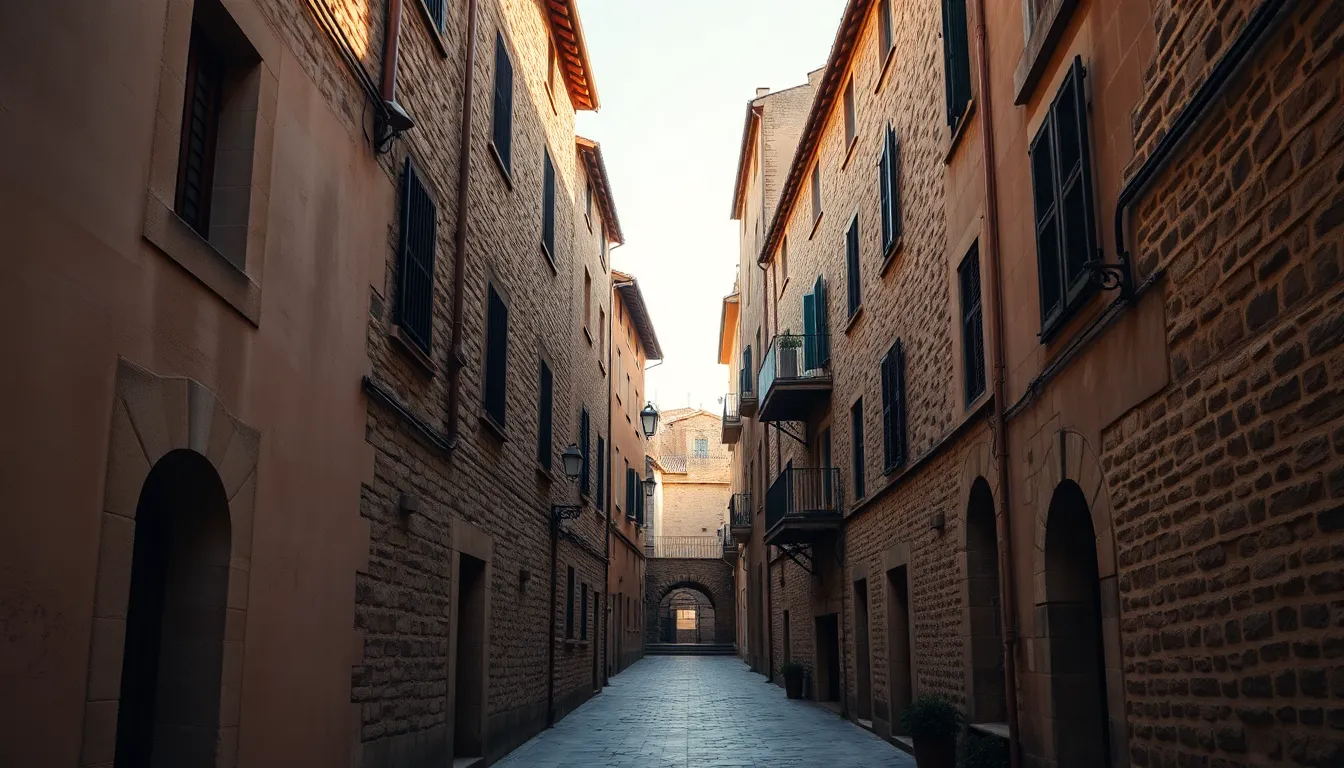
I remember the first time a group of mine turned a corner into the Call of Girona. Nobody said anything for a while. The streets are so narrow that two people can barely walk abreast, the stone is worn smooth by eight centuries of footsteps, and the light filters down between tall buildings the way it must have done when this was a living Jewish neighborhood. One woman in the group whispered, “It feels like they only just left.” She was right. Girona’s Jewish quarter is one of the best-preserved in all of Europe, and walking it is a different experience from reading about it.
I have been bringing faith communities to Catalonia for more than twenty years, and Girona is the city I most often hear people say they wish they had known about sooner. It sits about an hour and a half north of Barcelona, and it is small, walkable, and deeply layered. Let me give you the orientation: the Jewish layer, the Christian layer, the Moorish traces, and what your group needs to know.
Why Girona Is Worth the Trip
Girona does not have the name recognition of Toledo or the size of Barcelona, and that is part of why it is so rewarding. The old city, perched above the Onyar River, has survived remarkably intact. The medieval walls still stand. The cathedral still dominates the skyline. And the Call, the old Jewish quarter, is one of the most complete medieval Jewish neighborhoods left anywhere in the world.
For a heritage group, Girona offers something rare: a sense of scale you can actually grasp. You can walk the entire old city in a day, see how the Jewish, Christian, and earlier communities fit together within the same walls, and come away with a clear, felt understanding of how a medieval Spanish city worked. It pairs beautifully with Barcelona and Montserrat for a Catalonia itinerary.
The Jewish Layer: The Call
For around six hundred years, Girona was home to one of the most important Jewish communities in Catalonia. At its peak the Call was a dense, self-contained neighborhood of homes, schools, ritual baths, and synagogues. It was also a center of Jewish learning and, notably, of Kabbalistic thought. The great medieval scholar Nachmanides, the Ramban, was associated with Girona, and the city was a hub of Jewish mysticism in the 13th century.
Walking the Call today, you move through narrow stepped alleys and hidden courtyards that have changed very little in structure since the community lived here. After the 1492 expulsion, the quarter was sealed off and built over, which is part of why so much of it survived. Wandering these lanes, you are walking ground that Sephardic families called home for centuries before the decree forced them out.
The Museum of Jewish History
At the heart of the Call is the Bonastruc ca Porta Center, which houses the Museum of Jewish History. Built on the site of the medieval synagogue and community buildings, it tells the story of Jewish life in Girona and across Catalonia, from daily religious practice to the trauma of the expulsion. It also holds a remarkable collection of medieval Jewish tombstones recovered from the old cemetery. For a rabbi bringing a congregation, this is not a museum stop. It is the place where this community is remembered, and it gives shape to everything you see in the streets outside.
The Christian Layer: The Cathedral and the Basilica
Girona’s Christian heritage rises, quite literally, above the Jewish quarter.
Girona Cathedral
The Cathedral of Girona crowns the old city, reached by a dramatic flight of ninety steps. Inside, it holds the widest Gothic nave in the world, a single vast span that genuinely surprises people who walk in expecting rows of columns. The cathedral museum holds the Tapestry of Creation, an extraordinary embroidered medieval work depicting the creation story, and a beautifully illuminated medieval manuscript of the Commentary on the Apocalypse. For a pastor planning a Christian heritage day, the cathedral is a powerful anchor, and the climb up those steps tends to focus a group’s attention before they even enter.
The Basilica of Sant Feliu
Just below the cathedral stands the Basilica of Sant Feliu, with its distinctive truncated bell tower, one of the symbols of the city. It is one of the oldest churches in Girona and worth a quiet visit. Together, the cathedral and Sant Feliu give Christian groups a clear sense of the religious life that grew up alongside, and eventually displaced, the Jewish community below.
The Moorish and Earlier Layers: Arab Baths and Roman Walls
Girona’s deeper layers are subtler than in Andalusia, but they are present and worth pointing out to a group.
The so-called Arab Baths are a striking example. Despite the name, the structure that stands today is a 12th-century Christian-era building, but it was modeled directly on the Islamic and earlier Roman bathing traditions, with a beautiful domed central chamber supported by slender columns. It shows how the architectural ideas of Al-Andalus traveled north and shaped building even in Christian Catalonia.
You can also walk long stretches of the medieval city walls, parts of which sit on Roman foundations. The walk along the ramparts gives you sweeping views over the old city and the surrounding countryside, and it helps a group understand how the whole settlement was organized and defended. It is one of my favorite ways to end a day in Girona, with the late light on the stone.
Planning Your Group’s Visit to Girona
A few practical notes for group leaders.
First, Girona is about 100 kilometers north of Barcelona, roughly 40 minutes by high-speed train or about an hour and a half by road. Most groups visit it as a day trip from Barcelona, though the old city is genuinely lovely in the evening once the day visitors leave, so an overnight is worth considering.
Second, the old city is steep and cobbled, with stairs throughout, including the ninety steps up to the cathedral. For a mixed-age group, plan a sensible pace, build in rest stops, and let a local guide structure the route so the climbs are spread through the day rather than stacked at the start.
Third, Girona is compact enough that you do not need to rush. A focused day comfortably covers the Call, the Museum of Jewish History, the cathedral, Sant Feliu, the Arab Baths, and a walk along the walls. Spring and autumn are the most comfortable seasons. Summer is warm but more manageable here than in central or southern Spain.
A heritage tour is not a standard sightseeing trip, and the right operator makes the difference between seeing Girona and understanding it. At Heritage Tours, we build every itinerary around what matters to your specific community, and with 15 or more participants, the group leader always travels free.
If Girona belongs in your community’s journey through Spain, I would love to help you plan it. Start with our Spain heritage travel guide, or compare it with the Toledo heritage guide and the Cordoba heritage guide to see how different Jewish quarters tell the story. You can also explore the wider Spain destination and our group heritage tours.
FAQ: Visiting Girona on a Heritage Tour
What is the Call of Girona?
The Call is Girona’s medieval Jewish quarter, home to an important Jewish community for around six hundred years and a center of Kabbalistic learning. It is one of the best-preserved Jewish quarters in Europe, with narrow stepped streets and hidden courtyards largely unchanged since the community lived there before the 1492 expulsion.
Is Girona a good day trip from Barcelona?
Yes. Girona is about 100 kilometers north of Barcelona, roughly 40 minutes by high-speed train. Many groups visit it as a day trip, often combined with Montserrat or the Costa Brava. That said, the old city is especially peaceful in the evening, so an overnight stay is worth considering if your schedule allows.
What should a Jewish heritage group see in Girona?
The essentials are the Call itself, walked slowly, and the Museum of Jewish History at the Bonastruc ca Porta Center, which sits on the site of the medieval synagogue. The museum’s collection of medieval Jewish tombstones is particularly moving. Together they tell the full story of Girona’s Jewish community.
Is Girona manageable for older group members?
It requires some planning. The old city is steep and cobbled, with stairs throughout, including ninety steps up to the cathedral. With a sensible pace, rest stops, and a local guide who spreads the climbs through the day, mixed-age groups manage well. Good shoes are essential.
Do group leaders travel free to Girona with Heritage Tours?
Yes. When your group includes 15 or more participants, the group leader travels free on all Heritage Tours itineraries, including any route that features Girona. It is our way of honoring the work spiritual leaders put into bringing their communities together.