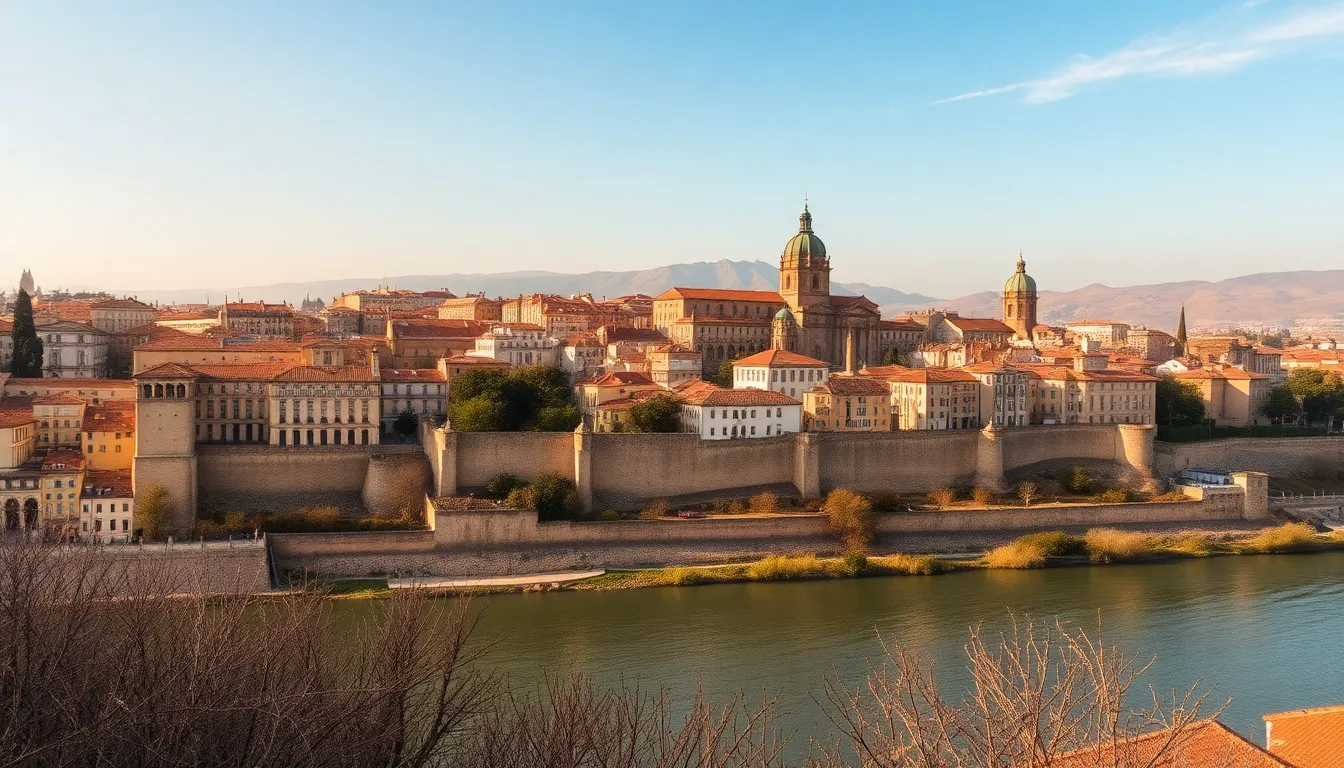
The first time I brought a group to Toledo, an older man in our party stopped in the middle of a narrow street, put his hand on the stone wall, and just stood there. He had read about the city for years. He never expected to feel it in his body. That is what Toledo does. It is the one place in Spain where the three faiths that shaped the country are still standing within a few minutes’ walk of each other, on the same hilltop, inside the same walls.
I have been bringing faith communities to Toledo for more than twenty years, and I still tell every group leader the same thing before we go: this is not a city you rush. Toledo rewards slow walking and open eyes. So let me give you the full orientation, the Jewish layer, the Christian layer, the Moorish layer, and the practical knowledge you need to plan a day or two here that your people will remember.
Why Toledo Is Called the City of Three Cultures
For centuries, Toledo was a place where Jews, Christians, and Muslims lived in the same compact medieval city. It was the capital of Castile, a center of learning, and home to the famous School of Translators, where scholars from all three faiths worked side by side rendering Arabic, Hebrew, and Greek texts into Latin. That translation work helped carry classical and scientific knowledge into the rest of Europe.
The phrase “city of three cultures” gets used on every brochure, and it can start to sound like marketing. But in Toledo it is literally true and physically visible. You can stand in one spot and see a former synagogue, a cathedral, and Moorish brickwork in your line of sight. That density is what makes Toledo such a powerful first stop for a heritage group. It sets up the whole story of Spain in a single afternoon.
The Jewish Layer: The Juderia and Two Surviving Synagogues
Toledo held one of the most important Jewish communities in medieval Europe. At its height, the Juderia, the Jewish quarter, was a thriving neighborhood of homes, schools, and several synagogues. Two of those synagogues are still standing today, and they are the heart of any Jewish heritage visit to the city.
Santa Maria la Blanca
Built around 1180, Santa Maria la Blanca is often described as the oldest synagogue building still standing in Europe. Walk inside and the first thing you notice is the forest of white horseshoe arches and the carved capitals. The architecture is Moorish, built by Muslim craftsmen, for a Jewish congregation, in a Christian kingdom. It later became a church, which is why it carries a Christian name today. All three faiths are present in this one room, and I always pause here to let a group sit with that.
El Transito and the Sephardic Museum
A short walk away is the Synagogue of El Transito, built in the 14th century by Samuel ha-Levi, treasurer to King Pedro of Castile. The interior is extraordinary, with Hebrew inscriptions and intricate stucco work running along the upper walls. Today it houses the Sephardic Museum, which tells the story of Jewish life in Spain before and after the expulsion. For a rabbi bringing a congregation, this is not a museum stop. It is a place where your community’s story was lived, and lost, and remembered.
After 1492, when Ferdinand and Isabella ordered every Jew in Spain to convert or leave, the Juderia emptied. Walking these streets today, you are walking ground that Sephardic families called home for centuries before that decree. I find groups grow quiet here on their own.
The Christian Layer: The Cathedral and the City of El Greco
Toledo was the religious capital of Catholic Spain for centuries, the seat of the Primate of Spain, and the Christian heritage here is correspondingly deep.
Toledo Cathedral
The Cathedral of Toledo is one of the great Gothic cathedrals of Europe, and photographs genuinely do not prepare you for the scale of it. Construction began in the 13th century and continued for more than 250 years. Inside, the main altarpiece, the choir stalls, and the Transparente, a baroque skylight sculpture that pulls daylight down onto the altar, are the kind of thing that stops a group in its tracks. The sacristy holds paintings by El Greco, Goya, and others. For a pastor planning a Christian heritage day, the cathedral alone justifies the trip up to Toledo.
El Greco’s Toledo
The painter El Greco spent the most productive years of his life in Toledo, and the city is full of his work. His masterpiece, The Burial of the Count of Orgaz, hangs in the Church of Santo Tome, exactly where he painted it to hang. Standing in front of it in the actual church, rather than in a distant museum, is a different experience entirely. Christian groups often find this a quiet, moving moment late in the day.
The Moorish Layer: Brick, Arches, and the Mudejar Style
Toledo was under Muslim rule for roughly 370 years, from 712 until Christian forces took the city in 1085. That long presence left a permanent mark, not only in surviving structures but in a whole architectural style that outlived Muslim rule itself.
You will see the word “Mudejar” throughout the city. It refers to the work of Muslim craftsmen who continued building in their own tradition under Christian rule, blending Islamic decorative forms with Christian and Jewish needs. The brickwork, the horseshoe arches, the geometric patterns, much of what makes Toledo look the way it does is Mudejar. The two surviving synagogues are themselves Mudejar buildings.
Look for the Puerta del Sol and the Puerta Bisagra, the old city gates, and the bell tower of the Church of Santo Tome, which began life as a minaret. The Moorish layer in Toledo is not a single famous monument. It is the texture of the whole city, and once a group learns to see it, they see it everywhere.
Planning Your Group’s Day in Toledo
Here is what I tell every group leader before we go.
First, Toledo sits about 70 kilometers south of Madrid, roughly an hour by road or about 33 minutes on the high-speed train. Many groups base themselves in Madrid and visit Toledo as a full day. I will be honest: a single day works, but if your itinerary allows it, staying one night inside the old city is worth it. Toledo after the day-trippers leave, lit up in the evening, is a completely different and more peaceful place.
Second, the city is built on a steep hill, with narrow cobbled streets and plenty of stairs. For a mixed-age group, this matters. Wear good shoes, plan rest stops, and consider the escalators on the north side of the city that carry you up from the lower car parks. A good local guide will pace the day so that older members are not exhausted by lunch.
Third, the major sites require some planning. The cathedral, El Transito, and Santa Maria la Blanca can all draw crowds, and a combined tourist bracelet covering several monuments saves both money and time. Spring and early autumn are the best seasons. Summer in central Spain is genuinely hot, and Toledo’s stone streets hold the heat.
Fourth, the right operator makes the difference between seeing Toledo and understanding it. A heritage tour is not a standard sightseeing trip. You need someone who can connect the synagogues, the cathedral, and the Mudejar streets into one coherent story for your community. At Heritage Tours, we build every itinerary around what matters to your specific group. And with 15 or more participants, the group leader travels free.
If Toledo is part of the journey you are imagining for your community, I would love to help you shape it. Start with our full Spain heritage travel guide, or explore the wider Spain destination and our group heritage tours to see how the group leader experience works.
FAQ: Visiting Toledo on a Heritage Tour
How much time do I need in Toledo for a heritage group?
A full day covers the essentials: both synagogues, the cathedral, and a walk through the Juderia and the Mudejar streets. If your itinerary allows it, an overnight stay lets you experience the old city in the evening, after the day crowds leave, which many groups find is the most memorable part of their visit.
What are the must-see Jewish heritage sites in Toledo?
The two surviving synagogues are essential. Santa Maria la Blanca, from around 1180, is often called the oldest synagogue building still standing in Europe. El Transito, from the 14th century, houses the Sephardic Museum, which tells the story of Jewish Spain before and after the 1492 expulsion. Together they anchor any Jewish heritage visit to the city.
Is Toledo suitable for older or less mobile group members?
It requires some planning. Toledo sits on a steep hill with cobbled streets and stairs. With good shoes, a sensible pace, rest stops, and use of the city’s escalators from the lower car parks, mixed-age groups manage well. A local guide who knows how to structure the day around mobility makes a real difference.
How do we get to Toledo from Madrid?
Toledo is about 70 kilometers south of Madrid. The high-speed train takes roughly 33 minutes from Madrid’s Atocha station, and driving takes about an hour. Many groups base in Madrid and visit Toledo as a day trip, though staying a night in the old city is worth considering.
Do group leaders travel free to Toledo with Heritage Tours?
Yes. When your group includes 15 or more participants, the group leader travels free on all Heritage Tours itineraries, including any trip that features Toledo. It is our way of honoring the work spiritual leaders put into bringing their communities together.