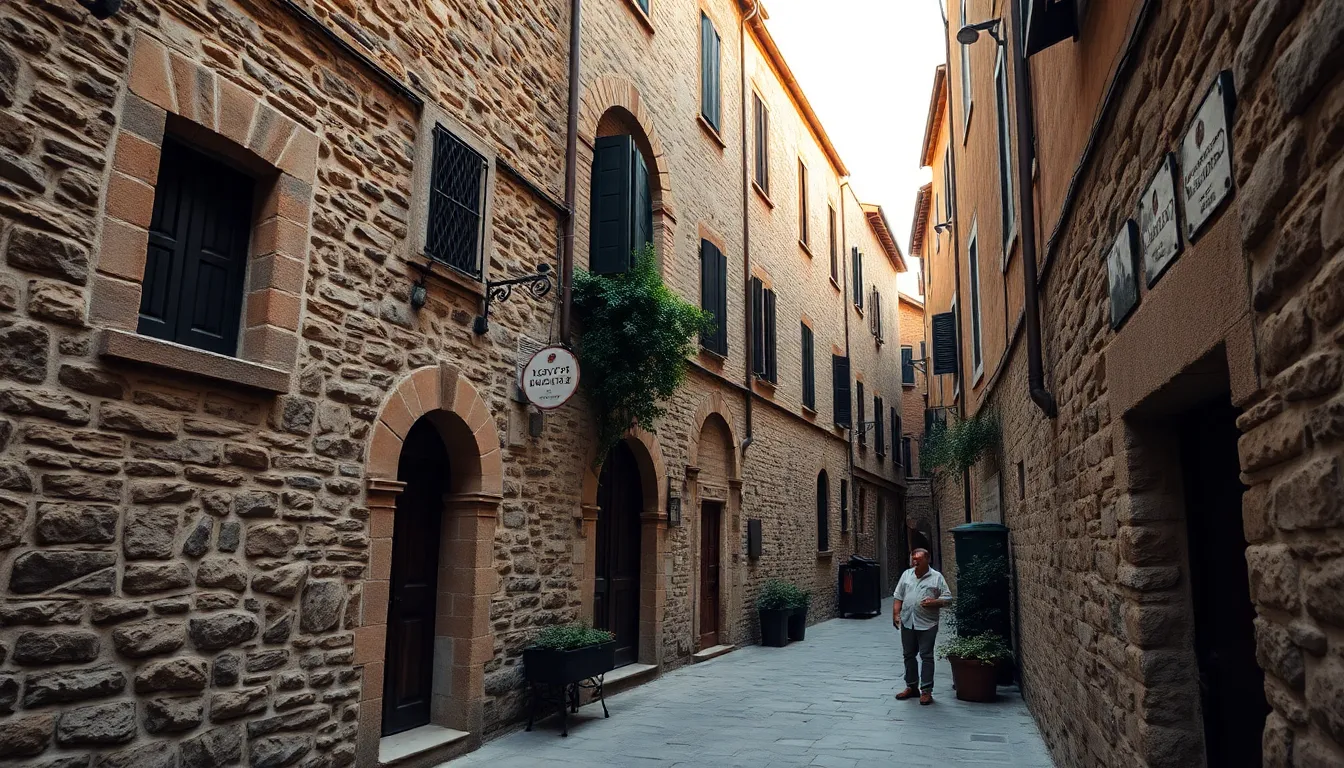
I have stood with a lot of groups in a lot of holy places. But there is a particular kind of stillness that comes over a learning-focused congregation when I tell them, in the lanes of Girona, that they are walking through the city of the Ramban. People who have studied his commentary their whole lives, who have wrestled with his words in a beit midrash thousands of miles away, suddenly find themselves standing where he stood. One man told me he had been arguing with Nachmanides in the margins of his Chumash for forty years, and only now did he feel he had finally met him. That is what this place does.
For a group leader, Nachmanides is not just a name to mention in passing. His life is one of the great stories of medieval Spain, and telling it well can turn a walk through Girona into the spiritual center of an entire trip. So let me lay out who he was, what happened to him, and how to bring his heritage alive for the people you lead.
Who Was Nachmanides?
Moses ben Nachman was born in Girona around 1194. The Jewish world knows him by the Hebrew acronym Ramban, which can confuse first-time travelers, since it sounds close to Rambam, the acronym for Maimonides. They are two different giants, separated by roughly a century. Maimonides was the philosopher of Cordoba. Nachmanides was the mystic and commentator of Girona.
He was, by any measure, extraordinary. A Torah scholar of the first rank, a physician by profession, a philosopher, a kabbalist, and a poet. His commentary on the Torah is one of the most studied and beloved in all of Jewish literature, known for weaving plain meaning together with mystical depth in a way no one had quite done before him. He led the Jewish community of Catalonia for much of his life and was recognized across Spain as its leading rabbinic authority.
When I introduce him to a group, I try to make this concrete. This is not a distant figure from a textbook. This is a man who walked the same hillside lanes my group is walking, who practiced medicine in this city, who wrote words that are still opened and studied every single week around the world.
Girona, the City That Formed Him
Girona in the 13th century held one of the most important Jewish communities in Catalonia, and Nachmanides was its heart. The Call, the Jewish quarter, was a center of learning, and the circle of scholars around Nachmanides made Girona a hub of early Kabbalah, the Jewish mystical tradition that was flowering in this region during his lifetime.
This is why a visit to Girona is the right setting to tell his story. The quarter survived as a near-intact medieval neighborhood, which means you can stand in the actual streets of his world. I walk groups through the lanes of the Call and pair the experience with the Museum of Jewish History, which holds gravestones, documents, and objects from exactly this period. Our fuller guide to the Call of Girona covers how to plan that walk, and it is the natural place to anchor a day built around Nachmanides.
What I want groups to feel is that his greatness did not happen in a vacuum. It grew out of this specific community, in this specific city, surrounded by other scholars who were pushing Jewish thought in new directions. Girona made the Ramban, and the Ramban made Girona.
The Disputation of Barcelona
No account of Nachmanides is complete without the Disputation of Barcelona, and for a group leader this is the part of his story that carries the most weight. It deserves to be told with care, because it shows both his brilliance and the precariousness of Jewish life in his time.
In 1263, King James I of Aragon summoned Nachmanides, then nearly seventy years old, to a public religious debate in Barcelona. His opponent was Pablo Christiani, a Jew who had converted to Christianity and now sought to use Jewish texts to prove Christian doctrine. The setup was not a fair exchange of ideas. It was a public spectacle staged in the king’s court, with the dominant religion holding all the power.
Nachmanides did something brave. Granted a guarantee of free speech, he defended his faith openly and with formidable skill, refusing to soften his arguments. By many accounts he held his own and more. The king himself acknowledged his eloquence. But the position of a Jew who had argued too well in a Christian court was dangerous. Under pressure from church authorities who objected to his published account of the debate, Nachmanides was eventually forced to leave Spain.
When I tell this story to a group, I let the dignity of it stand. Here was an old man, summoned against his will, defending everything he believed before a hostile court, and doing it with courage and grace. The fact that it cost him his homeland is part of the weight, not a footnote to brush past.
The Final Chapter: From Spain to Jerusalem
Around 1267, Nachmanides left Spain and made his way to the Land of Israel. He found the Jewish community of Jerusalem in ruins after centuries of war and upheaval, and he set about helping to rebuild it. He established a synagogue there, and the Ramban Synagogue in Jerusalem’s Old City carries his name to this day.
I love telling groups this part, because it changes the shape of his story. It does not end in exile and loss. It ends in renewal. A man driven from the city of his birth gave the last years of his life to restoring Jewish presence in Jerusalem. For congregations who will travel on to Israel, or who have been there, this connection lands hard. The thread that runs from Girona to Jerusalem is the same thread that runs through so much of Jewish history, displacement followed by the stubborn work of rebuilding.
How to Bring His Heritage Alive for a Group
The Ramban left no grand monument in Girona. There is no preserved house, no statue at the city gate. What there is, and what matters more, is the place itself and the words he wrote. My approach with groups is to bring both together.
I walk them through the lanes of the Call so they feel his physical world. I anchor the day at the Museum of Jewish History so they see the objects of his era. And I make space for actual study, reading a passage of his Torah commentary aloud in the quarter where he composed his thoughts. For a learning-focused group, that combination of place and text is far more powerful than either alone.
Girona pairs naturally with Barcelona, where the Disputation took place, so I often build a route that lets a group stand in both cities and trace the arc of his life across them. Our overview of the Red de Juderias network shows how these Catalonia stops fit into the wider map of Jewish Spain, and the Spain destination page lays out how we structure these journeys.
A trip like this works best with a group, because the study and the conversation are the point. With Heritage Tours, the group leader travels free with fifteen or more participants, which makes it realistic to bring a study community together for the kind of trip that does Nachmanides justice.
FAQ: Nachmanides and Girona
What is the difference between Nachmanides and Maimonides?
They are two different scholars, often confused because their acronyms sound alike. Maimonides, the Rambam, was the philosopher and legal codifier of Cordoba, who died in 1204. Nachmanides, the Ramban, was the commentator, mystic, and physician of Girona, born around 1194. They lived roughly a century apart and represent different strands of Jewish thought.
What was the Disputation of Barcelona?
In 1263, King James I of Aragon summoned Nachmanides to a public religious debate in Barcelona against a Jewish convert to Christianity, Pablo Christiani. Nachmanides defended his faith with great skill under a guarantee of free speech. The aftermath was costly. Church pressure over his account of the debate eventually forced him to leave Spain.
Are there sites in Girona connected directly to Nachmanides?
There is no preserved house or single monument, but the entire Call, the medieval Jewish quarter, is his world preserved. The lanes, the layout, and the Museum of Jewish History together let a group stand in the streets he walked. Reading his Torah commentary in the quarter is, for many groups, the most direct connection of all.
Where did Nachmanides go after leaving Spain?
Around 1267 he traveled to the Land of Israel and settled in Jerusalem, where he helped rebuild the devastated Jewish community and established a synagogue. The Ramban Synagogue in Jerusalem’s Old City still bears his name. His story ends not in exile but in renewal.
Is a Nachmanides-focused trip suitable for a study group?
Very much so. Girona is ideal for a learning-focused congregation. The combination of walking his physical world, viewing objects from his era at the museum, and studying his actual text in the quarter where he wrote creates a depth that classroom study alone cannot. Pairing Girona with Barcelona lets the group trace his full story.
If you lead a study community and want to walk in the world of the Ramban, I would welcome the chance to plan it with you. Contact us whenever you are ready to begin.