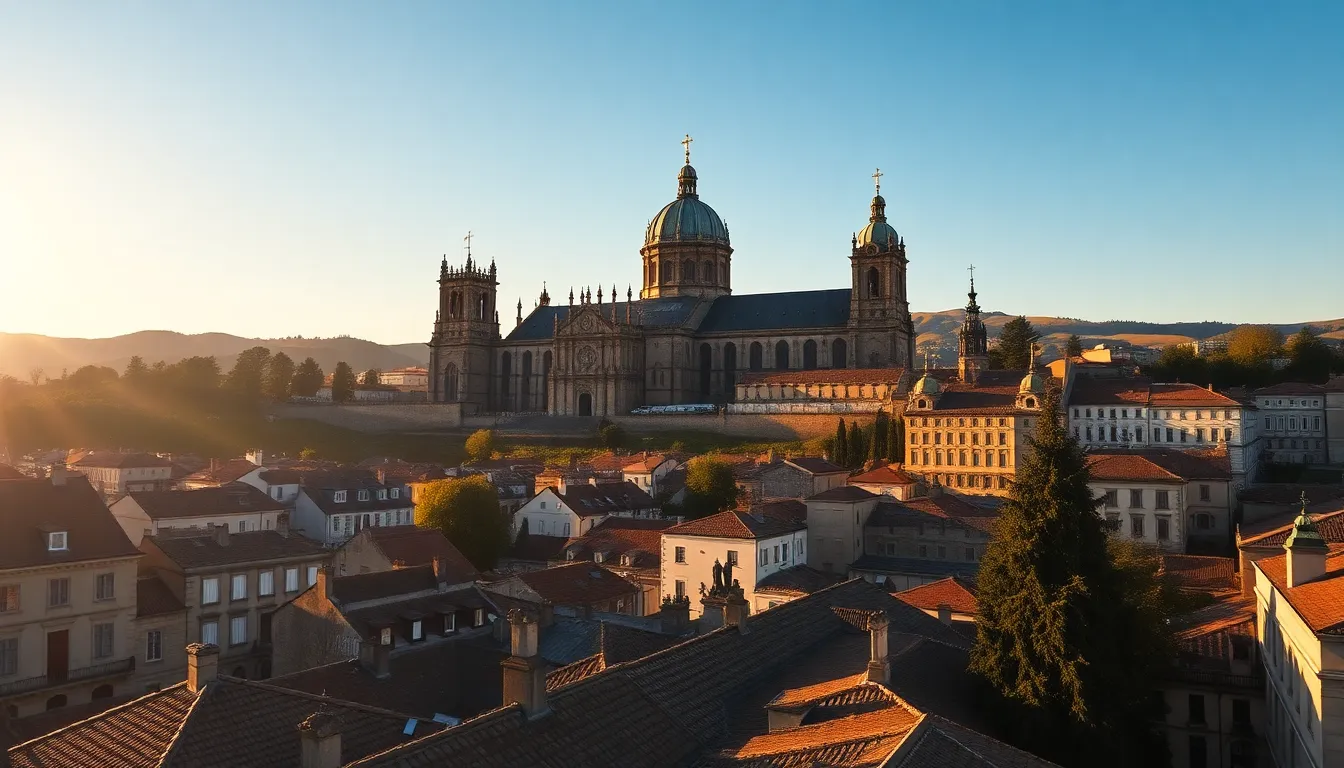
The first time I walked into the Praza do Obradoiro in Santiago and saw the cathedral facade fill the whole sky, a pastor in our group stopped dead and didn’t say anything for almost a minute. He had been planning this trip for two years. He had read about the place, looked at photographs, prepared his people. And he still wasn’t ready for what it felt like to actually stand there with pilgrims arriving around him, some of them weeping, some of them just sitting down on the stone because their legs were done.
That is Galicia. It is the green, wet, Atlantic corner of Spain that most people skip, and it is the place where one of the oldest pilgrimage traditions in the Christian world comes to rest. If you lead a faith community and you are thinking about Spain, you owe it to your group to understand this region. Let me walk you through it the way I would on a planning call.
Where Galicia Sits and Why It Feels Different
Galicia is the northwest corner of Spain, above Portugal, facing the Atlantic. If you have only seen the dry plains of central Spain or the heat of Andalusia, Galicia will surprise you. It is green, hilly, and often misty. The food is built around the sea. The language, Galician, is its own thing, closer to Portuguese than to Castilian Spanish. There is a Celtic thread that runs through the music and the folklore, and you will hear bagpipes here that sound more like Ireland than Spain.
For a heritage group, the practical takeaway is this: Galicia has its own rhythm and its own weather. Pack for rain even in summer. And understand that you are coming to the end of something. For a thousand years, pilgrims have walked across Europe to reach this one corner. The whole region is shaped around that arrival.
Christian Heritage: Santiago and the End of the Road
The heart of Galicia for any faith traveler is Santiago de Compostela. Tradition holds that the remains of the apostle James were carried here and discovered in the ninth century, and the cathedral was built over that tomb. For more than a thousand years, pilgrims have walked the Camino de Santiago to reach this place.
The Cathedral of Santiago de Compostela
The cathedral is the destination of every Camino route, and standing inside it changes how you understand the whole pilgrimage. The Pilgrim’s Mass, held daily, gathers people who have walked for weeks. On certain days you may see the Botafumeiro, the enormous censer that swings across the transept on ropes, filling the cathedral with incense. It is one of the most striking things you will witness in any church in Europe.
For a pastor bringing a group, even one that has not walked a single step of the Camino, the cathedral offers something rare. Your people stand at the finish line of a journey that millions have made over a millennium. That weight is in the room.
The Pilgrim Country Around Santiago
Galicia is more than its cathedral city. The final stretch of the French Way, from Sarria into Santiago, runs through villages, oak forests, and stone churches that have served pilgrims for centuries. Many groups walk a short, manageable portion of this final stretch even if they cannot do the full route. Walking the last few kilometers into Santiago, arriving on foot the way pilgrims always have, gives a group a shared memory that a bus arrival never will.
Beyond Santiago, the Galician coast holds Finisterre, long believed to be the end of the known world. Pilgrims have walked the extra days out to this headland for centuries, treating the Atlantic as a final, silent close to their journey.
Jewish Heritage in Galicia
Galicia is not where most Sephardic itineraries begin, and I want to be honest about that. The great centers of Jewish Spain were in Castile, Andalusia, and Catalonia, in Toledo, Cordoba, and Girona. Galicia’s Jewish history is quieter and harder to see on the ground.
But it is here. Medieval Galicia had Jewish communities in towns like Ribadavia, Ourense, and Tui. Ribadavia in particular has worked to recover its Jewish past, with a preserved old quarter and a heritage interpretation that walks visitors through what Sephardic life in this region looked like before 1492. For a rabbi building a wider Spain itinerary, Ribadavia can be a thoughtful stop that shows how far the Sephardic presence reached, all the way into this Atlantic corner.
If your group’s primary focus is Sephardic heritage, you will spend most of your time elsewhere in Spain. But Galicia adds a dimension: it shows that the expulsion of 1492 emptied not only the famous quarters but the small towns at the very edge of the country.
Moorish Heritage: Why Galicia Is the Exception
Here is something worth understanding before you plan. The Moorish heritage that defines so much of Spain, the Alhambra in Granada, the Mezquita in Cordoba, barely touched Galicia. Muslim rule reached the north only briefly in the early eighth century and never took hold here. Galicia became one of the first strongholds of the Christian reconquest, and the cult of Saint James grew directly out of that history.
So if your group is coming to Spain partly to understand Al-Andalus and the centuries when three faiths shared one country, you will find that story in the south and center, not in Galicia. What Galicia gives you instead is the other half of the picture: the Christian kingdom that pushed back, and the pilgrimage that became its spiritual engine. For a fuller view of how these threads connect, our Spain heritage travel guide lays out the whole map.
Planning a Galicia Heritage Trip
A few things I tell every group leader looking at this region.
First, build in time for weather. Galicia is genuinely rainy, and that is part of its character, but it means outdoor walking days need flexibility. Bring layers and good footwear, and do not over-schedule.
Second, decide how much Camino you want. You do not have to walk the whole route to make the pilgrimage real for your group. Even walking the final stretch into Santiago, or just spending an unhurried day in the cathedral city, gives people the encounter. If your group is up for more, the last leg from Sarria is doable for most reasonably fit travelers. For groups focused on the route itself, our guide to the Way of Saint James as a region goes deeper.
Third, pair Galicia with at least one other region if you can. Galicia works beautifully as the conclusion of a trip. Many groups move from the Jewish and Moorish heritage of central or southern Spain up to the pilgrim country of the northwest, so the journey ends at Santiago. Avila and the Castilian highlands make a natural bridge; you can read about that in our Avila heritage guide.
Fourth, the right operator matters more here than almost anywhere. Coordinating a partial Camino walk, cathedral access, and the logistics of a wet, hilly region takes someone who knows the ground. At Heritage Tours, we build every Galicia itinerary around what your specific community wants from the pilgrimage, and with 15 or more participants, the group leader always travels free.
If Galicia is calling to your community, I would love to talk about what that trip could look like. Explore our Spain heritage tours or take a look at how our group heritage tours work. There is no obligation, just a conversation about what is possible.
FAQ: Galicia Heritage Travel
What is the main heritage site in Galicia?
Santiago de Compostela and its cathedral are the heart of Galicia for any faith traveler. The cathedral is built over the traditional tomb of the apostle James and has been the destination of the Camino de Santiago for more than a thousand years. The daily Pilgrim’s Mass and the swinging Botafumeiro censer are experiences your group will remember.
Do we have to walk the Camino to visit Galicia?
No. Many groups visit Santiago and the surrounding pilgrim country without walking the full route. That said, walking even a short final stretch into Santiago, such as the last leg from Sarria, gives a group a shared experience of arriving on foot the way pilgrims always have. We can structure as much or as little walking as your group wants.
Is there Jewish heritage in Galicia?
Yes, though it is quieter than in Toledo, Cordoba, or Girona. Towns like Ribadavia, Ourense, and Tui had medieval Jewish communities, and Ribadavia in particular has recovered and interprets its Sephardic past. For groups focused on Jewish heritage, Galicia adds a meaningful edge to a wider Spain itinerary rather than serving as the main focus.
When is the best time to visit Galicia?
Late spring through early autumn is most comfortable, though Galicia is rainy in any season, so come prepared for wet days. Summer is the busiest pilgrim season, which adds energy in Santiago but also crowds. Late September and early October often give you good walking weather with thinner crowds.
Do group leaders travel free on Heritage Tours Galicia trips?
Yes. When your group includes 15 or more participants, the group leader travels free. This applies to all Heritage Tours group itineraries, including Galicia and the Camino. It is our way of honoring the work spiritual leaders put into bringing their communities together for these journeys.