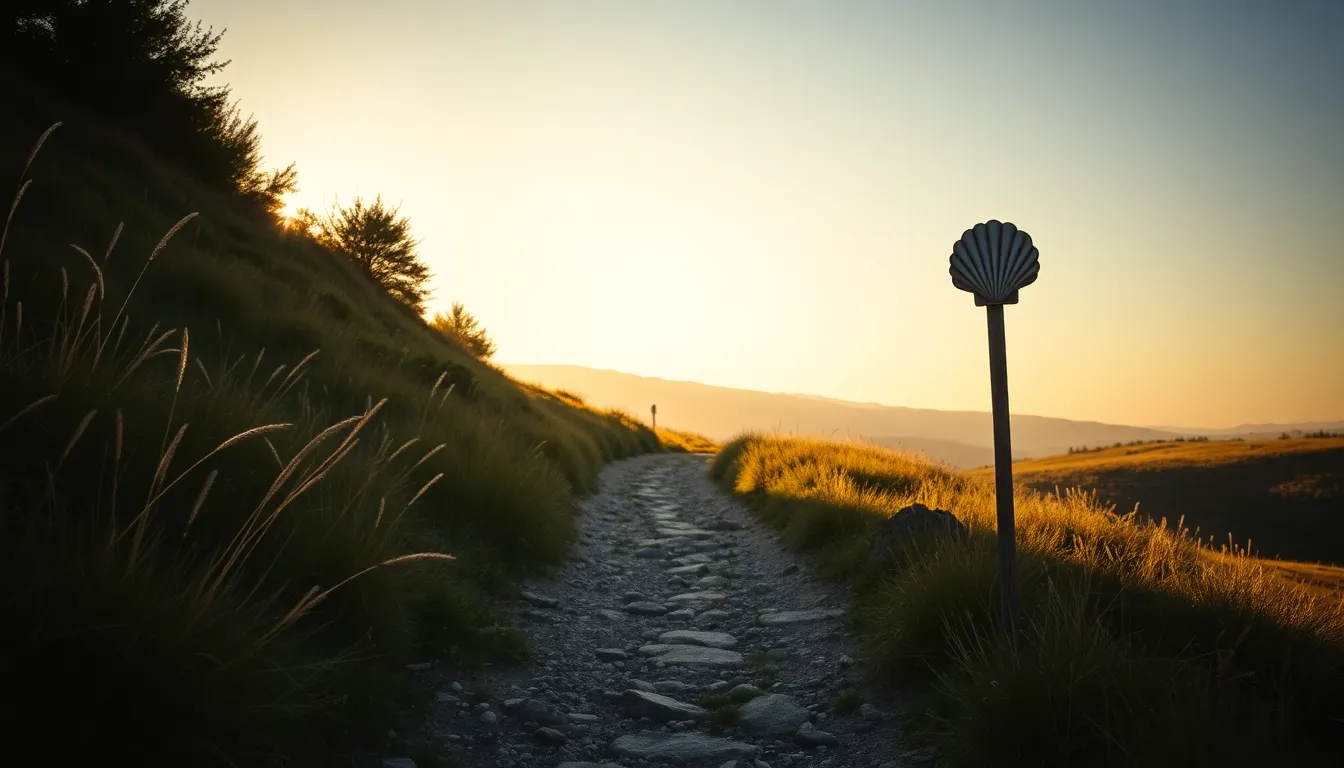
People ask me where the Camino is, as if it were a single place you could point to on a map. The honest answer is that the Way of Saint James is not a place. It is a whole region of Spain, stitched together by a thousand years of footsteps. It crosses mountains, vineyards, high plains, and green Atlantic hills. It runs through ancient cities and tiny stone villages. To plan a Camino trip well, a group leader needs to stop thinking of it as a line on a map and start thinking of it as a corridor of heritage that stretches across the top of Spain.
I have walked stretches of it with church groups and with mixed heritage groups, and the thing that always lands is this: you are joining something. For a thousand years, people have walked these same roads toward the same cathedral. Let me lay out the region the way I would on a planning call, so you can see how the pieces fit.
What the Way of Saint James Actually Is
The Way of Saint James, the Camino de Santiago, is a network of pilgrimage routes leading to the Cathedral of Santiago de Compostela in Galicia, where tradition holds the apostle James is buried. Pilgrims have walked these roads since the Middle Ages. Along the way, an entire infrastructure grew up to support them: churches, hospitals, bridges, monasteries, and whole towns that exist because the pilgrims came through.
That is why I call it a region rather than a trail. The Camino shaped the map of northern Spain. The scallop shell, the pilgrim’s symbol, marks the way everywhere you look. Understanding the Camino means understanding the towns and cathedrals strung along it, not just the walking itself.
The Main Routes
There is no single Camino. There are several historic routes, and choosing among them is one of the first decisions a group leader makes.
The French Way
The French Way, the Camino Frances, is the most famous and most traveled route. It runs from the French border across northern Spain through Pamplona, Burgos, Leon, and on into Galicia and Santiago. Most groups who walk a portion of the Camino walk part of the French Way, because it has the richest concentration of heritage cities and the best support along the route. The final stretch from Sarria into Santiago is the most popular short segment for groups.
The Portuguese Way
The Portuguese Way comes up from the south, through Portugal and into southern Galicia. It is quieter than the French Way and has grown popular with groups who want a gentler, less crowded walk into Santiago.
The Northern Way and Others
The Northern Way follows the Atlantic coast through the Basque Country, Cantabria, and Asturias before turning toward Santiago. It is more rugged and more scenic. There are other historic routes as well, but for most faith groups the choice comes down to the French Way for its heritage cities or the Portuguese Way for a quieter approach.
For a fuller sense of where all these routes converge, our Galicia heritage guide covers the green northwest where every road ends.
The Cities and Cathedrals Along the Way
The Camino is lined with some of the great religious architecture of Spain. These are the anchors of a route-based itinerary.
Burgos
Burgos, on the French Way, holds one of the most magnificent Gothic cathedrals in Spain, a soaring stone landmark that has welcomed pilgrims for centuries. For a group, Burgos is a natural overnight, a chance to step off the path and into one of the country’s great churches.
Leon
Leon, further along the French Way, has a Gothic cathedral famous for its stained glass, walls of colored light that change through the day. Leon also marks roughly the last major stretch before Galicia, and many groups treat it as a key stop.
Santiago de Compostela
Every route ends here, at the Cathedral of Santiago de Compostela. The daily Pilgrim’s Mass gathers people who have walked for days or weeks, and on certain occasions the great Botafumeiro censer swings across the transept in clouds of incense. Arriving at this cathedral is the emotional peak of any Camino journey. Whether your group walks the final kilometers on foot or arrives to spend an unhurried day, this is where the whole region points. Our Spain heritage travel guide places Santiago within the wider story of Christian Spain.
Jewish and Moorish Heritage Along the Way
The Camino is first and foremost a Christian pilgrimage, but the towns it passes through carry other histories too, and a thoughtful group leader can weave them in.
Several cities along the routes had medieval Jewish communities before 1492. Burgos, Leon, and other towns on the French Way held Jewish quarters whose memory survives in street names and in local heritage work. The Camino corridor was not separate from the wider story of Jewish Spain; it ran right through it. For a mixed heritage group, noticing the Sephardic past in these pilgrimage towns adds a layer that pure walking guides miss.
The Moorish chapter is fainter along the northern routes. The Camino runs across Christian northern Spain, the heartland of the reconquest, so you will not find the great Moorish monuments of the south here. What you find instead is the Christian kingdom that grew up around the pilgrimage. If your group wants the Moorish and convivencia story as well, that belongs to a southern leg of a wider Spain trip, not to the Camino itself.
Planning a Way of Saint James Group Trip
A few things I tell every group leader looking at the Camino.
First, decide how much you want to walk. You do not have to walk the whole route, and most groups do not. You can build a trip that visits the great cathedral cities by coach with short, meaningful walking segments, or you can commit to walking a multi-day stretch such as Sarria to Santiago. Both are real Caminos. The right choice depends on your group’s fitness and time.
Second, match the route to your group. The French Way gives you the heritage cities and the full support network. The Portuguese Way gives you a quieter, gentler approach. I help groups choose based on what they want the journey to feel like.
Third, plan the arrival into Santiago with care. Walking the final stretch on foot, even just the last few kilometers, gives your group the shared memory of arriving the way pilgrims always have. Time it so you reach the cathedral for the Pilgrim’s Mass if you can.
Fourth, think about season. Late spring through early autumn is the main walking window. Summer is busy and warm; the shoulder seasons give you thinner crowds and good walking weather. Galicia is rainy in any season, so pack for it.
Fifth, the right operator is essential on a route trip. Coordinating walking segments, luggage transfer, overnights in the cathedral cities, and cathedral access takes someone who knows the ground intimately. At Heritage Tours, we build every Camino itinerary around your group’s pace and purpose, and with 15 or more participants, the group leader always travels free.
If the Way of Saint James is calling to your community, I would love to talk about what that journey could look like. Explore our Spain heritage tours or take a look at how our group heritage tours work. There is no obligation, just a conversation.
FAQ: The Way of Saint James
Is the Camino a single trail or many routes?
Many routes. The Way of Saint James is a network of historic pilgrimage roads that all lead to Santiago de Compostela. The French Way is the most famous, running across northern Spain through Burgos and Leon. The Portuguese Way comes up from the south, and the Northern Way follows the Atlantic coast. A group leader chooses the route that fits the group’s goals and fitness.
Does my group have to walk the whole Camino?
No. Most groups do not walk the full route. You can build a trip that visits the great cathedral cities by coach with short walking segments, or commit to a multi-day stretch such as Sarria to Santiago. Both are genuine Camino experiences. We tailor the amount of walking to your group’s fitness and the time you have.
Which cathedrals should we see along the Way?
On the French Way, Burgos has one of Spain’s great Gothic cathedrals, and Leon’s cathedral is famous for its stained glass. Every route ends at the Cathedral of Santiago de Compostela, where the daily Pilgrim’s Mass and the swinging Botafumeiro censer make the arrival the emotional peak of the journey. These three cities anchor a route-based itinerary.
Is there Jewish heritage along the Camino?
Yes. Several towns on the routes, including Burgos and Leon, had medieval Jewish communities before the 1492 expulsion, and their memory survives in street names and local heritage work. The Camino corridor ran right through the wider story of Jewish Spain. For a mixed heritage group, weaving in these Sephardic traces adds a meaningful layer.
Do group leaders travel free on Heritage Tours Camino trips?
Yes. When your group includes 15 or more participants, the group leader travels free. This applies to all Heritage Tours group itineraries, including the Way of Saint James. It is our way of honoring the work spiritual leaders put into bringing their communities together for these journeys.