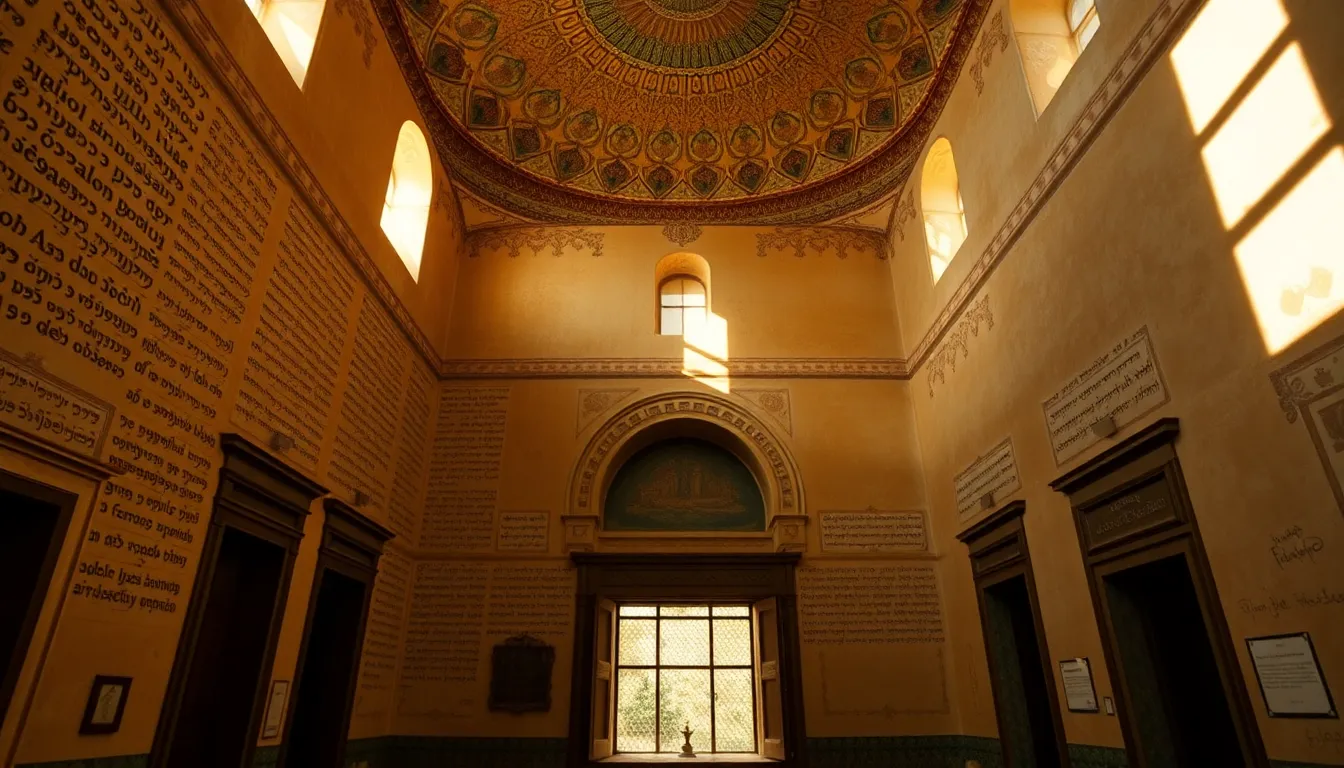
The first reaction in Cordoba’s synagogue is almost always the same: surprise at how small it is. Groups come in after Toledo, after El Transito and its museum, and they step into a single modest room and you can see them recalibrating. And then, every time, something shifts. The smallness stops being a disappointment and becomes the whole point. This one room is what survived. Out of a community that once numbered in the tens of thousands, this is what is left. I have watched that realization land on a lot of faces, and it never loses its weight.
If you are a rabbi or an educator planning a journey through Sephardic Spain, the Cordoba synagogue is one of the essential stops. Let me tell you what it is, why it matters so much, and what your group walks into.
One of Only Three That Survived
The synagogue of Cordoba was built around 1315 and it is one of only three medieval synagogues still standing in all of Spain. The other two are in Toledo. That number, three, out of the dozens upon dozens of synagogues that once served Jewish communities across the peninsula, is the single most important fact I give a group before we go in. Everything else was destroyed, repurposed beyond recognition, or simply lost. This room is a survivor.
Cordoba in the medieval period was one of the great centers of the Jewish world. During the Golden Age it produced scholars, poets, and physicians, Maimonides among them, born here in 1138. The Jewish community of Cordoba was large, learned, and woven into the intellectual life of one of the most sophisticated cities in Europe. To understand the synagogue, your group needs to understand that it is the surviving fragment of something that was once enormous.
What Your Group Sees Inside
The synagogue is a small, roughly square prayer hall, and the experience is intimate rather than grand. But the detail rewards a close look.
The Mudejar Plasterwork
The upper walls carry Mudejar stucco decoration, the intricate geometric and floral plasterwork produced by Muslim craftsmen working in this period. It is the same visual language your group will have seen in Toledo, and it tells the same quiet story: a Jewish synagogue, in a city shaped by Islamic Spain, decorated in a shared artistic tradition. In a room this small, the craftsmanship feels close enough to touch.
The Hebrew Inscriptions
Bands of Hebrew text run across the walls, including verses and dedicatory inscriptions. For a group with Hebrew readers, this is where the room comes alive. People recognize the words, read them softly, and a building that has not held a congregation in over five centuries fills, for a moment, with the sound of its own language again. I let those moments breathe.
The Women’s Gallery
A narrow staircase leads to the upper women’s gallery, which is still visible. Small architectural details like this one help a group picture the room not as a monument but as a working synagogue, with a real community filling it on a Shabbat morning seven hundred years ago. I encourage people to stand in the center, look around, and imagine the room full, the voices, the children, the ordinary life that happened in this space week after week for generations. That act of imagination is often what people remember longest.
The Synagogue and the Mezquita, Steps Apart
One of the things that makes Cordoba so powerful for a heritage group is geography. The synagogue sits in the old Jewish quarter, the Juderia of Cordoba, just a few minutes’ walk from the Mezquita, the famous mosque turned cathedral. And nearby is the statue of Maimonides, the Rambam, who was born in this city.
Visiting these in a single morning gives a group an experience that is hard to construct anywhere else. Two sacred spaces, two faiths, the deep intellectual legacy of a third great mind, all within a few hundred steps. I often build the morning so the group moves from the synagogue to the Maimonides statue to the wider quarter, letting them feel how compact and intertwined this world was.
How a Group Moves Through It
A few practical notes from years of bringing groups here.
The visit to the synagogue itself is short, because the building is small. Twenty minutes inside is enough for most groups to take it in fully, read the inscriptions, and reflect. What makes Cordoba a substantial morning is everything around it: the Juderia, the Maimonides square, the proximity to the Mezquita.
The synagogue is on a narrow lane and the prayer hall holds a tour group but not a crowd, so in peak season I time our entry to avoid bottlenecks. Admission is modest, and the building is run as a national monument. Modest dress is appropriate, and photography policies shift, so I confirm them fresh for each group.
Because the room is so small and quiet, it is one of the best places on the whole Spain itinerary for a short reflection or reading together as a group. The space invites it.
Holding the Loss With Dignity
I want to be honest with groups about what this single room represents, without letting the visit collapse into grief.
This synagogue stopped serving the Jewish community after the persecutions and the 1492 expulsion. Like the others, it was taken and put to other uses over the centuries before being recognized and preserved as heritage. The community that filled it scattered. That it survived at all, when nearly every other synagogue in Spain did not, is partly luck and partly the care of later generations who refused to let it disappear.
The way I frame it for a group is this: yes, this small room is a measure of how much was lost. But it is also proof that not everything was lost. The Sephardic world that began in cities like Cordoba carried its prayers, its language, and its scholarship across the Mediterranean and kept them alive. When your community stands in this room and reads the Hebrew on the walls, they are continuing the very thing the expulsion tried to end. That is the note I want a group to leave on.
FAQ: Visiting the Cordoba Synagogue
How old is the Cordoba synagogue?
It was built around 1315, in the early 14th century. It is one of only three medieval synagogues still standing in Spain, alongside El Transito and Santa Maria la Blanca in Toledo. The other synagogues that once served Spain’s Jewish communities were destroyed or repurposed beyond recognition after the expulsion.
Why is the Cordoba synagogue so small?
The surviving building is a single modest prayer hall, which surprises many visitors. The smallness is part of what makes it moving: out of a Jewish community that once numbered in the tens of thousands in Cordoba, this one room is what survived. It was likely one of several synagogues in the medieval quarter, and the only one to come down to us.
What is near the Cordoba synagogue?
It sits in the Juderia, the old Jewish quarter, a few minutes from the statue of Maimonides and within easy walking distance of the Mezquita, the great mosque turned cathedral. Groups commonly see the synagogue, the Maimonides square, and the wider Juderia together in one morning.
How long does a group need at the synagogue?
The synagogue itself takes about twenty minutes, since the building is small. The fuller morning comes from pairing it with the surrounding Juderia and the Maimonides statue. The quiet of the room makes it an ideal place for a short group reflection.
Is the Cordoba synagogue suitable for a faith group?
Very much so. For Jewish groups it is one of the most significant surviving Sephardic sites in the world and a deeply moving place to read Hebrew together. For Christian and educator groups it tells the layered story of the Golden Age, the shared cultures of medieval Spain, and the expulsion. We tailor the framing to your community.
If Cordoba is part of the journey you are imagining for your congregation, I would welcome the conversation. Heritage Tours builds each Spain itinerary around the history and interests of your group, and with fifteen or more participants the group leader travels free. You can read more about Jewish heritage in Spain or see how we run our group heritage tours.
Contact us whenever you are ready to begin.