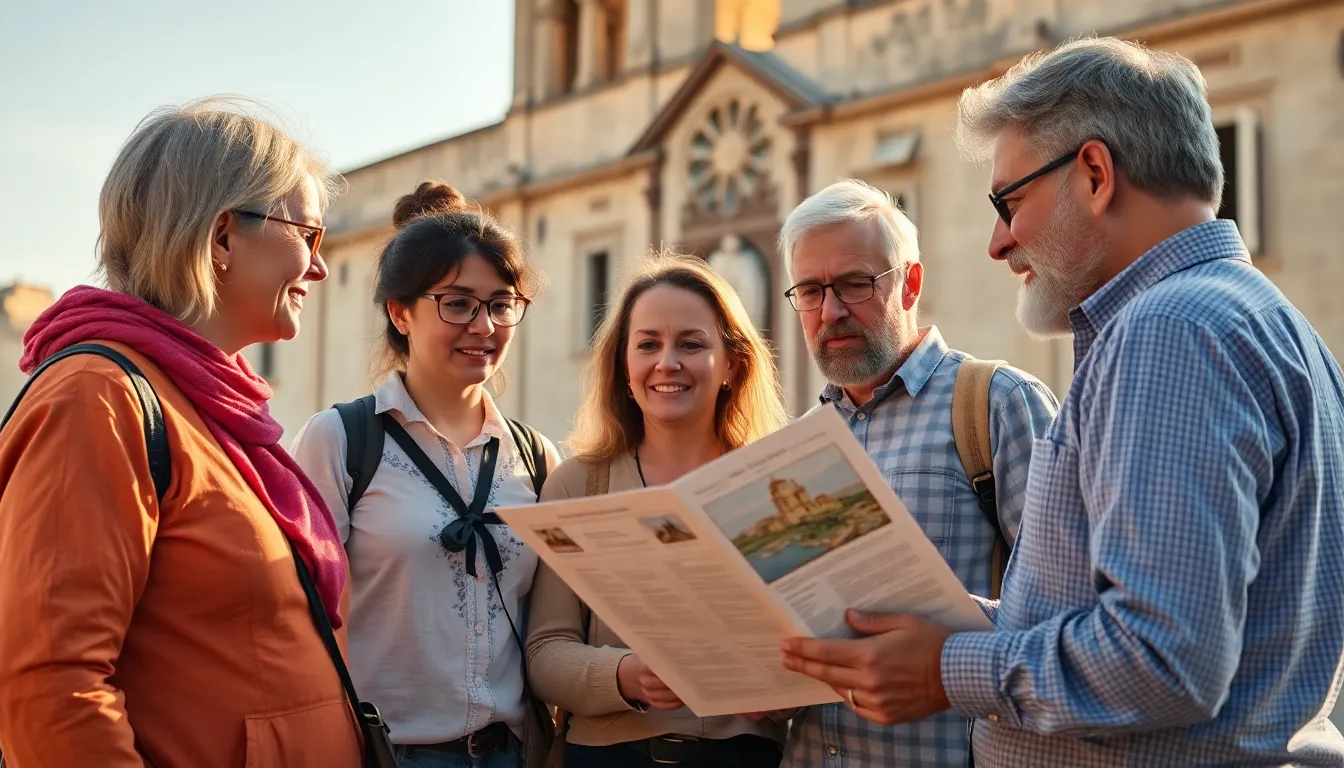
Most group leaders come to me somewhere in the middle. They have already mentioned a trip from the pulpit, a few people have asked about it, and now they are staring at a blank calendar wondering what actually happens between “we should go to Spain someday” and a bus pulling away from a hotel in Toledo. That gap is where trips either come together or quietly die.
So let me lay out the whole thing, start to finish, the way I would if you sat across from me at the first planning call. This is the timeline I have watched work for congregations of every size over more than twenty years. It is not complicated. It just has to happen in the right order.
Phase One: The Idea and the Anchor (Months 9 to 12 Out)
Before anything practical, decide why Spain and why now. A congregation will not commit a week and real money to a destination. They commit to a purpose. Spain holds Christian, Jewish, and Muslim history layered in the same cities, which makes it unusually rich for a faith community, but “rich” is not a reason. Your reason has to be specific to your people.
Maybe your congregation has been studying church history and you want them to stand where it lived. Maybe the Camino de Santiago and the pilgrim tradition speaks to a season your church is in. Maybe you want the harder, fuller story of three faiths sharing and contesting the same ground. Pick the anchor. Everything else hangs from it.
This is also when you have your first conversation with an operator, even if you have no dates and no list. I would rather talk to a group leader at the blank-calendar stage than after they have promised their congregation something that does not fit a real itinerary. We figure out the anchor together, then shape a draft route, two or three regions and four or five sites, with room to breathe. Our Spain heritage tour planning guide covers how to choose sites around your community’s story.
Phase Two: Lock the Frame (Months 7 to 9 Out)
Now you turn the idea into something real enough to sell.
Pick the window. For a mixed-age congregation, spring and early fall are the kindest weather and the best site conditions. Avoid the height of summer heat if you can. Work around your church calendar, Lent, Easter, the program year, so the trip does not collide with your busiest season.
Set the length and the route. Most congregation trips run seven to ten days. We finalize the regions and the sites, secure the advance reservations places like the Alhambra require, and build in the free time your people need to absorb what they are seeing. Nobody comes home moved by a bus window.
Get the real number. This is the step that lets you speak honestly to your congregation. Ask for a fully transparent, all-in quote: flights, hotels near the historic quarters, ground transport with hotel pickup and dropoff, site entries, guides, and the meals in the itinerary. No surprises after people commit. With that number in hand, you can answer the first question anyone asks after a service, which is always “what does it cost.”
Understand the leader benefit. When your group reaches 15 or more participants, you travel free. Your full trip is covered at no cost, flights, hotels, transport, entries, and included meals. That shapes how you talk about the trip, because you are not asking your congregation to fund your travel. You are leading a journey at no personal cost, and every person who signs on moves the group toward that threshold.
Phase Three: Build the Core (Months 6 to 7 Out)
Here is the mistake I watch eager leaders make: they announce to the whole congregation first, with a big flourish, and then panic when the signups trickle. Do it the other way.
Start with a small core of people you already know will come. The couple who has talked about traveling. The members who back everything you do. Get a handful of firm yeses privately. That core gets you most of the way to 15, and it gives you proof when you go wide. “The Reyes family is going, the Okafors are going” does more than any brochure, because people follow people they trust before they follow an itinerary.
Once your core is committed, you have a real trip, not a hope, and the public announcement lands on solid ground.
Phase Four: Fill the Group (Months 4 to 6 Out)
Now you go congregation-wide, and you lead with the anchor you chose in Phase One, not a list of hotels. Show your people what they will encounter and why it matters for their faith. Tell the story. Then make it concrete with an information night, a short slideshow, and the real all-in number so cost is never a mystery.
Take deposits to convert interest into commitment. Interest is free. A deposit is a decision. The leaders who fill groups are the ones who give people a clear, low-friction way to say yes the moment they feel it. For the full approach to filling a group with the right people, our guide on marketing a Spain heritage trip to your congregation goes deep on this.
This is also when you collect the details that shape logistics: who needs dietary accommodation, who has mobility limitations, who has passport issues to sort out. The earlier you know your real group, the better we plan around real people instead of an average.
Phase Five: Prepare Your People (Months 1 to 3 Out)
A trip that lands does not start at the airport. In the weeks before departure, teach toward it. Preach or study the history your people are about to walk into, so that when they stand in a thousand-year-old cathedral or a medieval quarter, the meaning is already in them. Frame the sites in advance.
Handle the practical prep too: a packing guide, walking-shoe warnings for the cobblestones, a clear schedule, and an answer to every “what about” your congregation will raise. We provide the logistical detail. You provide the spiritual readiness. Our piece on educational framing for Spain heritage trips helps you build that pre-trip teaching arc.
Phase Six: Wheels Up, and Your Real Job Begins
On the ground, the logistics are mine. Hotel pickups, transport, guides who know the religious history, entries, meals, accessible alternatives for anyone who needs them. That frees you for the only job that was ever yours: shepherding. You lead the devotional at each site, the prayer, the reflection, the connection back to your community’s life. You are not the tour guide, and you should not try to be. The professional guide teaches the history. You make it mean something.
That division is the whole secret. When you carry the spiritual weight and let the operator carry the operational weight, a from-scratch congregation trip stops being overwhelming and becomes one of the most meaningful things you will do in ministry.
If you are at the blank-calendar stage and want to talk it through, that is my favorite conversation to have. Start with our Spain heritage destination overview, or see how our group heritage tours handle the logistics so you can focus on your people.
FAQ: Planning a Church Group Trip to Spain From Scratch
How long does it take to plan a congregation trip to Spain?
Plan for nine to twelve months from first idea to departure. That gives you time to set the purpose, lock the itinerary and reservations, build a committed core, fill the group, and prepare your people spiritually. Rushing any phase, especially building the core, is where from-scratch trips stumble.
How many people do I need for the trip to work?
Heritage Tours groups typically start at 10 participants, and the group leader travels free at 15 or more. Most congregation trips aim for that 15-person threshold, which covers your full trip at no cost and makes the per-person economics work well for everyone.
Do I really travel free as the group leader?
Yes. With 15 or more participants, your full trip is covered, including flights, hotels, ground transportation, site entries, and included meals. It exists to honor the months of work organizing the trip and to keep the cost off the church budget and your own pocket.
Should I announce the trip to everyone first?
No. Build a small committed core privately before you announce congregation-wide. That core gets you most of the way to 15 and gives you living proof when you go public, because people commit to a trip that already has trusted members on board.
What should I have ready before I take deposits?
A clear purpose, a finalized window and route, and a fully transparent all-in price covering flights, hotels, transport, entries, guides, and meals. When people can see exactly what they are committing to, deposits come far more easily.
When you are ready to start building, reach out and we will map it out together, one phase at a time. No pressure. Just a plan that fits your congregation.