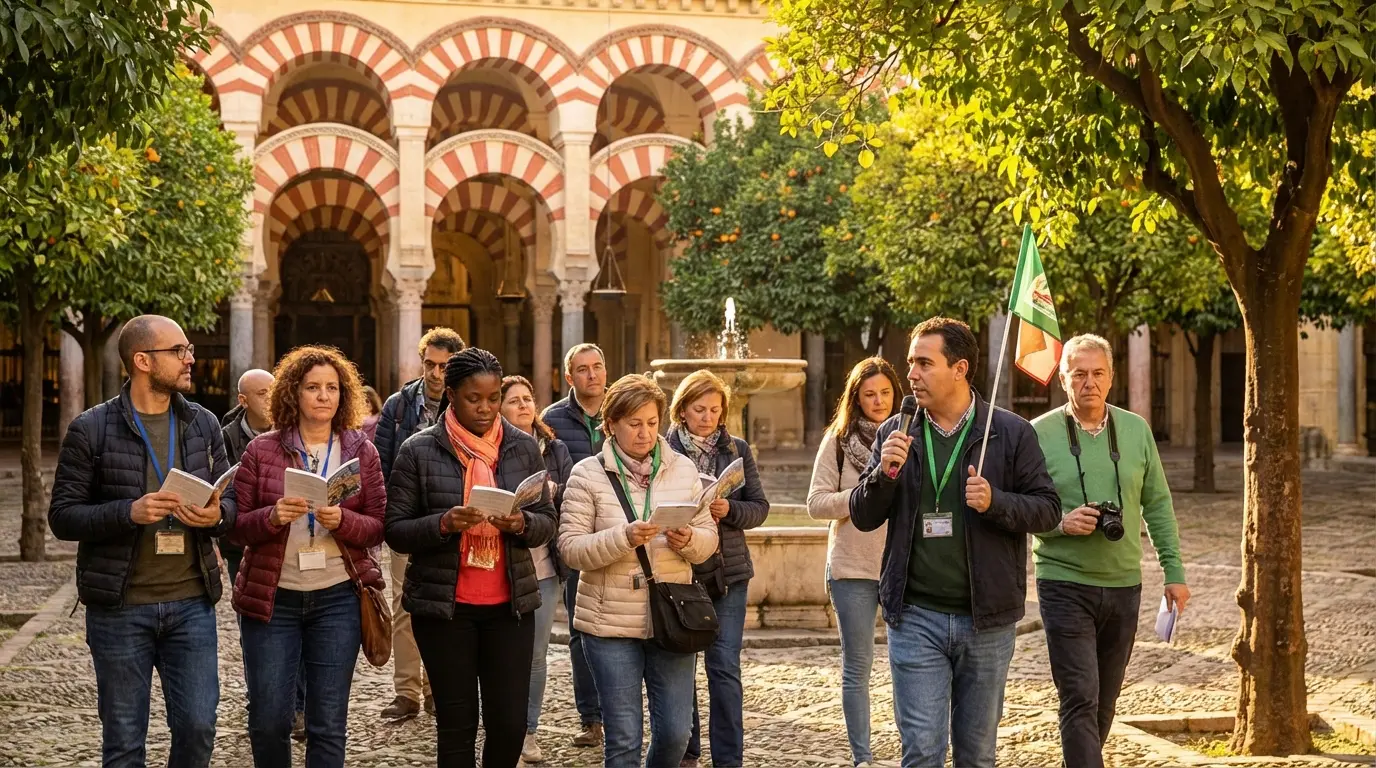
What Makes Spain Different from Other Heritage Destinations
Spain is not a single-story destination. If you take your community to Israel, the focus is clear. If you bring them to Italy, most of the heritage conversation centers on Christian history. Spain is different because it holds Jewish, Christian, and Muslim heritage in the same cities, sometimes in the same buildings. That makes it uniquely powerful for a group trip, and it also means planning requires more thought than just picking the famous sites off a list.
As someone who has organized group heritage tours to Spain for over twenty years, I can tell you that the trips that work best are the ones where the group leader was involved in shaping the itinerary from the beginning. Not choosing between Package A and Package B, but actually deciding what stories matter to their community and building the trip around those stories.
That is what this guide is for. Whether you are a rabbi planning for your synagogue or a pastor organizing a trip for your congregation, here is what I tell every group leader at our first planning call.
Choosing the Right Sites for Your Community’s Story
The biggest mistake I see group leaders make is trying to see everything. Spain is a large country, and its heritage sites are spread across multiple regions. Trying to cover Toledo, Cordoba, Granada, Barcelona, and Santiago de Compostela in a single trip means your group spends more time on buses than at sites. Nobody comes home moved by a highway.
Instead, start with a question: what does my community need to experience? If your synagogue community wants to connect with Sephardic history, the Toledo, Cordoba, and Granada corridor is the strongest itinerary. If your church group is drawn to pilgrimage and sacred architecture, Barcelona, Montserrat, and the Camino offer something extraordinary. If your community includes both Jewish and Christian members, or if interfaith dialogue matters to you, the Al-Andalus story in Cordoba and Granada provides the richest material.
Once you have a focus, the itinerary builds itself. Two or three regions, four or five key sites, and enough free time for your group to absorb what they are seeing. That is the formula.
The Practical Details Every Group Leader Should Understand
Let me walk through the things that matter most when you are planning for a group of twenty to forty people.
Transportation. Heritage Tours includes hotel pickup and dropoff for group tours. That means your group does not need to navigate public transit or find a central meeting point each morning. This sounds like a small thing until you are traveling with congregants in their seventies who need a bit more time and comfort. It matters.
Accommodation. For heritage groups, we place you in hotels near the historic quarters whenever possible. Staying within walking distance of Toledo’s Jewish quarter or Cordoba’s old city changes the experience. Your group can walk out in the evening and explore on their own, without needing a bus ride to get back to the history.
Meals and dietary needs. If your group observes kosher dietary laws, that requires advance planning. Spain is not Israel, and kosher options are limited outside of Madrid and Barcelona. We work with local providers to arrange meals that meet your community’s standards, but this is something that must be discussed early in the planning process, not added as an afterthought.
Local guides. A good local guide transforms a heritage tour. We work with guides who understand the religious and historical significance of the sites, not just the architectural details. The difference between a guide who says “this synagogue was built in 1357” and one who can explain what life was like for the Jewish community that worshipped here is the difference between a tour and an experience.
How the Group Leader Free Travel Benefit Works
This is straightforward and I want to make sure it is clear, because it is one of the most important planning details for faith communities on a budget.
When your group includes 15 or more participants, the group leader travels free. That means your full trip, flights, accommodations, ground transportation, site entries, and meals included in the itinerary, is covered at no cost to you.
This benefit exists because we understand what group leaders do. You are not a tour guide. You are a spiritual leader who has taken on the work of organizing a meaningful experience for your community. That takes months of planning, communication, and trust-building. The free travel benefit is our way of honoring that work and making it financially possible for you to be there with your group.
There is no catch. If you bring 15 people, you travel free. If your group grows beyond that, additional leaders may qualify as well. Ask about this when we talk.
What to Ask Before You Book Any Spain Heritage Tour
Not all group tour operators are the same, and a heritage tour is fundamentally different from a standard group trip. Here are the questions I would ask any operator before signing on.
Do you customize itineraries, or is it a fixed package? A fixed package means your group visits the same sites as every other group. A heritage tour should be built around your community’s specific story and interests.
Who are your local guides, and do they understand the religious history? General tour guides can point out architecture. Heritage guides can explain why a rabbi in 1357 commissioned a synagogue with Arabic-style plasterwork, and what that tells us about Jewish life under medieval Spanish rule.
Do you handle dietary needs proactively? If kosher meals or specific dietary observances matter to your group, this should be part of the initial planning conversation, not something dealt with on arrival.
What happens if someone in the group has mobility issues? Heritage sites often involve cobblestones, stairs, and uneven terrain. A good operator plans for this. We make sure every site visit has accessible alternatives or advance information so nobody is left behind.
What is the total cost, including everything? Ask for a fully transparent quote. Flights, accommodations, transportation, site entries, guide fees, and meals. No surprises after you have already committed your community.
Common Mistakes Group Leaders Make (and How to Avoid Them)
Trying to do too much. I have said it already, but it is worth repeating. A seven-day trip that covers three regions is better than a seven-day trip that races through five. Your group needs time to sit with what they are experiencing.
Booking too late. Spain’s heritage sites, especially in Toledo and Granada, require advance reservations. The Alhambra in particular can sell out months ahead. If you are planning for spring or early autumn, start the conversation at least six to nine months before your intended travel dates.
Not involving the community early enough. The most successful group trips I have seen are the ones where the leader starts talking to their community six months out. Share what the trip will include. Explain the history. Build anticipation. By the time your group arrives in Toledo, they should already know why they are there.
Choosing an operator based on price alone. The cheapest group tour and the most meaningful group tour are almost never the same thing. A heritage operator invests in specialized guides, site access that requires advance coordination, and itineraries that prioritize depth over checkbox tourism. That costs more than a generic bus tour, and it is worth every dollar.
If you are in the planning stage and want to talk through what a Spain heritage tour could look like for your community, I would be glad to help. Explore our Spain heritage tours or reach out directly. No pressure, just a conversation about what matters to your group and how we can build around it.
FAQ: Group Heritage Tours to Spain
How many people do I need for a group heritage tour to Spain?
Heritage Tours group trips typically start at 10 participants, with the group leader free travel benefit kicking in at 15 or more. Most of our Spain groups range from 15 to 40 participants. Larger groups are possible and can sometimes be split into smaller sub-groups for site visits to ensure a more personal experience.
Do group leaders travel free on Heritage Tours trips?
Yes. When your group includes 15 or more participants, the group leader’s full trip is covered at no cost, including flights, accommodations, transportation, site entries, and included meals. This applies to all Heritage Tours group itineraries, including Spain.
What is the difference between a heritage tour and a regular group tour?
A heritage tour is built around historical, cultural, and spiritual significance rather than tourist highlights. The guides specialize in religious and cultural history. The itinerary is customized to your community’s story. And the pace allows for reflection and group discussion, not just photo stops. A regular group tour covers the famous sites. A heritage tour helps your group understand why those sites matter.
How far in advance should I book a group tour to Spain?
Six to nine months is ideal. This gives enough time to secure reservations at popular heritage sites, coordinate with local guides and dietary providers, and allow your community to prepare. If you are planning around Jewish holidays or church schedules, starting even earlier gives you more date flexibility.
Can I mix Jewish and Christian heritage sites in the same Spain itinerary?
Absolutely. Many of our groups do exactly this, and Spain is one of the best destinations for it. The Al-Andalus period in Cordoba and Granada naturally brings Jewish, Christian, and Muslim history into the same conversation. A combined itinerary can include Toledo’s Jewish quarter alongside the Camino or Montserrat, creating a trip that speaks to interfaith understanding and shared history.