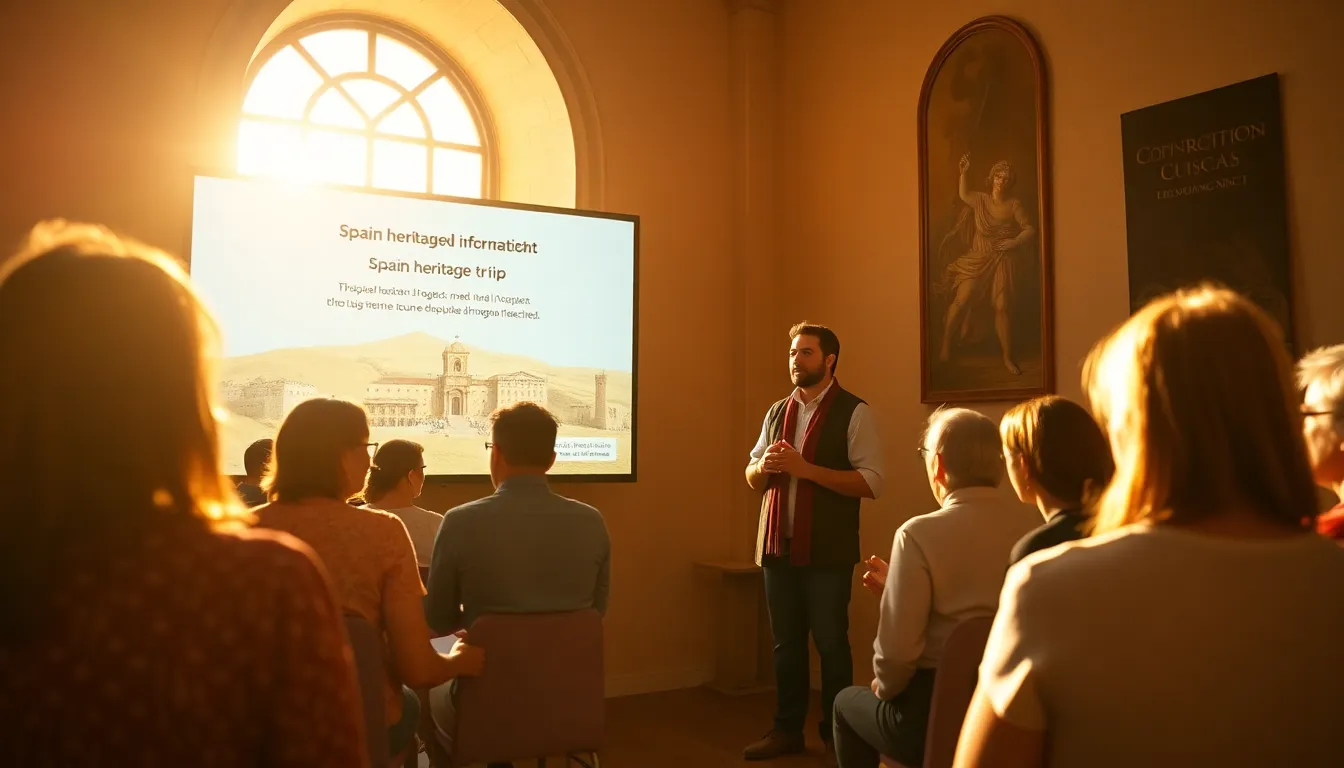
The hardest part of a heritage trip is not the planning. I can carry the planning. The hardest part is the thing only the group leader can do: getting enough of the right people to actually say yes. I have watched beautifully designed Spain itineraries fall apart because the leader announced once from the pulpit, waited, and the group never filled. And I have watched modest plans come together fast because the leader understood that filling a group is its own kind of work.
So let me give you what I have learned about marketing a heritage trip to a congregation. Not marketing in the slick sense. Marketing in the sense of inviting your people clearly, repeatedly, and in a way that helps them say yes. The word “promote” makes some clergy uncomfortable, so let me reframe it. You are not selling. You are giving your congregation a clear path to a journey that will matter to them.
Lead With the Why, Never the Itinerary
The single biggest mistake group leaders make is opening with logistics. They announce “a ten-day trip to Spain, visiting Toledo, Cordoba, and Granada, hotels included,” and they wonder why no one moves. Nobody commits a week and a chunk of savings to a list of cities.
People commit to a story and a purpose. So before you mention a single hotel, tell your congregation why Spain. Spain holds Christian, Jewish, and Muslim history layered in the same walls, the cathedral that was a mosque, the synagogue built by Muslim craftsmen for a Jewish community under a Christian king. Tell your people what they will come home understanding about their faith. Tell them what it does to stand in a place where three traditions met and clashed and produced extraordinary things.
When the why is clear and personal to your community, the itinerary becomes a detail people ask about, not the pitch itself. Decide your anchor first. Our Spain heritage tour planning guide helps you choose the story that fits your community.
Build a Core Before You Go Public
Here is the move that separates groups that fill from groups that fizzle. Do not announce to the whole congregation first.
Start privately with a small core of people you already know will come. The couple who has talked about wanting to travel. The longtime members who support everything you do. Get five or six firm yeses before you say a word from the pulpit. That core does two things at once. It gets you a meaningful way toward 15, and it gives you social proof for the public launch.
When you finally announce and you can say “the Hendersons are going, the Pattersons are going,” you have changed the dynamic entirely. People do not follow a flyer. They follow people they trust. A trip that already has respected members committed feels real and safe in a way a fresh announcement never does. Build the core, then go wide.
The Information Night Does the Heavy Lifting
A single announcement is not marketing. Repetition and a real gathering are. The most effective single thing you can do is host an information night, and do it well.
Keep it warm and concrete. Open with the why, the same story you have been telling, brought to life with a short slideshow of the actual places. Then walk through the practical frame: the dates, the length, the all-in price covering flights, hotels, transport, entries, guides, and meals. Be transparent about cost, because the unanswered cost question is what kills momentum. People imagine a number worse than the real one and quietly opt out.
Have a clear next step ready in the room. A deposit form, a signup sheet, a date by which to decide. The energy of an information night fades within days. Capture the yes while people are sitting in front of you and feeling it. Bring a few people from your committed core to speak, because peer enthusiasm moves a room more than the leader’s.
Name the Money Plainly, Including Your Own Travel
Cost anxiety is the quiet group-killer, and clergy often make it worse by being vague out of discomfort. Do the opposite. Name the all-in number clearly and early, break it into a deposit and a payment timeline, and let people plan.
And be open about your own travel, because it removes an awkwardness your people may feel. When your group reaches 15 or more participants, you as the leader travel free. Your full trip, flights, hotels, transport, entries, and included meals, is covered at no cost. Say this plainly. Your congregation is not funding a vacation for their pastor or rabbi. You are leading a journey at no personal cost to yourself, and every person who signs on helps reach the threshold that makes the whole trip work. Framing it this way turns a potential discomfort into a shared goal: “help me get to 15 and the trip becomes possible for all of us.”
Reach the Right People, Not Just the Most People
Filling a group is not only about volume. It is about the right mix. A heritage trip works best with people who actually want depth, reflection, and a slower pace, not bucket-list checkbox tourists. So aim your invitation.
Speak directly to the people most likely to value it: the lifelong learners in your congregation, the ones who show up to your Bible study or history series, the empty-nesters with time and means, the members who have hinted at wanting something more than a beach week. Use the channels that reach them, the pulpit yes, but also your newsletter, small groups, adult education, and direct personal asks. The personal ask is the most powerful tool you have. A general announcement reaches everyone and moves few. A direct “I think this trip is for you, would you consider it” moves more people than any flyer.
You also want a group whose pace and needs you understand. As you fill, quietly collect who has dietary needs and who has mobility limitations, so we can plan around real people. The earlier we know the real group, the better the trip is for everyone in it.
Keep the Momentum Until the Group Is Full
Marketing a trip is not one announcement. It is a steady drumbeat from the moment you go public until the group is full. Mention it regularly without nagging. Share a piece of the history each week. Post a photo of a site. Celebrate each new family that signs on, because visible momentum recruits the undecided. People who are on the fence commit when they see the group becoming real.
Build toward the deadlines that create decisions: the deposit date, the point where the price locks, the cutoff for the group rate. Gentle, clear deadlines convert interest into commitment. Interest is free and endless. A deadline turns “maybe someday” into “yes, now.” Pairing your invitation with good pre-trip teaching also helps, and our guide on educational framing for Spain heritage trips shows how teaching toward the trip doubles as the best kind of promotion.
If you want help shaping the message and the numbers so you can fill your group with confidence, that is part of what I do. Start with our Spain heritage destination overview, or see how our group heritage tours work so you can speak to them clearly.
FAQ: Promoting a Spain Heritage Trip to Your Congregation
How do I get enough people to sign up for a church trip to Spain?
Lead with the spiritual purpose, not the itinerary. Build a small committed core privately before announcing congregation-wide, host an information night with a transparent all-in price, and make personal direct asks to the members most likely to value a heritage journey. Momentum and personal invitation fill groups far better than a single pulpit announcement.
How many people do I need, and what does it do for me?
Heritage Tours groups start at 10 participants, and the group leader travels free at 15 or more. Naming that threshold to your congregation actually helps recruitment, because reaching 15 becomes a shared goal that makes the trip possible for everyone.
Should I tell people that I travel free?
Yes, say it plainly. With 15 or more participants, your full trip is covered, including flights, hotels, transport, entries, and included meals. Being open about it removes the awkward sense that the congregation is funding your travel and turns the 15-person threshold into a goal everyone helps reach.
How do I handle the cost question?
Name the all-in number early and clearly, then break it into a deposit and a payment timeline. Cost anxiety, not the actual cost, is what kills momentum. When people see exactly what they are committing to, they decide far more readily.
When should I start promoting the trip?
Begin building your core six to seven months out and go congregation-wide four to six months before departure. That gives people time to plan finances and schedules, and gives you time to keep the drumbeat going and reach the 15-person threshold without a last-minute scramble.
When you are ready to fill your group, reach out and we will work through the messaging and the numbers together, so your invitation lands and the right people say yes.