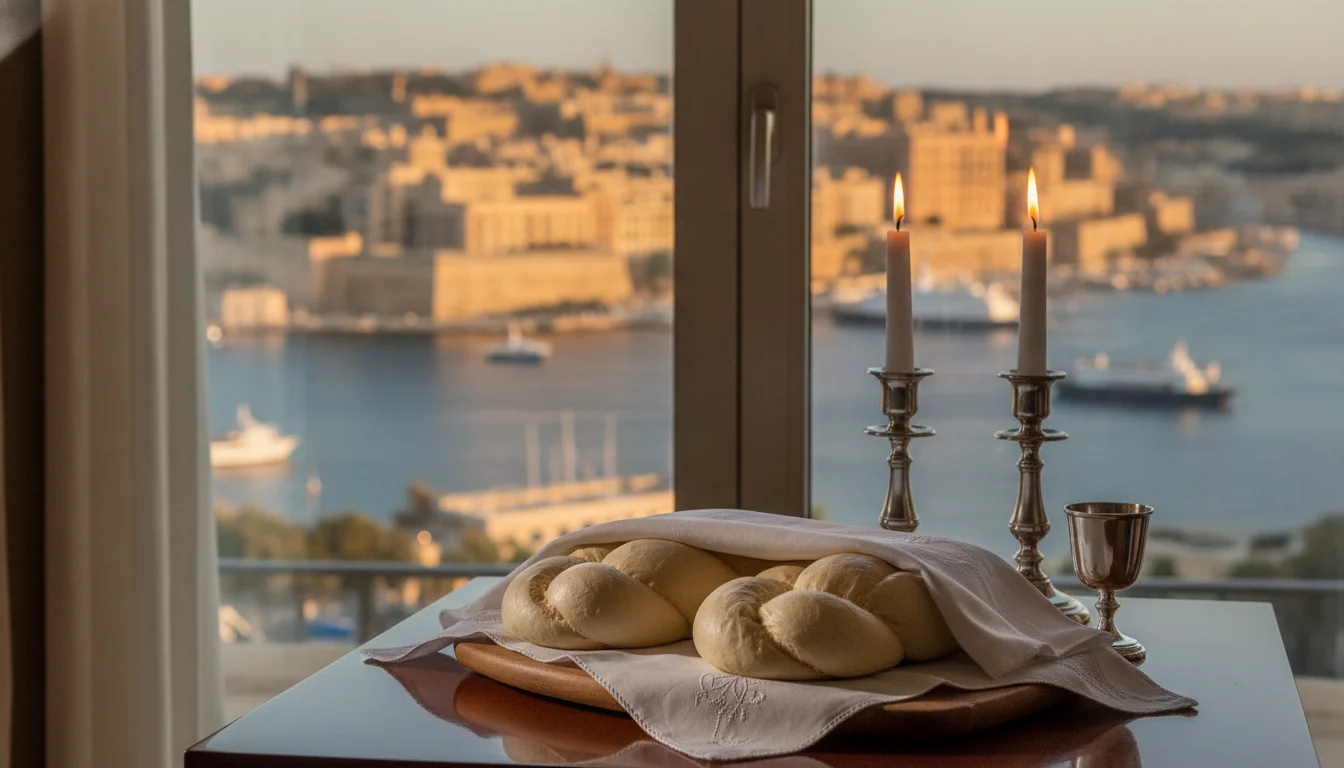
A rabbi asked me directly before booking a Malta trip: “Will my group be able to keep Shabbat properly, or are we going to be improvising in a hotel room?” I appreciated the bluntness, because it deserves a blunt answer. Shabbat in Malta is absolutely possible to observe well, but I will not pretend it works the way it does in Jerusalem or even Istanbul. Malta’s Jewish community is small, newly re-established after five centuries without an organized presence, and that reality shapes how far in advance you need to plan. Let me walk you through what is real and what it takes.
The Honest Starting Point
Our guide to Jewish heritage in Malta tells the fuller story: a Jewish community lived on this island for over 1,500 years before the 1492 expulsion, and only in recent years has a new synagogue been established in Valletta, the first dedicated Jewish house of worship on the island since then. That timeline matters directly for Shabbat planning. You are not walking into a city with multiple synagogues, an eruv, kosher restaurants on every block, and a community accustomed to hosting Jewish tour groups every week. You are working with a small, real, but limited infrastructure that is still being built back up.
This is the same honesty I try to bring to every faith-heritage question. I do not oversell Malta’s Jewish infrastructure the way I would not oversell any destination’s limitations. What I will tell you is that with the right advance coordination, your group can observe Shabbat meaningfully here, and doing so alongside a community that is itself in the process of returning after five centuries is its own kind of powerful experience.
Choosing Where to Base Your Group for Shabbat
The single most important decision is where your hotel sits relative to Valletta and its new synagogue. Unlike a general Malta itinerary, where a Sliema or St. Julian’s base makes sense for reaching every site efficiently, a Shabbat-observant group needs walking distance to be the deciding factor for at least that portion of the trip. We plan Shabbat-observant Malta itineraries around a hotel base close enough to Valletta that your group can walk to services and back without needing transport once Shabbat begins.
This sometimes means splitting the trip logistically: a base near Sliema or St. Julian’s for the touring days, and a short relocation or a Valletta-adjacent hotel specifically for the Shabbat portion of the trip. It adds a planning step, but it is the difference between a group that observes Shabbat properly and a group that spends Friday night worrying about how to get back to their rooms.
Meals: What Requires Advance Coordination
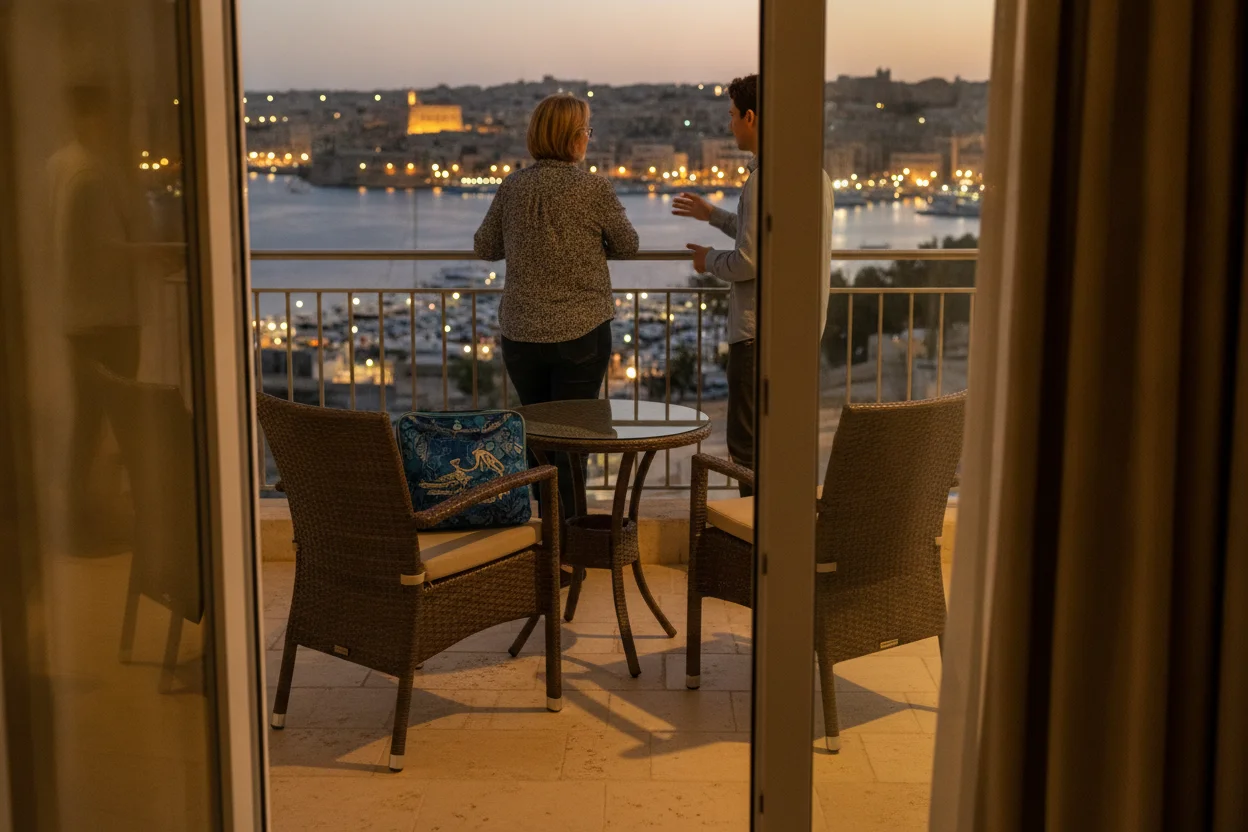
Shabbat meals are the piece that cannot be improvised, and this is where Malta’s limited infrastructure shows up most directly. There is no network of kosher caterers accustomed to servicing visiting groups the way you would find in a larger Jewish center. What we do instead is coordinate directly with Malta’s Jewish community and local contacts well ahead of your arrival: arranging Friday night and Shabbat day meals, sourcing kosher provisions where needed, and in some cases having food prepared and brought in rather than assuming a restaurant will accommodate the group on-site.
The lead time matters here more than almost anywhere else in trip planning. This needs to be settled months out, not the week before departure. If your group keeps a specific kashrut standard, name it early and clearly, the same way we approach food planning for any Jewish heritage trip, so the arrangements can be built to match rather than discovered as a mismatch on a Friday afternoon.
What a Shabbat in Valletta Can Actually Look Like
When it is planned properly, a Shabbat spent in or near Valletta can be one of the most meaningful parts of the entire journey, arguably more so than in a place with an established, long-running Jewish infrastructure. Your group is not simply attending services in a community that has always been there. They are present for a community actively re-establishing itself after five centuries of absence, praying in a synagogue that did not exist a generation ago on an island where Jewish communal life was erased in 1492.
For a rabbi leading a group through this, that context is worth naming explicitly to your travelers before Friday night arrives. This is not heritage tourism in the usual sense of visiting the past. It is participating, in a small way, in the present chapter of a story that is still being written.
Building Shabbat Into the Broader Itinerary
Shabbat observance works best when it is planned as a fixed point in the itinerary rather than squeezed between other activities. Most groups plan their week so that touring, St. Paul’s Bay, Mdina and the Giudecca, a Gozo day trip if included, happens before or after the Shabbat window, with Friday afternoon reserved for settling into the Shabbat-adjacent hotel and Saturday kept free of travel and touring. If you are weighing which week of the year to travel, our guides on Malta heritage travel in spring and Malta heritage travel in fall can help you land on a departure window, and once you have dates, Shabbat planning should begin immediately alongside the rest of the logistics, not as an afterthought closer to departure.
What I Ask Every Group to Do Early
If your group observes Shabbat, tell us as early as possible, ideally at the same time you confirm your dates. The two things that need the longest lead time are the hotel selection for walking distance to Valletta, and the meal coordination with the local community. Everything else in a Malta itinerary can flex relatively late in the planning process. Shabbat logistics cannot. Get this piece moving first and the rest of the trip builds around it easily.
FAQ: Shabbat on a Malta Heritage Trip
Is it realistic to keep Shabbat properly on a Malta heritage trip?
Yes, with advance planning. Malta’s Jewish community is small and its infrastructure is more limited than a larger Jewish center, so meals and hotel location need to be coordinated months ahead rather than assumed. Done that way, groups observe Shabbat meaningfully.
Where should our group stay for Shabbat in Malta?
Close enough to Valletta and its new synagogue to walk both ways without needing transport. This sometimes means a different hotel base than the one used for the rest of the trip’s touring days.
How are Shabbat meals arranged in Malta?
Through direct coordination with Malta’s Jewish community and local contacts, arranged well in advance. There is no established network of caterers used to servicing visiting groups, so meals are planned and, in some cases, prepared and brought in rather than sourced from a restaurant on short notice.
How far ahead should we tell our tour operator that we observe Shabbat?
As early as possible, ideally when you confirm your travel dates. Hotel selection for walking distance and meal coordination with the local community both need long lead times, more than most other parts of a Malta itinerary.
Is there an active synagogue we can attend in Malta?
Yes. A new synagogue has been established in Valletta, the first dedicated Jewish house of worship on the island since the 1492 expulsion. It is a small, still-growing community, and attending services there is one of the most meaningful parts of a Shabbat-observant Malta trip.
If your group keeps Shabbat and you are considering Malta, tell us early and we will build the trip around it properly from the start.
Contact us to begin planning a Shabbat-observant heritage journey.