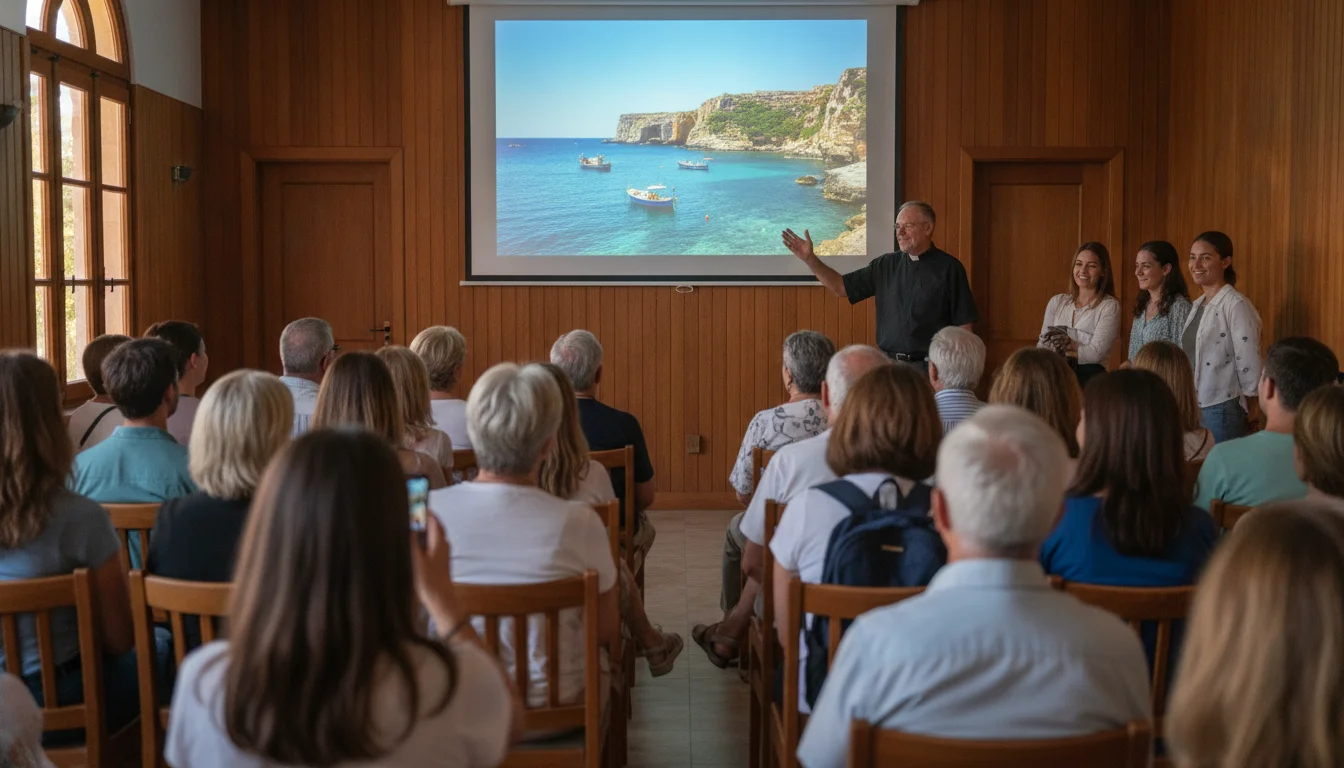
A pastor called me a few months ago, sold on Malta himself, and stuck on the same problem every group leader eventually hits. “I know I want to take them. I don’t know how to get them to want it too.” He had a bulletin announcement drafted and a vague sense that people would sign up because the idea was good. That is rarely how it works.
Malta is not a destination most congregations already have on their radar the way Israel or Italy might be. Nobody’s grandmother talked about visiting Malta. So the marketing job here is different from announcing a trip to a place people already associate with faith. You are introducing the place and the trip at the same time. That takes a plan, not just an announcement.
Here is how I walk group leaders through it.
Lead With the One Fact That Sells Malta
Every successful Malta pitch I have seen starts with the same sentence: the Apostle Paul was shipwrecked here. Acts 27 and 28, in detail, on this specific island. Most congregants have read that passage without ever knowing it was a real place they could stand in.
That single fact does more marketing work than any brochure. It turns “a trip to Malta” into “the place where Paul survived a shipwreck and the islanders showed him unusual kindness.” Say it exactly like that, early, in the first thing people hear about the trip. Our group heritage tour guide walks through the site itself in more depth if you want the details right before you present.
Do not bury this fact in paragraph four of a newsletter. Open with it.
Use the Right Visuals
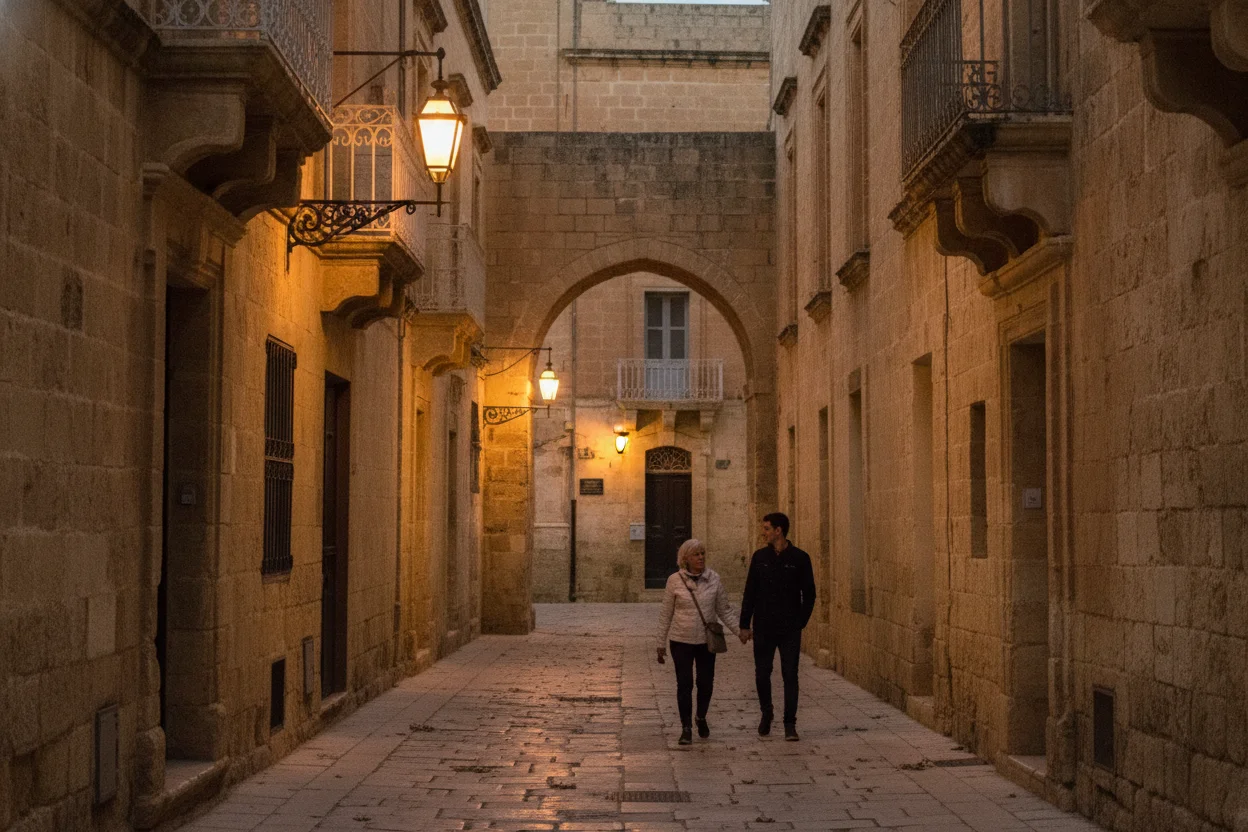
Malta photographs beautifully, and beauty sells a trip that facts alone cannot. St. Paul’s Bay at golden hour. The honey-colored stone of Valletta. The Grotto of St. Paul. Mdina’s quiet, walled streets at dusk. If you do not have your own photos yet, ask us. We can point you to imagery from past groups that shows real travelers standing at real sites, which lands better than stock photography every time.
A short slideshow during announcements, three or four strong images with one line of context each, outperforms a wall of text nearly every time I have watched a leader present.
Anticipate the Three Objections
I hear the same three concerns from congregants almost every time a leader introduces Malta. Answer them before anyone has to ask.
“Where is Malta, exactly?” A small island nation south of Sicily, in the Mediterranean. Show a map. People commit more easily to a place they can picture.
“Is this a real heritage trip or a vacation with a religious label on it?” Be direct: this is heritage and faith travel specifically, not leisure travel with a few churches added in. The itinerary centers on St. Paul’s Bay, St. John’s Co-Cathedral, the Grotto, and the Knights of Malta history in Valletta. If your congregation also has interest in Jewish heritage, Malta has that thread too, through Mdina’s ancient Jewish quarter, which our Malta Jewish heritage post covers well.
“Is five or six days enough, or is this too small a trip?” Malta is compact by design, and that is a selling point, not a limitation. Every major site sits within a thirty-minute drive of every other site. Nobody loses a day to transit. Our 5-day heritage itinerary shows exactly how much a shorter trip can hold.
Make the Free Leader Policy Part of the Pitch
Tell your congregation directly that you travel free when the group reaches fifteen or more participants. I know some leaders feel awkward mentioning this, as if it looks self-interested. Say it anyway. Congregants respond well to transparency, and knowing the math benefits the group, not just the leader, actually builds trust rather than undermining it.
Frame it as what it is: an incentive for the congregation to rally around a full bus, because a full bus makes the whole trip more affordable for everyone and gets their pastor or rabbi there for free.
Give People a Real Timeline
Vague announcements produce vague interest. Specific timelines produce sign-ups. Once you have a target trip date, work backward and give your congregation four checkpoints: initial interest and deposit, passport and paperwork deadline, final payment date, and a pre-trip meeting a few weeks before departure. Put these dates in writing from the first announcement.
Most leaders find that a six to nine month runway gives families enough time to budget and still keeps the trip feeling close enough to be real. Announce too far out and the trip becomes an abstraction people forget to act on.
Recruit a Few Early Champions
Before you announce to the full congregation, talk privately to two or three people you know will say yes immediately, ideally people others in the community respect or listen to. Ask them to commit early and let their enthusiasm be visible when you make the wider announcement. A trip that already has five names attached feels real in a way an open invitation does not.
This is a small thing, but I have watched it double sign-up rates in the first two weeks compared to a cold announcement with zero early commitments.
Follow Up Individually
The announcement gets attention. The one-on-one conversation gets commitment. Plan to follow up personally with anyone who expressed interest but has not yet put down a deposit, ideally within a week or two of the initial pitch. Ask what is holding them back. Often it is a logistics question you can answer in two minutes, not a real objection.
Marketing a Malta trip well is mostly this: lead with the strongest fact, show real images, answer the objections before they are asked, be upfront about the leader policy, and follow up like you mean it. Do that consistently and you will fill a bus.
FAQ: Marketing a Malta Heritage Trip
How far in advance should I start marketing a Malta heritage trip to my congregation?
Six to nine months before departure is the sweet spot for most congregations. It gives families time to budget and handle passports without letting the trip feel so distant that people forget to commit.
What is the single best selling point for Malta with a congregation that has never considered it?
The Apostle Paul’s shipwreck, described in detail in Acts 27 and 28, happened on this specific island. Leading with that fact, rather than general Mediterranean appeal, is what consistently gets people interested.
Should I mention that the group leader travels free?
Yes, directly and early. It is not self-serving to explain the math. Congregants generally respond better to transparency about how group travel economics work than to leaders who avoid the topic.
How many people do I need before Malta pricing gets attractive?
Fifteen or more participants unlocks the free leader seat and generally the best per-person group rate. Smaller groups can still travel well in Malta, since the island’s compact size keeps costs more reasonable even for private formats.
What if my congregation is more interested in Israel or Italy and Malta feels like a hard sell?
Malta rarely competes head to head with Israel or Italy as a first heritage trip. It works best framed honestly as its own distinct experience or as a pairing with a broader Mediterranean itinerary. Our heritage travel guide can help you position it accurately for your community.
If you are getting ready to introduce a Malta trip to your congregation and want help building the pitch, the timeline, or the itinerary itself, I am glad to talk it through. Contact us and let’s put together something your people will actually sign up for.