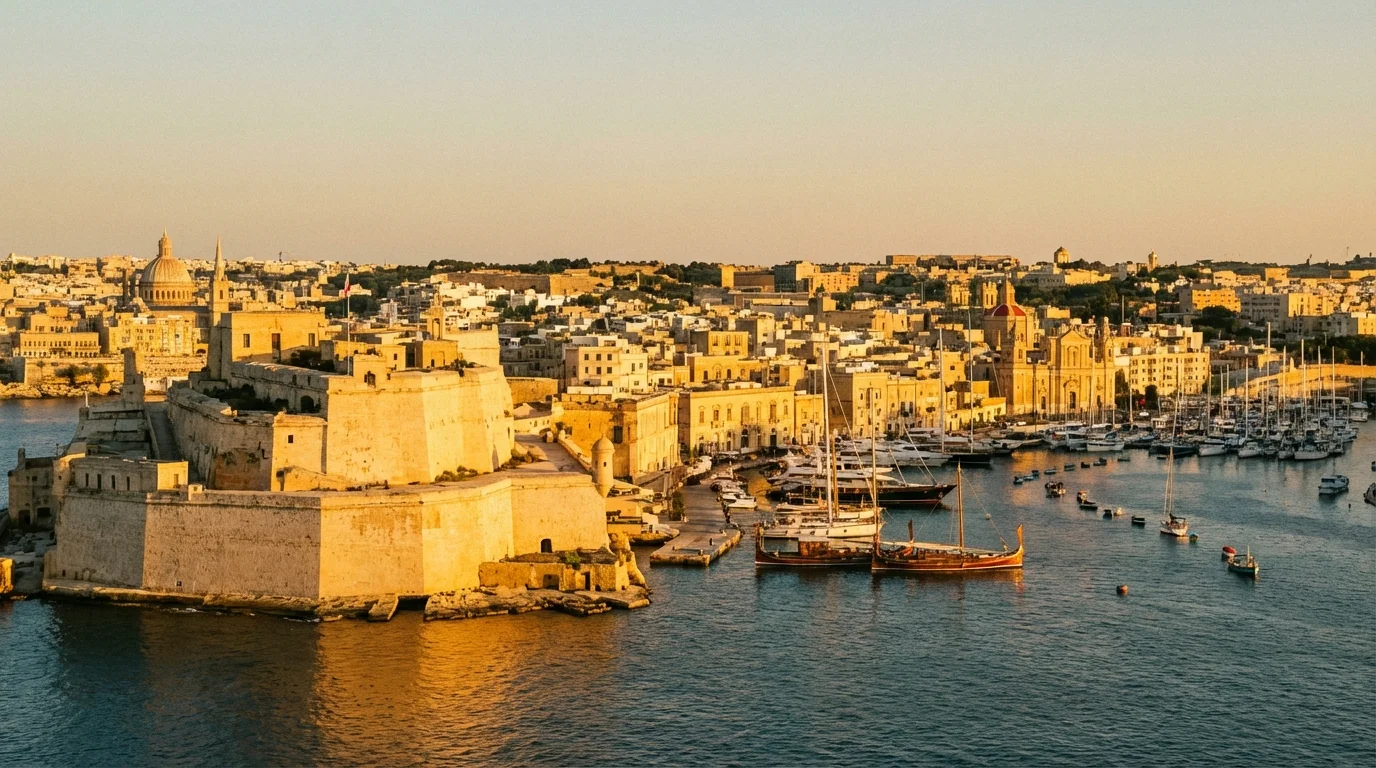
Malta: Where the Bible Meets the Mediterranean
There are places you visit because they are beautiful, and places you visit because something happened there that changed the course of faith. Malta is both.
This small island in the center of the Mediterranean holds a claim almost no other European destination can make. A specific event from the New Testament took place here. Not symbolically. Not by tradition alone. The Apostle Paul was shipwrecked on this island around 60 CE, as recorded in Acts 27 and 28, and the geography where it happened is still identifiable today.
For over forty years, I have walked with faith groups through the places that shaped their traditions. Malta is one of the destinations that stays with people long after they return home, because the connection between Scripture and the physical landscape is so direct, so close, that it changes how you read the text afterward.
This guide walks through what makes Malta a heritage destination of the first order, for Christian groups, for Jewish travelers, and for anyone drawn to the deep history of faith in the Mediterranean.
St. Paul’s Shipwreck: The Event That Defined an Island
In approximately 60 CE, a ship carrying the Apostle Paul as a prisoner to Rome was caught in a violent storm that lasted fourteen days. The crew lost all hope. Paul told them that an angel had appeared to him, promising that all 276 people aboard would survive. The ship ran aground on a sandbar, broke apart, and everyone reached shore safely.
That shore was Malta. The bay where it happened is still called St. Paul’s Bay.
What followed is recorded in Acts 28. The islanders built a fire for the survivors. A viper came out of the brush and bit Paul’s hand. He shook it off, unharmed, and the Maltese took it as a sign. Paul then healed the father of Publius, the island’s governor, who was suffering from fever and dysentery. Paul stayed three months. Christianity came to Malta through him.
For a Christian group leader standing at St. Paul’s Bay with a congregation, this is not a museum exhibit. This is the place where it happened. The water, the shoreline, the island itself. It is one of the most powerful moments a faith group can experience in the Mediterranean.
Valletta: A Capital Built by the Knights of God
Valletta was not built by a government or a commercial power. It was built by the Knights of St. John, a Catholic military order that defended Christendom in the Mediterranean for centuries. After the Great Siege of 1565, when the Knights held Malta against the Ottoman Empire against extraordinary odds, they built Valletta as a fortress city dedicated to God and to their mission.
The result is one of the most concentrated heritage cities in Europe. Every street, every church, every fortification in Valletta carries the mark of the Knights’ faith and their vow to defend it. The city is a UNESCO World Heritage Site, but for heritage travelers, it is something more. It is a city built as an act of devotion.
Walking through Valletta with a group is walking through the physical expression of a military order’s commitment to their faith. The scale of what they built, on a small island, in a few decades, with the Ottoman Empire still threatening, tells you something about what belief can accomplish.
The Mdina Jewish Quarter: Before the Expulsion of 1492
In the same year that Ferdinand and Isabella expelled the Jews from Spain, the Knights of Malta expelled the island’s Jewish community. They had been in Malta for over 1,500 years.
The Jewish quarter, known as the Giudecca, was in Mdina, Malta’s ancient walled capital. Today, the narrow streets of the Giudecca still exist. They are quiet now. There are no synagogues standing. But the layout of the quarter, the street names, and the archaeological record all confirm what was here: a small but established Jewish community that lived, traded, and worshipped on this island for a millennium and a half before they were forced to leave.
For Jewish heritage travelers, Malta’s story is modest compared to the great Jewish centers of Europe. But it is real, and it is largely unknown. The Giudecca in Mdina, the Jewish section of the catacombs beneath nearby Rabat, and the emerging story of a new synagogue in Valletta all form a heritage trail that is worth walking, especially for groups who want to understand the full arc of Jewish life in the Mediterranean.
St. John’s Co-Cathedral: Caravaggio and the Knights’ Faith
Inside Valletta, St. John’s Co-Cathedral is one of the most remarkable religious buildings in Europe. From the outside, it looks austere, almost military. Inside, it is overwhelming. Gold, marble, painted vaults, and the work of Caravaggio, including “The Beheading of St. John the Baptist,” the only painting the artist ever signed.
But what makes St. John’s Co-Cathedral truly extraordinary for heritage travelers is what lies beneath your feet. The entire floor is made of marble tombstones, over 400 of them, each marking the grave of a Knight of St. John. You walk across centuries of buried faith. Each stone bears a coat of arms, a name, a date. These were men who gave their lives to the order and are buried in the church they built.
For a faith group, standing in St. John’s is standing in a place where devotion is not abstract. It is in the walls, in the art, in the floor under your shoes.
How to Build a Heritage Group Itinerary in Malta
Malta’s small size is one of its greatest advantages for group leaders. The main island is roughly 27 kilometers long. You can drive from one end to the other in under an hour. There are no internal flights, no border crossings, no train connections to manage. Your group stays in one place and visits everything from a single base.
A well-planned heritage itinerary in Malta typically covers four to five days. That gives enough time for the St. Paul’s heritage sites in the north, Valletta and its Knights heritage in the center, Mdina and Rabat for the Jewish heritage and catacombs, and a day trip to Gozo for the ancient Ggantija temples, which predate Stonehenge by roughly 900 years.
Heritage Tours builds Malta itineraries around the faith narrative, not the tourist circuit. Whether your group is Christian, Jewish, or both, the island holds enough to fill every day with meaning.
If you are considering Malta for your next group heritage journey, we would welcome the chance to help you plan it. You can explore our Malta destination page or reach out to us directly. We have been doing this for a long time, and Malta is one of the places we know best.
Frequently Asked Questions
Why is Malta important for Christian heritage travelers? Malta is one of the few places in Europe where a specific New Testament event took place. The Apostle Paul was shipwrecked here around 60 CE, as described in Acts 27 and 28. The bay, the grotto where he is believed to have stayed, and the sites connected to his three months on the island are all visitable today.
What is the significance of St. Paul’s shipwreck in Malta? The shipwreck brought Christianity to Malta. Paul healed the sick, survived a viper bite, and spent three months on the island. The governor Publius, whose father Paul healed, is traditionally regarded as Malta’s first Christian. The event is documented in the Book of Acts and is central to Malta’s identity as a faith destination.
Is there Jewish heritage in Malta? Yes. Malta had a Jewish community for over 1,500 years before the expulsion of 1492. The Giudecca, the Jewish quarter in Mdina, still exists as a physical space, and the Jewish section of the Rabat catacombs is one of the few ancient Jewish burial sites in the Mediterranean outside of Rome. A new synagogue is also being established in Valletta.
What is St. John’s Co-Cathedral in Valletta? St. John’s Co-Cathedral was built by the Knights of St. John in the 16th century. It houses Caravaggio’s masterwork “The Beheading of St. John the Baptist” and has a floor entirely composed of over 400 marble tombstones of Knights. It is one of the most significant heritage churches in Europe.
How many days do you need for a heritage trip to Malta? Four to five days is the standard recommendation for a heritage group trip. Malta is small enough that all major heritage sites can be reached from a single base, and five days allows for a thorough visit including a day trip to the island of Gozo.