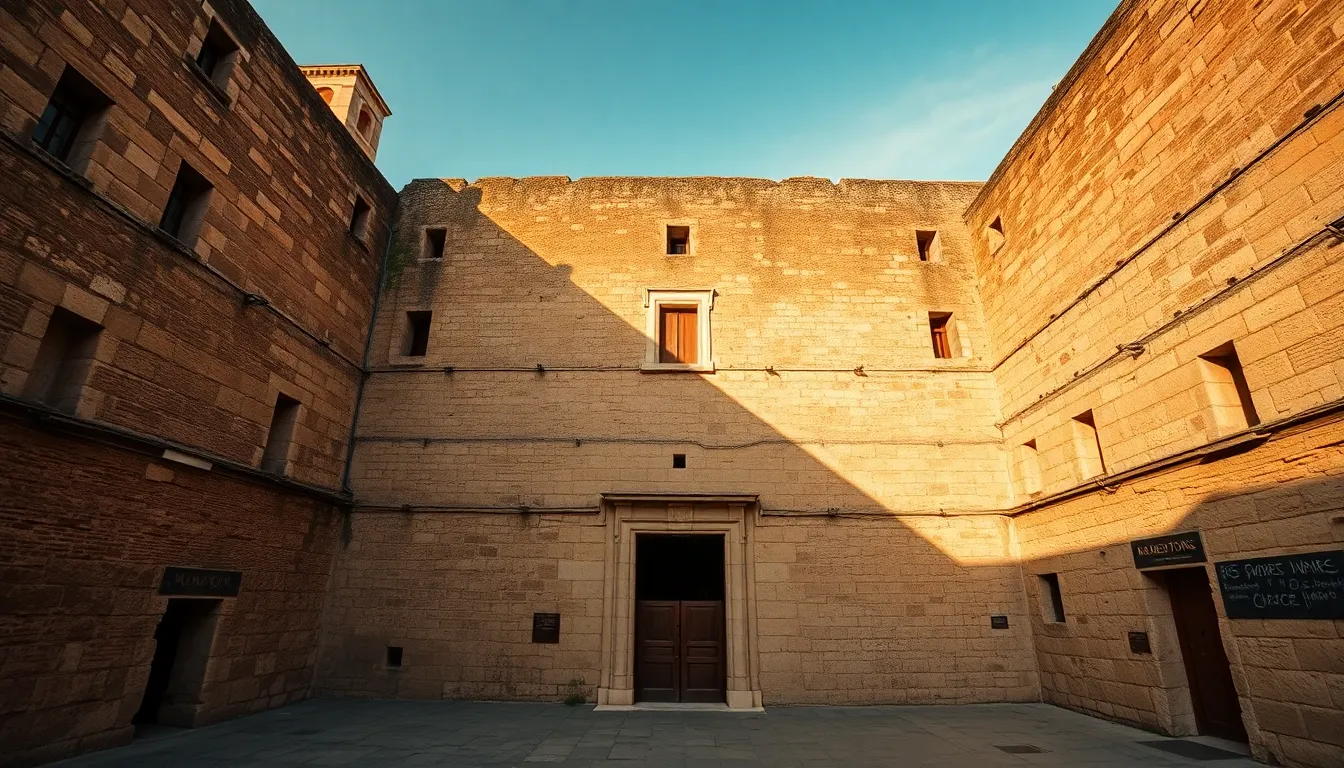
A few steps from the Roman Forum, below the church of San Giuseppe dei Falegnami, there is a small, grim chamber of stone that I always bring groups to with a word of preparation. It is the Mamertine Prison, and by ancient tradition it is where the apostles Paul and Peter were held before their executions. There is no gold here, no soaring dome, nothing to soften the place. It is a cell. And that is exactly why it belongs in a faith itinerary. After days of admiring the church in triumph, a group needs to stand in the cold room where, by tradition, the men who built that church waited to die for it. It is one of the most sobering and clarifying stops in all of Rome.
Let me tell you what this place is, what the tradition holds, and how to bring a group through it with the gravity it asks for.
A Roman State Prison
The Mamertine Prison, known in antiquity as the Tullianum, sits at the foot of the Capitoline Hill on the edge of the Forum, in the heart of ancient Rome. It is genuinely old, older than the empire, with the lower chamber dating to perhaps the seventh or sixth century BC. The Romans did not use prisons for long sentences the way we do. This was a holding cell, a place where condemned enemies of the state were kept briefly before execution, usually by strangling, or where they were simply left to die.
It has two levels. The upper chamber is reached from the street. The lower chamber, the original Tullianum, was once accessible only through a hole in the floor, through which prisoners were lowered into the dark. A spring rises in the lower cell. The historian Sallust described the place in the first century BC as neglected, dark, and foul, and noted the dread it inspired. This is where Rome put the people it intended to destroy. Among the famous prisoners held here before the apostles was the Gaulish chieftain Vercingetorix, kept in this cell after his defeat by Julius Caesar and later executed. For where this fits the wider faith landscape of the city, our overview of spiritual sites in Italy for faith travelers gives the map.
The Tradition of Paul and Peter
Now to why a faith group comes here. By a tradition reaching back to the early centuries of the church, both Paul and Peter were imprisoned in the Mamertine before their martyrdoms during Nero’s persecution in the 60s AD.
I am always careful to frame this honestly for groups. The New Testament itself does not name the Mamertine. We know from Acts and from Paul’s own letters that he was held in Rome, and his second letter to Timothy, widely read as written from a Roman imprisonment near the end of his life, has the unmistakable tone of a man facing execution: “I am already being poured out as a drink offering, and the time of my departure has come.” Where exactly he was held, scripture does not say. The identification with the Mamertine comes from early and persistent church tradition, not from the biblical text. I tell groups that plainly, and they appreciate the honesty. It does not diminish the place. Standing in an authentic Roman death cell, a few steps from the Forum, while you read Paul’s last words, is powerful whether or not this is the precise room.
The tradition holds that Peter, too, was imprisoned here before his crucifixion on the Vatican hill. A column in the lower cell is venerated as the place he was chained, and a spring in the floor is connected by legend to a story that Peter caused water to rise so he could baptize his guards. These are devotional traditions layered onto the site over centuries, and I present them as such: as the church’s long memory and love for the apostles, not as documented history.
What Makes It Worth a Group’s Time
So why bring a group to a small, dark cell with a tradition the Bible does not confirm? Three reasons I give every leader.
First, the authenticity of the prison itself is not in doubt. This is a real Roman state prison, in continuous identification since antiquity, where Rome held and killed its condemned. The dread of the place is genuine. Standing in it tells your group something true about the world the apostles actually lived and died in.
Second, it reframes everything else in Rome. A group that has seen Saint Peter’s Basilica, the golden ceilings, the marble, the dome, needs the counterweight of this cell to understand the whole story. The glory above ground was built in honor of men who, by tradition, ended in a hole in the floor of a stone prison. The contrast is the point. I often pair this stop with the tomb of Saint Peter so a group holds both ends of the story: the cell and the grave, the humiliation and the honor.
Third, it is honest about cost. Faith groups can drift toward a tourism of beautiful things. The Mamertine resets that. It asks the question the whole New Testament asks: what is this faith worth to you, if it cost them this? I have seen that question land harder in this cold room than in any cathedral.
How to Visit With a Group
A few practical notes from bringing groups through.
It is a managed site now. The Mamertine is run as a ticketed visitor site, often with a multimedia presentation that lays out the layered history, Roman and Christian. You enter through the upper level and descend to the lower cell. It is compact, so a large group moves through in sections rather than all at once.
It is small and can feel close. The lower chamber is genuinely tight and dim. For anyone with claustrophobia, prepare them, and know that the upper level and the presentation still convey the place even if someone chooses not to go all the way down.
Pair it with the Forum. The Mamertine sits right at the edge of the Roman Forum and the Capitoline Hill, so it slots naturally into a morning that includes the Forum and the heart of ancient Rome. Your group walks the streets of the empire and then steps into the cell at its dark edge.
Read the right text on site. I bring Second Timothy and read a few verses in the lower cell. The words of a man at peace facing death, in the kind of room where such men were held, is the heart of the visit. Coordinate with your pastor on what to read so the moment is prepared, not improvised.
Connect it to the early church thread. The apostolic story you touch here continues at the Catacombs of Priscilla and along the Appian Way, where the church that survived the persecution buried and remembered its martyrs.
We build the Mamertine into a Rome itinerary alongside the Forum, the Basilica, and the catacombs, with the timing and the reflective moment arranged in advance. Our group heritage tours page explains the group leader experience, and our Italy destination page shows how the days connect.
FAQ: The Mamertine Prison
Were Paul and Peter really imprisoned in the Mamertine Prison?
By ancient and persistent church tradition, yes, both apostles were held here before their martyrdoms under Nero in the 60s AD. The New Testament itself does not name the Mamertine, so I always tell groups this is tradition rather than a biblical fact. What is not in doubt is that the Mamertine was a genuine Roman state prison where the condemned were held and executed. Standing in a real Roman death cell while reading Paul’s final words carries weight whether or not it is the precise room.
What was the Mamertine Prison used for?
It was Rome’s holding cell for condemned enemies of the state, not a place of long sentences. Prisoners were kept here briefly before execution, usually by strangling, or left to die. The lower chamber, the ancient Tullianum, was reached through a hole in the floor and described by Roman writers as dark and dreadful. Famous prisoners before the apostles included the Gaulish chieftain Vercingetorix, executed here after Caesar’s triumph.
Is the Mamertine Prison suitable for everyone in a group?
Mostly, with one caution. The lower cell is small, dim, and can feel close, so anyone with claustrophobia should be prepared, and they can remain at the upper level if needed. The site is managed with a presentation and is accessed by stairs to the lower chamber. Flag any mobility or claustrophobia concerns when planning, and know that the visit still conveys the place from the upper level for those who prefer not to descend fully.
Why visit a prison on a faith trip to Rome?
Because it tells the truth the cathedrals do not. After a group sees the golden grandeur of Saint Peter’s, the Mamertine reframes the whole story: that glory was built in honor of men who, by tradition, ended in a stone cell. It asks what the faith was worth to those who founded it. For many groups, this cold room and a reading of Paul’s last letter become the most clarifying and sobering moment of the entire trip.
Where is the Mamertine Prison, and what is it near?
It sits at the foot of the Capitoline Hill on the edge of the Roman Forum, in the heart of ancient Rome, beneath the church of San Giuseppe dei Falegnami. Its location makes it easy to combine with a morning at the Forum and the Capitoline, so a group can walk the public heart of the empire and then step into the prison at its dark edge. We sequence it into the Rome itinerary alongside the Forum and the Vatican sites.
The Mamertine is not a comfortable stop, and that is its gift. It puts a faith group in the actual world the apostles died in and asks the question the whole New Testament asks. Paired with the grandeur of Saint Peter’s and the quiet of the catacombs, it completes the arc from cell to glory. If you want a Rome itinerary that tells the whole story, cost and all, I would be glad to build it with you.
Contact us to start planning your group’s journey to Rome.