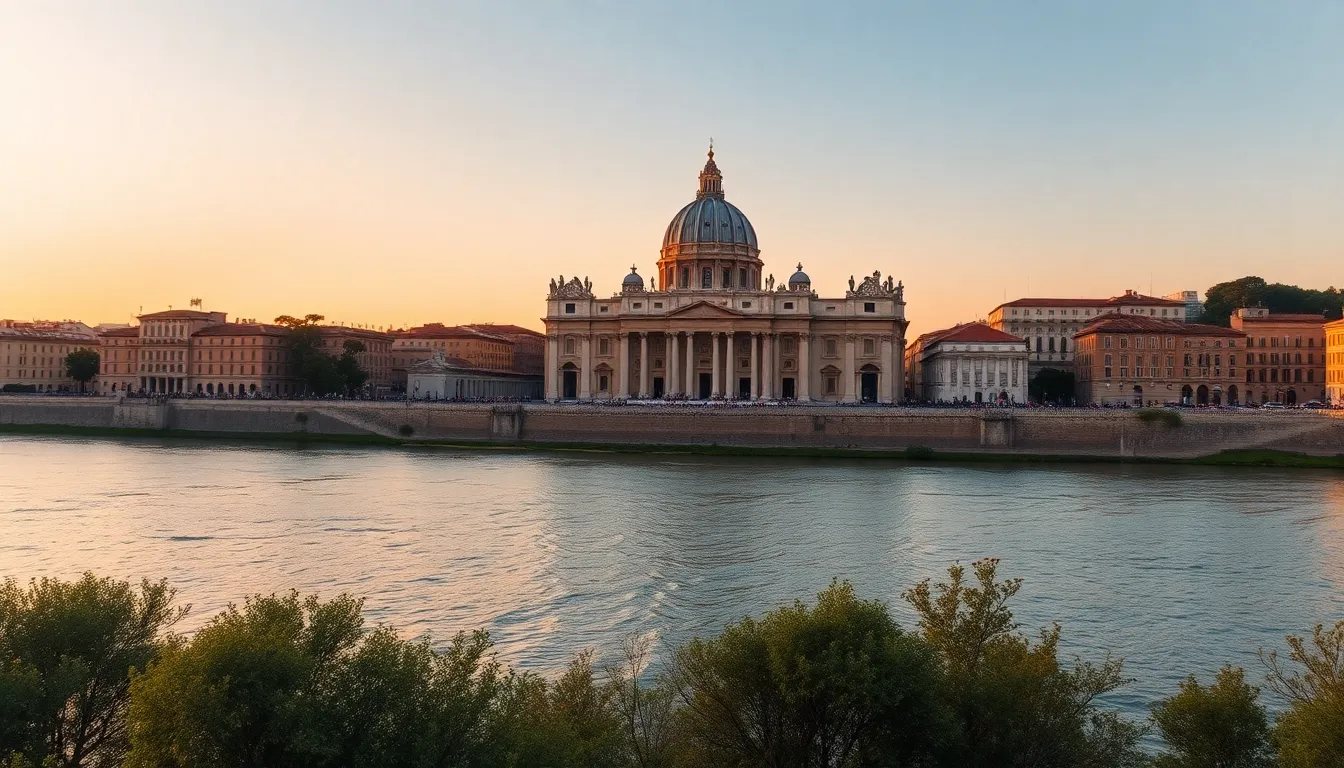
Some groups do not want to spend half their trip on trains. They want one city, one hotel, no packing and repacking, and the chance to go deep instead of wide. For faith communities, Rome is the city that rewards that choice more than any other. You can build five full days here without a single travel day and never run out of meaningful ground. Two thousand years of Jewish and Christian history sit within a few square miles, and a group that stays put can walk most of it.
This is the five-day Rome route I build for congregations who choose one city and commit to it. It works for Christian groups, for Jewish groups, and for blended communities, because in Rome the two stories are never far apart. I will note along the way where to lean one direction or the other.
Day 1: The Vatican
Start with the Vatican, and start early. Arriving before the heaviest crowds is the difference between a contemplative morning and a crush.
The morning holds the Vatican Museums and the Sistine Chapel. My standing advice to every group leader: do not try to see every gallery. Choose the Raphael Rooms and the Sistine ceiling, and give your people time to sit beneath Michelangelo’s ceiling rather than glance up and move on. The ceiling alone deserves twenty quiet minutes. In the afternoon, St. Peter’s Basilica, built over the tomb of the apostle Peter. Stand at the confessio above his grave. Climb the dome if your group has the legs for it, because the view across Rome orients everyone for the days ahead. For Jewish groups, the Vatican still belongs on Day 1 as context, the seat of the church whose history is woven through the Roman Jewish story you will encounter later in the week.
Day 2: The Catacombs and the Ancient Roads
Day 2 goes underground and back to the beginning. For Christian groups, the Catacombs of San Callisto or San Sebastiano along the Appian Way are where the earliest believers buried their dead and worshipped when the faith was illegal. The corridors are narrow and close, the symbols simple, scratched by people who risked death to gather. It is often the most powerful morning of the trip precisely because it is the least grand.
For Jewish groups, Rome holds its own catacombs, at Vigna Randanini and Villa Torlonia, where menorahs and Hebrew inscriptions are carved into the walls. Access takes advance permission, which we arrange. Either way, the afternoon belongs to the Appian Way itself, the ancient road where Peter is said to have fled before turning back to Rome, walking the same stones the early church walked.
Day 3: The Jewish Ghetto and Ancient Rome
Day 3 brings the Jewish story to the center, and it is essential whether your group is Jewish, Christian, or both.
Begin in the Jewish Ghetto near the Tiber, the oldest continuously inhabited Jewish quarter in Europe, with a community here since the second century BCE. Start at the Great Synagogue of Rome and the Jewish Museum inside it, which carries the story from antiquity through the Nazi deportation of October 1943. Walk the Portico d’Ottavia and read the plaques in the pavement. This is a living community, not a museum, and your group should feel that. Have a kosher lunch on Via del Portico d’Ottavia.
In the afternoon, the Roman Forum and the Colosseum a short walk away. For a faith group, the Arch of Titus is the moment that matters: its carved panel shows Roman soldiers carrying the Temple menorah out of Jerusalem after the sack of 70 CE. For two thousand years Roman Jews refused to walk beneath it. Stand there and the ancient and the modern collapse into one.
Day 4: The Early Church Layer by Layer
Day 4 traces how the church grew up through the old pagan world. San Clemente is the site I never skip: a twelfth-century church built over a fourth-century church built over a first-century Roman house and a temple of Mithras. You descend through the layers one floor at a time, and by the bottom you understand the whole story of how the faith rose through what came before.
Pair it with San Giovanni in Laterano, the actual cathedral of Rome and the oldest church in the West, and the Scala Sancta across the street, the holy stairs pilgrims still climb on their knees. For groups with a strong Marian devotion, add Santa Maria Maggiore, the great fifth-century basilica whose mosaics are among the oldest depictions of the life of Mary anywhere. This is also a natural day for a quieter pace. After the intensity of the first three days, San Clemente and the Lateran give your group room to slow down and absorb.
If your group has the energy and interest, the area around San Clemente rewards an unhurried afternoon. The Basilica of Santi Quattro Coronati nearby holds a thirteenth-century chapel of frescoes that most tour groups never see, and the cloister there is one of the quietest corners in the whole city. I often steer groups to it specifically because, after three intense days, a half hour in a silent medieval cloister does more for a community than another grand church. Rome is full of these small, unhurried places, and a five-day stay is what gives you the room to find them.
Day 5: Reflection and Departure
The last day is not filler, and I always ask group leaders to use it intentionally. If your flight is in the afternoon or evening, the morning can hold one final site, San Paolo Fuori le Mura over the apostle Paul’s tomb is a strong close for Christian groups, or a last walk back through the Ghetto for Jewish groups who want to end where the living community is.
But my real advice is to hold a short reflection before you go. Gather at the hotel or walk to a quiet piazza for coffee, and let each traveler name one place that stayed with them. It takes half an hour and it turns five days of visits into a shared story your community carries home. We handle the departure transfers so the final hours are not spent on logistics.
Adapting This Rome Week for Your Group
Five days in one city leaves room to follow your community’s specific interests. For Christian groups, we can arrange a Mass at one of the major basilicas and request a papal audience when the calendar allows. For Jewish groups, we deepen the Ghetto and catacomb visits and bring in a community historian. For blended congregations, the route already balances both, and we tune the days based on who is actually traveling.
If your group later wants to add more of Italy, our 10-day heritage itinerary for Italy extends Rome into Assisi, Florence, and Venice. The 7-day Christian heritage itinerary pairs Rome with Assisi, and the 7-day Jewish heritage itinerary carries the Jewish story north to Florence and Venice. You can see how we structure these journeys on our Italy destination page.
One thing to keep in mind as you plan: with fifteen or more participants, the group leader travels at no cost. The pastor, rabbi, or educator who shapes the trip is what makes it a heritage journey rather than sightseeing, and we have always built the economics around keeping that person present.
If a focused Rome week is what your community needs, I would welcome the conversation. You can learn more on our group heritage tours page.
FAQ: A 5-Day Rome Heritage Itinerary
Is 5 days enough to see Rome’s heritage sites?
Yes. Five days with no travel days lets you cover the Vatican, the catacombs, the Jewish Ghetto, ancient Rome, and the early church layer by layer, with time to reflect rather than rush. You will not see every church in Rome, and you should not try. Five focused days deliver more than a week split across multiple cities.
Does this Rome itinerary work for both Christian and Jewish groups?
Yes. Rome’s Jewish and Christian histories sit within the same few square miles, often steps apart. The Ghetto and the Vatican are less than two miles from each other. The itinerary builds in both stories, and we tune the emphasis based on whether your group is Christian, Jewish, or blended.
How much time should we plan for the Vatican?
Plan a full day. The Vatican Museums take three to four hours if you focus on the key galleries, and St. Peter’s needs at least two more. Groups that try to fit it into a half day feel rushed. An early entry helps avoid the worst crowds, and breaking for lunch between the Museums and the Basilica keeps everyone’s energy up.
Can we visit Rome’s Jewish catacombs?
Yes, but they require advance permission, which we arrange for your group. The Jewish catacombs at Vigna Randanini and Villa Torlonia hold menorahs and Hebrew inscriptions carved into the walls. They are far less visited than the Christian catacombs, which makes them a quiet and rare experience for Jewish heritage groups.
Is staying in one city better than touring multiple cities?
For groups that want depth and minimal logistics, yes. One hotel, no packing and repacking, no travel days, and the freedom to go deep rather than wide. Rome rewards this more than any other Italian city because of how much heritage sits within walking distance. If your group wants to see more of Italy, a multi-city route is the better fit, and we build those too.
If you want to talk through a focused Rome week for your community, I would love to start that conversation. Every congregation brings a different tradition and focus, and the best version of this route is the one built around yours.
Contact us whenever you are ready.