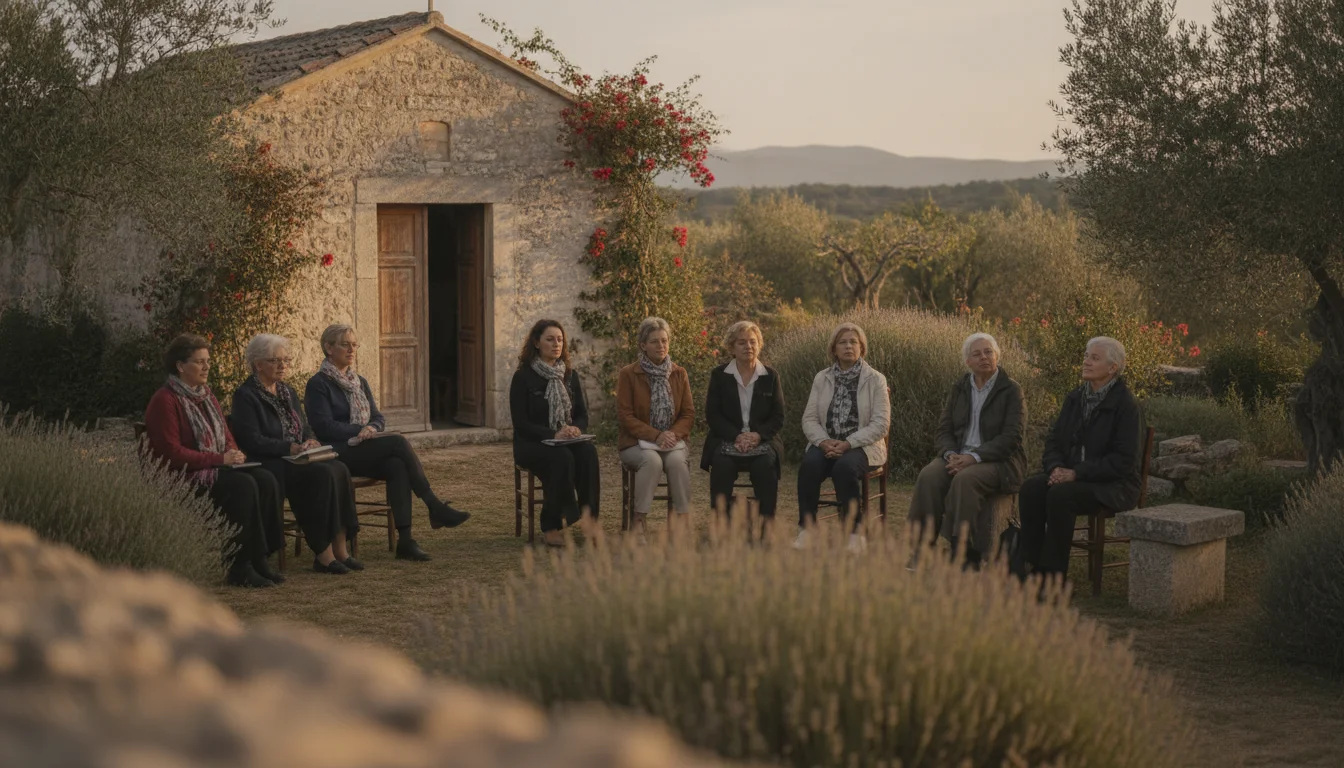
Every so often a pastor calls me and, three sentences in, I can hear that this is not the usual request. He is not asking to walk Paul’s route or stand in the Upper Room. He is tired. His leadership team is tired. The congregation has been through a hard stretch, and what he wants is not more sites to see. It is rest. He wants to take his people somewhere quiet and let God do something in them that a busy schedule never allows.
That is a different trip. After more than forty years of building journeys abroad, I have learned to name it clearly the moment I hear it, because a spiritual retreat abroad and a heritage tour are two different products, and confusing them is the fastest way to disappoint a weary group. This is a guide to the retreat. What it is, who it serves, where to hold it, how to shape the days, and how to organize it without turning it back into a tour by accident.
A Retreat Is Not a Tour, and the Difference Is the Whole Point
A heritage tour is built to move. You cover ground. You wake early, you see Philippi and Thessaloniki and Corinth, you read Scripture where it happened, and you fall into bed full and grateful and a little footsore. It is one of the most meaningful things a group can do together, and it is not restful. That is by design.
A retreat is built to stay. The point is not how much you see. It is how much you slow down. Where a tour packs five sites into a day, a retreat might hold one gentle morning walk and leave the whole afternoon open. Where a tour fills silence with a guide’s narration, a retreat protects silence on purpose. Fewer places. More space. Less input, more formation.
Here is the way I put it to leaders. On a tour, the destination does the teaching. On a retreat, the rhythm does the teaching. You are not there to absorb history. You are there to be quiet long enough to hear something you cannot hear at home. If you plan a retreat like a tour, with a full itinerary and a coach idling outside every morning, you will hand your tired people one more thing to keep up with. The empty space is not a gap in the plan. It is the plan.
Who a Retreat Abroad Is Really For
Not every group needs a retreat, and part of my job is helping a leader tell the difference. A congregation that has never traveled together and is hungry to see the Holy Land wants a tour. But there are groups for whom a retreat is exactly right.
Leadership teams are the clearest case. Elders, staff, and ministry directors carry the weight of a church all year, and they rarely stop together in a place where no one can reach them. A few days abroad, away from the building and the inbox, does more for a team’s health than a dozen meetings.
Worship teams come up often too. They pour out every Sunday and refill on the run. Taking them somewhere to rest, pray, and reconnect with why they sing tends to change the whole tone of a ministry.
Women’s and men’s ministry groups travel beautifully as retreats. The bond that forms over shared quiet, shared meals, and unhurried conversation is different from anything a program produces at home.
And then there is the weary congregation. After a building project, a painful season, a pastoral transition, or simply years without a breath, a rest-and-renewal trip can be the thing that lets a church exhale. If that describes your people, do not try to disguise a retreat as a sightseeing trip. Name it for what it is and let them come expecting rest.
The Best Kinds of Places for Rest
A retreat needs a certain kind of setting. Not a hub city with traffic and a packed square, but somewhere the pace of the place itself helps your group slow down. These are the settings I return to.
The Galilee. The north of Israel is quieter than Jerusalem, greener, and slower, and the Sea of Galilee has a stillness that does its own pastoral work. A guesthouse near the water, mornings on the shore where Jesus called fishermen and taught crowds, evenings of worship as the light goes down. You are still in the land of the Gospels, but you are resting in it rather than racing through it.
A quiet Greek island. Away from Athens, the smaller islands offer whitewashed calm, sea air, and very little that demands your attention. Patmos, where John received the Revelation, carries a contemplative weight that suits a retreat well. You are not there to tick off sites. You are there to sit with the sea and the Word.
Assisi. Few places on earth are as shaped by simplicity and prayer as the hill town of Francis. Assisi invites you to walk slowly, pray in old stone chapels, and let the noise fall away. It has drawn tired pilgrims seeking renewal for eight centuries, and it still does exactly that.
A monastery guesthouse. Across Italy, Greece, and Spain, monastic communities keep guesthouses that welcome groups into their rhythm of prayer, meals, and quiet. The hospitality is simple and the silence is real. For a group serious about formation, staying where a rule of life already sets the pace is hard to beat.
The Portuguese or Spanish coast. For a group that wants renewal without a heavy spiritual-tourism agenda, a quiet stretch of the Atlantic coast offers rest, long light, and room to breathe. You bring the teaching and the worship. The setting simply gives you the calm to receive it.
Notice what these have in common. They are unhurried, they are contained, and they let you stay put. A retreat wants a home base you return to each evening, not a new hotel every night.
How to Structure the Days
The heart of a retreat is its daily rhythm, and a good rhythm holds four things in balance: worship, teaching, silence, and free time. Get the proportions right and the trip almost runs itself.
Worship anchors the day. A simple gathering in the morning and again in the evening, unhurried, without production pressure, gives the group a shared heartbeat. Keep it small and honest.
Teaching feeds the group, but lightly. One session a day is plenty. On a retreat, a single well-chosen passage that people carry with them all afternoon does more than three back-to-back talks. Say less and leave room for it to land.
Silence is the piece leaders most often skip and most need to protect. Build in real stretches of quiet, an hour of solitude after the morning teaching, a silent walk, a meal taken without conversation. People are not used to it and may resist at first. By day three they usually stop wanting it to end.
Free time is not filler. It is where rest actually happens. Long open afternoons let people nap, walk, journal, pray, or simply sit. Resist the urge to organize it. The empty space is the gift.
A day might look like this: gather for worship and a short teaching in the morning, then an hour of silence, then a simple lunch and a wide-open afternoon, then evening worship and a shared meal with unhurried conversation. That is the whole plan. It looks thin on paper and feels full in the living. For a fuller framework on shaping a group trip of any kind, our complete guide for group leaders walks through the arc from first interest to departure.
Adding a Short Heritage Stretch Without Losing the Rest
Many groups want a taste of both, and that is easy to do well as long as you keep the two parts distinct. The pattern I recommend is retreat first, heritage second, or the reverse, but never blended into a single blurred week.
Say your group spends five days in the Galilee resting, then closes with two or three days in Jerusalem walking the sites. Or a group holds four quiet days on a Greek island, then joins a short heritage add-on to see a few of Paul’s places before flying home. The key is a clean seam between them. Let the retreat be fully a retreat, unhurried and open, and let the heritage days be their own thing, focused and full. When you mix them day by day, you lose both. When you sequence them, each one is stronger.
If the heritage half is what pulls at your group, our overview of Christian pilgrimage tours in Europe shows what a touring stretch can hold, and you can pair a few of those days onto the end of a restful week.
Group Size
Retreats run smaller than tours, and that is a feature, not a limitation. A leadership team of eight or ten is a complete retreat group. Ministry groups of fifteen to twenty-five work beautifully. Once you climb past thirty, the intimacy that makes a retreat what it is starts to thin, and silence gets harder to hold. If you have a large congregation wanting to come, I would rather help you run two smaller retreats than one crowded one. Rest does not scale the way sightseeing does.
The Free-Leader Model Applies Here Too
Leaders sometimes assume the free-leader benefit is only for large touring groups. It is not. The same structure that covers a group leader’s seat on a heritage tour applies to a retreat. When you gather a qualifying group, your own cost is built into the trip’s economics, so you are not asking your church to send you on an expensive journey on top of everyone else’s.
That matters more on a retreat than people expect, because the leader who is not worrying about the budget is a leader who can actually be present. The whole point of taking your people to rest is undone if you spend the week as the trip’s accountant. Let the cost sit where it belongs and give your attention to your group. For the full breakdown of how the seat is covered, see how the free-leader model works.
FAQ: Planning a Spiritual Retreat Abroad
How is a spiritual retreat different from a heritage tour?
A heritage tour is built to see as much as possible, moving between sites at a full pace. A retreat is built to slow down: fewer places, a home base you stay put in, and long open space for rest, prayer, and reflection. The rhythm does the work, not the destinations.
Where is the best place to hold a retreat abroad?
Somewhere quiet and contained. The Galilee, a small Greek island like Patmos, Assisi, a monastery guesthouse in Italy or Spain, or a calm stretch of the Portuguese or Spanish coast all work well. The setting should let your group stay in one place and let the pace of the place help them rest.
How many people should come on a retreat?
Smaller than a tour. A leadership team of eight or ten is a full group, and ministry groups of fifteen to twenty-five work well. Past thirty, the intimacy and the silence that make a retreat meaningful get harder to hold, so two smaller retreats often beat one large one.
Can we combine a retreat with a few days of sightseeing?
Yes, and the trick is to keep them separate. Sequence them, retreat first and heritage second or the reverse, rather than blending them day by day. Let the restful days be fully restful and the touring days be their own focused stretch, with a clean seam between the two.
Does the free group-leader benefit apply to a retreat?
It does. The same model that covers a group leader’s seat on a heritage tour applies to a retreat when you gather a qualifying group. That frees you from carrying the trip’s budget so you can be present with your people, which is the whole reason you brought them to rest.
If your team or your congregation is worn down and what they need is rest rather than another itinerary, a retreat abroad may be the right call. You can see how the group experience works on our group heritage tours page, and when you are ready to shape something for your people, contact us and we will help you build a week of real rest around your group and your dates.