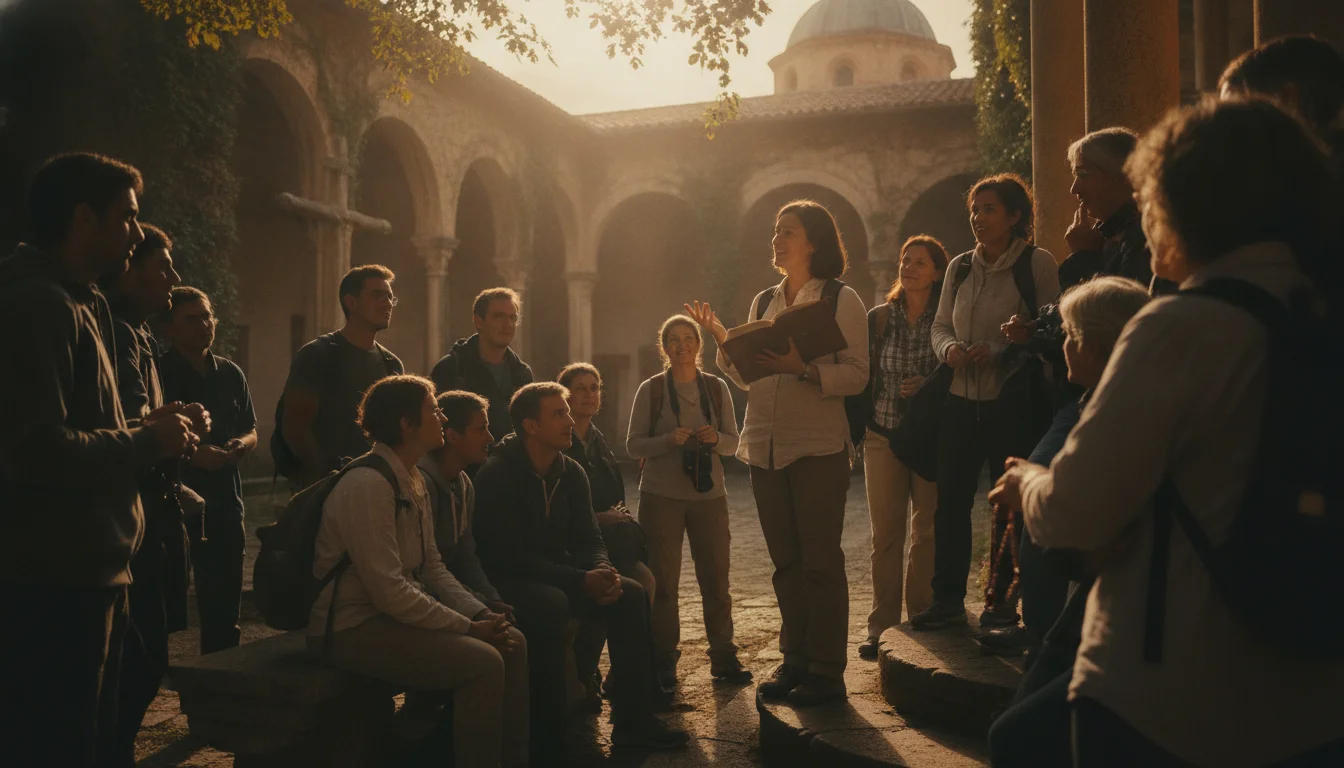
The first time you stand at an airport gate with twenty-two people looking at you for direction, something shifts. Up to that point you were the person who planned the trip. Now you are the person who leads it. Those are two different jobs, and most first-time leaders only discover the second one exists at the gate. I want to close that gap before you fly.
I have built heritage journeys for more than forty years, and I have watched pastors, rabbis, and lay leaders shepherd groups of ten and groups of a hundred. The ones who came home saying “that was the most meaningful thing our congregation has done” were rarely the best planners. They were the best shepherds on the road. The good news is that shepherding a group is a learnable skill, not a personality trait.
What Shepherding Actually Means on the Road
Let me define the word before I use it forty more times. To shepherd your group during travel is to hold three things at once: the group’s schedule, the group’s mood, and the group’s purpose. When those three drift apart, the trip gets harder. When you keep them aligned, the days feel effortless to everyone but you.
Here is the part that surprises new leaders. On a well-run heritage tour, the operator handles logistics, your guide handles the sites, and your coach driver handles the roads. Your job is the human layer that no vendor can touch: keeping thirty people feeling seen, moving, and connected to why they came. That is shepherding, and it is the one role only you can fill.
If you have not yet built the trip itself, start with the planning side first. Our guide to planning a group pilgrimage walks through dates, budget, and itinerary before anyone boards a plane. This article picks up where that one ends, on the ground, with your people around you.
How to Handle Group Dynamics on a Tour
Every group has a physics to it. Ten strangers and their families, sharing meals and long coach rides for eight to twelve days, will form patterns whether you shape them or not. The leaders who ignore this get surprised by cliques, silences, and friction. The leaders who expect it get to steer it.
Here is what I have learned about group dynamics after four decades of watching them form.
Set the Tone in the First Twenty-Four Hours
Groups take their emotional cue from the leader in the first day, and that cue tends to hold for the whole trip. If you are calm and unhurried on day one, the group relaxes into that. If you are anxious about logistics in front of everyone, the anxiety spreads. Your first evening together, before the touring even starts, is the most important leadership moment of the trip. Gather everyone, welcome them by name if you can, say a few honest words about why this journey matters to you, and let them feel they are in steady hands.
Rotate the Seats and Tables
The single most effective tool I know for healthy group dynamics costs nothing. Ask people to change coach seats every day or two, and to sit with someone new at group meals. Left alone, couples and friends cluster and never widen. A gentle rotation turns twenty-two individuals into one group by the end of the week. I frame it as a warm invitation, never a rule: “Tonight, find a table with someone you have not really talked to yet.”
Watch for the Quiet Ones
In every group there are two or three people who go quiet, not because they are unhappy, but because they are shy in a crowd. A shepherd notices them. A quick private word at breakfast, “I am so glad you came, how are you finding it so far,” tells a quiet traveler they are seen. That one sentence prevents most of the isolation that sours a person’s trip. You cannot befriend thirty people equally, but you can make sure no one feels invisible.
How to Keep a Group on Schedule Kindly
Time is the quiet source of most group tension. A tour that runs late compresses the good moments and stretches the tired ones. But a leader who barks about the clock turns a spiritual journey into a school trip. The skill is keeping the group on time without making anyone feel policed. Here is how I do it.
Give clear numbers, not vague ones. “We leave at 8:15” moves a group. “We will head out shortly after breakfast” does not. People honor a specific time far more than a soft one, and specificity feels like respect, not control.
Build in the buffer instead of fighting the drift. A group of thirty will always take longer than a group of five. I plan the day knowing that, so I am not secretly resenting the people who slow us down. When you have already absorbed the extra fifteen minutes into the schedule, you can stay relaxed, and a relaxed leader keeps a relaxed group.
Use a soft warning system. Ten minutes before departure, I let people know it is coming. Then at the time itself, we go. Once a group learns that the leader means the time gently but truly, latecomers correct themselves within a day or two.
Never shame the latecomer in front of the group. If someone is consistently late, that is a private conversation, warm and direct, not a public callout. Public correction embarrasses one person and makes the whole group tense around you. A quiet word protects both the schedule and the relationship.
The deeper truth is that keeping to schedule is not about the clock at all. It is about fairness. When you protect the group’s time, you are protecting the people who showed up ready, not punishing the ones who ran late. Frame it that way in your own mind and the kindness comes naturally.
How to Handle a Difficult Traveler
I want to be honest with you, because glossy trip brochures never are. On most groups of any size, there will be one person who is harder than the rest. The chronic complainer. The one who wanders off. The person whose expectations no itinerary could meet. If you lead groups long enough, you will meet all of them. Learning to handle a difficult traveler with grace is what separates a leader who dreads the trip from one who enjoys it.
Start by sorting the behavior. Most difficulty comes from an unmet need underneath, not from a bad heart. The complainer is often tired, hungry, or anxious. The wanderer is often bored or overwhelmed. When you address the need, the behavior usually softens. A difficult traveler at 4pm is frequently just a hungry traveler who needs a snack and a rest, and half the friction on a long touring day dissolves with a coffee stop.
Handle the hard conversation privately and early. If someone’s behavior is affecting the group, address it once, quietly, and soon. Do not let it build for six days until you snap. Pull them aside with warmth: “I have noticed you seem frustrated, and I want to make sure you are getting what you came for. Talk to me.” Most people respond to being heard. You are not there to win an argument, but to keep one person’s struggle from becoming everyone’s.
Protect the group without abandoning the individual. Your first duty is to the whole. If one person’s behavior would genuinely harm the trip for the other twenty-nine, you may have to set a firm boundary, but even then you set it privately, kindly, and with a way back. I have almost never had to do this, and doing it early kept it from ever becoming a scene.
Lean on your operator and guide. You are not alone out there. A good tour operator has handled difficult situations for decades and can quietly help with a room change, a medical need, or a logistical fix that defuses tension. When you choose a faith-focused tour operator, part of what you are buying is a partner who absorbs the problems you should not have to carry alone. Never feel you must solve everything yourself. Shepherding is a shared load.
How to Build Community Within Your Group
The trips people remember for years are not the ones with the best hotels. They are the ones where a group of acquaintances came home as a community. That transformation does not happen by accident, and it does not happen just because you visited holy places together. You build it, deliberately, in small moments. Here is how.
Create Shared Rituals
Groups bond around repeated small acts. A short reflection each morning before you set out. A moment of prayer or a reading at a meaningful site. A nightly gathering where people share one thing that moved them that day. These rituals give the group a shared rhythm and a shared vocabulary. By day four, people are quoting each other’s reflections, and that is community forming in front of you.
Let the Places Do Their Work
Heritage sites carry weight that ordinary tourism does not. Standing where Paul stood, or praying where your ancestors prayed, opens people. Your role is to create space for that opening, then get out of the way. Read the passage aloud. Let the silence sit longer than feels comfortable. Do not rush from the emotion to the next photo stop. The deepest community I have seen form in a group formed in those unhurried, sacred pauses.
Give People Small Jobs
Community grows when people contribute, not just consume. Ask one traveler to lead a morning prayer. Ask another to keep the group’s photo album. Invite a musician to lead a hymn. When people have a role, they belong. A group where only the leader contributes stays a tour. A group where everyone gives something becomes a family.
Share Meals Slowly
More community is built at the dinner table than at any monument. Protect your group meals. Do not schedule them so tightly that people bolt their food and rush to bed. A long, unhurried dinner where people linger and laugh is not wasted time on a heritage trip. It is the point. Leave room in the evenings, because that is where your acquaintances become your community.
The Shepherd’s Mindset
Everything above comes down to one shift in how you see your role. You are not a tour manager checking boxes. You are a shepherd carrying people through an experience that may mark them for the rest of their lives. That mindset changes how you handle a late departure, a hard traveler, a quiet soul, and a sacred silence. It makes you patient where a manager would be annoyed.
If you carry the logistics and the leadership both, you will arrive home exhausted and your group will feel it. So do not carry both. Let the operator carry the logistics. You carry the people. That division is the secret. You can see how the group experience is structured on our group heritage tours page, and if you are still weighing whether to lead at all, our note on how pastors afford to lead a trip covers the free-leader model that makes stepping into this role possible in the first place.
FAQ: Shepherding Your Group on the Road
How do I keep a large group on schedule without sounding like a drill sergeant?
Give specific departure times, not vague ones (“we leave at 8:15” moves people; “shortly after breakfast” does not). Build a buffer into every day so you are not resenting the drift. Use a soft ten-minute warning, then go on time. Frame punctuality as fairness to the people who showed up ready, and never correct a latecomer in front of the group.
What do I do about one traveler who is making the trip harder for everyone?
Address it privately and early, not after six days of buildup. Most difficulty comes from an unmet need underneath (tired, hungry, anxious), so start there before assuming bad intent. Have one warm, direct conversation, lean on your operator for logistical fixes, and set a firm but kind boundary only if the group’s experience is genuinely at risk.
How do I help people who do not know each other become a real community?
Build shared rituals (a morning reflection, a nightly sharing circle), rotate coach seats and dinner tables so cliques do not harden, and give people small jobs so they contribute rather than just watch. Protect unhurried group meals, because more community forms at the dinner table than at any monument.
How much should I be involved in logistics during the trip?
As little as possible. On a well-run tour, the operator handles transport, hotels, and problems, and your guide handles the sites. Your one irreplaceable job is the human layer: mood, connection, and purpose. Leaders who try to carry logistics and leadership both arrive home drained, and the group feels the divided attention.
What is the single most important thing I can do as a group leader?
Set the emotional tone in the first twenty-four hours. Groups take their cue from the leader on day one and hold it for the whole trip. Be calm and unhurried, welcome people by name, say honestly why the journey matters to you, and let them feel they are in steady hands. Everything else gets easier from there.
Shepherding a group is not something you master before your first trip. It is something you grow into, and a good operator grows with you. If you are preparing to lead a heritage journey and want a partner who carries the logistics so you can carry your people, contact us and we will help you build a trip you can lead well.