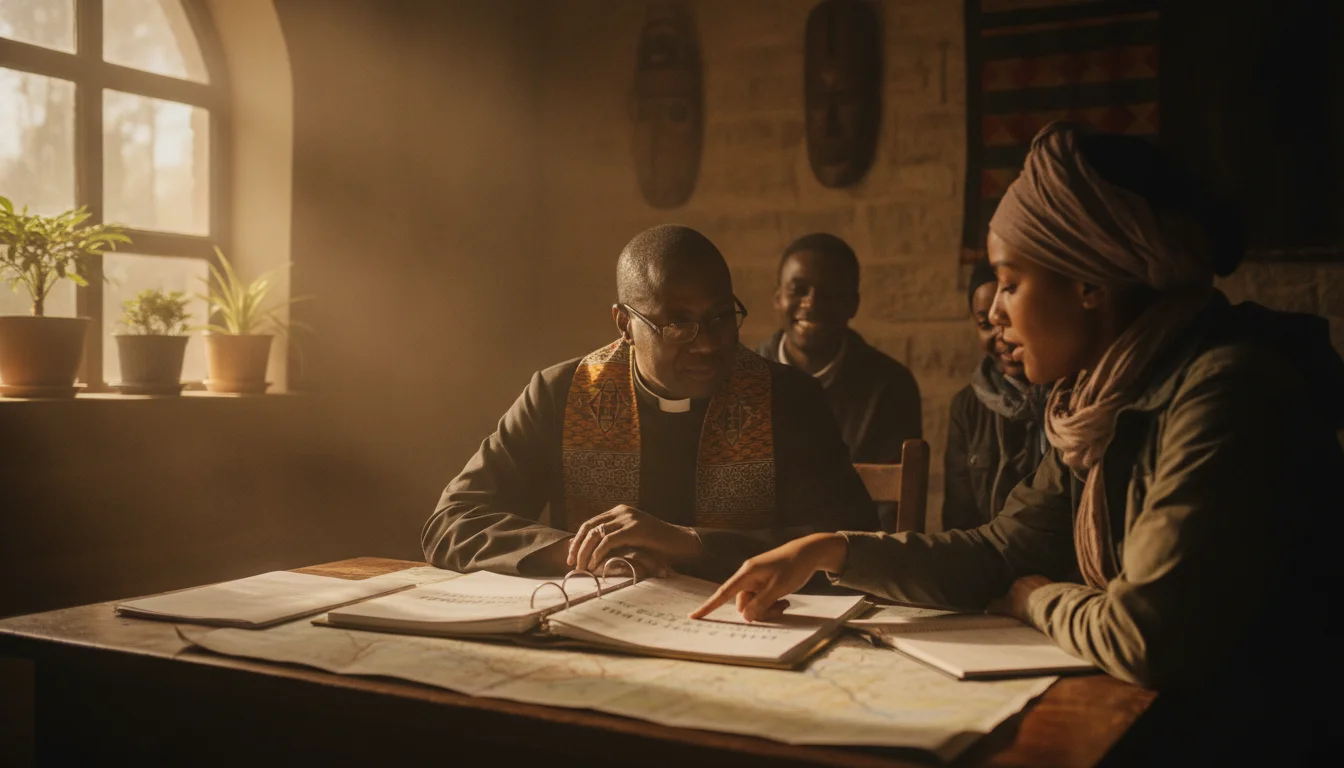
The first time a pastor sits down to organize a trip to the Holy Land, the pressure he feels is rarely about the itinerary. It is about the fear of getting it wrong. Twenty or thirty people from his congregation are about to hand over their savings and their vacation time on his word, and he knows it. He has never done this before. He is trusting an operator he found online, and he is quietly terrified that the operator will not deliver, or worse, will disappear with the deposits. I have watched that fear on a lot of faces over more than forty years of building heritage journeys. So let me tell you what I tell them. The single most important decision you will make is not the destination, the dates, or the price. It is who you choose to run the trip.
Everything else flows from that. A good operator makes a first-time leader look like a seasoned one. A bad operator turns a spiritual journey into a series of apologies. This is a walk through how to tell them apart, the questions to ask, the red flags to watch for, and what a good first call sounds like.
Why the Operator Choice Matters Most
When you lead a faith trip, your name is on it. Not the operator’s. If the hotel is wrong, if the guide is bored, if the bus is late to the Garden Tomb, your people look at you, not at some company they have never heard of. That is the reality of group leadership, and it is why the operator you pick matters more than any other single choice.
A first-time leader carries a specific kind of risk. You do not yet know what good looks like, so you cannot spot when a proposal is thin, and you have not seen how a trip falls apart, so you do not know which corners get cut. The right operator closes that gap for you. They have run the route a hundred times, they know where groups get stuck, and they build the trip so the problems never reach you. That is what you are actually buying. Not a package. Protection.
What a Dedicated Faith Operator Does That a Travel Agent Does Not
Plenty of general travel agents will happily book a group trip to Israel, Greece, or Jordan. They can find flights and hotels and put a price in front of you. What they cannot do is the part that makes a heritage journey worth taking.
Deep site access. A heritage operator has standing relationships with the people who control access to the sites that matter. Getting a group of thirty into the Church of the Holy Sepulchre at a time when you can actually pray, arranging a private moment at the Southern Steps, timing a Jordan River baptism so your group is not fighting three other buses for space, this is relationship work built over decades. A general agent books a ticket. A heritage operator opens a door.
Faith-aware guides. This is the one that separates a good trip from a forgettable one. A general operator sends whatever licensed guide is available. A faith operator sends a guide who knows the difference between a Baptist group and a Catholic pilgrimage, who can read Scripture aloud at the right site without being asked, who understands why you stopped at that particular hill. Your guide is the voice of the trip for eight or ten days. Get that wrong and no hotel upgrade fixes it.
Group logistics that hold up. Moving thirty people through a foreign country is a problem most agents underestimate. Meals that account for the wheat allergy and the two who keep kosher. A coach that fits the whole group with room for the walker. Check-ins that do not leave your seniors standing in a lobby for an hour. A dedicated operator has systems for all of it because they do nothing else.
The free-leader model. Most dedicated faith operators cover the leader’s trip cost once the group reaches a certain size, usually fifteen paying travelers. A general agent has no such structure, because they are not built around the way congregations travel. This one point often decides whether a trip is feasible at all, which is why I wrote out how it works in the complete leader’s guide.
The Questions to Ask Before You Sign Anything
When you get an operator on the phone, you are interviewing them, not the other way around. A good operator welcomes hard questions because the answers are their advantage. Here is the checklist I would use.
Experience With Faith Groups Specifically
- How many faith-based groups have you personally run in the last year, and to where?
- Have you worked with a congregation like mine, in size and tradition?
- Can you give me two leaders I can call who have traveled with you?
Anyone can claim experience. Ask for the references and actually call them. A leader who has traveled with the operator will tell you in five minutes what a brochure never will.
Who Actually Guides the Trip
- Is my guide employed by you or subcontracted at the last minute?
- Will you tell me the guide’s name before we travel, and can I speak with them?
- Is the guide familiar with my tradition, and comfortable with prayer and Scripture at the sites?
The guide is the trip. If the operator is vague about who it will be, that is information.
What Is Actually Included
- What exactly does the price cover: flights, hotels, ground transport, site entries, meals, tips, taxes?
- Which meals are included and which are on our own?
- What is not included that people always assume is?
Get this in writing, line by line. The gap between a cheap proposal and an honest one is almost always hiding in what is left out.
How My Group’s Money Is Protected
- Where do deposits go, and are they held in a protected or escrow account?
- What happens to our money if the trip is canceled by you, or by us?
- Do you carry insurance and bonding, and can you show me proof?
- What is your refund schedule, in dates and amounts?
This is the question first-time leaders skip and later regret. You are moving tens of thousands of dollars of other people’s money. You are allowed to know exactly where it sits and what protects it.
What Support I Get as the Leader
- Who is my point of contact before the trip, and how fast do they respond?
- Do you help me recruit and communicate with my group, or is that all on me?
- Is there someone reachable on the ground, in my time zone’s daytime, if something goes wrong at 2 a.m. in Jerusalem?
- What do you hand me to run my own information meetings back home?
A good operator carries a lot of the recruiting and administrative weight so you can focus on shepherding. If the answer is “you handle your group, we handle the ground,” keep looking.
Red Flags in the Contract
Once a proposal turns into a contract, slow down and read it. These are the clauses that have caused the most pain for leaders I have known.
- Vague inclusions. If the contract says “meals” without saying how many and which, that vagueness will cost your travelers money on the ground.
- A deposit with no protection language. If the contract does not say where your money is held and what happens if the trip is canceled, that silence is the risk.
- Prices that can move after you sign. Watch for clauses letting the operator raise the price for fuel, currency, or “unforeseen costs” without a cap. Some adjustment is normal. An open-ended one is not.
- A cancellation schedule that only protects them. Read what happens if you cancel and what happens if they do. If only your money is at risk, that tells you how the relationship is built.
- No named guide or guarantee. A contract that reserves the right to assign “a qualified guide” with no further commitment is leaving itself room you do not want it to have.
- Everything by email, nothing by phone. If you cannot get a person on a call before you sign, imagine reaching one when a flight is canceled mid-trip.
None of these mean the operator is dishonest. They mean the contract protects the operator and not you, and you have every right to ask for language that protects your group too.
How to Compare Two Proposals
You will usually end up with two or three proposals, and the trap is to compare them on price. Price is the easiest number to read and the most misleading. Here is how to compare fairly.
Line the two proposals up side by side and match them item for item. If one is cheaper, find out why before you celebrate. Cheaper almost always means fewer included meals, a lower hotel category, a shared guide across two groups, or a site or two quietly dropped from the route. Sometimes the cheaper trip is genuinely leaner and that is fine, as long as you know it. What you cannot afford is to discover the difference on day three.
Then compare the things that do not show up on the price line. Which operator answered your questions directly? Which one gave you references without hesitating? Which one explained where your deposits sit? Which contact felt like a person who would pick up the phone when you needed them? Those signals predict your actual experience far better than the bottom-line figure.
For a realistic sense of what the numbers should look like before you judge any proposal, it helps to read up on what a group trip costs first. And whatever the proposals say, make sure the plan accounts for travel insurance for a church group, because that protects your travelers in ways the trip cost never can.
What to Expect on a First Call
A good first call is not a sales presentation. If the operator spends the whole time telling you how wonderful they are, that is your answer. A good operator spends most of it asking you questions.
They will want to know your tradition and what your community cares about seeing. They will ask roughly how many travelers you expect and how experienced they are with international travel. They will ask what season you are aiming for and what your people can realistically budget. Only then will they start shaping a trip, because a heritage journey built before anyone understands the group is a template, not a trip.
By the end of that call you should feel two things. First, that the person on the other end has done this many times and is not rattled by anything you asked. Second, that they were more interested in your group than in closing you. Those two feelings together are the best predictor I know of a trip that goes well.
The Bottom Line
Choosing an operator is choosing who stands behind you when your congregation is a long way from home. Pick the one who answers the hard questions plainly, protects your travelers’ money in writing, sends a guide who knows why you came, and treats your group as the point rather than the sale. Do that and the rest of the planning gets much easier.
You can see how the group experience works on our group heritage tours page.
FAQ: Choosing a Faith-Based Group Tour Operator
How do I know if an operator is legitimate and financially safe?
Ask where deposits are held, whether they are protected or held in escrow, and whether the operator carries insurance and bonding. Ask for proof, not a promise. Then call two references from leaders who have actually traveled with them. A legitimate operator answers all of this without hesitating.
What is the difference between a faith tour operator and a regular travel agent?
A regular agent books flights and hotels. A dedicated faith operator brings deep site access, guides who understand your tradition and are comfortable with Scripture and prayer, group logistics built for congregations, and usually a free-leader model once your group reaches a set size. The difference shows up most at the sites that matter.
How many quotes should I get before choosing?
Two or three is plenty. More than that and the proposals blur together. Compare them item by item rather than by price, since a cheaper quote almost always means fewer included meals, a lower hotel category, or sites dropped from the route. Weigh how each operator answered your questions as heavily as the number.
What should be included in the price?
At minimum, international flights, hotels, ground transportation, site entry fees, and the meals built into the itinerary. Ask which meals are included and which are on your own, and ask directly what is not included that people usually assume is. Get the full list in writing before you sign.
Do I have to recruit the whole group by myself?
A good operator carries much of that weight with you. They should give you materials for your information meetings, help with group communication, and provide a responsive point of contact before you travel. If an operator expects you to handle recruiting and administration alone, that tells you how the relationship is built.
If you are weighing whether a group trip is realistic for your community, the right first step is a conversation, not a contract. Contact us and we will answer every question on this page for your group, your tradition, and your dates, before you commit to anything.