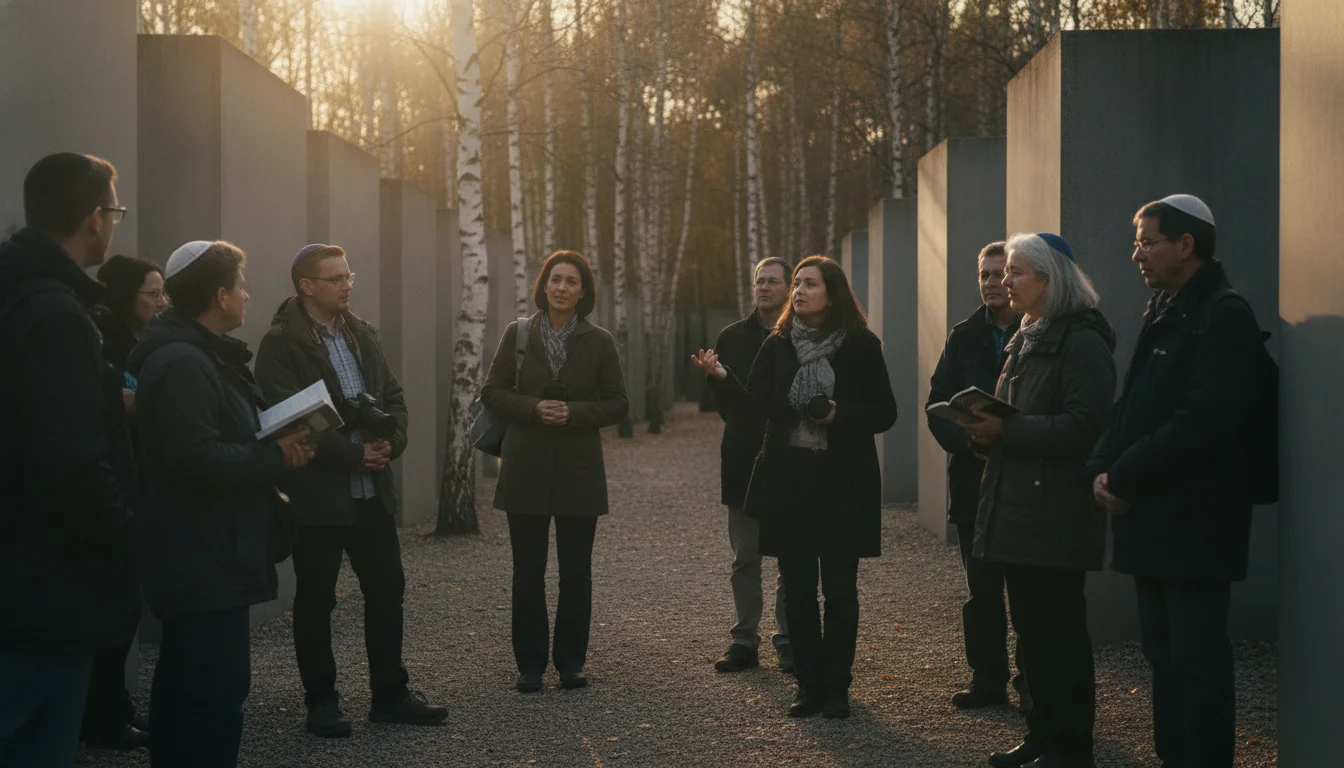
A pastor called me last spring and said he wanted to take his congregation to the camps, but he did not know where to begin and he was afraid of getting it wrong. That fear is the right instinct. A remembrance journey is not a sightseeing route with heavy stops mixed in. It is a single, deliberate arc, and the person building it carries a responsibility that a normal tour does not ask of you. I told him what I will tell you here: the work is learnable, the structure is knowable, and you do not have to design it alone.
I have built heritage journeys for more than forty years, for churches and for synagogues, and I have led more groups through Poland and Germany than I can count. This guide is written for you, the organizer. Not the traveler. You are the one recruiting the group, setting the dates, holding the budget, and standing at the front when the group falls silent at a place that demands silence. I want to give you the decisions in the order you actually face them, so a Holocaust remembrance itinerary for a group stops feeling like an impossible task and starts feeling like a plan.
Start With the Question the Itinerary Has to Answer
Before you pick a single site, decide what this journey is for. That sounds obvious. It is the step most leaders skip, and skipping it is why some remembrance trips feel like a string of terrible places rather than one coherent experience.
A Christian congregation and a Jewish congregation will often walk the same ground and mean two different things by it. For a church group, the arc is frequently one of witness and moral formation: standing where evil was organized, confronting it honestly, and returning changed in how the community reads scripture, history, and its own responsibility. For a Jewish group, the arc is memory, lineage, and often kaddish: this happened to us, we return as living proof, and we say the names. Some of my groups are mixed, and the shared arc becomes one of shared humanity.
You do not have to write a thesis. You do need one sentence you can say to your group and to me: “We are going so that our people will never again treat this as abstract,” or “We are going to honor the families this community lost and to stand at the sites as their descendants.” That sentence shapes every choice below, from which memorials you include to how much time you leave for reflection versus history.
The Sites, and Why Sequence Is Everything
The instinct is to build the itinerary around the most well-known camp and work outward. I would ask you to think differently. A remembrance route works best as an emotional sequence, not a checklist of names.
The pattern I return to again and again moves from life, to loss, to the machinery, to memory, and back to life. In practice that often looks like this. Begin in a city where Jewish life flourished before the war, Krakow or Warsaw or Berlin, and spend real time in the old quarters, the surviving synagogues, the streets. Your group needs to see what was there before they can grasp what was taken. Only then do you move to a former ghetto site, then to a camp such as Auschwitz-Birkenau or Majdanek or Sachsenhausen, then to a place of testimony and remembrance such as a museum of Jewish history or a memorial that speaks to the future. You end, deliberately, somewhere that holds hope, whether a living community, a rebuilt synagogue, or a survivor’s story of return.
Build it as loss without life first, and your group arrives at the camp unprepared and leaves the trip flattened. Build the arc, and they leave the trip changed rather than crushed. I have watched the difference on hundreds of faces, and I promise you the sequence is not a small detail.
Practically, a meaningful route usually spans Poland alone, or Poland paired with Germany or the Czech Republic (Terezin sits close to Prague and tells its own particular story). For a first remembrance journey with a congregation, I usually steer organizers toward a focused Poland itinerary rather than a five-country sweep. Depth matters more than breadth here, and a group that is emotionally present cannot absorb six countries in ten days.
How Long the Trip Should Be
Most remembrance journeys land between eight and eleven days on the ground, plus travel. Shorter than eight and you are rushing your people through material that must not be rushed. Longer than eleven, and without careful pacing, the weight becomes more than a group can carry well.
The pacing rule I hold to is one heavy day, then one lighter day. After Auschwitz-Birkenau, your group should not visit a second camp the next morning. They need a city, a meal together, a moment to talk and to breathe. As the organizer, you are managing not just logistics but emotional load, and the calendar is your main tool for that. When operators and I plan a route together, I fight for those recovery days even when a group wants to “see everything.” Seeing everything is not the goal. Understanding it is.
The Budget, and How the Leader’s Seat Works
Now the part you are quietly worried about. Remembrance journeys cost real money because they are guide-intensive. You want licensed educators at Auschwitz, not a generalist. You want a coach, local specialists, and reserved entry times at sites that cap group numbers. That is what makes the difference between a profound day and a chaotic one.
Here is the piece that changes the math for you. When you bring a group of fifteen or more paying travelers, the group leader travels free. That is the leader’s full trip, flights, hotels, ground transport, and included site entries, covered inside the economics of the group. If you want the full logic of why fifteen is the threshold and what the free seat does and does not include, I lay it out in our guide on whether the pastor travels free and the companion piece on how many people you need for a leader-free trip.
For your congregation, that benefit reframes the whole ask. You are not requesting that your church or synagogue fund the leader’s expensive trip on top of everyone else’s. You are organizing a journey your people pay into, and your seat is part of how the group is structured. If money is the reason you have been putting this off, read our practical walk-through of how pastors afford to lead a trip, and when you are ready to price it out, our note on how to budget a church trip gives you the categories to plan around. A group payment plan is usually what makes it reachable for the families in your community.
Recruiting a Remembrance Group Is Different
Filling a beach tour and filling a remembrance journey are not the same task, and you should know that going in. This trip asks something of people. Not everyone in your congregation is ready for it, and that is fine. Your job is not to fill seats with anyone. It is to find the people who are ready and give them a real reason and a real date.
Start with your core, the eight or ten people who have already told you, in one way or another, that this matters to them. Adult study groups, second-generation families, members who have asked hard questions in sermons or shiurim. They come first, and they bring others. I have never seen a remembrance group built from a mass email. I have seen many built from a dozen committed people who each brought a spouse, a sibling, a friend.
Frame the invitation honestly. Do not soften it into a European vacation with a museum attached. Name what it is: a journey of memory and witness, difficult and important, that your community will carry for the rest of their lives. The honesty is what draws the right travelers. Our fuller guide on recruiting for a church trip has the mechanics, but the tone is the part I want you to get right for this particular journey.
How Far Ahead to Plan
For a group of fifteen to thirty on a remembrance route, I ask organizers to start six to nine months out, and closer to a year if you are timing the trip around a date that matters, such as Yom HaShoah, a congregation’s memorial cycle, or a milestone anniversary. Auschwitz-Birkenau caps educator-led group entries and books up, so the reserved slots you want are not always available on short notice. Earlier planning is not only about logistics. It is your recruiting runway, and for a trip this weighty, people need time to decide, to save, and to prepare themselves. Our timing guide on how far ahead to plan breaks the lead times down by group size.
Choosing the Right Operator for This Specific Trip
Not every operator should run a remembrance journey, and you are within your rights to be selective. Ask directly whether they use licensed site educators, how they handle the emotional arc, whether they build in recovery days, and how they have supported both Christian and Jewish groups through these sites. An operator who answers those questions well is telling you they understand that this is not ordinary tourism. One who brushes them off is telling you something too. Our guide on how to choose a faith tour operator gives you the full list of questions to bring to that first call.
Your Real Job Once the Logistics Are Handled
Here is what I most want you to hear. When the free-leader model and a capable operator take the cost and the coordination off your plate, they free up the thing your group actually needs from you, which is your presence. You are not the trip’s travel agent. You are its shepherd.
Your work at Birkenau is not to know the train schedule. It is to gather your people at the end of the ramp, to hold the silence, to read the passage or say the kaddish, to be a steady presence when the weight lands. That is the entire point of handing the machinery to someone else. This journey sits inside the broader craft of leading a group well, and if you want the full framework, start with our pillar guide on how to plan a group pilgrimage. Everything I have described here is one deep application of it.
FAQ: Building a Remembrance Itinerary for Your Group
How many days do I need for a Holocaust remembrance itinerary?
Most groups need eight to eleven days on the ground. That gives room for the full arc, from pre-war Jewish life, to a camp, to a place of testimony, with recovery days built in between the heaviest visits. Shorter trips rush material that should not be rushed, and much longer trips risk more emotional weight than a group can carry well.
Which sites should a first remembrance journey include?
For a first trip with a congregation, I usually recommend a focused Poland route: a city like Krakow or Warsaw to see the Jewish life that flourished before the war, a former ghetto site, Auschwitz-Birkenau or Majdanek with a licensed educator, and a museum or memorial that speaks to memory and the future. Depth in one or two countries serves a group far better than a rushed sweep across five.
Does the group leader really travel free on this kind of trip?
Yes. With fifteen or more paying travelers, the group leader’s full trip is covered, including flights, hotels, ground transport, and included site entries. Below fifteen the journey is still possible, but the leader pays a participant’s price. That threshold is what makes leading this trip realistic for most pastors and rabbis.
How do I recruit people for something this heavy?
Start with the eight or ten people in your community who have already shown you this matters to them, and let them bring others. Name the trip honestly as a journey of memory and witness, not a vacation with a museum attached. The honesty is what draws the right travelers, and a small committed core almost always grows into a full group.
How far ahead should I start planning?
Six to nine months for a group of fifteen to thirty, and closer to a year if you are timing the trip around a memorial date or want reserved educator-led entry at Auschwitz-Birkenau. The lead time is as much about giving your people room to decide and prepare as it is about booking. For a journey this significant, that preparation matters.
If you are carrying the idea of a remembrance journey for your community and do not yet know where to start, that is exactly the right time to talk. You can see how the group experience works on our group heritage tours page.
Contact us and we will help you shape the arc, the sites, and the numbers around your group and your dates.