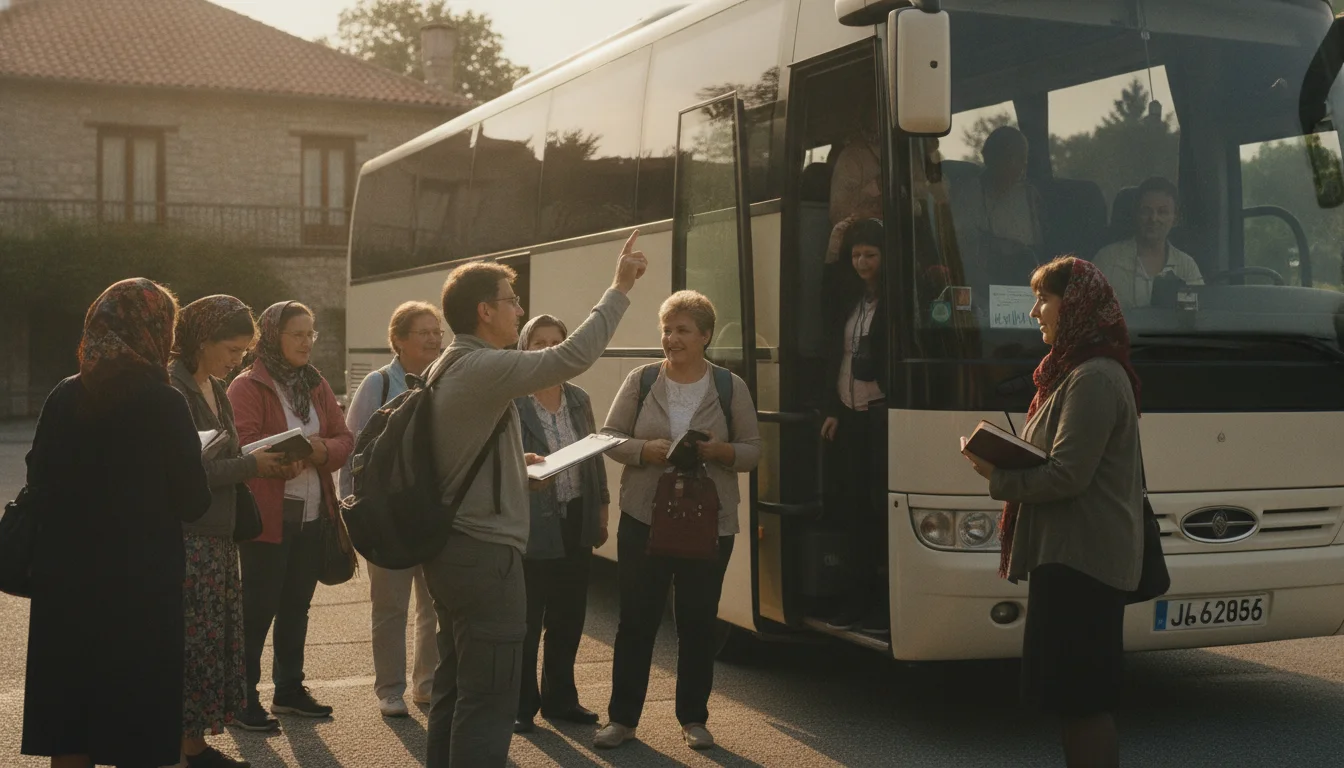
The question I hear most from a first-time group leader is not about the itinerary or the price. It is a quieter one, usually asked near the end of a call, sometimes almost apologetically: how do I keep my people safe over there? A pastor is about to stand in front of a congregation and ask thirty families to trust him with their parents and their teenagers on the other side of the world. A rabbi is about to do the same. That responsibility sits heavy, and it should. It is also completely manageable once you understand what actually keeps a group safe abroad and what only feels like it does.
I have built heritage journeys for more than forty years, and I have walked thousands of travelers through countries that made their families nervous before they left and grateful once they returned. Safety abroad is not luck. It is a set of decisions the leader and the operator make together, most of them before anyone boards a plane. Let me walk you through how I think about it, so you can carry that same clarity back to your board and your congregation.
Safety Is a Planning Decision, Not a Travel Decision
The single most important thing to understand is this: a group’s safety is mostly determined before the trip begins, not during it.
By the time you are walking through an old city or boarding a coach, the real safety work is already done. It was done when you chose an operator with local ground teams. It was done when the itinerary was routed around known pressure points and timed to avoid crowds. It was done when someone confirmed that every hotel had been used for groups before, that the drivers were licensed and insured, that a local coordinator was reachable by phone at any hour. A well-planned trip feels calm from the inside because a great deal of tension was engineered out of it months earlier.
This is why I tell leaders not to think of safety as vigilance on the road. Think of it as a series of choices you make at the planning table. Your job as the organizer is to ask the right questions of the right operator, then let their local structure carry the weight. If you want the full sequence of those planning decisions in order, our guide on how to plan a group pilgrimage lays out the whole timeline from first interest to departure.
How to Read a Travel Advisory Without Overreacting
Every leader eventually pulls up a government travel advisory, reads a paragraph that sounds alarming, and wonders whether to cancel the whole idea. So let me be direct about how these documents actually work, because misreading them is the most common reason good trips die before they start.
A national travel advisory is a broad instrument. It is written for every citizen, from the solo backpacker to the business traveler to the organized group, and it usually covers an entire country at once. A single advisory level often lumps together a quiet pilgrimage region and a distant border area that no heritage itinerary goes anywhere near. The headline number rarely tells you anything specific about the roads you will actually travel.
Here is how I coach leaders to read them:
- Read the region detail, not just the country level. Most advisories break down by area. The part of the country your itinerary covers is frequently at a very different level than the country-wide headline suggests.
- Separate the reason from the rating. An advisory can rise for reasons that have nothing to do with a supervised group: petty crime in nightlife districts, road conditions in remote provinces, weather events. Ask what specifically drove the level.
- Look at the date and the trend. Advisories move. A level set during a specific event three months ago may already be easing. Check when it was last updated.
- Cross-check with your operator’s ground reality. A good operator has people living in the destination right now. Their read on the ground is more current and more specific than any published document.
The point is not to ignore advisories. It is to read them the way a professional does, at the level of the actual route, rather than reacting to a single word in a headline.
Is Israel Safe for a Church Group?
I get this question in almost exactly those words, so I want to answer it plainly, because Israel is where a great many first-time leaders feel the tension most sharply.
Israel is one of the most experienced group-travel destinations in the world. Faith groups have traveled there continuously for generations, and the entire hospitality and touring infrastructure is built around exactly that: buses of pilgrims moving between Jerusalem, the Galilee, Bethlehem, the Dead Sea, and the coastal cities. Licensed guides, established hotels, professional drivers, and site security are the norm, not the exception. When you travel with an operator that runs Israel regularly, you are stepping into a system that has moved hundreds of thousands of church and synagogue groups safely.
That does not mean you switch off your judgment. It means you rely on structure. A responsible Israel itinerary is routed and timed by people who watch the ground daily and adjust when they need to. Groups travel with a licensed local guide and a driver who both know the terrain. Sites have their own security. Your operator monitors conditions and reroutes a day if a specific area warrants it, usually without your travelers ever noticing the change.
So the honest answer is yes, Israel is safe for a church group when the group travels the way church groups actually travel: supervised, guided, on a professionally managed itinerary. If you want to see how a Holy Land trip is structured end to end, our overview of a church group trip to Israel walks through the shape of it, and the Israel heritage page shows the routes and regions a typical group covers.
The same logic applies to whatever destination your group is weighing. The question is never simply “is this country safe.” It is “is this country safe for a supervised group on a managed route with local support.” That is a very different and much more answerable question.
What to Ask a Tour Operator Before You Trust Them With Your People
Since so much of your group’s safety rides on the operator, the vetting conversation is the most important one you will have. Here are the questions I would want a leader to ask me, and the answers a serious operator should be able to give without hesitation:
- Do you have local ground teams in the destination, or do you subcontract everything? You want people on the ground who work for the trip, not a chain of anonymous vendors.
- Who is my emergency contact, and are they reachable around the clock? There should be a named person and a real phone number that works at 2 a.m. local time.
- How do you monitor conditions, and what is your process for rerouting a day? A good operator reroutes quietly and often. Ask them to describe a time they did.
- Are your guides licensed and your drivers insured? These are baseline. Any hesitation here is a red flag.
- What is your medical and evacuation protocol if someone falls ill? Your travelers will include older adults. You want a clear answer.
- What insurance do you require or recommend, and what does it cover? This tells you how seriously they take the parts of a trip that go wrong.
If an operator answers these calmly and specifically, you are in good hands. If they get vague, keep looking. Our deeper checklist on how to choose a faith tour operator breaks down what separates a real heritage operator from a reseller.
The Safety Work That Falls to You as the Leader
The operator carries the logistics. A few things, though, are genuinely yours, and they matter.
Know your people. Before departure, collect the basics: any medical conditions, medications, mobility limits, dietary needs, and an emergency contact back home for every traveler. You do not need to be a nurse. You need to know that Mrs. Adler uses an inhaler and that two of your travelers cannot manage long stair climbs, so nobody is surprised on day three.
Set the tone on the buddy system. On a group of twenty-five, the simplest safety tool in the world is people looking out for each other. Pair travelers up. Ask couples and friends to keep track of one another. It sounds basic because it is, and it works.
Communicate the plan clearly. People feel safe when they know what is happening. Share the daily rhythm, the meeting points, and what to do if someone gets separated. Uncertainty is what breeds anxiety on a trip, not the destination itself.
Require travel insurance and mean it. This is the one I will not soften. Every traveler on a group trip should carry travel medical and trip insurance, no exceptions, and the leader should confirm it before departure rather than hope for it. It protects your people and it protects you. We cover exactly how this works for congregations in our guide to travel insurance for a church group.
None of this is heavy lifting. It is a handful of lists and one clear conversation with your group before you go. But it is the part only the leader can do, and doing it well is what lets you relax once you are actually there.
What to Tell a Nervous Congregation
When you take this trip to your board and your congregation, some of them will be worried, and a few will say so loudly. That is normal. Here is how I would frame it.
You are not asking anyone to travel casually into a risky place. You are organizing a supervised journey with a professional operator that runs this route regularly, with licensed local guides, established hotels, around-the-clock local support, and required insurance for every traveler. The itinerary is monitored and adjusted by people on the ground. Every person is accounted for, every day. That is a fundamentally different thing than a family booking flights and wandering on their own, and it is worth saying so out loud.
Confidence is contagious in a congregation, and so is anxiety. When the leader has actually done the homework and can answer questions with specifics rather than reassurance, the whole group settles. Your calm is downstream of your preparation.
FAQ: Keeping a Group Safe Abroad
How do I keep a group safe abroad without becoming the trip’s security guard?
You keep a group safe primarily through planning, not policing. Choose an operator with local ground teams, a monitored itinerary, licensed guides, and around-the-clock emergency support. Then handle the leader’s part: know your travelers’ medical needs, run a buddy system, communicate the daily plan, and require insurance. The structure carries the weight so you can lead your people rather than guard them.
Is Israel safe for a church group?
Yes, when the group travels the way church groups do: supervised, on a professionally managed itinerary, with a licensed local guide and driver. Israel has hosted faith groups continuously for generations and the entire touring system is built around them. A responsible operator monitors conditions daily and reroutes when needed, usually without travelers ever noticing.
How should I read a travel advisory for a group trip?
Read the region detail rather than the country-wide headline, since advisories often lump a quiet pilgrimage area together with a distant border zone your route never touches. Separate the reason for the rating from the rating itself, check when it was last updated, and cross-check it against your operator’s current read on the ground.
What is the most important safety question to ask a tour operator?
Ask whether they have their own local ground teams and a named emergency contact reachable around the clock. An operator that runs the destination regularly, with people living there now, can monitor conditions and reroute quietly. Vague answers about subcontractors and unnamed contacts are the clearest warning sign to keep looking.
What safety responsibilities are actually mine as the group leader?
Four things are genuinely yours: collecting each traveler’s medical needs and emergency contact, setting up a simple buddy system, communicating the daily plan and meeting points, and confirming that every traveler carries travel insurance before departure. The operator handles logistics and local support. These four are the leader’s job and they are what let you relax once the trip begins.
If you are weighing a heritage trip and the safety question is the one holding you back, that is exactly the conversation I want to have with you, because it is usually the most answerable part of the whole plan. You can see how a supervised group journey is structured on our group heritage tours page.
Contact us and we will walk through your destination, your route, and your group so you can lead with confidence.