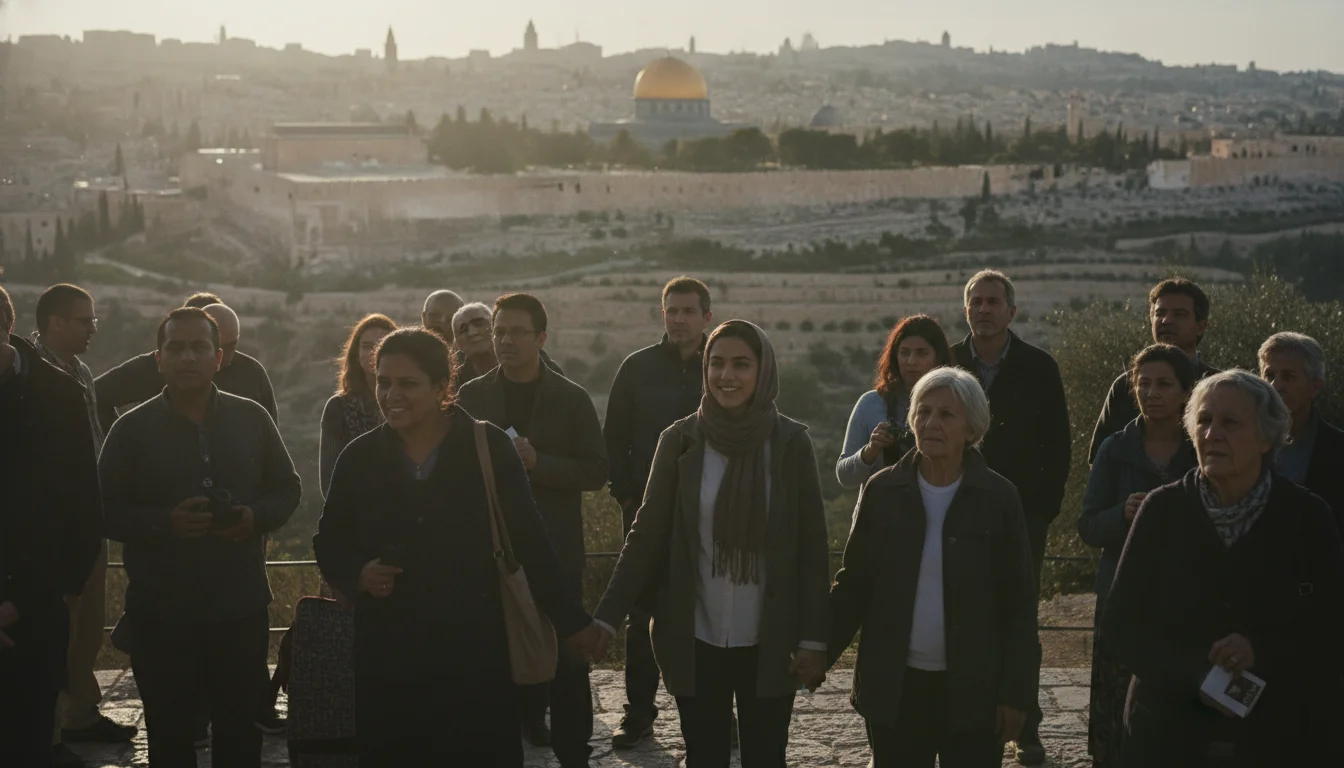
When a pastor first tells me his congregation wants to travel, the destination is almost never in question. It is Israel. He may float Greece or Italy or Turkey later, but the first trip a church takes together is nearly always the Holy Land, because it is the one place where the Book they have been preaching from for years turns into ground they can stand on. I have built heritage journeys for more than forty years, and I want to walk you through what organizing that first trip actually involves, so you can decide whether to commit.
This is written for you, the organizer. Not the traveler. The person deciding whether this is realistic, what it will take, and whether the numbers work. I will keep it practical.
Why Israel Is the Anchor Trip for Most Congregations
There is a reason Israel sits at the center of religious travel and not on its edges. For a Christian congregation, the Gospels stop being distant when your people are standing in Capernaum where Jesus taught, sailing the Sea of Galilee, walking the Via Dolorosa, or sitting quietly in the Garden of Gethsemane. For a Jewish congregation, the Western Wall, Masada, and the streets of Jerusalem are not a tour stop. They are a homecoming.
Either way, the trip does something no sermon or study series can do on its own. An Israel pilgrimage for churches moves scripture from the page into the body. People come home changed, and they talk about it for years. That is why Israel is the trip congregations build toward, and why it is usually the one that fills the fastest once you give people a real date.
It is also, practically speaking, a complete trip. You are not stitching together scattered sites across a country. The key places sit within a few hours of each other, which means a well-built itinerary of a single week can carry your people through most of the story. That density is part of why Israel works so well for a first group.
The Core Regions and Sites a First Group Should See
When you are planning a first trip, resist the urge to see everything. The country rewards depth over speed. Here are the regions that anchor almost every itinerary, and what your group will actually experience in each.
Jerusalem
Jerusalem is the heart of the trip, and most itineraries give it three to four days for good reason. The Old City holds the Western Wall, the Church of the Holy Sepulchre, the Via Dolorosa, and the Temple Mount. The Mount of Olives gives you the view your group will remember, the whole city laid out below, with Gethsemane on the slope beneath you. Bethlehem and the Church of the Nativity sit a short drive south. For most groups, Jerusalem is where the trip becomes personal.
Bethlehem
A short journey from Jerusalem, Bethlehem carries the nativity story and the Church of the Nativity built over the traditional site of the birth. It is a natural half-day paired with Jerusalem, and for Christian groups it is non-negotiable.
The Galilee
The north is where the Gospels breathe. The Sea of Galilee, Capernaum, the Mount of Beatitudes, Tabgha, and a boat ride across the water your people have read about their whole lives. The Galilee is greener, slower, and quieter than Jerusalem, and many leaders tell me it is where their group finally exhales. Two days here is the common shape.
Nazareth
Nazareth, the town where Jesus grew up, usually pairs with the Galilee leg. The Basilica of the Annunciation and the sense of the ordinary town behind the Gospels make it a meaningful stop on the way north or south.
The Jordan River
The Jordan is where many groups hold a baptism or a renewal of baptismal vows, often at Yardenit near the Sea of Galilee. For a pastor, this is frequently the emotional high point of the whole journey, standing in the river with your people. Build time for it. Do not rush it.
The Dead Sea and Masada
The southern desert gives the trip its range. The Dead Sea, where your group floats in water they cannot sink in, sits beside Masada, Herod’s fortress on the cliff above, reached by cable car and heavy with the history of the Jewish revolt against Rome. Nearby Qumran, where the Dead Sea Scrolls were found, often joins this leg. For Jewish groups especially, Masada is a defining stop. For everyone, the desert is a change of register that makes the trip feel complete.
How Many Days You Need
The honest answer for a first group is seven to ten days on the ground, not counting travel.
Seven days is the working minimum. It gives you Jerusalem, the Galilee, the Jordan, and a taste of the Dead Sea and Masada, without much slack. It moves at a good pace and covers the core story, but it asks your group to keep up.
Ten days is where the trip breathes. You get the same core with room for Nazareth, a fuller day at the Dead Sea and Masada, more unhurried time in Jerusalem, and space for reflection, teaching, and the moments that are not on any schedule. If your people can give you ten days, take them. Most groups that go for seven come home wishing they had gone for ten.
Anything under seven days means cutting something essential, and I usually steer leaders away from it for a first trip. If you want the full shape laid out day by day, our a 10-day Holy Land itinerary for groups walks the whole route from arrival to departure.
How a Christian Route and a Jewish Heritage Route Differ
The sites overlap more than people expect, but the emphasis and the framing are different, and a good route respects that.
A Christian route follows the life of Jesus and the early church, and it is the shape most Holy Land tours for churches take. It leans into the Galilee ministry, the Jerusalem of the passion, the Jordan for baptism, Bethlehem for the nativity, and the sites of Acts. The teaching moments happen at the water, on the Mount of Beatitudes, along the Via Dolorosa, and at the empty tomb. The rhythm is devotional. Scripture is read aloud where it happened.
A Jewish heritage route centers on the story of the people and the land. It leans into the Western Wall and the Old City, Masada and the revolt, Yad Vashem and the weight of memory, the Israel Museum, and the living Jerusalem of today. For many Jewish groups the trip carries a bar or bat mitzvah at the Wall or on Masada, which becomes the emotional center of the journey.
The geography is shared. Both routes stand in Jerusalem, both climb Masada, both feel the Galilee. What changes is where you slow down, what you read, and what the days are built around. When we plan with you, we build the route to your congregation, not to a template. That is the whole point of a private group.
Combining Israel With Jordan or Greece
Once your group is already flying across the world, adding a few days often makes sense, and two extensions come up again and again.
Jordan is the natural pairing. Petra, the rose-red city carved into rock, sits a manageable distance across the border, and Mount Nebo, where Moses looked out over the promised land, and the baptism site on the Jordan’s eastern bank add real biblical weight. Three or four days in Jordan turns a Holy Land trip into a fuller regional journey, and the border crossing is well worn for tour groups.
Greece is the other common extension, especially for churches studying Acts and the letters of Paul. Following Paul’s missionary journeys through Athens, Corinth, Thessaloniki, and Philippi pairs naturally with the Israel story, since it carries the narrative from the Gospels into the spread of the early church. It usually works as a separate leg rather than a day trip, and it adds close to a week.
My advice for a first group is to keep it simple. Israel on its own is a full and complete trip. Extensions are worth discussing, but do not let them stretch a first journey past what your people can commit to in time or budget. You can always come back for Jordan or Greece on the next one, and many groups do.
Best Seasons to Travel
Israel has two windows that most groups aim for.
Spring, roughly March through May, is the most popular. The weather is mild, the landscape is green, and the light is good. It also carries Easter and Passover, which are extraordinary to witness in Jerusalem but crowd the city and the sites, so those weeks book early and move fast.
Fall, roughly September through November, is the other strong window. The summer heat has broken, the crowds thin, and the conditions for walking Jerusalem and the desert are comfortable.
Summer is hot, especially at the Dead Sea and Masada, though groups do travel then, often around school breaks. Winter is quieter and cooler, with some rain, and it can be a good value season if your group does not mind the shorter days. For a first trip, spring or fall is the safe recommendation, and booking six to nine months ahead is how you hold the dates you want.
How the Free-Leader Model Makes It Feasible
Here is the part that changes the decision for most leaders. When you organize a group of fifteen or more paying participants, your seat as the leader is covered. Flights, hotels, ground transportation, site entries, and the group meals built into the itinerary. You travel free.
This matters because the leader’s cost is often the quiet reason a trip stalls. A pastor does not want to ask the church to fund an expensive personal trip, and paying his own way on top of everything else is a real barrier. Remove that one expense and the trip becomes feasible again. You are no longer asking your congregation to send you. You are organizing a journey your people pay into, and your seat is built into how it is structured.
The model is not a discount. It is a complimentary spot that the economics of a fifteen-person group can absorb. Larger groups, around twenty-five or thirty, sometimes open room for a reduced or complimentary second seat for a co-leader or spouse, which is worth raising early if you are building toward a bigger group. If you want the mechanics in full, how the free-leader model works breaks down where the number comes from and what the seat covers.
Once the money is handled, your job changes. You are no longer the trip’s accountant. You are its shepherd. Your role is to lead your people through the experience, to read the Gospel at the sites where it happened, to stand with them in the Jordan, to be present in the moments that move them. The operator makes everything else invisible. The free seat is part of how we keep your focus where it belongs.
FAQ: Planning a Church Group Trip to Israel
How many days do we need for a first church trip to Israel?
Seven to ten days on the ground is the working range. Seven covers the core story of Jerusalem, the Galilee, the Jordan, and the Dead Sea at a good pace. Ten gives the same route room to breathe, with more unhurried time in Jerusalem and space for teaching and reflection. For a first group, ten is worth it if your people can give you the days.
What is the best time of year to go?
Spring (March to May) and fall (September to November) are the two strongest windows for mild weather and comfortable walking. Easter and Passover in spring are powerful to witness but crowd the sites, so book those weeks early. Summer is hot at the Dead Sea and Masada, and winter is quieter and cooler with some rain.
Can we combine Israel with Jordan or Greece?
Yes, and both are common. Jordan adds Petra and Mount Nebo in three or four days across the border. Greece follows Paul’s missionary journeys and usually runs as a separate week for churches studying Acts. For a first trip, many leaders keep it to Israel and save the extension for the next journey.
How does the free trip for the group leader work?
With fifteen or more paying participants, the group leader’s full trip is covered, including flights, hotels, ground transportation, and site entries. Below fifteen the trip is still possible, but the leader pays a participant’s price. Larger groups can sometimes open a reduced or complimentary second seat for a co-leader or spouse.
How far ahead should we start planning?
Six to nine months is the sweet spot for a group of fifteen to thirty, which gives people time to budget, request time off, and commit. Holiday-timed trips around Easter, Passover, or the Jewish high holidays want nine to twelve months. The lead time is as much about recruiting your group as it is about booking.
If you are weighing whether a Holy Land trip is realistic for your congregation, you are asking the right questions, and the answers are more reachable than most leaders expect. You can see how the numbers come together in our guide to what a church group trip to Israel costs, read the complete leader’s guide for the full planning picture, or look at the routes and sites on our Israel heritage tours page.
When you are ready, contact us and we will help you shape a route, pick your dates, and run the numbers for your group.