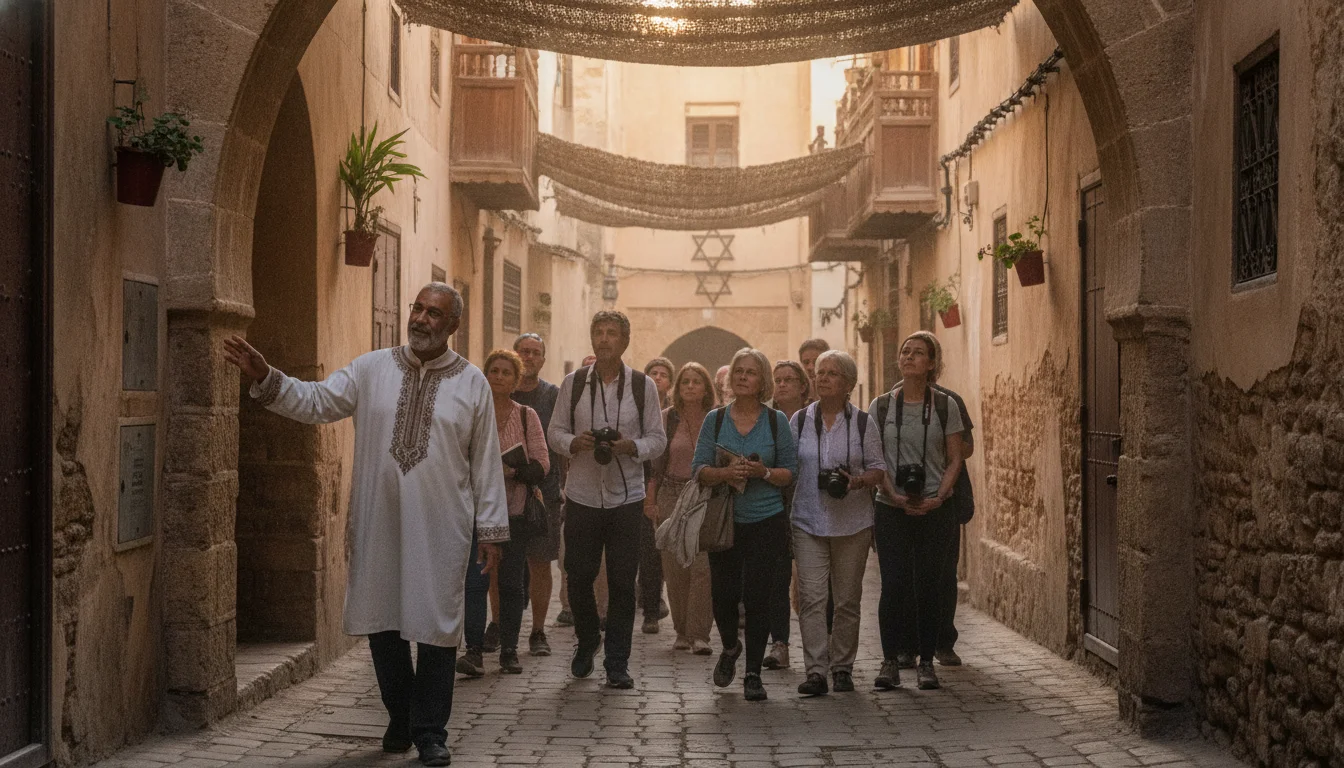
Most of the pastors who call me about Morocco are surprised the country is even on the table. They know Israel. They know Greece and the footsteps of Paul. Morocco feels like a leap. Then I tell them what is actually there, a thousand years of Jewish life woven through Fez, Marrakech, and the coast at Essaouira, ancient mellahs, working and restored synagogues, cemeteries where sages are still honored, and a Muslim country that has protected that heritage rather than erased it. By the end of the call, the leap looks a lot shorter.
I have built heritage journeys for more than forty years, and Morocco has become one of the trips I most enjoy handing to a congregation leader, because it does something a familiar itinerary cannot. It surprises people. This is a guide for you, the organizer, the pastor or rabbi or lay leader who is going to plan this, recruit for it, lead it, and answer to a board about the cost. I want to walk you through the decisions in the order you will actually face them.
Why a Church Group Would Go to Morocco for Jewish Heritage
Let me answer the question your board will ask first. Why would a Christian congregation travel to Morocco to see Jewish sites.
The honest answer is that the roots of your faith did not stay in one place. The story of the Jewish people scattered across the Mediterranean world, and Morocco holds one of the oldest and richest chapters of that story outside Israel. For a church studying the Old Testament, the prophets, or the long arc of covenant history, standing inside a five-hundred-year-old synagogue in Fez does something a classroom cannot. It makes the diaspora real. It shows a living Jewish community that endured, and it opens honest conversation about how three faiths shared, and sometimes strained, the same streets.
For a synagogue group, the draw is more direct. This is family history. Many congregants trace roots to Sephardic and Mizrahi communities, and Morocco is often the ancestral ground itself. Either way, the destination carries weight that a sightseeing trip never could.
I raise this early because your recruiting message depends on it. You are not selling a vacation. You are offering your people a way to walk through a piece of their spiritual inheritance. Name that clearly and the trip recruits itself faster than you expect. If you want the full planning arc from first idea to departure, our guide to planning a group pilgrimage lays out every stage in order.
The Sites That Anchor the Trip
You do not need to be an expert on Morocco to lead this well. You need to know the anchors, because those are what you will describe to your congregation when you recruit.
Fez is the heart of it. The mellah, the historic Jewish quarter, sits beside the royal palace, and the Ibn Danan Synagogue, restored and open to visitors, is one of the oldest in North Africa. The Jewish cemetery on the hillside, with its white tombs, is quiet and moving. Fez is where the depth of this heritage lands hardest.
Marrakech carries its own mellah and the Slat al-Azama Synagogue, still active, plus the wider color and noise of the city that makes people fall in love with Morocco. It balances the solemn parts of the trip with life and markets and light.
Essaouira, on the Atlantic coast, was once nearly half Jewish, a trading port where the community held real economic weight. The old scholars’ quarter and restored synagogues there tell a different story than the inland cities, one of commerce and the sea.
Casablanca anchors most arrivals, and it holds the Museum of Moroccan Judaism, the only Jewish museum in the Arab world, which is a strong first or last stop for framing the whole journey.
You can build a rich eight to ten day route from these four, with time in the mountains or the desert if your group wants it. My job, once you commit, is to shape that route around your congregation’s interests and pace. Your job is to know these names well enough to make your people want to see them.
The Part That Makes the Trip Feasible: You Travel Free
Here is where the planning conversation usually shifts from dreaming to deciding.
When you gather fifteen or more paying participants, the group leader travels free. That means your full trip cost is covered, flights, hotels, ground transportation, site entries, and the group meals built into the itinerary. Not a discount. Not a partial credit. A complimentary seat built into the economics of the group booking.
The reason it works is straightforward once you see it. A group of fifteen paying travelers generates enough margin within the trip’s costing to carry one more person, and that person is you. You are the reason the group exists, so the model is built around your seat being the free one. We cover exactly how this math holds together in our explainer on why the pastor travels free, and the specific headcount question in how many people you need for the leader-free benefit.
This changes the whole shape of what you are asking. You are no longer telling your board that the church should fund an expensive trip for its pastor. You are organizing a journey your people pay into, and your participation is simply part of how a group trip is structured. That is a very different meeting.
For leaders who still need to square the cost with a tight budget, our guide on how pastors afford to lead a trip walks through the practical options.
What Happens Below Fifteen
Smaller groups are absolutely possible. We run trips for ten to fourteen people regularly, and Morocco works beautifully at that size. Those groups just do not qualify for the free-leader benefit, because the economics that fund the complimentary seat start at fifteen. In that range, the leader pays a participant’s price, or the group agrees to absorb a small premium to cover the leader’s seat.
My advice, if you are sitting at twelve committed with a few maybes, is to start planning anyway. Interest firms up once people see real dates and a real route. I have watched groups cross from thirteen to seventeen in the final two months simply because the trip stopped being an idea and became a booking.
Building a Group That Reaches Fifteen
This is the work leaders worry about most, so let me be practical.
Start With Your Core, Not the Whole Congregation
You do not need to recruit fifteen strangers. You need the eight to ten people in your community who already lean toward this, then let them bring others. Couples travel together. Friends bring friends. A Bible study or a Torah study group often travels as a unit. Fifteen is reachable when you start from the people already interested rather than the full membership roll. Our guide on how to recruit for a church trip breaks the outreach into steps you can hand to a volunteer.
Give People a Real Reason and a Real Date
Vague interest never fills a group. A specific journey on specific dates does. “We are spending nine days tracing Jewish Morocco next March, Fez, Marrakech, Essaouira, and Casablanca, here is what we will see,” lets people decide. “We might do a Morocco trip sometime” never converts. Tie the journey to something your community is studying or preaching through, and the interest sharpens fast.
Plan Far Enough Ahead
Six to nine months is the sweet spot for a group of fifteen to thirty. That gives your people time to budget, request time off, and commit, and it gives you time to build interest, which is the real work. Trips timed around a holiday season want nine to twelve months. Our guide on how far ahead to plan goes deeper on the timeline, because earlier planning is not just logistics, it is recruiting runway.
Handling the Money Without Losing Sleep
Once your seat is off the table, the budget conversation gets much simpler, but you still own it. A few things make it manageable.
Offer a payment plan. Almost nobody writes one check for an international trip. A deposit to hold the seat, then monthly installments toward departure, removes the single biggest barrier to a yes. Our guide on group trip payment plans shows how to structure it so you are never chasing money.
If parts of your group need help, fundraising is normal and it works. Congregations sponsor travelers, run dinners, and set up dedicated funds all the time. Our guide on how to fundraise for a trip covers the approaches that actually raise real money without exhausting your volunteers. And if you want a clean framework for the whole budget, from per-person pricing to what is and is not included, start with how to budget a church trip.
The rule I give every leader is the same. Never quote a price you are guessing at. Get a real quote for your real dates and your real headcount, then build your recruiting around that number. You can request a custom quote once you have a rough date and group size in mind, and it will save you from promising something the math cannot hold.
Your Real Job Once the Logistics Are Handled
Here is what I most want you to hear. When the free-leader model takes your personal cost off the table, it also frees your attention. You stop being the trip’s accountant. You become its shepherd.
That is the point of a heritage journey, and it is more true in a place like Morocco than most. Your people will stand inside a synagogue their ancestors, or the ancestors of the faith, once filled with prayer. They will walk a mellah where a whole community lived and worked and worshiped. They will feel the weight of endurance in a cemetery on a Fez hillside. Those are the moments they came for, and your job is to be present in them, to read the right passage aloud, to lead a moment of reflection, to help your community make meaning of what they are seeing.
Everything else, the coaches, the guides, the hotels, the site access, the pacing, is our work to make invisible. A good operator disappears so the leader can lead. The free seat is part of how we keep your focus where it belongs. If you are comparing operators, our guide on how to choose a faith tour operator lists the questions that separate a real specialist from a booking desk.
A Simple Checklist Before You Commit
Before you announce a Morocco trip to your congregation, have these five things in hand:
- A rough date window, ideally two options six to nine months out.
- A target group size, with fifteen as your floor for the free-leader benefit.
- An anchor theme tied to what your community is studying or celebrating.
- A real quote for your dates and headcount, not a guess.
- A payment plan you can put in front of people on day one.
With those five, the announcement writes itself. Our full church group planning checklist expands each of these into the specific tasks and their timing.
FAQ: Leading a Church Group Trip to Morocco for Jewish Heritage
How many people do I need for the group leader to travel free to Morocco?
Fifteen paying participants. At fifteen or more, your full trip cost is covered, including flights, hotels, ground transportation, and site entries. Below fifteen the trip is still possible, but the leader pays a participant’s price or the group covers that seat by agreement.
Is Morocco safe and welcoming for a faith group visiting Jewish sites?
Yes. Morocco has protected its Jewish heritage rather than erased it, restoring synagogues and maintaining cemeteries and museums, and it welcomes heritage groups regularly. Your local guides know the sites, the customs, and how to move a group respectfully through both Jewish and Muslim spaces.
Can a Christian congregation do this trip, or is it only for synagogues?
Both travel it, and both get something real from it. For a synagogue group it is often ancestral history. For a church it is the living reality of the diaspora and the long arc of covenant history, which deepens Old Testament study in a way a classroom cannot. The route and the framing shift to fit your community.
What cities should our Morocco itinerary include?
Fez for the mellah and the Ibn Danan Synagogue, Marrakech for its synagogue and its color, Essaouira for the coastal trading community, and Casablanca for the Museum of Moroccan Judaism. Eight to ten days lets you cover these with room for the mountains or desert if your group wants them.
How far ahead should I start planning to reach a group of fifteen?
Six to nine months for fifteen to thirty travelers, and nine to twelve for larger or holiday-timed groups. The lead time is as much about recruiting your people as it is about booking, so concrete dates and a real itinerary are what move a congregation from interested to committed.
If Morocco has been sitting in the back of your mind as a maybe, the free-leader math and a real quote are usually what turn it into a plan. You can see how the group experience works on our group heritage tours page, or look at the full country route on our Morocco heritage page.
Contact us and we will help you run the numbers for your group, your dates, and the route your community will remember.