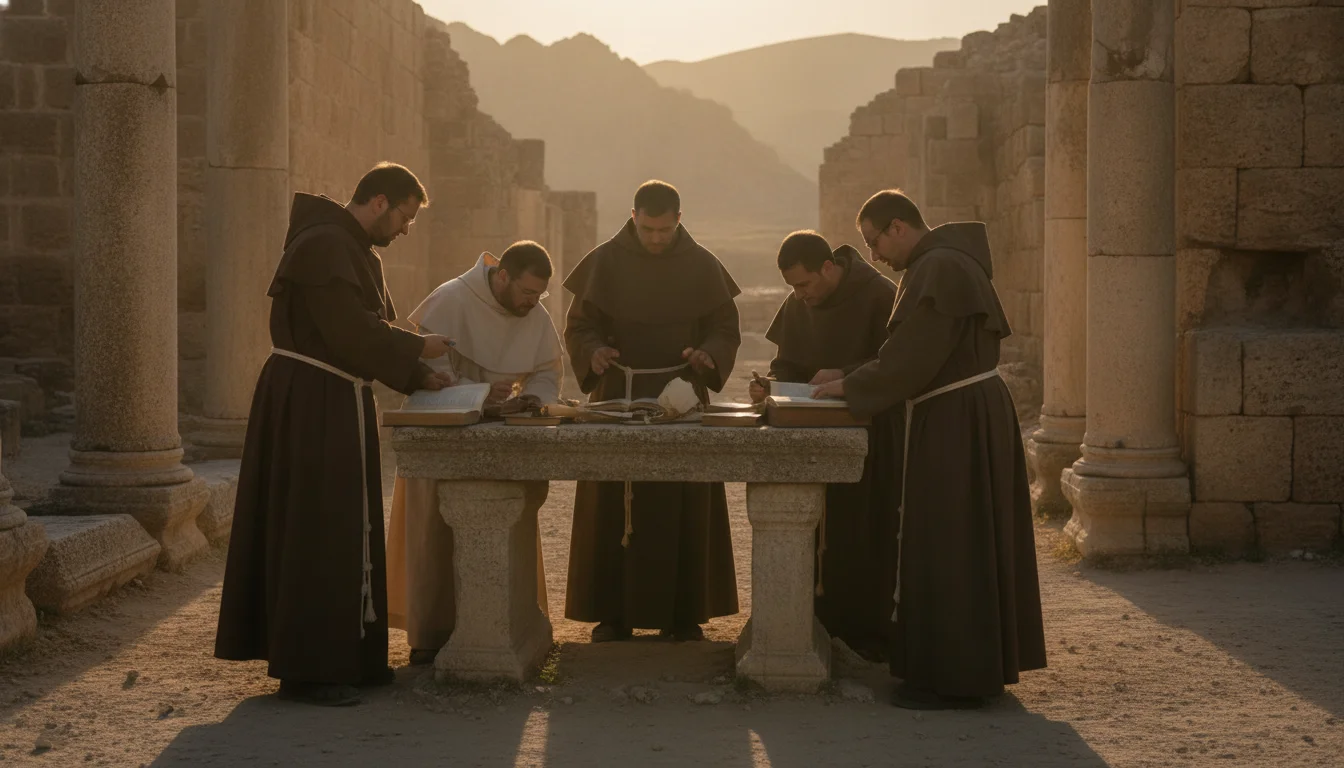
When a pastor or a rabbi first calls me about leading a study tour, the questions come in a rush. How much will it cost me. How many people do I need. What if the group falls apart in the last month. Who handles the buses and the hotels while I am trying to teach. I have learned to slow the conversation down, because a clergy study tour is not one big decision. It is a stack of small ones, made in the right order, and every one of them has a clear answer.
I have built heritage journeys for more than forty years. In that time I have sent seminary faculty on research trips, walked deacons and elders through retreats abroad, and helped church planting networks run vision trips that started whole ministries. This is the playbook I give every leader who is planning their first one. It is written for you, the organizer, not for the traveler in seat 14B.
Start With the Purpose, Not the Destination
The most common mistake I see is leaders choosing a country before they have named the reason. Greece is beautiful. Israel is moving. But a study tour needs a spine, and the spine is the purpose, not the postcard.
Ask yourself one question first: what do I want my people to walk away with. The answers usually fall into a few clear buckets.
- A teaching tour built around a text or a book you are preaching through (the footsteps of Paul, the Exodus route, the ministry of Jesus in Galilee).
- A faculty or leadership study trip, where the goal is depth and firsthand knowledge rather than a broad overview.
- A vision or discernment trip, where the point is not the sites at all but what happens to your team while they are away together.
Once you name the purpose, the destination almost chooses itself. A Pauline teaching series points to Greece and Turkey. A study of the land of the Bible points to Israel and Jordan. A team wrestling with a new church plant might go somewhere that stretches them precisely because it is unfamiliar. Get the purpose right and every later decision gets easier, because you have a filter for saying yes and no.
The Cost Question Every Leader Asks First
Let me handle the money directly, because it is the thing most leaders are anxious about and least willing to say out loud.
On a group study tour, the leader almost never pays. With fifteen or more paying travelers, the group leader’s full trip is covered: flights, hotels, ground transportation, site entries, and the meals built into the itinerary. That is not a discount. It is a complimentary seat built into the economics of a group booking. Fifteen paying participants generate enough margin within the trip to carry one more traveler, and that traveler is you.
This matters more than people expect, because it changes what you are asking your congregation for. You are not asking your church or synagogue to fund an expensive trip for the pastor or rabbi. You are organizing a journey your people pay into, and your seat being free is simply how a group of that size is structured. I wrote more about the mechanics in how pastors afford to lead a trip, and if you want the plain answer to the recurring board question, does the pastor travel free covers it directly.
If your group lands below fifteen, the trip still runs. You simply pay a participant’s price like everyone else, or the group agrees to absorb a small premium to cover your seat. For a firmer sense of where the line sits and how larger groups unlock a second free seat, see how many people you need for the leader to travel free.
How Far Ahead to Plan
A clergy study tour needs runway, and most of that runway is for recruiting, not logistics.
For a group of fifteen to thirty, six to nine months is the sweet spot. That gives your people time to budget, request time off, and commit, and it gives you time to build interest, which is the real work. Larger groups, or trips timed around Easter, Passover, or the fall holidays, want nine to twelve months. Faculty trips tied to an academic calendar sometimes need even longer, because you are working around teaching loads and a fixed term.
Earlier is almost never a mistake. The one caution I give: do not announce a date you are not ready to hold. A firm date is a recruiting tool. A date you might move is a reason for people to wait. If you want a fuller breakdown, how far ahead to plan walks through the timeline by group size.
Building the Group: Recruiting Is the Leader’s Real Work
This is the part that keeps leaders up at night, so let me be practical.
You do not need to recruit fifteen strangers. You need to find the eight to ten people in your community who already want to go, and let them bring the rest. Every study tour I have run started with a small committed core. Couples travel together. Friends bring friends. A Bible study or a board travels as a unit. Fifteen is reachable when you start from the people leaning in, not from the whole membership list.
Three things move people from interested to committed:
- A specific journey on specific dates. “We are walking Paul’s route from Philippi to Corinth next May, eight days” converts. “We might do a trip someday” never does.
- A reason tied to something your community is already living. Preach through Acts, study the Exodus, run a teaching series, and let the trip be the capstone.
- A payment plan. Nothing calms a nervous traveler like knowing they can pay in installments rather than one lump sum.
For the recruiting mechanics, how to recruit for a church trip is the detailed guide, and group trip payment plans covers how to structure the money so cost stops being the barrier.
Seminary Faculty Heritage Trips: A Different Kind of Study Tour
When the travelers are scholars, the trip changes character. A seminary faculty heritage trip is not a broad overview with a few photo stops. Faculty want depth, primary access, and time to sit with a site rather than pass through it.
A few things I plan differently for faculty groups:
- Fewer sites, more time at each. A New Testament scholar wants an hour at the bema in Corinth, not fifteen minutes and a group photo.
- Local specialist guides, not generalists. When your travelers know the material better than most guides, you bring in academic-level guiding or arrange access to people doing current fieldwork.
- Built-in study and discussion time. Faculty trips work best with evening sessions where the group processes what they saw, sometimes with a member presenting their own area.
The free-leader model still applies. The department chair or trip organizer travels free at fifteen, which for a small faculty often means bringing spouses or graduate students to reach the number. That is a feature, not a workaround. It widens the circle.
How to Plan a Deacon or Elder Retreat Abroad
A leadership retreat abroad is the trip where the sites matter least and the people matter most. When you take your deacons or elders out of the building, away from phones and Sunday obligations, something happens to a leadership team that no local retreat center reproduces.
If you are planning a deacon or elder retreat abroad, plan for the group, not the itinerary:
- Keep the pace slower than a teaching tour. You want margin for conversation, prayer, and the unplanned talk that happens over a long dinner.
- Choose a place with meaning but not an overwhelming schedule. A focused route through the Holy Land or the footsteps of Paul gives a spiritual anchor without exhausting the group.
- Build in real retreat time. Half a day of nothing scheduled is not wasted. It is often where the actual work of the retreat gets done.
Because it is a leadership group, your numbers may run smaller. A board of ten to fourteen is common. If you want the retreat to include the leader for free, this is where inviting spouses gets you across fifteen and deepens the experience at the same time.
Church Planting Network Vision Trips
A church planting network vision trip has a different engine again. The goal is not to study the past but to shape the future: to take a team of planters, funders, and leaders somewhere that clarifies the calling and forges the relationships a new work depends on.
When I plan a vision trip for a planting network, I build around three things:
- Shared experience over sightseeing. The trip exists to bond a team and cast a vision, so the itinerary serves the conversations, not the other way around.
- Time with people, not just places. Meeting local believers, pastors, or ministries doing the kind of work the network is imagining is often the most formative part.
- A clear commissioning moment. Somewhere on the trip, in a place that carries weight, the team names what they are going home to build.
Vision trips often start smaller and grow as the network catches the idea. Start planning with your committed core, hold a firm date, and let the vision recruit for you.
Who Handles the Logistics While You Lead
Here is the promise that lets a clergy leader actually breathe. Once the trip is built, your job is to lead your people, not to run the operation.
The buses, the hotels, the site entries, the timing, the local guides, the problems that come up at 6 a.m.: those belong to the operator. Your job is to read Acts 16 aloud at the river outside Philippi, to lead a moment at a memorial, to teach at the site where the text comes alive, to be present for your people. When the free-leader model takes your personal cost off the table, it also frees your attention. You stop being the accountant and become the shepherd again.
That is the whole point of doing this with a heritage operator rather than assembling it yourself. If you are still deciding who to work with, how to choose a faith tour operator and the questions to ask an operator will save you a lot of guessing.
For the full end-to-end picture, from first idea to the moment your group boards the plane, our pillar guide on how to plan a group pilgrimage is the place to start.
FAQ: Planning a Clergy Study Tour
How many people do I need for the clergy leader to travel free?
Fifteen paying participants. At that number the group leader’s full trip is covered: flights, hotels, ground transportation, included site entries, and the meals built into the itinerary. Below fifteen the trip still runs, but the leader pays a participant’s price or the group covers the seat by agreement.
How far ahead should I start planning a study tour?
Six to nine months for a group of fifteen to thirty, and nine to twelve for larger groups or trips timed around major holidays. Faculty trips tied to an academic term sometimes need longer. Most of that lead time is for recruiting your group, which is the real work, not for the booking itself.
What is the difference between a study tour and a regular pilgrimage?
A study tour is built around a specific learning purpose, whether that is a text you are preaching through, a scholarly focus for faculty, or a discernment goal for a leadership team. It usually means fewer sites, more time at each, and built-in teaching or discussion. A general pilgrimage covers more ground at a broader level.
Can I plan a small leadership retreat abroad, or do I need a big group?
You can absolutely run a small deacon or elder retreat. Groups of ten to fourteen are common for leadership retreats. They simply do not include the free-leader benefit unless you reach fifteen, which is often why leaders invite spouses. That gets you across the line and deepens the retreat at the same time.
Who handles the logistics so I can focus on leading?
The operator does. Hotels, ground transportation, site entries, timing, and local guiding all belong to us. Your job on a study tour is to teach, guide, and be present for your people. Taking the operations and the leader’s cost off your plate is exactly what frees you to do that.
If you are weighing a clergy study tour for your congregation, seminary, or network, the first step is naming the purpose and holding a date. From there the numbers usually work out more easily than leaders expect. You can see how the group experience comes together on our group heritage tours page.
Contact us and we will help you shape the purpose, run the numbers for your group, and build a study tour your people will carry for years.