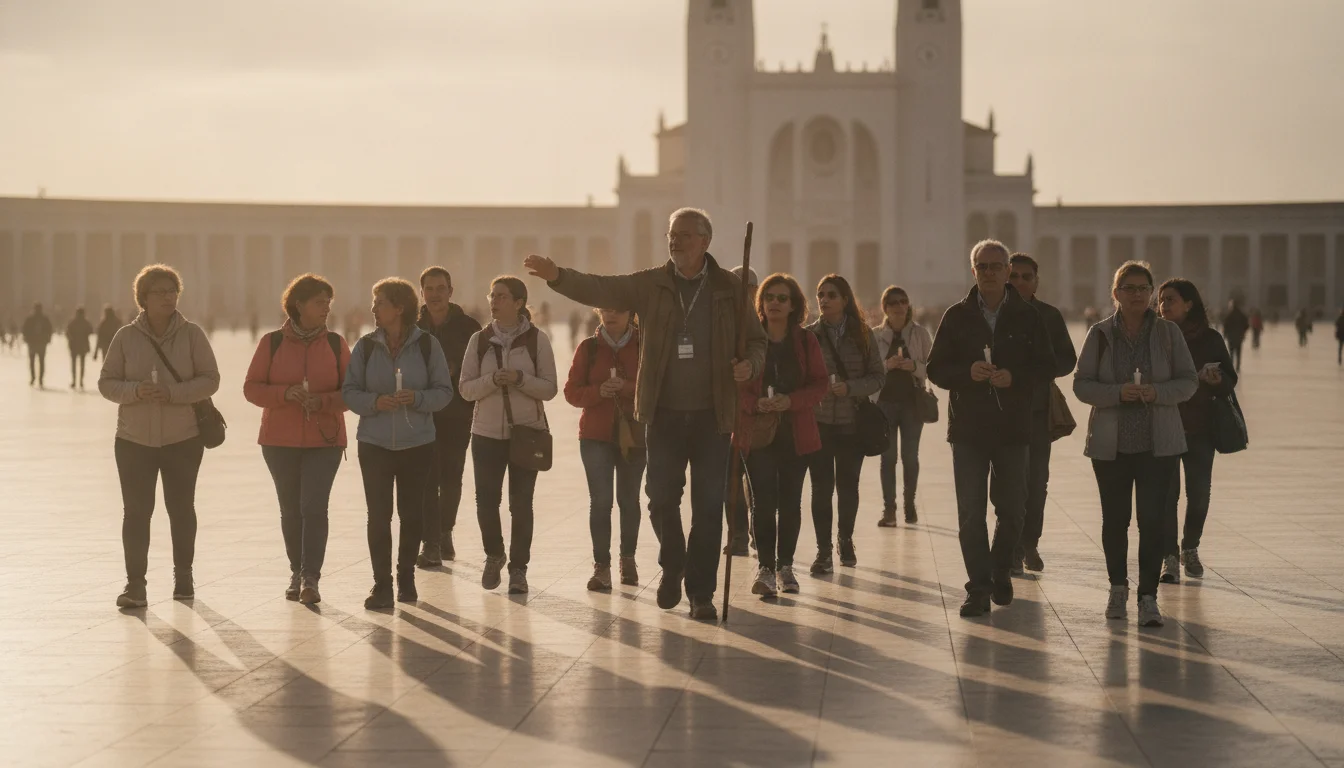
Most of the pastors who call me about Portugal have already made the decision in their hearts. They have preached Fatima, or a congregant went years ago and never stopped talking about it, or the church has done Israel twice and wants a fresh journey that still means something. What they have not done is the part that stalls trips: the planning. Who books it. What it costs per person. Whether the leader can afford to go. How you get from an idea whispered after a service to fifteen people with passports in hand.
I have built heritage journeys for more than forty years, and I want to walk you through planning a church group tour to Portugal from the organizer’s chair, not the traveler’s. You are the one leading this. So this is written for you: the decisions you actually own, the numbers you need to hold in your head, and the one benefit that quietly makes the whole thing feasible.
Why Portugal Works for a Church Group
Portugal is one of the few destinations that speaks to more than one kind of congregation at once, and that matters when you are trying to fill a group.
For a Catholic parish, the center of gravity is obvious. Fatima is one of the most visited Marian sanctuaries in the world, and standing in that square with your people, at the Chapel of Apparitions or the candlelit procession, is the kind of moment that anchors an entire trip. But Portugal is not a single stop. Braga carries centuries of Christian tradition and the sanctuary of Bom Jesus do Monte with its stairway of the senses. Coimbra holds one of the oldest universities in Europe and a deep monastic history. Lisbon and Porto give your group cathedrals, saints, and a sense of the faith woven into the country’s daily life.
For a Protestant congregation, Portugal reads differently but still rewards. It is a study in church history, the age of exploration, and the way faith shaped a nation. Many leaders pair it with Spain to walk a broader Iberian route.
And for a synagogue or a mixed heritage group, Portugal holds one of the most moving Sephardic stories in Europe. Belmonte, where crypto-Jews quietly kept their faith for five centuries after the Inquisition. The Kadoorie synagogue in Porto. The old synagogue in Tomar. Lisbon’s Jewish quarter and the 1506 massacre memorial. I have led groups here who came for the churches and left changed by the Jewish history they did not expect to encounter.
The point for you as organizer: Portugal gives you more than one reason to invite someone. That is exactly what you want when you are building toward a group.
The Number That Changes Everything: Fifteen
Before we talk itineraries, I want to put the money question where it belongs, at the front, because it is the thing that stops most leaders from ever starting.
Here is the structure. When you bring fifteen or more paying travelers, the group leader travels free. That covers the leader’s full trip on the same terms as everyone else: international flights, hotels, ground transportation, site entries, and the meals built into the itinerary. Not a discount. A complimentary seat, built into the economics of the group.
Sit with what that does to your decision. You are no longer walking into a board meeting asking the church to send the pastor on an expensive trip abroad. You are proposing a journey your people pay into, where your seat is covered because you are the reason the group exists. The conversation stops being “can we justify sending the pastor” and becomes “how many of our people want to go.”
I wrote about the mechanics of this more fully in how pastors afford to lead a trip, and if you want the plain answer to the question everyone asks first, does the pastor travel free lays it out. The short version: at fifteen, yes.
What If You Only Have Ten or Twelve?
You can still go. We run trips for ten to fourteen people regularly. They just do not include the free-leader benefit, because the fixed costs of a trip (guide, coach, local operators, coordination) get spread across too few travelers to carry a complimentary seat. In that range the leader pays a participant’s price, or the group agrees to absorb a small premium to cover the leader’s spot.
My honest advice if you are sitting at twelve committed with a few maybes: start planning anyway. Interest firms up once people see real dates and a real itinerary. I have watched groups cross from thirteen to seventeen in the final two months for no reason other than the trip became concrete. If you want the fuller reasoning, how many people you need for the leader to go free covers exactly where the line sits and why.
Building the Itinerary: The Organizer’s Version
When you plan a church group tour to Portugal, resist the urge to see everything. A group of fifteen to thirty moves slower than a couple. Every stop means loading a coach, walking a group, keeping people together, and leaving margin for the person who needs a moment. A good route does fewer things well.
For most Christian groups I build something like this: fly into Lisbon, give the group a day to find their feet in the old city and the Jeronimos Monastery, then move north. Fatima is the heart, and I never rush it. A night there lets your group experience the evening rosary procession, not just a daytime photo stop. From Fatima you can reach Batalha and its monastery, Nazare on the coast, Coimbra, and then Porto for the final stretch. Eight to ten days holds this comfortably. Add Braga for a parish that wants more Marian and cathedral depth.
If your group leans toward the Jewish heritage route, we build inland toward Belmonte and Tomar and weave the Sephardic story through the same country. Many of my most meaningful trips carry both threads, because a congregation is rarely one thing.
Here is the part I want you to hear as the leader. Your job is not to become a Portugal expert or a logistics coordinator. Your job is to shepherd your people through it. The operator handles the coach, the guides, the hotels, the entries, the timing. You handle the moment: reading Scripture in the sanctuary, leading a reflection at Belmonte, being present for your congregation in the places that move them. When the planning is done right, everything logistical goes invisible and you are free to lead.
What It Actually Costs
Leaders want a number, and I understand why, but the honest answer is a range, because Portugal changes with season, hotel level, group size, and whether you are pairing it with Spain.
The larger drivers you control as organizer are these. Time of year: shoulder seasons like late spring and early autumn cost less than peak summer and hold better weather for walking. Group size: a group of twenty-five carries costs more efficiently than a group of fifteen, which is part of why bigger groups sometimes unlock a second free or reduced seat for a co-leader or spouse. Trip length: each added night adds hotel and meal cost, so length is a lever, not a fixed thing.
The mistake I see leaders make is quoting a number to their congregation before the trip is built. Do not do that. Get a real itinerary costed first, then present a firm per-person price you can stand behind. If you want a structured way to think about the money before you present it, how to budget a church trip is the piece I point leaders to, and when you are ready for real figures, get a custom quote is the fastest way to turn a rough plan into a number.
How to Fill the Group
This is the part that keeps leaders up at night, so let me be practical.
Start With Your Core, Not the Whole Congregation
You do not need to recruit fifteen strangers. You need the eight to ten people in your community who already want to go, and then you let them bring others. Couples come together. Friends bring friends. A Bible study travels as a unit. Every full group I have run started with a small committed core, not a mass appeal. Recruiting for a church trip goes deeper on this if you want a real method.
Give People Dates and a Reason
Vague interest never fills a group. “We might do Portugal someday” converts no one. “We are going to Fatima next May, ten days, here is the route and here is the price” lets people decide. Tie it to something your congregation already cares about, a season of study, a devotion, a milestone, and the interest sharpens fast.
Make Paying Easy
Cost is rarely the true objection. A large single payment is. When people can spread the cost over several months, a trip that felt impossible becomes doable. A simple deposit-and-installments plan does more to fill a group than any amount of persuading. Setting up a group trip payment plan shows how to structure it without becoming your church’s bookkeeper.
Start Early Enough
Six to nine months is the sweet spot for a group of fifteen to thirty. That gives people time to budget, request time off, and commit, and it gives you time to build interest, which is the real work. Trips timed around peak season or a specific feast want nine to twelve months. Earlier planning is recruiting runway, not just booking logistics. How far ahead to plan breaks the timeline down month by month.
Before You Say Yes to an Operator
You are trusting someone with your congregation, so choose carefully. A group leader once told me the trip is the pastor’s reputation walking around a foreign country, and he was right. Ask how they handle a medical issue on the road. Ask who your guide is and whether they know Christian and Jewish heritage, not just city sightseeing. Ask what the free-leader terms are in writing. The questions to ask an operator and how to choose a faith tour operator give you the full checklist so nothing important is left to assumption.
If this is your first time leading a group abroad, do not improvise the process. Our group pilgrimage planning guide is the pillar I point every new leader to, and it walks the whole arc from first idea to the day you board the plane.
FAQ: Planning a Church Group Tour to Portugal
How many people do I need for the group leader to travel free?
Fifteen paying travelers. At fifteen or more, the leader’s full trip is covered: flights, hotels, ground transportation, site entries, and the meals in the itinerary. Below fifteen the trip is still possible, but the leader pays a participant’s price or the group covers the seat by agreement.
Is Portugal a Catholic-only destination, or does it work for other groups?
It works for more than Catholic parishes. Fatima anchors the Catholic route, but Portugal also holds deep Christian history for Protestant groups and one of Europe’s most moving Sephardic Jewish stories at Belmonte, Porto, and Tomar. Many groups travel with both threads.
How long should a Portugal church trip be?
Eight to ten days is the comfortable range for a group. It lets you give Fatima an overnight rather than a rushed day stop and still reach Lisbon, Coimbra, and Porto without exhausting your travelers. Adding Spain pushes it longer.
How far ahead should I start planning?
Six to nine months for a group of fifteen to thirty, and nine to twelve for peak season or a feast-timed trip. Most of that time is recruiting your group, not booking. Concrete dates and a real itinerary are what move people from interested to committed.
What if I cannot gather fifteen people?
We run trips for ten to fourteen, so the journey can still happen. It just will not include the free-leader benefit, since the economics that fund the complimentary seat begin at fifteen. Many groups that start at twelve reach fifteen before departure, so it is worth planning anyway.
If Portugal has been sitting in the back of your mind, the free-leader math is usually the thing that makes it real. You can see how a group journey comes together on our group heritage tours page, or look at the full route on our Portugal heritage page.
Contact us and we will help you run the numbers for your group and your dates.