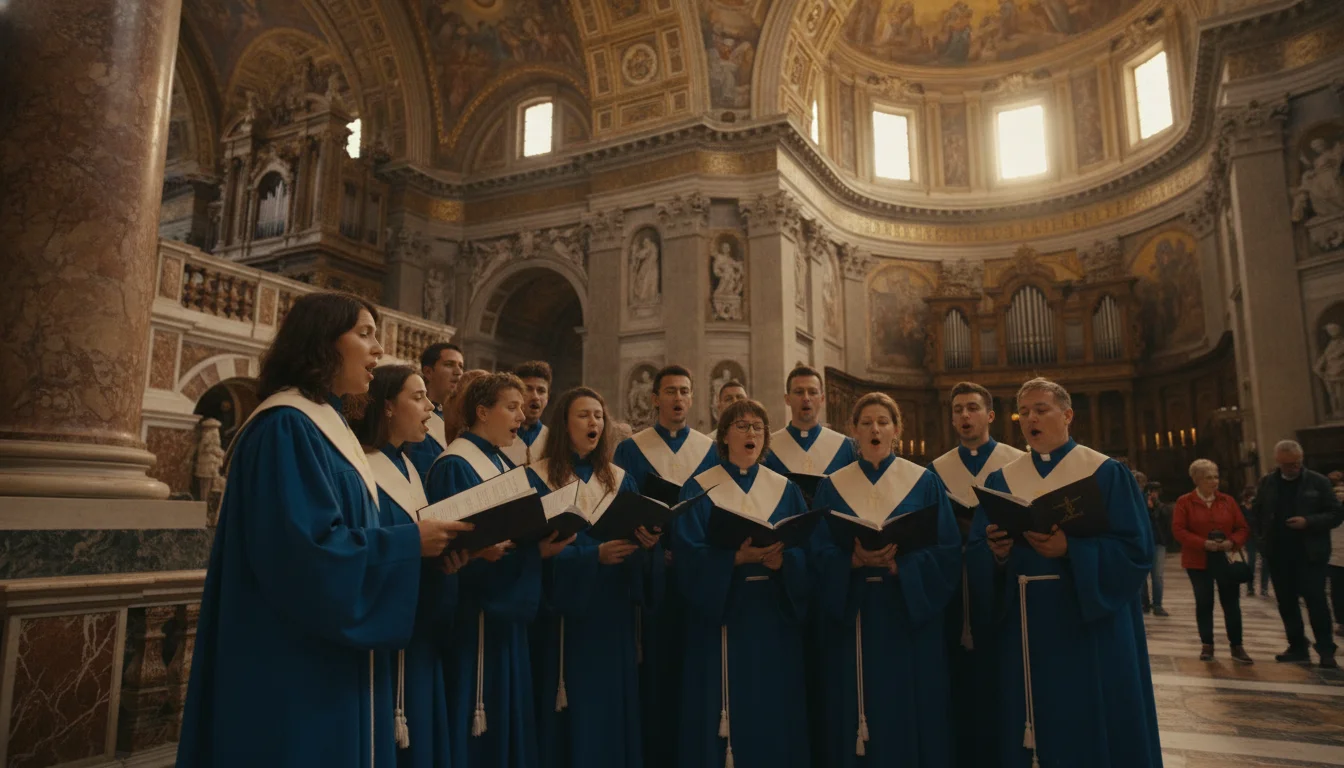
The email I get most often from a music minister starts the same way. “We have talked about taking the choir to Italy for years. I do not know where to begin.” That is the honest starting point, and it is the right one. A choir tour is not a bigger version of a Sunday trip to a regional festival. It is a group of singers, their families, a director, and often a pastor, all moving through a country where you will be singing in spaces built centuries before your hymnal existed. It is worth doing well.
I have built heritage journeys for more than forty years, and choir tours are among the most rewarding groups I plan. The singers rehearse for months, and then they stand under a dome in Rome or Florence and hear their own sound come back to them in a way no rehearsal room can produce. My job here is to walk you, the organizer, through the actual decisions: how to plan a choir heritage tour from the first meeting to the final concert, what it costs, how to recruit, and how the numbers work so you are not paying your own way to lead your own group.
Why Italy Is the Right Country for a Choir
Choirs can tour many places. The reason Italy keeps rising to the top for church and congregation groups is the density of great singing spaces in a small geography.
In one eight to ten day itinerary you can sing in Rome, Florence, Assisi, and Venice without long transfers between them. These are not tourist stops where you snap a photo and leave. They are working churches, basilicas, and cathedrals where music has been part of worship for hundreds of years, and where a visiting choir singing sacred repertoire fits the room rather than fighting it. The acoustics do half your work for you.
For Christian choirs, the pull is obvious: singing in the country that holds so much of the Church’s musical and artistic history. For synagogue choirs and Jewish community ensembles, Italy offers something quieter and just as moving. The Venice Ghetto, the ancient synagogues of Rome, the Jewish heritage of Florence and Livorno. A Jewish choir touring Italy is singing through a story that runs back two thousand years. I have planned both, and both belong here.
Start With the Purpose, Not the Dates
Before you pick a month or count heads, answer one question with your leadership: what is this tour for?
A choir tour usually carries one of three purposes, and the purpose shapes everything after it.
- A worship and witness tour. The choir sings in churches and at services, and the trip is a ministry offering as much as a travel experience.
- A performance and cultural tour. The focus is on scheduled concerts in notable venues, sometimes alongside local choirs or in shared programs.
- A milestone tour. The trip marks something: an anniversary, a director’s retirement, or a graduating class. This is where a choir tour and a graduation heritage trip often become the same journey.
Name the purpose out loud in your first planning meeting. It decides your repertoire, your venue requests, the length of the trip, and how you talk about it to families when you recruit. A tour without a stated purpose drifts, and drifting trips are hard to fill.
How to Plan a Choir Heritage Tour: The Real Sequence
People ask me how to plan a choir heritage tour as if there is a secret. There is not. There is a sequence, and following it in order is what keeps you from redoing work later.
First, form a small planning team. You should not carry this alone. A director for the music, an organizer for the logistics, and one detail-minded volunteer for payments and paperwork. Three people is plenty. This mirrors what I lay out in the full group pilgrimage planning guide, which is worth reading before your first meeting because it applies to any faith group, choir or not.
Second, set your window before your dates. Decide the season and rough length, then let the operator find the specific dates that get you into the venues you want. Choir tours live or die on venue access, and the best singing spaces book far ahead. If you lock exact dates before checking venue availability, you can end up with a great week and no cathedral to sing in.
Third, build the repertoire around the rooms. This is the piece choir directors care about most, and rightly. A program that soars in a dry rehearsal room can turn to mud in a stone basilica with a six second reverb. Plan sacred and slower pieces for the big resonant spaces, and save your crisper, faster repertoire for smaller churches or outdoor settings. I coordinate with local venue staff on this, so you know the acoustic you are writing for before you arrive.
Fourth, handle the logistics as a group, not as individuals. Flights, coaches, hotels that can seat your whole group at breakfast, restaurants that can turn a table of thirty. This is the invisible work, and it is where an experienced operator earns their keep. Your singers should never feel the logistics. They should feel that they showed up and sang.
What a Church Choir Tour to Italy Actually Costs
Let me be direct about money, because vague answers help no one.
A church choir tour to Italy is priced per traveler, and the per-person cost depends on four things: the length of the trip, the season you travel, the hotel level you choose, and how many people you bring. More singers lower the per-person price, because the fixed costs of the coach, the guide, and the venue coordination spread across more travelers.
A typical eight to ten day choir tour includes international flights, hotels, daily breakfast and most dinners, ground transportation, a professional guide, site entries, and the venue arrangements for your concerts and singing engagements. What it does not include is personal spending, lunches on your own, and any optional extensions.
For a full breakdown of how these numbers come together, our guide on what a church group trip costs walks through the same cost structure, and the budgeting a church trip guide shows you how to price it for your families without surprises. The principle is the same for Italy as anywhere: the more of your group you commit early, the more predictable the price.
The Director Should Not Pay to Lead
Here is the part I most want organizers to hear, because too many directors quietly assume they will fund their own seat.
With fifteen or more paying travelers, the group leader travels free. That is the full trip: flights, hotel, ground transportation, meals built into the itinerary, and venue access, all covered. For a choir, this usually means the director or the music minister travels at no personal cost, and larger groups can sometimes open a second complimentary or reduced seat for a co-leader, an accompanist, or a spouse.
This changes the math for the person carrying the whole project. You are organizing the tour, rehearsing the choir, and shepherding the group, and your seat is the one the model is built to cover. If you want the full explanation of how this works and where the number comes from, read does the pastor travel free and how pastors afford to lead a trip. Both apply directly to a choir director leading a group of singers.
Recruiting the Choir and Their Families
A choir tour has a recruiting advantage most trips do not: your core group already exists. Your singers already show up every week. The work is turning “we should do this someday” into signed commitments with deposits.
A few things I have watched work again and again:
- Recruit the families, not just the singers. Spouses, adult children, and close friends fill the seats that get you from twelve committed singers to a group of twenty five. Many of your best travelers are not in the choir at all.
- Sing the tour before you sell it. Program one or two of the pieces you will perform in Italy at a Sunday service months ahead, and tell the congregation where those pieces are headed. People commit to a trip they can already hear.
- Make the first step small. A deposit and an interest meeting, not the full price. Commitment builds once dates are real.
Our guide on recruiting for a church trip goes deeper on filling a group, and it works for a choir with one adjustment: your rehearsal schedule is your best recruiting tool, so use it.
How to Plan a Graduation Heritage Trip
Some of the most meaningful choir tours I have built were graduation trips in disguise. A school choir, a youth ensemble, or a seminary class travels together in the final year, and the tour becomes the way they mark the ending. If that is your situation, a few things change in the planning.
Plan the graduation heritage trip further ahead than a standard tour. Families of graduating students need the longest possible runway to budget and to protect the dates around exams, ceremonies, and everything else that crowds a final year. Twelve months is not too early. Our guide on how far ahead to plan explains the timing, and it matters more for a graduation group than almost any other.
Build the payment structure for younger families. A graduation trip often carries households already stretched by tuition, so a monthly group trip payment plan turns an impossible sum into a manageable one. Where a class wants to lower the cost together, fundraising for a trip through concerts and community events fits a choir perfectly, because you already have the thing people will pay to hear.
And keep the purpose in front of the students. A graduation heritage trip is not only a reward. It is a closing chapter of formation. When the choir sings its final program together in Assisi or Rome, that is the memory they carry into whatever comes next. Plan it as the ending it is.
Your Job Once the Logistics Are Handled
When the operator carries the flights, the hotels, the coaches, and the venue arrangements, your attention is freed for the two things only you can do: lead the music and shepherd the people.
That is the whole point of doing this with help. You should be the director in the cathedral, giving the downbeat, not the person on the phone at midnight chasing a bus. You should be present for the singer who is overwhelmed the first time the sound fills the space. The logistics disappearing is what lets the tour become what you hoped it would be.
FAQ: Planning a Church Choir Tour to Italy
How many singers do I need to make a choir tour to Italy work?
A group of fifteen or more paying travelers is the point where the tour becomes economically strong and the group leader travels free. You can run a smaller choir tour with ten to fourteen people, but it will not include the free leader seat, and the per-person price will be higher. Most choirs reach fifteen once families and friends are counted alongside the singers.
Can our choir actually sing in Italian churches and cathedrals, or just visit them?
You can sing. Arranging singing engagements and concert venues is part of building a proper choir tour, and it is planned well in advance because the best spaces book far ahead. Whether it is a scheduled concert, singing at a service, or a shared program with a local choir depends on the venue and your purpose, which is why we settle the purpose of the tour before requesting venues.
How far ahead should we start planning?
Nine to twelve months for a standard choir tour, and a full twelve months or more for a graduation trip, where families need extra runway to budget and protect the dates. Earlier planning is not only about logistics. It is your recruiting window and your rehearsal runway, both of which decide how ready the choir is when it steps into the room.
Does the director really travel free?
Yes, with fifteen or more paying participants. The director’s full trip is covered on the same terms as a traveler: flights, hotel, ground transportation, included meals, and venue access. Larger groups can sometimes open a reduced or complimentary second seat for an accompanist, a co-leader, or a spouse.
What is the difference between a choir tour and a graduation heritage trip?
Often nothing, and that is by design. A graduation heritage trip built around a school choir, youth ensemble, or seminary class is a choir tour that also marks an ending. The main differences are timing and payments: plan it earlier, build in a monthly payment plan, and lean on fundraising, because the families are usually younger and the dates are tighter.
If a choir tour to Italy has been the trip your community keeps talking about but never books, the planning is more straightforward than it feels from the outside. You can see how the group experience comes together on our group heritage tours page, look at the full picture on our Italy heritage page, or read how other leaders organized theirs in our church group tour to Italy guide.
Contact us and we will help you run the numbers for your choir, your dates, and the venues you want to sing in.