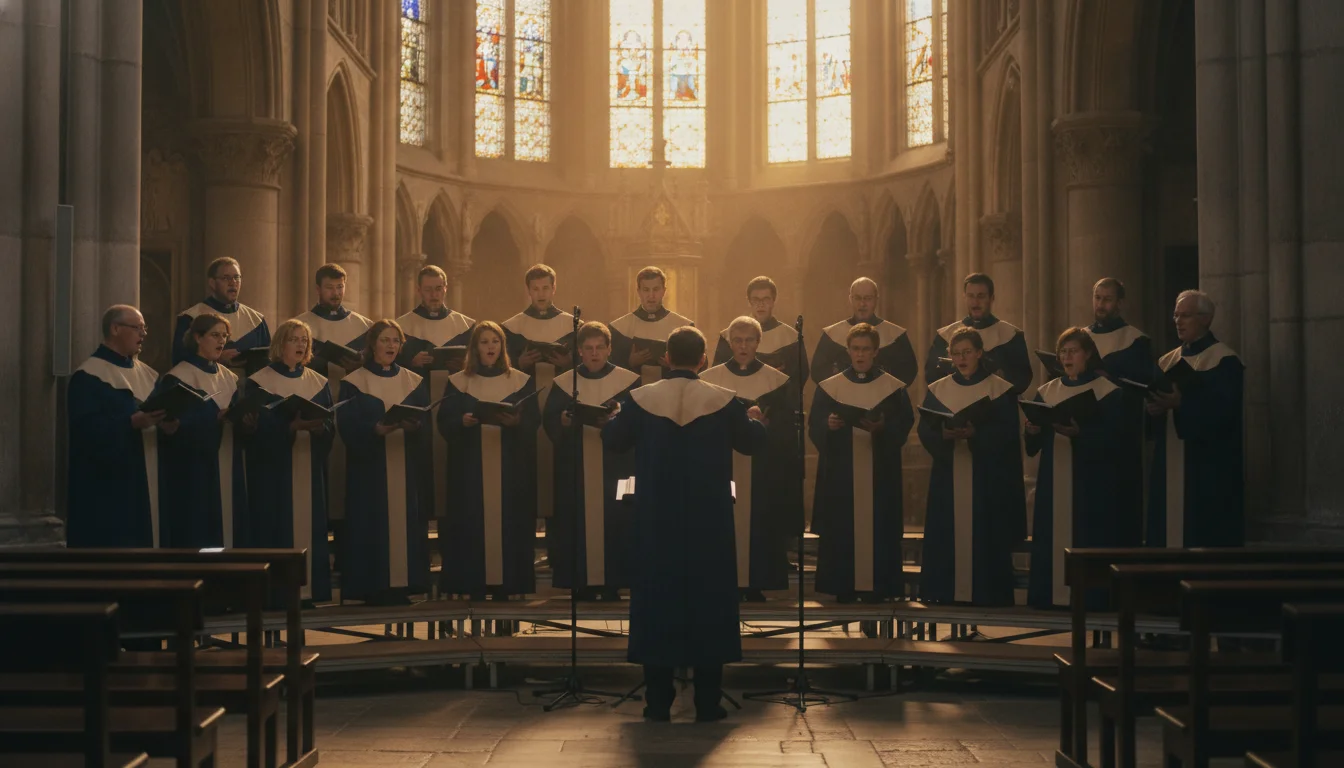
The first choir director who ever asked me to build a Europe tour told me he had been dreaming about it for eleven years and had never once believed it could actually happen. He assumed the cost would land on him, the logistics would eat his evenings, and the whole thing would collapse the first time a singer dropped out. By the time we finished talking, he understood that his own seat was covered, the logistics were mine to carry, and a choir tour is one of the easier groups to fill because the group already exists. It sings together every week.
I have built heritage journeys for more than forty years, and choir tours hold a special place in that work. A choir is not a random collection of travelers you have to recruit from scratch. It is a community with a shared purpose, a rehearsal schedule, and a reason to sing in a cathedral in Prague or a village church in the Rhine valley. This guide is written for you, the director or the leader who organizes the trip, not for the individual singer. I want to walk you through the decisions that are actually yours: what a heritage choir tour looks like, how the free-leader model covers your seat, how to recruit your singers, how the money works, and how to reach fifteen travelers so the whole structure holds.
What a Choir Heritage Tour to Europe Actually Is
A choir heritage tour is two trips braided into one. It is a heritage and faith journey through the churches, cathedrals, and historic sites of Europe, and it is a concert tour where your choir sings in those spaces. The two halves reinforce each other. Your singers do not just visit a Gothic cathedral as tourists. They rehearse in it, they perform in it, and they hear their own voices fill a nave that has carried worship for six hundred years.
The routes I build most often for choirs run through a few regions. The German and Central European route moves through Bach country, the churches of Leipzig and Dresden, and on into Prague, where sacred music is part of the daily life of the city. The Alpine and Italian route pairs the abbeys and basilicas of northern Italy with mountain churches that have remarkable acoustics. The Reformation route follows the story of the church through Wittenberg, Erfurt, and the Netherlands. For Jewish choral and cantorial groups, we build routes through the restored synagogues and Jewish quarters of Central Europe, where the music carries a very different weight of memory.
What ties all of these together is that the singing is not an add-on. It is woven into the itinerary. I coordinate the concert venues, the rehearsal access, the permissions, and the local contacts long before your group arrives. Your job is the music. My job is everything around it.
How Your Seat Gets Covered
Here is the part most directors do not expect. When your choir travels as a group of fifteen or more paying participants, your seat as the leader is covered. That means your flights, your hotel accommodation, your ground transportation, your site entries, and the group meals built into the itinerary. You travel free.
This is not a discount or a loyalty credit. It is a complimentary spot built into how a group booking is costed. A group of fifteen paying travelers generates enough margin within the trip to absorb one more person, and that person is the leader who made the group possible. I explain the full mechanics of this in the guide on how pastors and leaders afford to lead a trip, and the piece on whether the leader really travels free answers the question most directors are quietly asking. For a choir, the model matters even more than usual, because the person organizing the tour is often the same person volunteering hundreds of hours to rehearse it. Covering that seat is the least the structure can do.
If you are building toward a larger choir, the math gets friendlier. A group of twenty-five or thirty sometimes has room for a reduced or complimentary second seat, which many directors use for an accompanist, a spouse, or a co-leader who helps manage the group. The guide on how many people you need for the leader-free benefit lays out where those thresholds sit.
Recruiting Your Singers Is Easier Than You Think
Most group leaders spend their energy worrying about recruitment. Choir directors have an advantage: your group is already assembled, already committed to a shared activity, and already used to showing up on a schedule. You are not recruiting strangers. You are inviting people who sing next to each other every Sunday.
Start with your core. Every choir has a group of singers who will say yes the moment you name a date. Begin there. Announce the trip in rehearsal, not in a bulletin, because the room where they already commit to the music is the room where they will commit to the trip. Then let the tour grow outward. Singers bring spouses. Spouses are welcome travelers even when they do not sing, and they help you reach fifteen faster. Retired members of the congregation who once sang often rejoin for a tour like this. My guide on how to recruit for a church trip goes deeper on the messaging, but for a choir the shortcut is simple: give them a concrete date, a real route, and a venue they can picture themselves singing in.
The single most powerful recruiting tool is a specific concert. When you can stand in front of your choir and say, “We are singing evensong in a cathedral in the Rhine valley next June, here are the eight days, here is the program,” people can decide. Vague interest never fills a group. A named venue and a real date does.
How the Money Works
Choir directors are usually careful with money, often because they are managing a program on a tight church budget, so let me be direct about the numbers.
Each singer pays a per-person price that covers flights, hotels, ground transport, included site entries, and the meals built into the itinerary. Your seat, as the leader, is covered at fifteen paying travelers. That is the core of it. From there, a few things are worth planning around.
Payment plans matter for a choir more than for almost any other group, because your singers span a wide range of ages and incomes. A retiree, a schoolteacher, and a young family should all be able to say yes. I structure trips so travelers can pay in installments over the months before departure, which turns a large number into a manageable monthly one. The guide on setting up a group trip payment plan walks through how that works in practice.
Fundraising is also natural for a choir, because the choir already performs. A benefit concert, a hymn-sing, or a seasonal program can raise real money toward the trip while doubling as rehearsal for the tour repertoire. Many choirs cover a meaningful share of their travel this way. The piece on how to fundraise for a trip has the specific ideas. And when you are ready to see real figures for your group and your dates, you can request a custom quote rather than guessing from a brochure.
One more line item that people forget: insurance. With a group that includes older singers and a significant deposit at stake, coverage is not optional. I cover why and how in the guide on travel insurance for a church group.
Planning the Timeline
For a choir of fifteen to thirty singers, six to nine months of lead time is the sweet spot. That gives your people time to budget, request time off, and commit, and it gives you time to rehearse the tour repertoire properly. Larger choirs, or tours timed around a major church season, want nine to twelve months. The guide on how far ahead to plan breaks the timeline down month by month.
Concert venues add one wrinkle to the timeline that a normal heritage group does not have. The best cathedrals and historic churches book their music calendars far in advance, and some require an audition recording or a program submitted for approval. This is exactly the kind of thing I handle for you, but it is the reason I push choir directors to lock a date earlier rather than later. The more lead time we have, the better the venues we can secure.
To keep yourself organized through all of it, work from a single checklist. My church group planning checklist is built for exactly this, and it keeps the passport deadlines, the payment milestones, and the rehearsal schedule from colliding.
Choosing the Right Operator for a Choir
Not every faith tour operator can run a choir tour well, because a choir tour is a logistics problem most operators never face. You need someone who can secure concert venues, coordinate rehearsal access, handle instrument or robe transport if it comes to that, and build an itinerary with enough margin that a tired choir is not asked to sing after a nine-hour travel day. When you are comparing operators, the guide on how to choose a faith tour operator and the list of questions to ask an operator will help you tell the difference between a company that has done this and one that is improvising.
Ask directly whether they have booked cathedral concerts before. Ask who handles the venue permissions. Ask what happens to the schedule on a performance day. The answers tell you everything.
What Your Real Job Becomes
Here is what I most want you to hear. When the free-leader model takes your personal cost off the table and the operator carries the logistics, your attention is freed for the one thing only you can do. You are not the trip’s accountant or its travel agent. You are the musical and spiritual leader of a group of people who are about to have an experience they will talk about for the rest of their lives.
Your singers will remember the moment the last chord of a hymn hangs in the air of a cathedral built centuries before they were born. They will remember singing evensong in a language they do not speak, in a country they have never seen, next to people they have sung beside for years. That is the trip. Everything else, the coaches and the hotels and the entry tickets, exists to make that moment possible and then get out of its way. Keeping your focus on the music is the whole point of building the trip this way.
FAQ: Leading a Church Choir Tour to Europe
How many singers do I need for the choir director to travel free?
Fifteen paying participants. With fifteen or more, the leader’s full trip is covered, including flights, hotels, ground transportation, and included site entries. Spouses and non-singing travelers count toward the fifteen, which is why choir tours often reach the threshold quickly.
Do we perform in real venues, or just sightsee?
You perform in real venues. A choir heritage tour is built around concerts and services in the cathedrals and historic churches on your route. I coordinate the venues, the rehearsal access, and the permissions before you arrive, so the singing is part of the itinerary, not an afterthought.
How do we afford it if our singers have different budgets?
Through installment payment plans and choir fundraising. Travelers can pay monthly across the months before departure, and a benefit concert or seasonal program can raise a meaningful share of the cost while doubling as rehearsal. Both are covered in the payment plan and fundraising guides linked above.
How far ahead do we need to start?
Six to nine months for a choir of fifteen to thirty, and nine to twelve for larger choirs or tours timed to a church season. Concert venues book their music calendars early and some require a program or audition recording, so locking a date sooner gives us access to better venues.
Can our accompanist or an assistant travel free too?
Not automatically at fifteen, but larger choirs create room. A group of around twenty-five or thirty can sometimes unlock a reduced or complimentary second seat for an accompanist, a co-leader, or a spouse. If that matters to your program, raise it early so we can build toward it.
If you are a choir director who has been carrying this idea for years, the two things that usually stop the trip, the cost of your own seat and the weight of the logistics, are the two things this model is built to remove. You can start with the full group pilgrimage planning guide, or see how the group experience comes together on our group heritage tours page.
Contact us and we will help you build a route, secure the venues, and run the numbers for your choir and your dates.