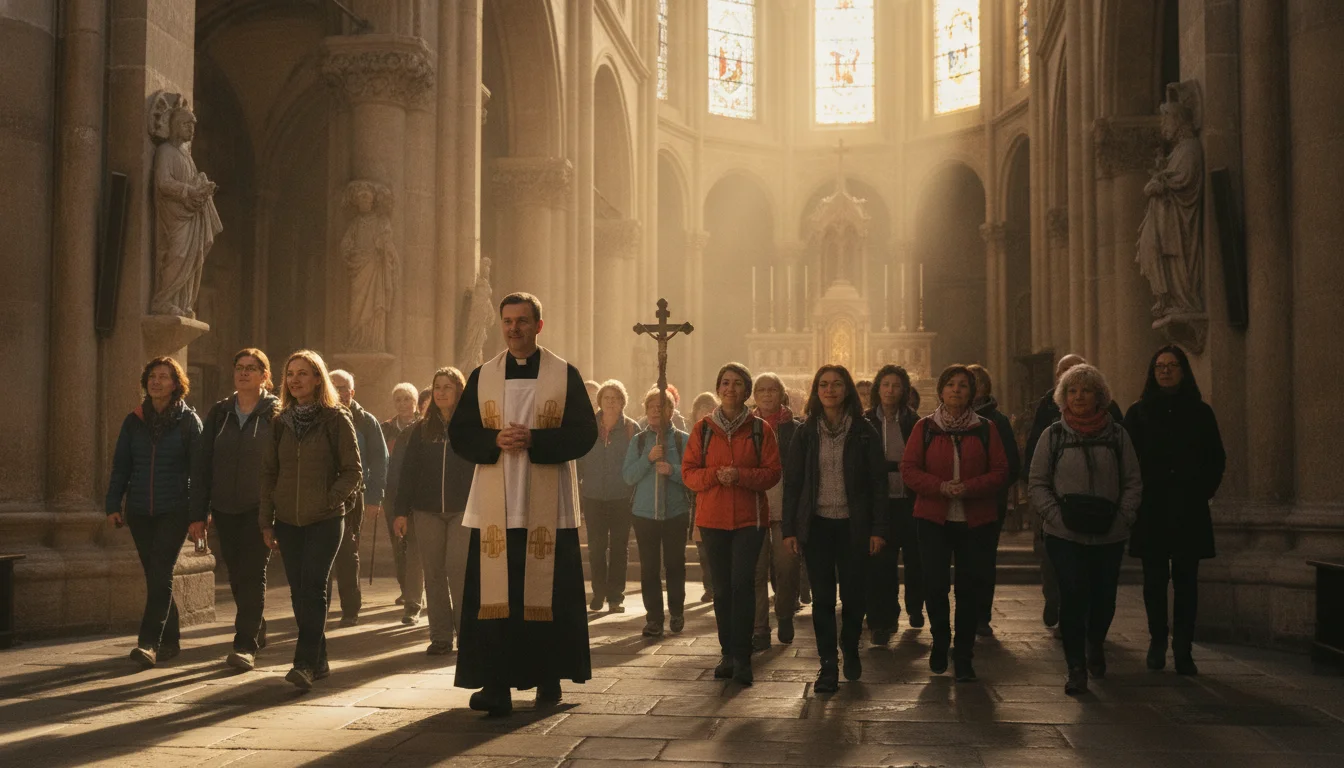
When a parish priest or a pastoral coordinator calls me about a pilgrimage, the first thing I listen for is not the destination. It is the worry underneath the question. Usually it sounds like this: I want to take my people to Rome, or to the Holy Land, or on the footsteps of Paul, but I do not know how to actually run it, who to trust with it, or how to keep it affordable. That worry is the real starting point, and it is the right one, because choosing the operator is the single decision that shapes everything else about your trip.
I have built heritage journeys for more than forty years, for Catholic parishes and dioceses, for Protestant congregations, for synagogues, for church schools. I want to walk you through what a Catholic pilgrimage tour operator for parishes should actually do for you, how to tell a good one from a broker who will hand your group off, and how the economics work so the trip does not fall on your shoulders financially. This is written for you, the organizer. You are the decision-maker, not a passenger.
What a Parish Pilgrimage Operator Should Actually Do
A real operator does more than book flights and hotels. That is the part people see, but it is the smallest part of the job. Here is what you are actually hiring for.
You are hiring someone to design the itinerary around your parish’s spiritual intent, not a generic sightseeing loop. A Marian pilgrimage through Lourdes and Fatima moves differently than a footsteps-of-Paul route through Greece, and both move differently than a Holy Land journey built around the Via Dolorosa and the Sea of Galilee. The route has to serve the prayer, not just the map.
You are hiring someone to handle the logistics that eat a coordinator alive: coaches, licensed local guides, site reservations, Mass locations and permissions, kosher or dietary needs, hotel blocks, and the daily pacing that keeps an older group healthy and a younger group engaged. When this is done well, it is invisible. When it is done badly, you spend your pilgrimage on the phone instead of with your people.
And you are hiring someone who carries the trip financially in a way that protects you. That is where the group model comes in, and it is worth understanding before you talk to anyone. Our full guide to planning a group pilgrimage lays out the whole process end to end, and I will pull the parish-specific pieces into this article.
The Free-Leader Model, and Why It Changes the Decision
Here is the part that takes the weight off your shoulders. With fifteen or more paying travelers, the group leader travels free. That means your seat, the organizer’s seat, is covered: flights, hotel, ground transportation, site entries, and the group meals built into the itinerary.
This is not a discount or a loyalty credit. It is built into the economics of a group booking. Fifteen paying pilgrims generate enough margin inside the trip’s costing to carry one additional traveler, and that traveler is you, because you are the reason the group exists. For a parish, that reframes the entire conversation with your pastor, your finance council, or your bishop. You are not asking the parish to fund an expensive trip for the priest or the coordinator. You are organizing a journey your parishioners pay into, and your participation is part of how the structure works.
If you want the fuller breakdown of how leaders cover their own participation, how pastors afford to lead a trip walks through it, and does the pastor travel free answers the question directly. For the exact threshold math, how many people you need for a free leader is the one to read.
Larger parishes ask about a second free seat, usually for a deacon, a co-leader, or a spouse. That is not automatic at fifteen, but groups of around twenty-five or thirty create room for it. If you are building toward a bigger pilgrimage, raise it early so we can structure toward it.
Recruiting a Parish Group That Reaches Fifteen
This is the part most coordinators worry about, so let me be practical. You do not need to fill a bus from a standing start. You need to start with your core.
Every pilgrimage I have run began with a small group of people who already wanted to go. Find the eight or ten in your parish who lean in the moment you mention it: the couple who has always wanted to see Rome, the family who lost someone and wants to pray at a shrine, the RCIA group, the Bible study, the parish council members. Let them bring others. Fifteen is reachable when you build outward from the committed rather than announcing to the whole bulletin and hoping.
Give people a real journey on real dates. Vague interest never fills a group. “We might do a Holy Land trip sometime” converts nobody. “We are walking the footsteps of Paul next April, ten days, here is the route and here is the cost” lets a family actually decide. Tie the pilgrimage to something your parish is living through: a jubilee year, a patronal feast, a preaching series, a sacramental milestone. The tighter the reason, the faster the group firms up. For the recruiting playbook in full, see how to recruit for a church trip, and if cost is the sticking point, group trip payment plans and how to fundraise for a trip both help people say yes.
Catholic Diocese Pilgrimage Coordinators: Planning at Scale
If you are coordinating at the diocesan level rather than for a single parish, the model is the same but the scale is different, and that works in your favor. A diocese can fill multiple departures a year, group parishes together, or run a single large pilgrimage of fifty to a hundred with a bishop or vicar leading.
At that scale, a few things matter more. You want an operator who can hold hotel blocks and coach capacity across several parishes without the plan collapsing when numbers shift. You want clear per-parish accounting so each community sees its own travelers and payments. And you want the free-leader math to work in your favor across the whole group, which at diocesan numbers it comfortably does, often opening room for clergy co-leaders. If you are coordinating that kind of pilgrimage, how to organize a church trip covers the operational spine, and it is worth starting the conversation nine to twelve months out.
Catholic School Pilgrimage Planning
School pilgrimages, whether a Catholic high school taking students to Rome for a jubilee or a university chaplaincy running a footsteps-of-Paul study trip, have their own shape. The pacing is different, the supervision and safeguarding requirements are real, and the itinerary usually needs an educational spine that ties to what students are studying.
The good news for a school is that groups fill more predictably than parishes, because you are recruiting from a defined population with a calendar. That makes reaching fifteen, and the free chaperone seat that comes with it, very achievable. What you need from the operator is age-appropriate pacing, guides who can teach and not just narrate, and airtight logistics so teachers can supervise instead of troubleshoot. Our group pilgrimage planning guide and the planning checklist both apply cleanly to a school context.
Planning Across Denominations: One Model, Many Traditions
Most of what I have described is not unique to Catholic parishes. The free-leader structure and the recruiting logic work the same way across traditions, and I have run journeys for most of them. A few denomination-specific notes, because the details differ even when the model does not.
For Anglican parish pilgrimage planning, the itinerary often blends a Holy Land or footsteps-of-Paul route with cathedral and heritage stops, and clergy usually want space built in for Eucharist at meaningful sites. The threshold and free-incumbent seat work exactly as they do for a Catholic parish.
For an Orthodox church pilgrimage group, timing around Pascha and the fasting seasons drives everything, and access to specific monasteries and shrines needs to be arranged early with local operators who know the communities. Build in more lead time, nine to twelve months, when the trip is timed to the calendar.
For a Presbyterian church heritage tour, the emphasis often leans toward the biblical and historical geography rather than shrines, and toward Reformation heritage in Europe. The recruiting core tends to form around adult study groups, which makes reaching fifteen straightforward.
For Adventist heritage tour planning, dietary provision and Sabbath observance shape the daily itinerary directly, and a good operator builds the schedule around them rather than treating them as exceptions. Say this up front and it becomes part of the design, not a compromise.
For Lutheran Reformation pilgrimage planning, the route usually runs through Wittenberg, Eisenach, Erfurt, and the Luther sites in Germany, often paired with a broader European heritage arc. These trips recruit well around anniversary years and confirmation cohorts.
Whatever your tradition, the operator’s job is to serve your theology and your practice, not flatten them into a generic tour. When you are evaluating candidates, the questions to ask an operator and how to choose a faith tour operator will help you separate the ones who listen from the ones who sell.
What Your Job Becomes Once the Operator Handles the Rest
Here is what I most want a coordinator to hear. When the operator carries the logistics and the free-leader model takes your personal cost off the table, your attention is freed for the only thing that actually needs you.
You are not the trip’s accountant or its travel agent. You are its shepherd. Your job on pilgrimage is to lead the prayer at the shrine, to say Mass at the site your community traveled to reach, to be present with the family who came to grieve and the young person seeing the faith made physical for the first time. Everything else should be invisible. That is what a good operator is for, and it is the real test of whether you have chosen the right one.
FAQ: Choosing a Catholic Pilgrimage Operator for Your Parish
What does a Catholic pilgrimage tour operator for parishes actually provide?
A full operator designs the itinerary around your parish’s spiritual intent, arranges flights, hotels, coaches, licensed guides, Mass locations, and site access, handles dietary and accessibility needs, and carries the trip financially through the group model. You focus on leading your people, not managing logistics.
How many parishioners do I need for the group leader to travel free?
Fifteen paying travelers. At that point the group leader’s full trip is covered, including flights, hotels, ground transportation, and site entries. Larger groups of around twenty-five or thirty can create room for a second seat for a deacon, co-leader, or spouse.
How far ahead should our parish start planning?
Six to nine months for a group of fifteen to thirty. Diocesan pilgrimages, larger groups, or trips timed to a holy season or feast want nine to twelve months. The lead time is mostly recruiting runway. See how far ahead to plan for the detail.
Can you run pilgrimages for non-Catholic congregations too?
Yes. The same model serves Anglican, Orthodox, Presbyterian, Lutheran, and Adventist groups, as well as synagogues. The structure is identical. The itinerary, timing, and observances are built to each tradition rather than treated as a generic tour.
What if we cannot reach fifteen people?
We run trips for ten to fourteen, so the pilgrimage can still happen. It simply will not include the free-leader benefit, since the economics that fund the complimentary seat begin at fifteen. Many parish groups that start at twelve reach fifteen before departure once the dates and route become real.
If you are weighing a pilgrimage for your parish, diocese, or school, the operator you choose is the decision that carries the rest. You can see how the group experience works on our group heritage tours page.
Contact us and we will help you run the numbers for your community and your dates.