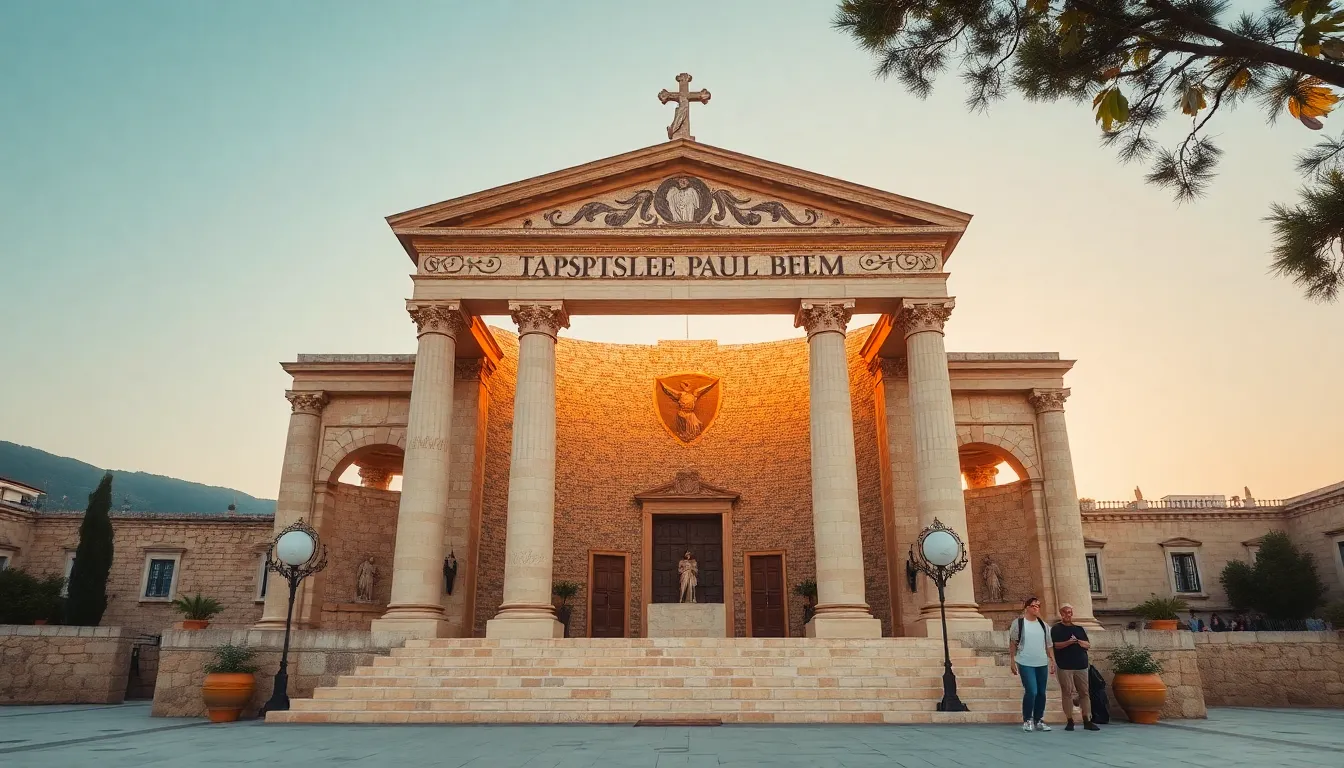
Veria is the stop that almost gets cut. Every time I plan a northern Greece itinerary with a pastor, there is a moment where the schedule is tight and someone suggests dropping Berea to gain an afternoon. I always push back, and here is why. Berea is the one place in Acts where Paul praises the people for how they listened. They “received the word with all readiness of mind, and searched the scriptures daily, whether those things were so.” For a congregation that values study, that values testing what they hear against the text, Berea is not a footnote. It is the heart of the matter. I have watched groups go quiet standing at the monument here, because they recognize themselves in the Bereans.
Let me walk you through Veria, the modern city that sits on ancient Berea, and why it deserves more than the half hour the guidebooks give it.
Berea in the Bible
The story is in Acts 17. Paul and Silas had just been run out of Thessaloniki after an uproar, and they came south to Berea. They went, as Paul always did first, to the synagogue. And the Jews of Berea responded differently than almost anyone else on the journey. Luke records that they were “more noble” than those in Thessaloniki, because they received the message eagerly but then checked it against scripture for themselves, day after day.
Many of them believed, Jews and Greeks alike. Then troublemakers came down from Thessaloniki, stirred up the crowds, and Paul was sent on to Athens while Silas and Timothy stayed behind. Short visit, lasting lesson.
For any group that prizes honest inquiry, Berea is sacred ground. The Bereans did not believe because Paul was persuasive. They believed because they did the work, opened the text, and found it true. I tell my groups: this is the trip’s quiet challenge. Are we Thessalonians or are we Bereans? Do we test what we are told?
The Bema of the Apostle Paul
The central site in Veria is the Bema of the Apostle Paul, a monument marking the traditional spot where Paul preached. It is not an ancient ruin. It is a modern memorial, built and later expanded, with steps, columns, and bright mosaics depicting Paul, his ministry, and the vision of the man of Macedonia that brought him to Greece in the first place.
Some leaders are disappointed that it is not original stone. I think that misses the point. The Bema is a place the city built to honor what happened here, and it is a fitting spot to gather your group, read Acts 17 aloud, and talk about what it means to search the scriptures daily. I often linger here longer than the itinerary suggests. The lesson of Berea is one most congregations want to carry home, and this is where you teach it. I cover how Berea fits the larger journey in our guide to the footsteps of Paul in Greece.
The Old Jewish Quarter
Here is the part of Veria most Christian groups never see, and it is one of the most rewarding corners of the whole north. Berea had a Jewish community in Paul’s day, the very synagogue where he preached, and that Jewish presence continued for nearly two thousand years.
The old Jewish quarter, called Barbouta, sits down by the river in the lower town. It is a preserved neighborhood of narrow lanes and traditional houses, and at its center stands the old synagogue, dating in its current form to the nineteenth century but on a site of far older Jewish worship. The community here was largely Romaniote, Greek-speaking Jews whose presence in Greece goes back to antiquity, later joined by Sephardim.
The Jewish community of Veria was almost entirely destroyed in the Holocaust, deported in 1943. The synagogue and the quarter survive as a memorial to a presence that lasted millennia. For a Jewish or interfaith group, this is deeply moving ground. For a Christian group, it closes a loop: the synagogue Paul entered was not an abstraction. There was a Jewish community in this city continuously, in some form, from before Paul until the twentieth century. The Christian and Jewish stories of Berea are one story, and Barbouta is where you feel it. I treat the broader picture in our Jewish heritage in Greece guide.
The Orthodox and Ottoman Layers
Veria has more layers still. The old town is dense with Byzantine and post-Byzantine churches, more than forty of them, many small and tucked into the lanes, some holding frescoes worth seeking out. The city was an important Orthodox center for centuries, and walking the upper town you pass through the Christian Greece that grew up long after Paul.
There is also an Ottoman layer, mosques and old houses from the centuries of Turkish rule, and the overall effect is a city where you can read four faiths and four eras in a single afternoon’s walk: ancient Greek, Jewish, Byzantine Orthodox, and Ottoman. Few cities of this size hold so much. That density is exactly what makes Veria a richer stop than its reputation suggests.
How to Spend a Day in Veria
Veria is about an hour and a quarter southwest of Thessaloniki, which makes it an easy stop on the route between the northern Pauline cities and the journey south. Here is how I structure it:
- Start at the Bema of Paul. Gather the group, read Acts 17, and teach the lesson of the Bereans. Give it real time.
- Walk down to Barbouta. See the old synagogue and the Jewish quarter by the river. This is the stop that surprises people.
- Wander the old town. Take in a few of the Byzantine churches and the layered streets of the upper city.
- Lunch in town. Veria is a real working city, not a tourist trap, and the food is honest and good.
A half day covers it well; a full day lets you breathe. Veria pairs naturally with Thessaloniki and the rest of the north, and our heritage travel guide for Greece shows how it fits the larger route.
One practical note as you plan: with Heritage Tours, the group leader travels free when you bring fifteen or more participants. For a pastor or educator building the northern route, that changes the math early, and it is worth knowing from the start.
FAQ: Visiting Veria (Berea)
Why is Berea important in the Bible?
Berea is where, in Acts 17, the local Jews received Paul’s message eagerly but then searched the scriptures daily to test whether it was true. Luke calls them “more noble” for it. For congregations that value honest study and testing teaching against the text, Berea is one of the most meaningful stops in Greece. It models a kind of faithful inquiry that many groups want to carry home.
What is the Bema of the Apostle Paul?
It is a modern monument in Veria marking the traditional spot where Paul preached, with steps, columns, and mosaics depicting his ministry. It is not an ancient ruin, but it is a fitting place to gather a group, read Acts 17 aloud, and teach the lesson of the Bereans. Many leaders find it one of the most natural teaching spots on the whole northern route.
Can I see Jewish heritage in Veria?
Yes, and it is one of the city’s best-kept secrets. The old Jewish quarter, Barbouta, sits by the river in the lower town, with a preserved synagogue on a site of ancient Jewish worship. The community, largely Romaniote, lasted nearly two thousand years until it was destroyed in the Holocaust. For Jewish, Christian, and interfaith groups alike, it is moving and important ground.
How long should a group spend in Veria?
A half day covers the essentials: the Bema of Paul, the Jewish quarter, and a walk through the old town. A full day lets you take it slowly, see more of the Byzantine churches, and have a proper lunch in town. Either way, I would resist the temptation to cut Veria to a quick photo stop. It rewards time.
Where does Veria fit in a Greece itinerary?
It sits about an hour and a quarter from Thessaloniki, making it a natural stop between the northern Pauline cities and the journey south toward Athens. Most groups visit Veria the same day they travel between Thessaloniki and Philippi or as they begin heading south. It folds cleanly into the standard northern route.
If Veria sounds like the kind of stop that would give your group both a powerful teaching moment and a layered, surprising city, I would love to help you keep it on the itinerary rather than cut it. The Bereans set a standard worth standing in front of. You can see how we build these journeys on our Greece heritage page or learn how the group experience works on our group heritage tours page.
Contact us whenever you are ready to start planning.