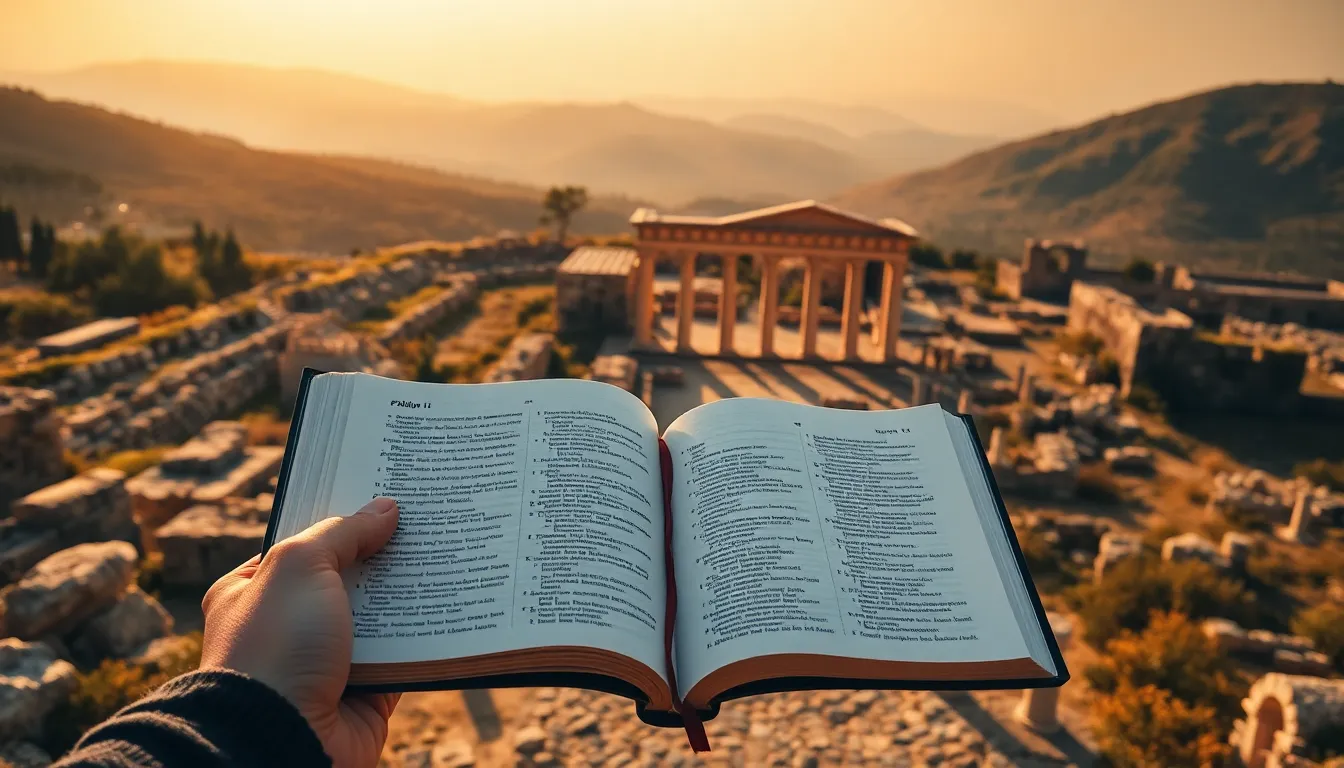
There is a particular skill to teaching the Bible while standing inside it, and most leaders discover they need it about an hour into their first trip. At home you teach Acts from a pulpit, with notes, in a room you control. On the road you are teaching it in the wind at Philippi, with a coach waiting and the afternoon light going, and the text is no longer an abstraction because the river is right there. It is a different craft. After leading these journeys for more than forty years, I have learned that the leaders who do it best are not the most polished. They are the ones who let the place carry the lesson and get out of its way.
So this is a working guide. Site by site through Pauline Greece, what to read, where to read it, and how to teach it when the ground is doing half the work for you.
A Few Principles Before You Open the Book
Teaching Acts on the road follows a few rules that do not apply in a classroom.
Read the passage at the place, not on the bus. The temptation is to brief everyone on the coach and then just look at the ruins. Resist it. The power is in reading the words while standing in the spot. Save the passage for the site.
Read less, not more. A single focused passage read aloud where it happened beats a long teaching session. The site is already preaching. Your job is to point, not to fill the air.
Let your people read. Assign passages in advance and let members of your group read aloud. The words land differently coming from within the community, and it draws in the quiet ones. I cover how to set this up in our spiritual preparation guide.
Leave silence. After the reading, do not rush to explain. Let the group stand in it. The best moments on these trips happen in the pause, not the commentary.
Philippi: Acts 16
Begin here, because the journey began here. Philippi is the first place in Europe the gospel was preached and the first European church planted.
At the river Gangites, outside the ancient city, read Acts 16:11 to 15, Lydia and the place of prayer where the women had gathered. This is where you tell your group they are standing at a genuine beginning. Many leaders hold a short service or a baptism renewal at the modern baptistery nearby. I have watched people weep at that riverside, and it is almost always after the reading, not before.
Then move to the traditional site of the prison and read Acts 16:25 to 34, Paul and Silas singing at midnight, the earthquake, the jailer’s question. The teaching point that lands here is praise in the dark. Your group is standing where it happened. You barely need to say more.
Thessaloniki: Acts 17:1 to 9
Thessaloniki is a living, busy modern city, not an archaeological park, so the teaching shifts. There is no single ruin to gather at the way there is at Philippi. Read Acts 17:1 to 9 somewhere the group can sit, near the Roman forum or by one of the Byzantine churches, the synagogue, the three Sabbaths, the uproar that ran Paul out of town.
The lesson here is that Paul preached to real communities in real, crowded cities, not in a vacuum. First and Second Thessalonians were written to people who lived here. Thessaloniki is also one of the most important Jewish heritage cities in the world, which makes it a natural place to widen the conversation if your group is interested in both stories. Our interfaith co-leading guide goes into how to hold both traditions in one trip.
Berea: Acts 17:10 to 12
Berea, modern Veria, gets skipped on rushed itineraries, and I think that is a real loss. Read Acts 17:10 to 12, the Bereans who “received the word with all readiness of mind, and searched the scriptures daily.”
There is a monument here, the Bema of the Apostle Paul, with mosaics of his ministry, and it is the right place to teach on discernment. The Berean lesson, that we test what we hear against scripture, is one most congregations want to take home, so I linger here longer than the guidebooks suggest. This is a site where the teaching matters more than the stones, so give it the time.
Athens: Acts 17:16 to 34
Then Athens, and the Areopagus, and one of the most famous sermons ever preached. Stand on Mars Hill, the Acropolis rising above you, and read Acts 17:16 to 34, Paul among the philosophers, the altar to an unknown god, the turn toward the God who made the world.
The teaching here almost designs itself. Your group is surrounded by the same temples Paul saw, standing where he stood, and they grasp in their bodies what he was up against and what he was offering. The contrast between the Parthenon and Paul’s message is the lesson. Let the setting make it.
A practical note. The rock of the Areopagus is smooth and slippery, especially for older members. Read from a stable spot, take your time, and use the stairs. A teaching moment is not worth a fall.
Corinth: Acts 18:1 to 17
Corinth is where you end, and it is the right ending. Paul spent eighteen months here, longer than anywhere else in Greece. Read Acts 18:1 to 17, the tentmaking, the year and a half of teaching, and Paul brought before the proconsul Gallio at the bema.
That bema is still there, and so is the detail about Gallio, which helps date the whole New Testament timeline, a point your more historically minded travelers will appreciate. Then read a passage from First Corinthians on site. In that divided, distracted, cosmopolitan city, the letter’s concerns make immediate sense. Ending at Corinth gives your group the feeling of completion, of having followed the apostle from his first European convert to a mature, complicated church. The full Pauline route guide walks the geography in more detail if you want to map the days.
Handling the Hard Parts of Teaching on the Move
A few honest cautions from years of doing this.
Watch your energy budget. You cannot teach with full intensity at every stop or you will exhaust both yourself and your group. Pick the two or three sites where you go deep, Philippi, Berea, Athens usually, and let the others breathe.
Mind the logistics pressing on you. There is always a coach, a lunch reservation, a closing time. Build your teaching to fit the window you actually have rather than the one you wish you had. A guide who knows the sites can tell you in advance how much time each stop really allows.
Let go of comprehensiveness. You will not teach all of Acts, and you should not try. The road version of teaching is about a few deep encounters, not coverage. The group that reads three passages well and stands in three places fully comes home more changed than the group that was lectured at every ruin.
FAQ: Teaching Acts at the Sites in Greece
What passages should I read at each site in Greece?
Acts 16 at Philippi, the river and the prison. Acts 17:1 to 9 at Thessaloniki, 17:10 to 12 at Berea, and 17:16 to 34 at Athens for the Areopagus sermon. Acts 18:1 to 17 at Corinth, paired with a passage from First Corinthians read on site. Reading them in this order follows the journey as Acts records it.
Should I teach on the bus or at the site?
At the site, almost always. The power of teaching Acts in Greece comes from reading the words where the events happened. Brief logistics on the coach if you must, but save the actual passage for the spot. The place does half the teaching for you.
How do I teach effectively when time is short at each stop?
Read less and go deeper at fewer sites. Pick two or three places to teach with full attention and let the others be quieter. A single focused passage read aloud where it happened lands harder than a long talk, and it respects the schedule.
Can my group members do some of the teaching?
Yes, and they should. Assign passages in advance and let members read aloud at each site. The words carry differently coming from within the community, and it draws in the quieter travelers. It is one of the most effective things a leader can set up before the trip.
Which site is best for teaching on discernment?
Berea. The Bereans “searched the scriptures daily,” and the monument there, the Bema of the Apostle Paul, gives you a natural setting to teach on testing what you hear against scripture. It is a site where the lesson outweighs the ruins, so it rewards leaders who slow down and give it time.
Teaching Acts where it happened is the heart of a Pauline trip, and it is the part your people will talk about for years. If you are shaping a journey for your congregation, you can see the full route on our Greece heritage page and how the group experience works on our group heritage tours page.
Contact us and we will build the itinerary around the sites you most want to teach.