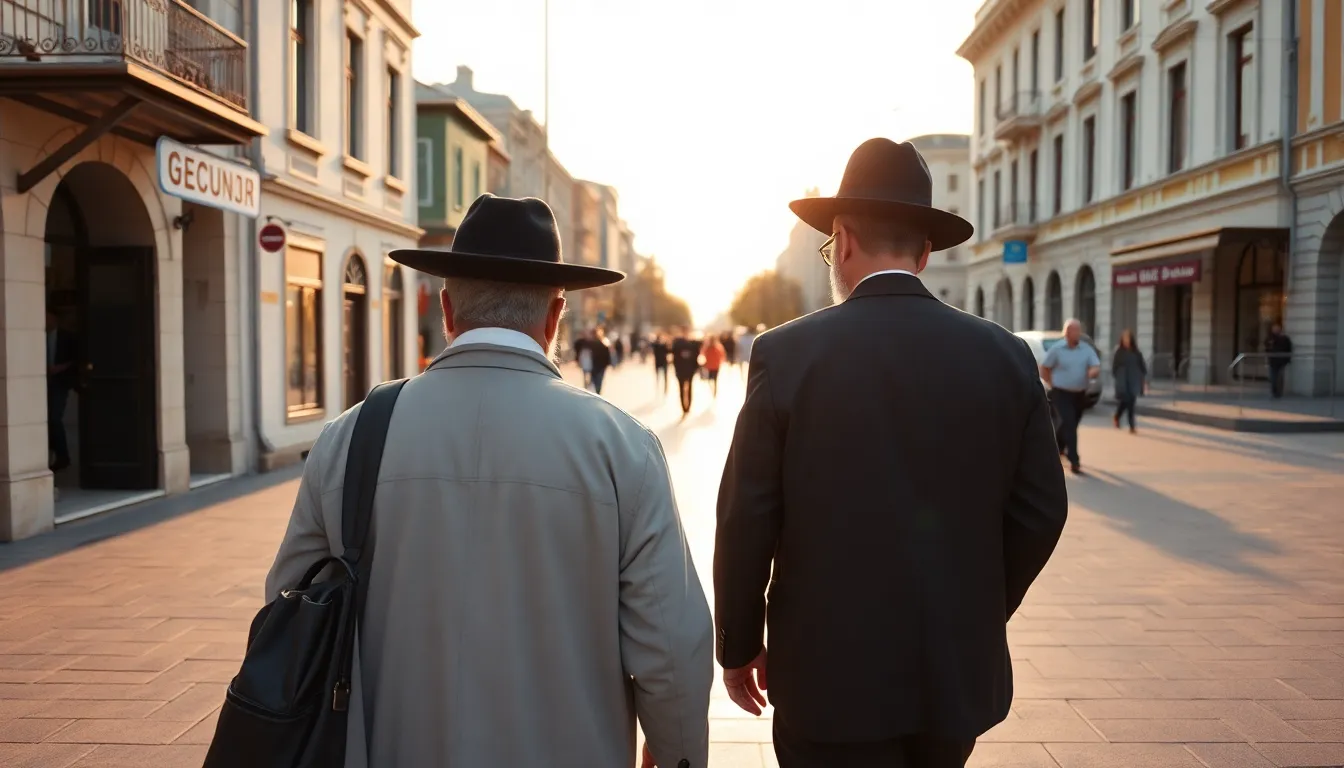
The first interfaith group I took to Greece almost did not happen, because both leaders assumed the trip would have to favor one tradition over the other. The rabbi worried his people would spend the week as guests on a Christian pilgrimage. The pastor worried the reverse. They were both relieved, and a little surprised, to learn that Greece is one of the few places where neither tradition has to give way. The two stories live in the same cities. In Thessaloniki they share the same streets. A trip built well lets both communities walk their own path and meet in the middle.
I have spent more than forty years building heritage journeys, and interfaith trips are among the most rewarding I run, precisely because they are hard to do anywhere else. Greece makes them possible. This is a guide to co-leading one well, written for the rabbi and the pastor who are thinking about it together.
Why Greece Works for Interfaith Travel
Greece holds two profound heritage journeys, one Jewish and one Christian, and they intersect in the same geography.
For a Jewish community, Greece means the Sephardic civilization that once dominated the eastern Mediterranean, the Romaniote tradition that predates it by a thousand years, and the near-total loss of both in the Holocaust. Thessaloniki, Rhodes, and Ioannina are the anchors.
For a Christian community, Greece means Paul’s missionary route. Philippi, Thessaloniki, Berea, Athens, Corinth, the cities where the early church took root and where the most studied epistles were addressed.
Notice that Thessaloniki appears in both lists. That is the key to the whole trip. Most heritage destinations force an interfaith group to choose whose story they are telling. Greece does not. The two traditions overlap in real places, which means a co-led trip is not a compromise. It is a genuinely shared journey.
Thessaloniki Is the Heart of the Interfaith Trip
If you take one thing from this guide, take this: Thessaloniki is where an interfaith Greece trip becomes more than two trips running in parallel.
Paul came to Thessaloniki and preached in the synagogue. The Jewish community he engaged with had already been there for generations. He wrote two epistles to the church he planted. Centuries later, the Sephardic Jewish community of Thessaloniki grew into one of the largest and most significant in the world, the city once known as the Jerusalem of the Balkans, before it was destroyed in the Holocaust.
So in one city, a Christian group stands where Paul preached and a Jewish group stands in one of the great centers of the Diaspora, and they are standing in the same place. When both communities visit Thessaloniki together, the conversation that emerges is the thing you cannot get anywhere else. I have watched a rabbi and a pastor teach back to back at the same site, one on the Sephardic world and one on Paul’s letters, and the group hold both without strain. That is the trip worth building.
How to Divide and Share the Leading
Co-leading is its own discipline. Here is what I have seen work.
Agree on Roles Before You Leave
Decide in advance who leads where. At the Jewish Museum and the Holocaust memorial in Thessaloniki, the rabbi leads. At Philippi and the Areopagus, the pastor leads. Where the site belongs clearly to one tradition, that leader carries it and the other becomes a participant. This is not awkward. It models exactly the respect the trip is built on.
Build Shared Moments on Purpose
The parallel sites are the spine, but the shared moments are the soul. Plan a few points where both communities gather without one tradition leading. A meal together after Thessaloniki. A conversation, guided gently, about what each group saw that day. A moment of shared silence at a place that means something to both. These do not happen on their own. Co-leaders schedule them.
Keep the Pace Honest for Both Stories
The most common mistake is letting one tradition’s itinerary dominate the days and bolting the other on as a side visit. Resist it. If you are doing both the Pauline route and the Jewish heritage route, give each real time. That may mean a longer trip. Our pastors and rabbis guide lays out both routes, and the Pauline footsteps guide details the Christian sites if you want to balance the days carefully.
Beyond Thessaloniki: Building the Rest of the Route
Thessaloniki anchors the trip, but it is not the whole trip.
For the Jewish side, Rhodes adds the island dimension, La Juderia and the Kahal Shalom Synagogue, the oldest in Greece still in use. Ioannina, in the northwestern mountains, is where the Romaniote tradition has survived for over two thousand years. It takes effort to reach. It is worth it.
For the Christian side, the route runs from Philippi in the north down through Berea to Athens and Corinth, following Paul’s second journey in the order Acts records it.
A co-led trip does not have to cover all of this. The art is choosing. Many interfaith groups anchor in Thessaloniki, add one strong Jewish site like Rhodes or Ioannina, and one strong stretch of the Pauline route, rather than racing to see everything. A focused trip that honors both stories beats an exhausting one that shortchanges both.
The Honest Challenges, and How to Hold Them
I will not pretend interfaith travel is effortless. A few realities to plan around.
The emotional weight is uneven across sites. A Holocaust memorial and a triumphant early-church site do not carry the same feeling, and your two communities will move through the days at different emotional pitches. Name this beforehand. Let each group have its harder moments without expecting the other to feel the same thing.
Dietary and observance needs take coordination. Kosher provision, Shabbat, and prayer times are real planning constraints, not afterthoughts. A good operator handles these in advance so they never become a source of friction on the road. Raise them early.
The leaders set the tone. If the rabbi and the pastor model genuine respect and real friendship, the group follows. If there is tension between the co-leaders, the group feels it immediately. The single best thing two co-leaders can do is build their own relationship before the trip, so they arrive as partners and not as two leaders sharing a coach.
What Makes These Trips Worth the Effort
For all the coordination, interfaith heritage trips to Greece produce something I have rarely seen elsewhere. Two communities, side by side, each seeing their own tradition reflected in the same cities, and then talking about it together. The dialogue that comes out of a shared day in Thessaloniki is deeper than any dialogue arranged around a conference table, because it grows out of a place both communities now hold in common.
If your two congregations are ready to consider it, the free group-leader benefit applies here too. With fifteen or more participants, the group leader travels free, and you can read how that math works in our group-leader economics guide.
FAQ: Co-Leading an Interfaith Trip to Greece
Can a Jewish and a Christian group really travel Greece together?
Yes, and Greece is one of the few places where it works without either tradition giving way. The Jewish and Christian heritage stories intersect in the same cities, above all Thessaloniki, so a co-led trip becomes a genuinely shared journey rather than a compromise between two itineraries.
Why is Thessaloniki so important for an interfaith trip?
Thessaloniki holds both stories at once. Paul preached in the synagogue here and wrote two epistles to the church he planted, and the city later became one of the great centers of Sephardic Jewish life, the Jerusalem of the Balkans. Both communities can stand in their own heritage in the same place, which is what makes the shared conversation so rich.
How should a rabbi and pastor divide the leading?
Agree on roles before departure. The leader whose tradition owns a site carries it while the other participates, so the rabbi leads at the Holocaust memorial and the pastor leads at Philippi and the Areopagus. Then schedule deliberate shared moments, a meal, a guided conversation, a silence, where neither tradition leads.
Does an interfaith trip need to be longer?
Often, yes. Giving both the Jewish heritage route and the Pauline route honest time usually means more days than a single-tradition trip. Many groups instead anchor in Thessaloniki and choose one strong site from each story rather than racing to see everything. A focused trip that honors both beats an exhausting one that shortchanges both.
How are dietary and observance needs handled?
They are planned in advance, not improvised. Kosher provision, Shabbat, and prayer times are real constraints that a good operator coordinates before the trip so they never cause friction on the road. Raise them early in the planning so the itinerary is built around them.
If two communities you serve are ready to walk Greece together, I would be glad to help you and your co-leader shape it. You can see how the group experience works on our group heritage tours page and the full route on our Greece heritage page.
Contact us when you and your co-leader are ready to start planning.