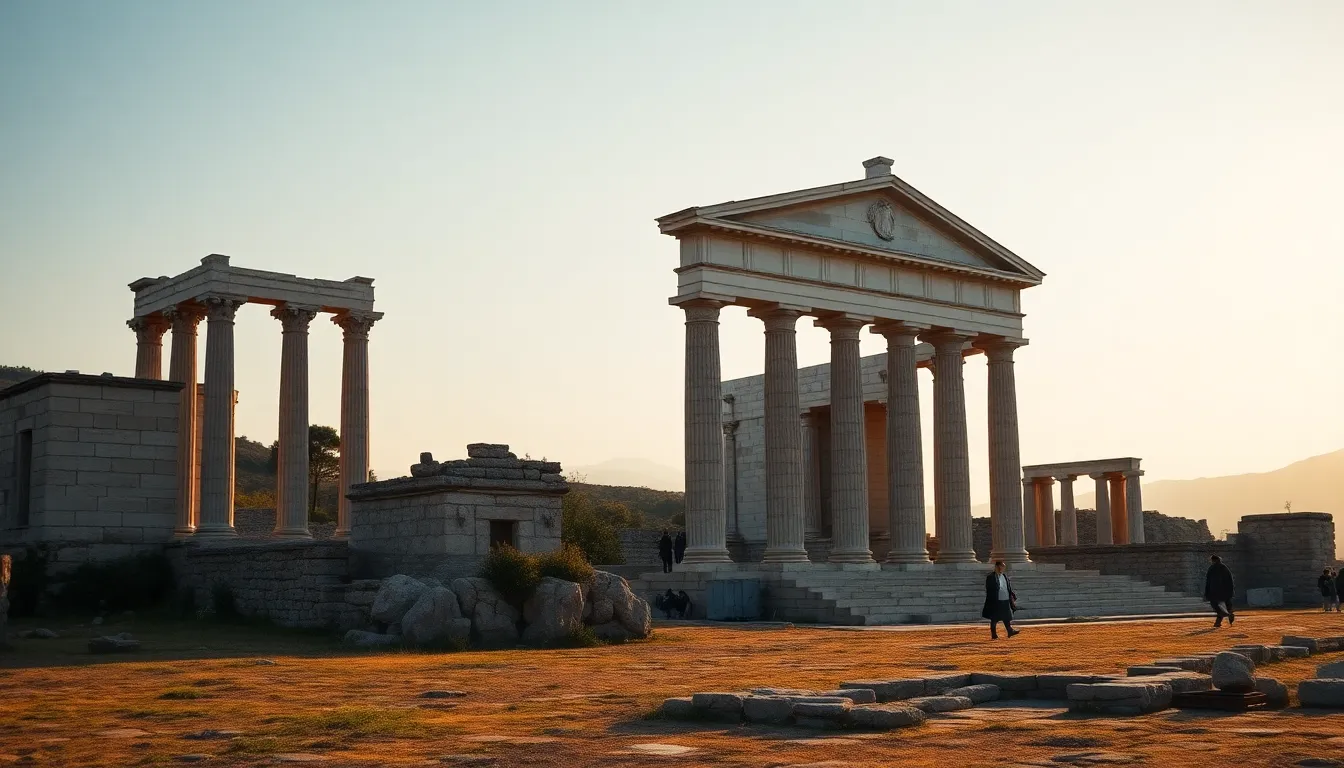
I always begin a Pauline journey at Philippi, and I do it on purpose. There is a moment, usually mid-morning, when the group is standing in the old forum and someone realizes what this ground is. This is where the gospel first crossed into Europe. Everything that followed, every church on every continent that traces its line back through the West, has a thread that runs through this quiet field in northern Greece. When that lands, the trip changes. People stop taking photos and start paying attention.
Philippi is not a famous tourist name the way Athens is. That is part of why it moves people. It is a working archaeological site set in farmland near modern Kavala, with extensive ruins and very little noise. Let me walk you through why it belongs at the start of any heritage journey through Greece, and what your group will actually see.
Why Philippi Is the Beginning of the European Church
The story is in Acts 16. Paul, on his second missionary journey, had a vision at Troas of a man of Macedonia pleading, “Come over to Macedonia and help us.” He took it as a call, crossed the Aegean, landed at the port of Neapolis (modern Kavala), and walked inland to Philippi, “the leading city of that district of Macedonia, a Roman colony.” It was the first city in Europe where he preached. The church that formed here was the first European congregation.
That is not a small claim, and standing on the site makes it concrete. Philippi was a proud Roman colony, settled with veterans, governed by Roman law, oriented toward Rome itself. The believers here later received Paul’s letter to the Philippians, the warmest and most affectionate of all his letters, written from prison and full of joy. When your group reads “I thank my God every time I remember you” on the ground where that church began, the affection in the letter becomes personal.
I tell groups that Philippi gives the whole trip a starting line. Whatever else you see in Greece, you began where Europe’s faith began.
The Forum, the Basilicas, and the Via Egnatia
The ruins at Philippi are some of the most complete in northern Greece. At the center is the Roman forum, the civic heart of the colony, with the bases of public buildings, the speaker’s platform, and the paving still in place. Walking it, you get a real sense of the ordered, official Roman town Paul entered.
Cutting through the site is the Via Egnatia, the great Roman road that ran from the Adriatic coast across to Byzantium. Philippi sat directly on it. This was the highway of the empire, and Paul used roads like this to carry the gospel from city to city. Seeing a stretch of the actual Via Egnatia helps your group understand that the spread of Christianity rode the infrastructure of Rome, the roads and ports and common language that God seemed to have prepared in advance.
You will also see the remains of grand early Christian basilicas built here in later centuries, proof that the church Paul planted endured and grew. The contrast between the small beginning in Acts 16 and these large worship halls tells its own story of what grew from the seed.
The Prison of Paul and Silas
Near the forum is a site traditionally identified as the prison where Paul and Silas were held. The episode in Acts 16 is one of the most dramatic in the book. After Paul cast a spirit of divination out of a slave girl, her owners, furious at losing their income, had the two men beaten and thrown into the inner prison with their feet in stocks.
And then, at midnight, they sang. “About midnight Paul and Silas were praying and singing hymns to God, and the prisoners were listening to them.” An earthquake shook the foundations, the doors flew open, and the chains came loose. The jailer, certain the prisoners had fled, was about to take his own life when Paul stopped him. That night the jailer and his whole household were baptized.
I always pause here. It is a small, cool, stone space, and the story it holds is about joy in suffering, about worship that does not wait for circumstances to improve. Many group leaders use this spot to sing a hymn together. There is something right about voices rising in the same kind of place where Paul and Silas sang.
The River of Lydia
A short distance outside the ancient city walls runs the river Gangites, the place tradition holds as the site of Lydia’s baptism. On the Sabbath, Paul went outside the gate to the riverside, “where we supposed there was a place of prayer,” and spoke to the women gathered there. Lydia, a dealer in purple cloth from Thyatira, listened, “and the Lord opened her heart.” She and her household were baptized, and she became the first recorded convert in Europe.
This riverside is, for many groups, the emotional center of the whole Greece trip. There is a modern open-air baptistery here, and many congregations hold a short service or a baptism renewal at the water. I have stood at this river with a lot of groups, and I have seen a lot of people weep here. It is a quiet, green, ordinary-looking spot, and what happened here was the opening of a continent to the gospel.
Because Lydia’s story carries so much weight, we give it a fuller treatment in our guide to the baptism of Lydia at Philippi. If your group plans to hold a renewal service here, it is worth reading in advance.
How Philippi Fits a Greece Itinerary
Philippi sits in the north of Greece, near Kavala, which makes it the natural first major stop on a journey that follows Paul north to south. Most groups base in Thessaloniki and visit Philippi as a day trip, then continue to Berea before heading south toward Athens and Corinth. Following that sequence, your group traces the second missionary journey in the order Acts records it.
After the beginning here, the route runs to Thessaloniki, where Paul’s preaching stirred a riot, and on to Berea, the city of the noble-minded. For the full picture of how these sites connect, start at our hub on Greece spiritual sites.
A practical note for leaders: the main site at Philippi involves walking on uneven ancient paving and some gentle slopes, but it is manageable for most mixed-age groups. The riverside baptistery is a separate, easy stop. Allow at least two hours for the archaeological site, more if you plan a service at the river.
FAQ: Visiting Philippi
Why is Philippi called the first church in Europe?
Because it is the first place on the European continent where Paul preached the gospel and the first European congregation was formed. Acts 16 records his arrival after the Macedonian vision, his preaching by the river, and the conversion of Lydia and her household. The church that grew here later received Paul’s letter to the Philippians.
What can you actually see at Philippi today?
The Roman forum, a stretch of the Via Egnatia, the traditional prison of Paul and Silas, the remains of large early Christian basilicas, and, a short distance away, the riverside baptistery marking the site of Lydia’s baptism. It is one of the most complete archaeological sites in northern Greece and is far quieter than the major southern sites.
Can groups hold a baptism or renewal service at Philippi?
Yes. The riverside where Lydia was baptized has a modern open-air baptistery, and many congregations hold a short service or baptism renewal there. It is one of the most moving moments of a Greece heritage trip. We help groups arrange the timing and logistics for this.
Where is Philippi, and how do groups get there?
Philippi is in northern Greece, near the modern city of Kavala (ancient Neapolis, the port where Paul landed). Most groups base in Thessaloniki and visit Philippi as a day trip, often combining it with the Lydia baptism site and a stop in Kavala. It is the natural first major stop on a north-to-south Pauline route.
How much time should we allow for Philippi?
Plan at least two hours for the main archaeological site, and add time if you intend to hold a service at the river. Including the riverside baptistery and a short devotional at the prison, a half day is comfortable. Rushing Philippi is a mistake, because the quiet moments here are the ones people carry home.
If you want your congregation to begin their Greece journey where Europe’s faith began, I would love to help you plan it. With Heritage Tours, the group leader travels free when you bring fifteen or more participants, which makes a real difference when a pastor is building a trip for the congregation. You can see how we structure these journeys on our Greece heritage page or learn how the group experience works on our group heritage tours page.
Contact us whenever you are ready to start planning.